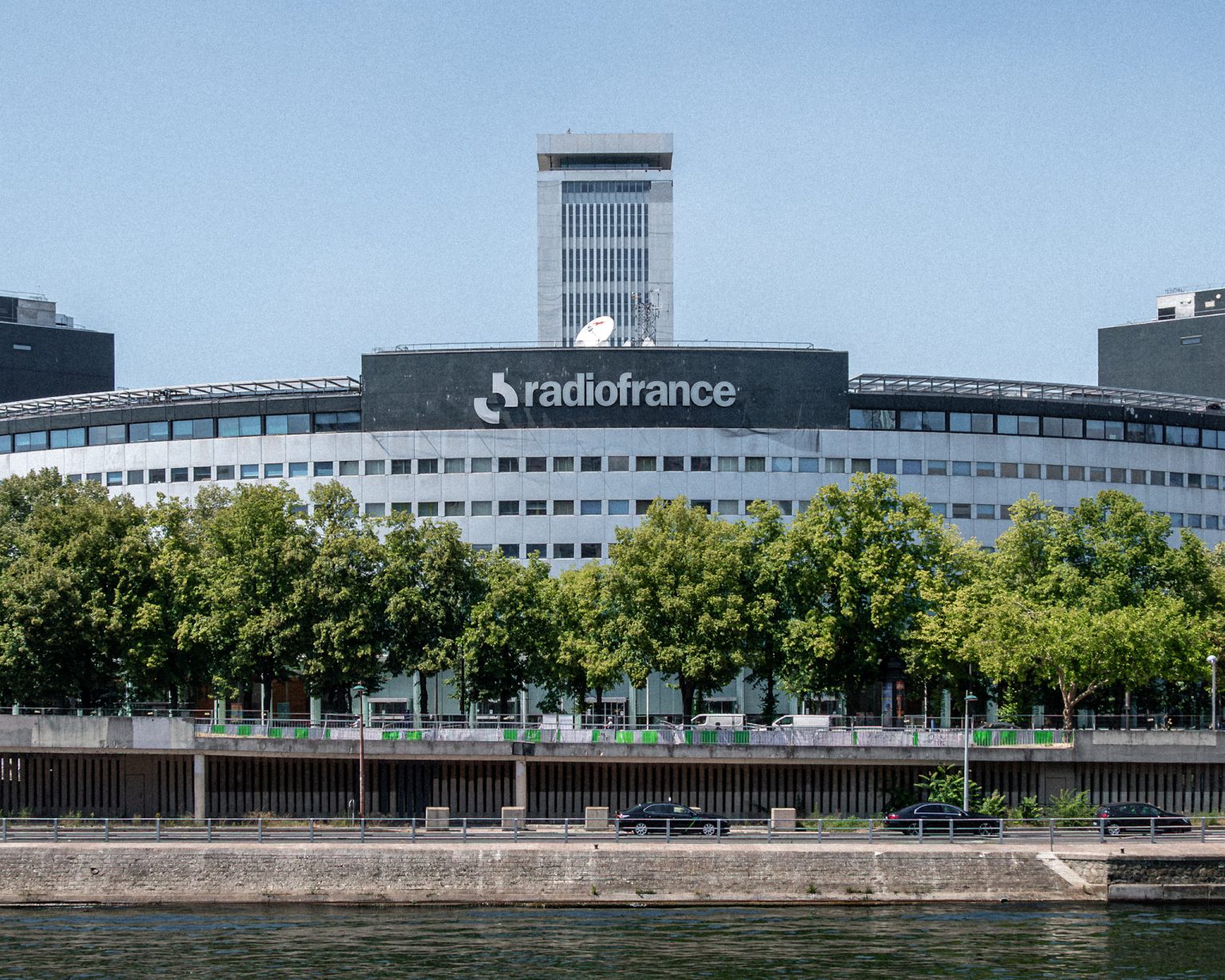
A French paradox: while the pluralism of the conservative channel CNews – the bête noire of the mainstream media – is subject to intense and regular political and regulatory scrutiny, the ideological bias of public broadcasting has long been considered a secondary issue.
The controversy took a new turn in September 2025, when conversations – recorded without their knowledge – between France Inter journalists Thomas Legrand and Patrick Cohen and two Socialist Party officials were made public by the magazine L’Incorrect.
The episode was particularly embarrassing because it no longer concerned an outside analysis of Radio France’s programming, but rather the relationships between some of its journalists and left-wing political figures. In particular, the conversation appeared to focus on the electoral strategy to use against Rachida Dati, then a candidate for mayor of Paris, to prevent her from taking the mayor’s office away from the left. Legrand explicitly mentioned his intention to “take action” against Dati.
The affair permanently undermined the public service’s claim to embody unquestionable political neutrality. Above all, it highlighted a fundamental difficulty: journalistic independence cannot be assessed solely on the basis of editorial statements of principle. The affair led to a request that Arcom, the independent media regulatory authority, conduct a broader examination of compliance with the principle of ideological neutrality and the selection of guests on public broadcasting.
A few months later, in February 2026, the Thomas More Institute revisited the subject with a study on a much larger scale. This time, some 2,000 hours of programming from seven France Télévisions and Radio France channels, broadcast over a three-month period, were analyzed using artificial intelligence.
The results were consistent with those from 2024. According to the study, 57% of the programs and segments analyzed exhibited an identifiable left-wing ideological orientation, compared to 16% with a right-wing orientation. Of the 37 programs studied, 30 were classified as left-wing and only seven as right-wing.
The study was not limited to the opinions expressed by journalists. It also analyzed the topics highlighted by public media and found that 14 of the 19 topics studied showed a left-leaning editorial orientation. The public service’s agenda was therefore more closely aligned with the priorities of environmentalists and centrists than with those of voters for Les Républicains, the Rassemblement National or La France Insoumise.
The Left by Day, the Right by Night
One detail of this new study would prove particularly prescient: one of the programs classified as right-wing, Questions politiques, received this classification in part because several interviews with right-wing figures had been extensively rebroadcast… between 2 a.m. and 5 a.m.
This issue of broadcast times came to a head a few months later. In June 2026, Arcom issued a formal notice to Radio France following an analysis of airtime on France Inter and franceinfo during the first quarter. The regulator’s findings are hard to dismiss: nearly 60% of the airtime granted to Rassemblement National (RN) representatives on France Inter had been broadcast between midnight and 5:59 a.m. On franceinfo, this proportion exceeded 70%. During the day, between 6 a.m. and midnight, the RN accounted for only about 9% of political commentary on France Inter and 9.5% on franceinfo.
On paper, the RN’s airtime could be accounted for; in reality, a considerable portion of this airtime was broadcast when the vast majority of the audience was not listening.
Radio France cited a technical error – though this did not alter the substance of the regulator’s findings. For Arcom, the problem was not merely statistical: the distribution of airtime itself constitutes an element of pluralism. Broadcasting the RN’s segments during late-night programming constitutes a breach of public radio’s pluralism obligations. It is not enough to grant a political party the regulatory number of minutes if the broadcaster can then choose to air those minutes at times when they will reach almost no one. In other words, ten minutes at 8 a.m. and ten minutes at 3 a.m. do not constitute equivalent media exposure.
The issue is all the more sensitive when it concerns the RN, now one of France’s leading electoral forces.
After several years of reports, controversies and scandals, the regulator has now acknowledged what critics of public broadcasting have long maintained: neutrality can be circumvented without a single minute of airtime being officially cut. All it takes is deciding when that minute will be aired.
A More Realistic Definition of Pluralism
As the campaign for the 2027 presidential election gets underway, Arcom now aims to address this loophole. Media outlets will no longer be able to simply compensate for a lack of representation during daytime hours by airing segments when viewership is at its lowest. Starting 1 October 2026, Arcom will apply a new calculation rule: appearances by political figures broadcast at night, between midnight and 5:59 a.m., will no longer be counted toward airtime and fairness quotas. This should radically change the landscape.
The regulator justifies its decision by citing a desire to make its oversight “more transparent and better aligned with actual media consumption”. While the method is not perfect, it does appear to be much more realistic and reasonable. For the first time, many French people will be able to hear alternative viewpoints that were previously reserved… for insomniacs.