If Congress funds the request in this midterm election year, it would boost government payments to US farms to a new record.
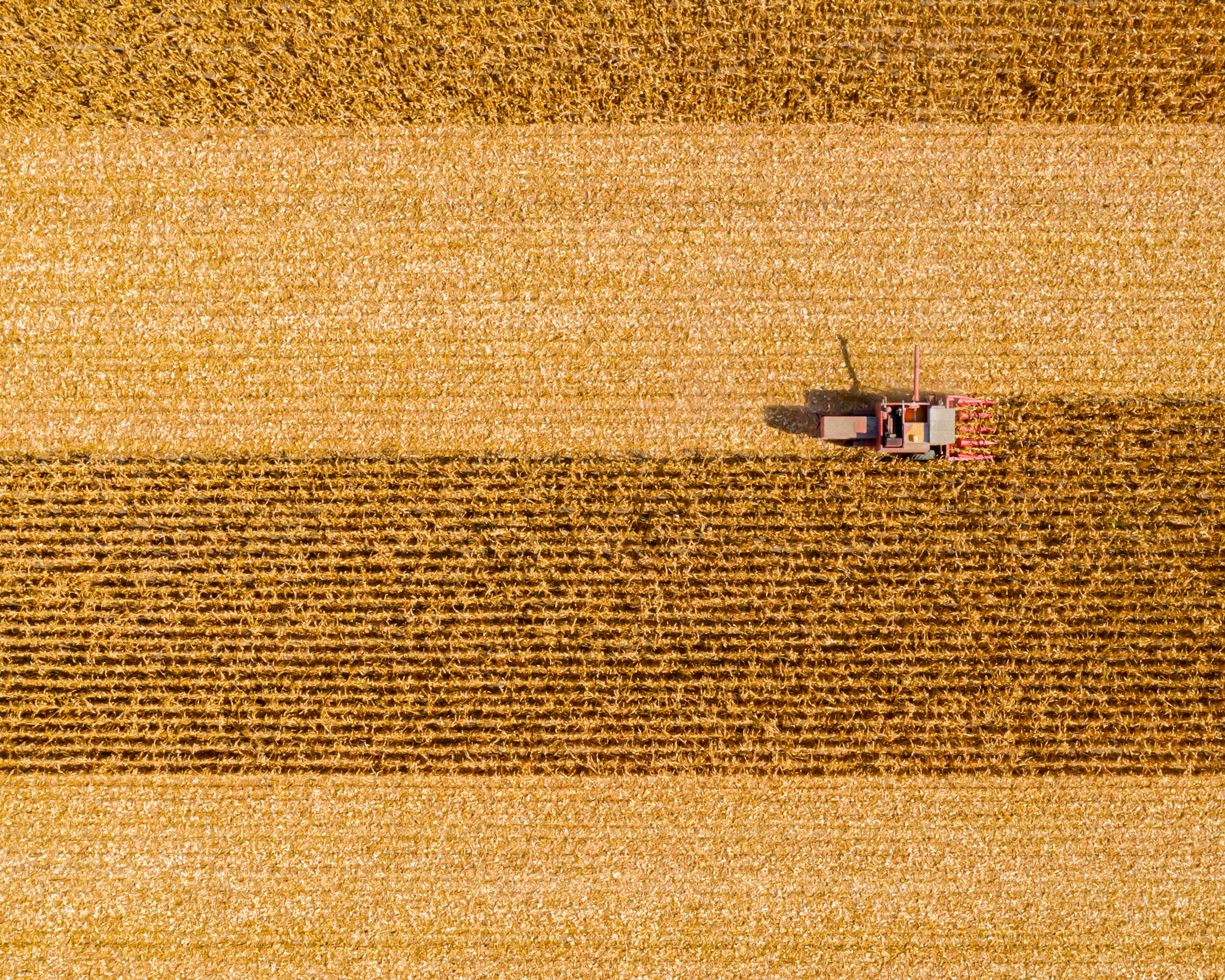
A farmer’s support for US President Donald Trump is displayed on the side of a barn near Clinton, Wisconsin, on 9 July 2025. Photo: Scott Olson/Getty Images
|
The White House wants another bailout for American farmers, on top of previous bailout money this year. If approved by the US Congress, the federal government’s payments would account for a ballpark estimate of one third of US farm income in 2026.
That would be well above historical averages. Absent an external cause, it might signal something has gone structurally wrong in the US farm economy.
The request was for $11.1bn, including $10bn in general aid for row and specialty crop producers and $1.1bn primarily for Florida farmers, whose crops were damaged in a storm and winter freeze.
It came as part of a 24 June supplemental spending request to Congress from the White House for $87.6bn.
That money would come on top of $12bn in “bridge payments” that the US Department of Agriculture (USDA) announced in December “for American Farmers Impacted by Unfair Market Disruptions”.
At least some of those disruptions resulted from the Trump administration’s efforts to lay tariffs on most nations and one island populated entirely by penguins. The administration’s authority to impose those tariffs was rejected by the US Supreme Court in February, and some refunds have started. Yet the tariffs and counter-tariffs on various products created problems for US farmers and workers in many other industries.
The USDA spread the blame around for the necessity of bridge payments to struggling farmers, saying the funds were authorized in response to “temporary trade market disruptions and increased production costs that are still impacting farmers following four years of disastrous Biden Administration policies that resulted in record high input prices and zero new trade deals”.
The $12bn was already provided for by Congress, and most of those funds would be routed through what is called the Farmer Bridge Assistance Program. It provides relief in the form of funds for American farms that grow a range of crops including, but not limited to, barley, corn, cotton, peas, wheat, mustard and soybeans.
The USDA released most of those bridge payment funds starting in February. The farm agency forecasted that farm program payments would run to $44.3bn for 2026, which it noted was a $13.8bn increase over the previous year. The new round of bailouts that Congress is being asked to fund would come on top of that.
Congress could say no, but that is less likely in a tough midterm election year. Regardless, payments to farmers are forecasted to account for between 29% and 36% of their 2026 income, or roughly one third.
Further, some payments from the US government will be structurally higher going forward. The “bridge” that the USDA promised was supposed to last until price supports in what is known colloquially as Trump’s Big Beautiful Bill kick in.
More Money Than Under COVID
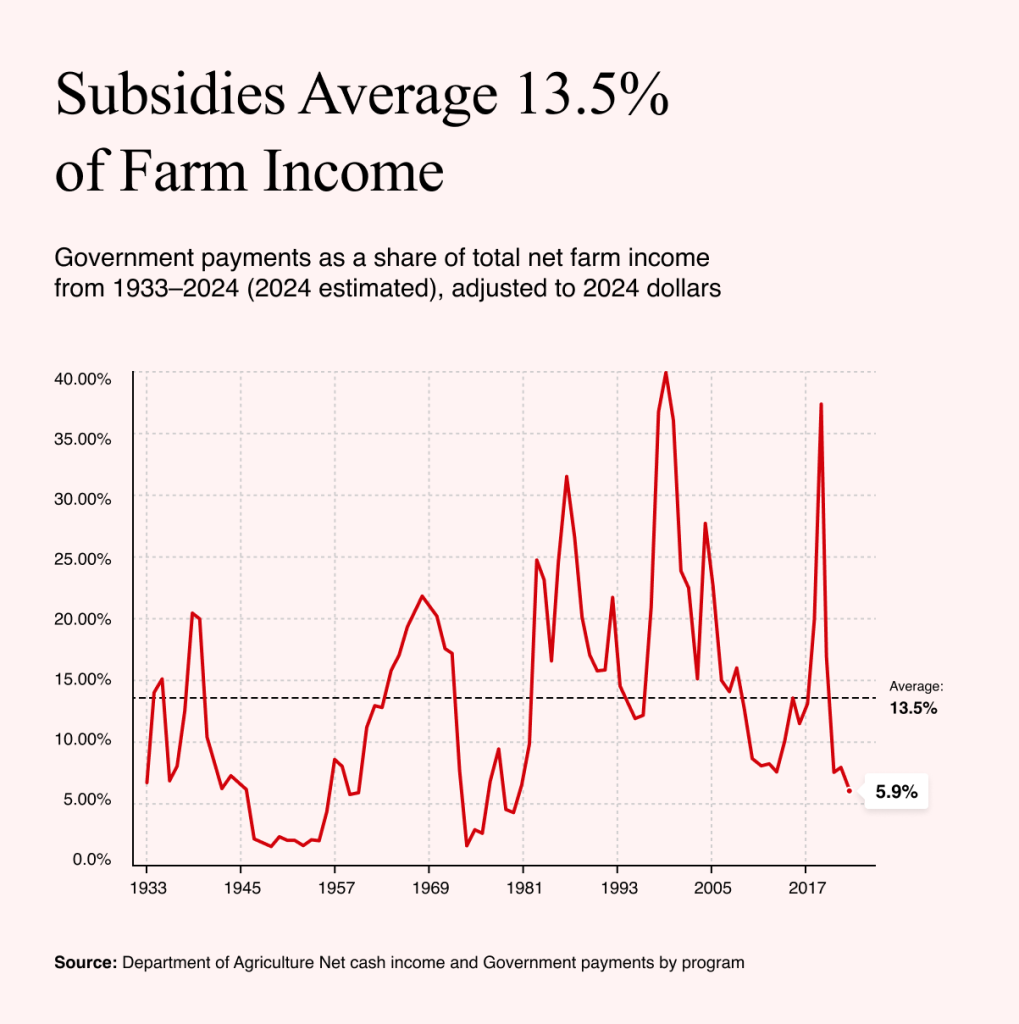
US farmers have received subsidies from the federal government for some time, but usually at much lower levels than in the last few years. According to USA Facts, between 1933 and 2024, farm subsidies accounted for 13.5% of net farm income.
Source: USDA
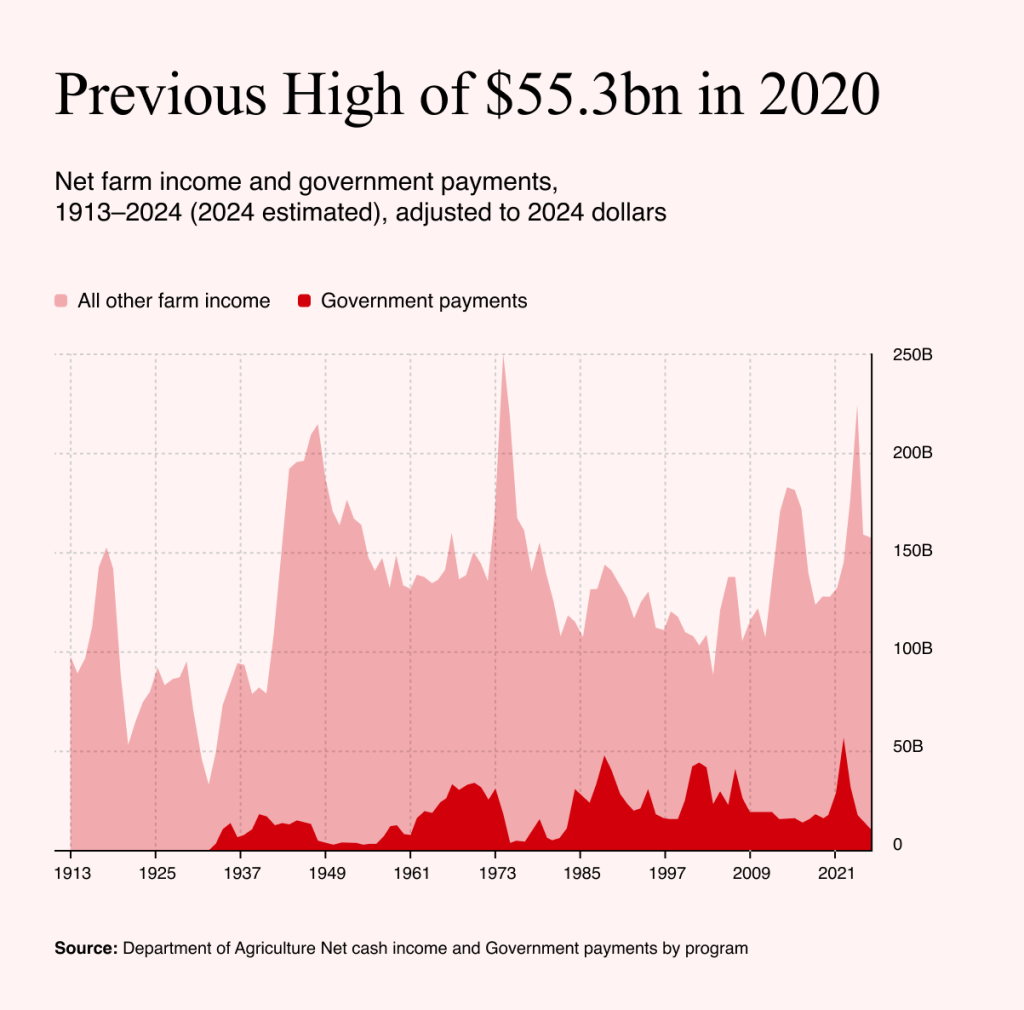
Farm assistance reached a previous high of $55.3bn in 2020, because of pandemic disruptions and many food security concerns that the long lockdowns set off. If Congress were to approve Trump’s request in full, this year’s government farming funds would run to $55.4bn, a new record.
Source: USDA
Farmers React to the Request
Many American farmers expressed support for the White House request for additional funds, even as they pointed out that the present market conditions are not optimal in many ways for those who make their living from working the land.
Zippy Duvall is president of the American Farm Bureau. He said that farmers are “grateful to have the president’s backing”, according to Farm Progress, but he insisted that it was not enough. Not only did his organization “urge Congress to heed the White House call to deliver economic aid, but we also know both sides of the aisle in Congress recognize more is needed as farmers’ losses nationwide far exceed $11 billion”.
Duvall added, “Over the last decade, we have lost nearly 200,000 farms, so we need to stabilize the farm economy and reverse that trend”.
“Well, I welcome the money, and I have yet to send back a check”, Mark Mueller, president of the Iowa Corn Growers Association told the Farm Journal in an interview. “But obviously I, like all farmers, prefer to make our income from the market. So we look forward to future trade deals that he is working on, and we do better when we can have free exchange of goods and services. And, especially in agriculture, that is very important.”
Farmers, almost uniquely among American business owners, have been both challenged by and benefited from President Donald Trump’s policies. He has acknowledged that some of his policies, on trade and immigration and in other areas, may hurt farm income, while also showing a willingness to use government payments to increase that income.
The bulk of the White House’s supplemental spending request that might benefit farmers was to cover expenses related to Operation Epic Fury in Iran. Yet the appeal for farm support is, in a way, related to the war costs.
Many of the unbudgeted expenses farmers have had to shoulder this harvesting season are related to higher fuel and fertilizer costs. That is true for farmers in the US and around the world, though it is only US farmers in line for a possible bailout.
Both expenses ballooned because of shortages caused by Iranian agitations in the Strait of Hormuz, following attacks on the Islamic Republic of Iran by US and Israeli forces to frustrate that country’s nuclear ambitions and weaken the regime and its military capacity.
Those attacks crippled much of the country’s offensive military facilities, including the major missile launching sites. The attacks also killed many of the regime’s leaders, including the late Supreme Leader Ayatollah Ali Khamenei.
What remained of the Iranian regime had counterattacked with drones and other smaller measures in sufficient forces to scare most ships away from trying to make the trip through the Strait of Hormuz.
That hostile move pinched off a significant route of world trade in oil and fertilizer and other things that are very important to farmers as they work to plant, tend and harvest their produce to feed the nation.