Reform has fiercely rejected Channel 4’s interpretation of the footage. Farage accused the journalists of “entrapment” and insisted that neither he nor his party had broken the law or accepted illegal money. He nevertheless admitted that his aides had said things they “perhaps should not have said”. Orr and Jukes have stepped down from their positions pending an internal party investigation.
Labour and the Liberal Democrats have referred the allegations to the Metropolitan Police. The force said it was assessing the matter and any information provided to it. According to the Electoral Commission, information about any potential attempt to evade controls on political donations is a matter for the police.
The scandal could hardly have arrived at a worse moment. Reform had intended its Birmingham conference to demonstrate its transformation from an insurgent protest movement into a government in waiting. Instead, Farage arrived facing questions about whether some of the people who might one day help him run Downing Street understood, or were prepared to circumvent, the rules governing how British political parties can be financed.
A New Entente Cordiale
Yet the controversy did not entirely derail Reform’s attempt to use Birmingham as a showcase for its ambitions. Away from the questions surrounding its aides, the conference produced the kind of political theater Farage had wanted: international allies, promises of rapid action in government and a potentially significant agreement on one of Reform’s defining issues.
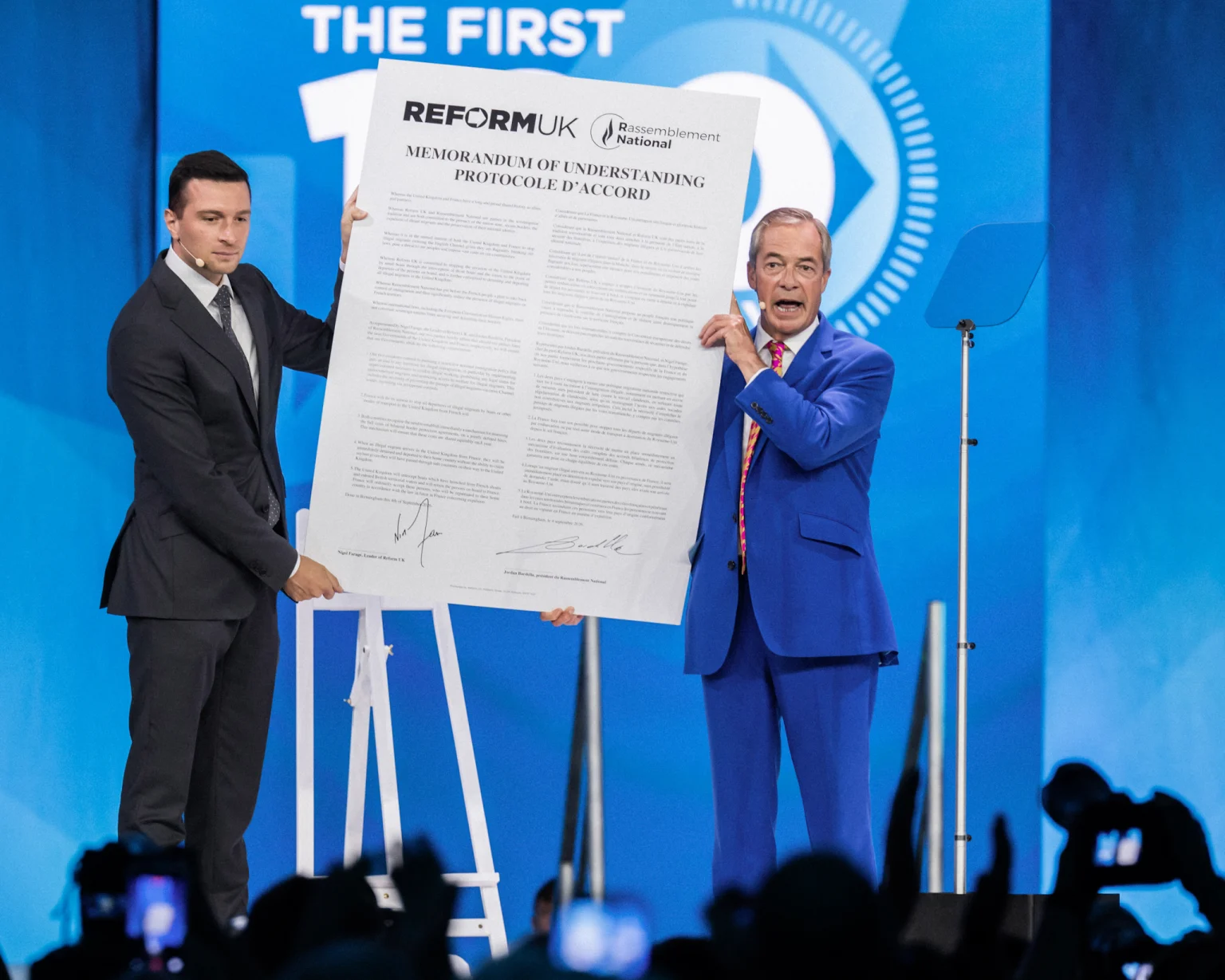
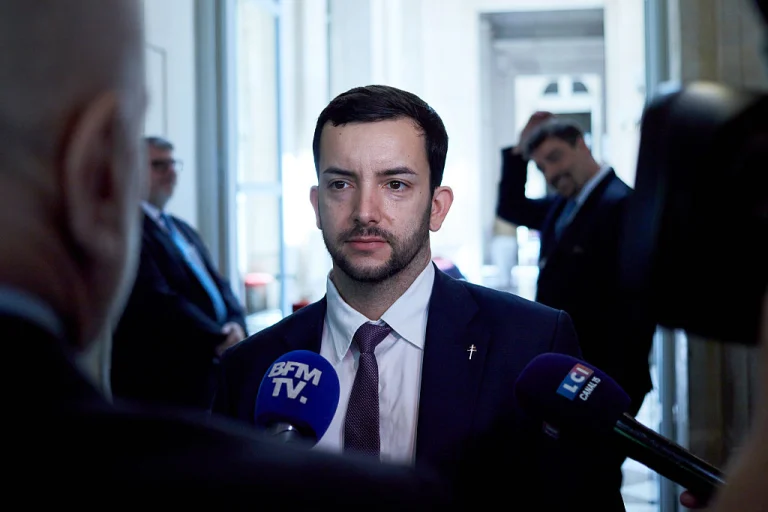
The most striking moment came when Jordan Bardella, president of France’s National Rally, joined Farage on stage. The two signed a memorandum of understanding aimed at stopping small boats crossing the English Channel and allowing Britain to return migrants to France.
Bardella promised delegates that a future National Rally government would act to prevent France from serving as a route for illegal migration to Britain.
“If the French people bring us to power in 2027, our government will do everything in its power to ensure France is no longer the gateway for illegal migration into the UK”, he said.
Bardella also said that migrants entering France illegally should be returned to their countries of origin. Farage hailed the agreement as the beginning of a new “Entente Cordiale” between the two parties and described it as “a historic document that will stop the boats for ever”.
From Protest Party to Government in Waiting
Bardella’s appearance was about more than providing Farage with an impressive foreign guest. It formed part of a broader attempt by Reform to persuade voters that the party is no longer merely a vehicle for protest, but is capable of governing.
That was supposed to be the central message of the party conference. Rather than simply asking whether voters agree with its policies on immigration, crime and the economy, Reform wants to shift the argument toward a different question: which party can actually be trusted to deliver? Its answer is a promise to demonstrate what a Farage government could achieve within its first 100 days in Downing Street. Ministers who failed to meet their commitments would be expected to resign or face dismissal.
The Bardella agreement was intended as an example of precisely that approach. Before the conference, Reform insiders made little secret of its political purpose. One described the plan as getting “the country to fall in love with Nigel again”, while another argued that Bardella’s presence would strengthen Farage’s migration pitch by showing that he could strike a deal with a man who could soon wield considerable power in France.
But Reform’s path from insurgency to power has become less straightforward. A turbulent summer brought renewed questions about Farage’s finances and internal rows involving senior figures including Zia Yusuf. Richard Tice himself acknowledged that the party’s attempt to present itself as a government in waiting had not progressed in a straight line.
The Conservative Problem
There is also a more fundamental obstacle: the Conservatives have proved harder to kill than Farage expected. He once predicted that Reform would destroy and replace the Tories, yet a recent More in Common poll put the Conservatives ahead of Reform for the first time in two years.
That raises the prospect of a divided British right. Reform could take working-class Labour seats in the north while the Conservatives remain better positioned against the Liberal Democrats in parts of the south. Tice has dismissed the threat, insisting Reform will beat the Conservatives simply “by being better”.
Birmingham was intended to counter doubts about Reform’s readiness for power. The conference expanded from two days to three, added a dedicated business day and attracted greater interest from corporate Britain. Reform wants voters to see an organization preparing for a general election rather than a permanent protest movement.
Yet that ambition also makes the donation controversy more damaging. A protest party can survive disorder and scandal more easily than one asking voters to entrust it with Downing Street. The closer Reform gets to power, the more intensely its personnel, finances and internal discipline will be scrutinized.