Stade Massacre Forces Lower Saxony’s Migration Commissioner to Resign
Lower Saxony’s migration commissioner has resigned over the fallout from a shooting in Stade that killed six welfare workers. His mother-in-law drove the gunman from the scene; the gunman’s wife allegedly attacked a dying victim. Both women remain free.
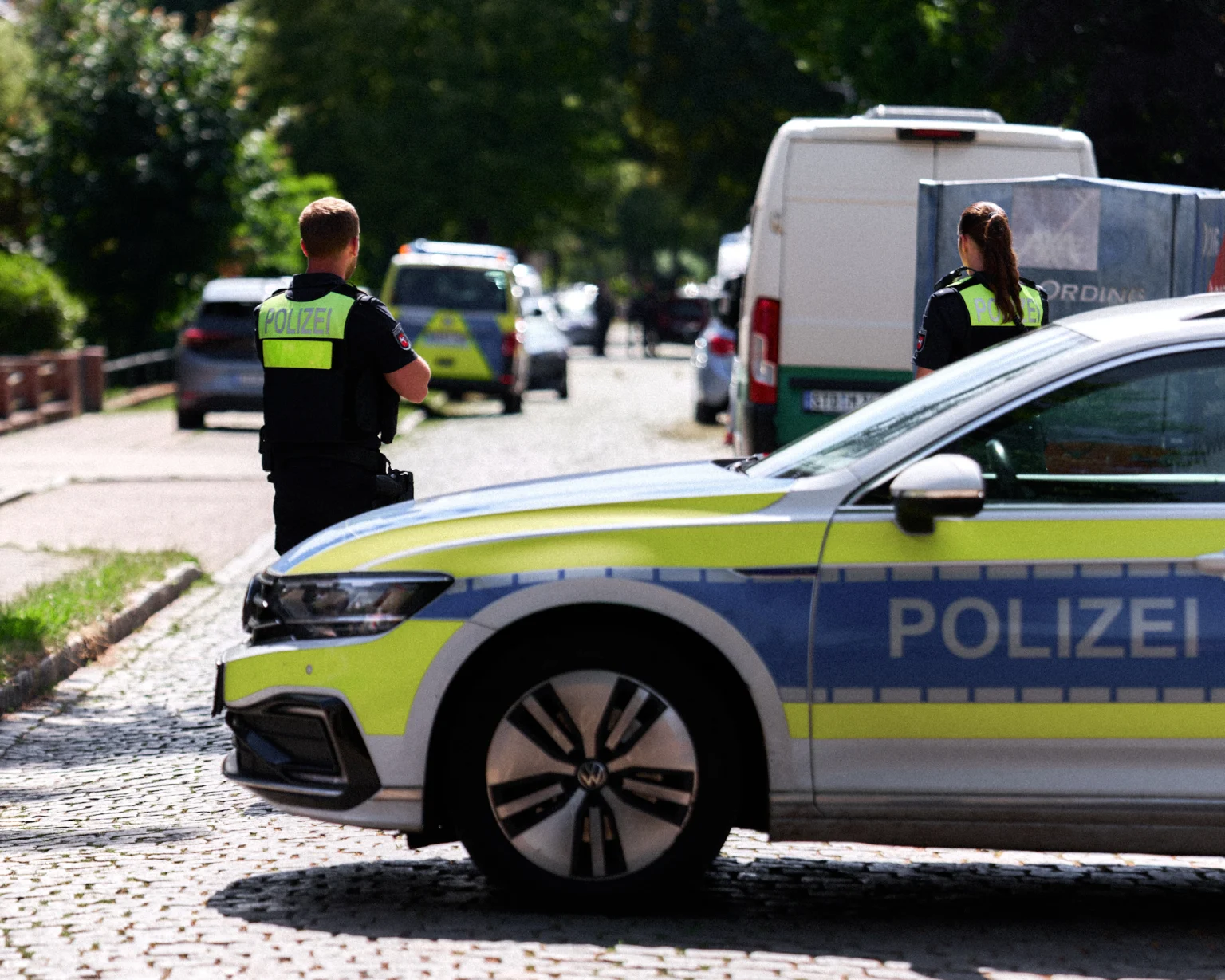
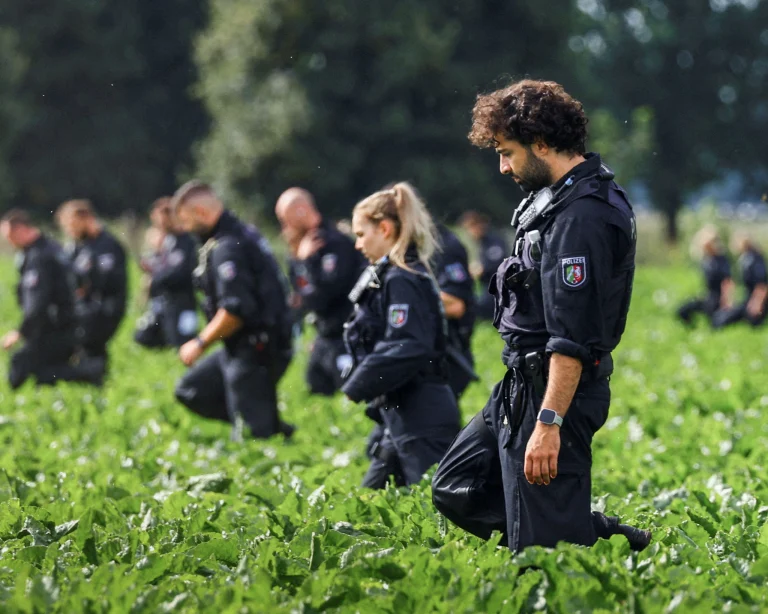
Police officers stand outside the youth facility in Stade where six people were shot dead. Photo: Marcus Golejewski/picture alliance via Getty Images
|
The massacre in the northern German town of Stade, where six welfare workers were shot dead at a youth facility in June, has now claimed a political casualty. On Friday, Deniz Kurku, a state parliament member for the center-left Social Democratic Party (SPD), resigned as Lower Saxony’s Commissioner for Migration and Participation. He will retain his seat in the state parliament.
Kurku said he was stepping down because of “massive hostility and threats”, as well as what he described as false claims in the media and on social networks. Under these circumstances, he said, he could no longer properly carry out his duties as commissioner. Lower Saxony Premier Olaf Lies thanked his fellow SPD politician for his work and condemned the abuse directed at him, including death threats.
Kurku was personally drawn into the case three days after the killings. On 2 July, he disclosed that Sylvia S., the woman who drove gunman Fatih Khan Gazioglu from the crime scene, was his mother-in-law. Through his lawyer, Kurku said he did not know Gazioglu, was unaware of his plans and had played no role in the custody dispute over Gazioglu’s child.
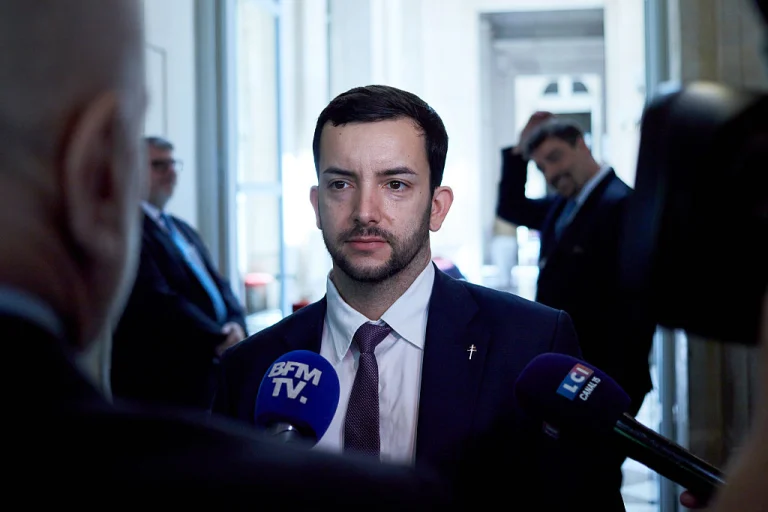
Deniz Kurku (SPD), Lower Saxony’s former State Commissioner for Migration and Participation, resigned on Friday. Photo: Michael Matthey/picture alliance/Getty Images
But at the end of August, new revelations gave the case a political dimension. According to an investigation of case files by the news outlet NIUS, Sylvia S. had suggested in a chat with Gazioglu on 5 May that a “Dennis” or “Deniz from Hanover” should visit the child’s mother in hospital with a business card. The apparent aim was to put pressure on doctors and the youth welfare office, which were seeking to remove the couple’s custody rights.
The father was suspected of abusing his three-month-old baby, causing a brain injury consistent with potentially fatal shaken baby syndrome. According to NIUS, investigators noted that the “Deniz” mentioned in the message was likely Sylvia S.’s son-in-law, Deniz Kurku. It is not known whether the proposal was ever acted upon.
Kurku’s lawyer denied his client had been involved. He said Kurku knew neither Gazioglu nor his partner, Enise Ö. He also denied that Kurku had left a business card at the hospital or played any role in the custody dispute. The revelations nevertheless increased pressure on Kurku, who skipped Thursday’s meeting of the state parliament’s interior committee.
On 29 June, Gazioglu and Enise Ö. attended a meeting at the Stethu mother-and-child facility in Stade about their three-month-old daughter. Doctors had found signs of potentially fatal shaken baby syndrome, prompting a family court to restrict the parents’ custody rights. The mother and baby had been living at the facility since 26 May, while Gazioglu was barred from seeing his daughter. The custody dispute appears to have triggered the massacre.
The case now raises two politically sensitive questions: what the women knew before the massacre and why neither has been held in pretrial detention. Investigative material has also focused attention on their actions surrounding the killings. One allegedly carried the bag containing the murder weapon into the building, while the other drove Gazioglu away afterward.
Enise Ö., the child’s mother, took part in the meeting with youth welfare officials and Gazioglu. According to a witness cited in an analysis of the case files, Ö. was carrying Gazioglu’s small leather bag when they entered the building. The bag reportedly contained a pistol with 21 rounds of ammunition and a long knife. Shortly after noon, Gazioglu drew the gun inside the building and shot three youth welfare employees and three members of staff at the facility.
One employee managed to escape despite suffering three critical gunshot wounds to the back and chest. Witness statements and a police reconstruction of events indicate that Enise Ö. stopped the woman outside as she tried to reach safety, pushed her to the ground and repeatedly struck her. She allegedly shouted that her child had been taken away from her. The victim managed to reach the other side of the street but died shortly afterward despite attempts to resuscitate her.
Enise Ö. disputes that account. She claims the wounded woman stood up and fell into her arms. According to the police analysis, investigators considered that version implausible and concluded that the alleged attack may have been intended to prevent the victim from escaping and assist the gunman. A preliminary police report said Ö.’s involvement in the crime or its planning could not be ruled out. She nevertheless remains free.
Sylvia S., the mother-in-law of the former migration commissioner, had been waiting outside the building. When the shots were fired, she entered the building, met Gazioglu inside and then returned to the car with him. She subsequently drove the Mercedes-AMG in which they fled. She says she acted under duress and that Gazioglu threatened her with the gun.
Police files reportedly contain surveillance footage showing the pair getting into the vehicle. Gazioglu can be seen smoking a cigarette with the gun in his hand, but the footage does not show him pointing it at Sylvia S. or holding it to her head.
Despite police officers firing at the tires of the vehicle, the pair fled the scene. The car was stopped a short time later at a roadblock and both were arrested. Enise Ö. was also taken into police custody on the day of the massacre. Both women were later released after questioning.
Prosecutors did not apply for arrest warrants for either woman. They said the evidence did not meet the legal threshold required for pretrial detention. Sylvia S. and Enise Ö. were therefore released while the investigations into them continued.
Sylvia S.’s role in particular raises difficult questions. Mobile phone records reveal how extensively she had been in contact with and supported Gazioglu in the weeks and months before the massacre. Three days before the killings, she sent a 20-page account of the custody dispute to several media outlets, attacking doctors, the youth welfare office and the justice system while portraying the baby’s injuries as accidental.
According to the mobile phone analysis reviewed by NIUS, Sylvia S. and Gazioglu exchanged 901 WhatsApp messages from the end of April onwards and spent hours talking on the phone. The SIM card he used was also registered in her name. She had also bought the expensive car from Gazioglu, taking out a loan to pay for it. It was later used to flee the crime scene.
On 11 May, Sylvia S. received a voice message from Gazioglu containing explicit threats of violence and revenge. He spoke of “one life for several lives” and threatened to take those who had taken his child into care “into [his] care” as well.
None of this establishes that Sylvia S. knew about the specific murder plan. But according to the files reviewed by NIUS, seven weeks before the massacre she received an explicit threat of violence from the man she later accompanied to Stade and drove away from the crime scene.
Gazioglu took his own life in pretrial detention on 21 July, and the proceedings against him were discontinued. Since earlier this week, however, the man suspected of selling him the murder weapon has been held in pretrial detention on suspicion of aiding and abetting manslaughter and illegal arms dealing.
The contrast is difficult to ignore. He remains in custody, while the two women are free, even though their possible involvement is also under investigation and police evidence has raised questions about what they knew.
The fact that one of those women is the mother-in-law of a former government commissioner for migration has inevitably prompted speculation about whether political influence had played any role in the handling of the case. There is no established evidence that such an intervention occurred.
The prosecution says there was not enough evidence to detain the two women, but the investigative files that have since emerged raise serious questions about their roles in the case.
Kurku’s resignation over the controversy surrounding his mother-in-law shows just how politically sensitive the case has become. The woman who drove the gunman from the scene had also been active in publicly funded NGOs supporting intercultural marriages. That does not make the question of her role any easier to answer. It does, however, add another layer to an already politically charged case.
Welcome to the comments section of the Štandard daily. Please take note of our guidelines, comments are moderated by us. You can contact the moderators at support@statement.com.
Participate in the discussion
Comments are available to subscribers only. If you'd like to join the discussion, choose a subscription starting at €6.72 per month.
All comments 0
Register
Comments are available to registered users only. If you'd like to join the discussion, register here.