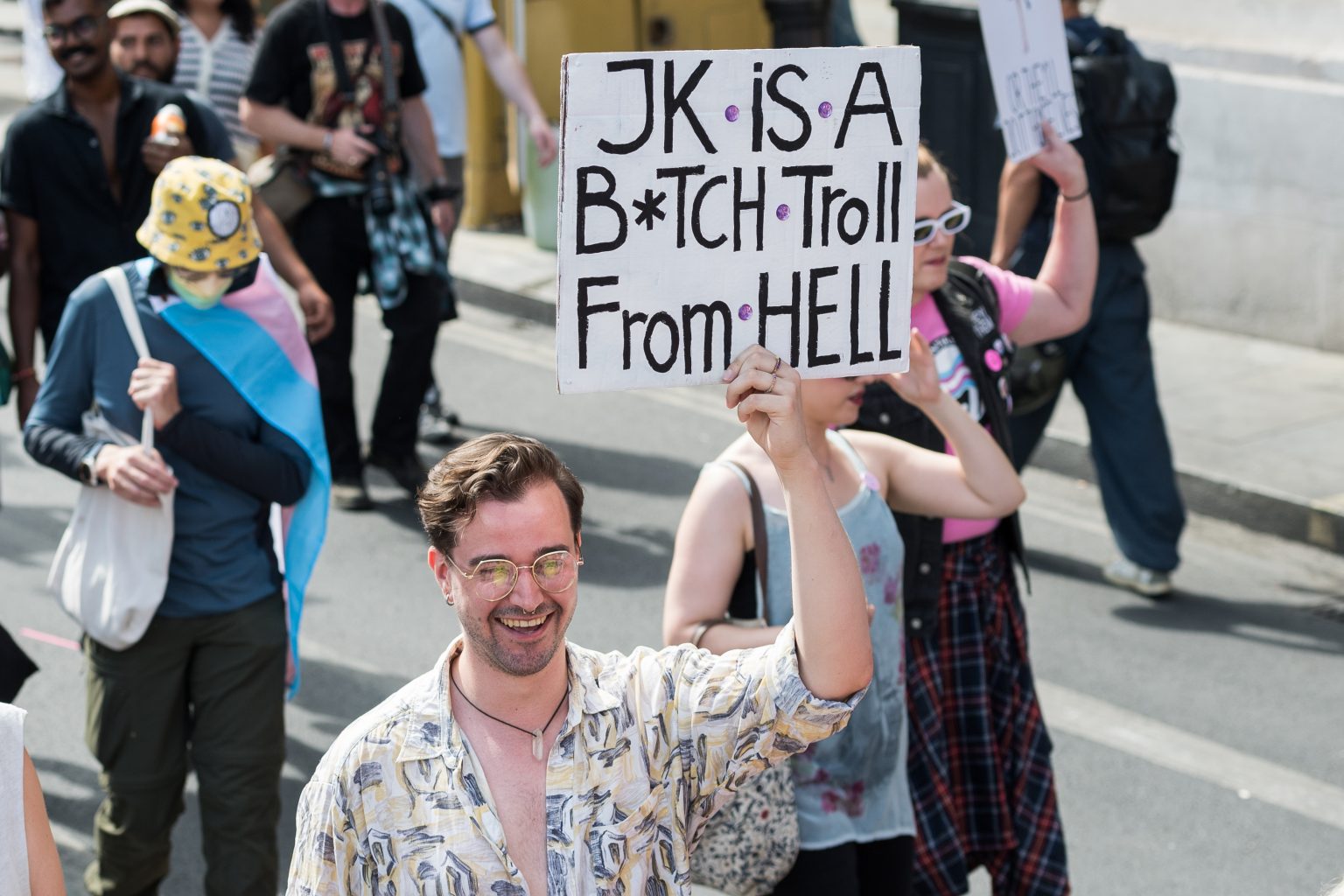
“Féile an Phobail” – “Public Festival” in English – is a taxpayer-funded political and cultural jamboree held annually in Belfast, Northern Ireland. In that divided country, as its Irish-language name might give away, the festival is very closely associated with the nationalist and republican community, and is widely regarded as one of the main events on the cultural calendar for those opposed to British governance in Northern Ireland.
It is, unsurprisingly, very culturally and politically left-wing.
This assignment of public funds to support what is essentially a left-wing festival is generally not controversial in Northern Ireland, even if it should be. Yet the supply of taxpayer cash may now have finally tripped the organizers up, as they have found a foe willing to take them on: gender-critical feminists.
An Unnoticed Event
A précis of the story so far: way back in May of this year, a group called Women’s Rights Northern Ireland applied to host an event at the festival. The session was to be called “Respect, Rights, and Reality: Women’s Voices from Ireland and Europe”. It was due to discuss women’s sex-based rights, single-sex spaces, women’s sports and other such topics where the transgender issue has created a debate. The event was accepted by the festival, included in the official program and due to take place on 4 August.
Then, when the festival program became public, all hell broke loose.
Transgender activists demanded that the event be canceled. Women’s Rights Northern Ireland say that they received a sustained campaign of abuse. When they – the women’s rights group – reached out to Féile an Phobail to ask for additional protection, the response was an email telling them that the event would be canceled on the grounds that it was likely to promote an anti-transgender view.
A Knee-Jerk Cancellation
The festival later confirmed this publicly: in a statement issued on 21 July, it openly confirmed that it was canceling the event due to the presence of “anti transgender views”.
It is here that the problem arises for the organizers.
You might be interested
The UK’s Transgender Lobby Is Weakened – but Still Advancing
Aside from the fact that the row has gone internationally viral, with the festival suddenly becoming the object of ire from women’s rights groups worldwide and drawing the media-friendly condemnation of Harry Potter and Strike author J.K. Rowling, the festival faces something of a legal problem.
That problem is that it is a publicly funded event, now openly discriminating on the basis of a person’s views about gender and sex-based rights, which is in open contradiction of the rulings of Britain’s courts.
The Trans Issue Versus Irish Socialist Republicanism
This adds some spice to matters: a festival with an openly republican, nationalist and left-wing ethos, which generally overtly appeals to the most anti-British sentiments in Northern Ireland, now finds itself in conflict not only with gender-critical feminists worldwide, but also with British law.
For their part, Women’s Rights Northern Ireland have launched a lawsuit, alleging discrimination. They have been joined in that venture by Sex Matters, the British-based campaign group that has a string of legal victories behind it. In addition, Rowling herself has offered funding to aid legal action against the festival.
The organizers have few good options. Sources in one of the women’s groups tell this reporter that they are very confident that they will prevail on the legal merits.
Further, the row threatens to open up a political wound at the heart of Irish nationalism in Northern Ireland. That wound is one that readers from around the world will recognize: on the transgender issue, nationalist elites in Northern Ireland are simply out of step with their own political supporters, clear majorities of whom side, on this issue, with the British courts and sex-based-rights campaigners.
No Good Choices
As the standoff enters its second week, and with gender-critical feminists from around the UK and even further afield booking their flights to Belfast to engage with the campaign, the festival’s position looks weaker and weaker.
You might be interested
Irish Teacher Jailed amid Trans Row Released – for Now
If it sticks to its present position, which is option one, then a few things are likely to happen. The first is that there is a very strong chance that the courts will find that the organizers have unlawfully discriminated, forcing them to reinstate the 4 August event. The second is that the courts – implausibly but not impossibly – side with the festival, making it and Northern Ireland the focus of a gender and sex-based-rights debate that polling shows would be very awkward for Irish nationalism.
On the other hand, if the festival itself tries to de-escalate and reinstate the event, it will suffer an enormous backlash from the left-wing activists who constitute its base and volunteers. There are, in short, few good options.
You might be interested
Scottish Court Rules Against Housing Trans Prisoners by Gender Identity
A Self-Inflicted Blow
What the entire saga demonstrates, however, is the enduring hold which transgender activists appear to have over publicly funded institutions, as well as their vastly disproportionate influence within the broad political left. The decision to cancel this event was clearly and evidently reflexive: the organizers heard “anti-trans” and acted without much consideration for the consequences, and without any thought that public opinion on the subject might be against them.
For the transgender movement itself, the whole mess is further evidence that the movement’s strategy of trying to delegitimize dissent against it is failing right across the Western world. Every time it successfully deplatforms an opposing voice, the consequences for the debate and public opinion are akin to the Streisand effect, whereby much more public attention is drawn to the issue.
Imagine for a moment that the original 4 August event had just been permitted to go ahead, unhindered: few, it is fair to say, would ever have heard of it or noticed. It would simply have been another fringe event at an internationally obscure festival.
Instead, it is an international controversy. That is an own goal, if ever there were one.
You might be interested
UK Nurses Win £187,000 Payout over Trans Changing Room Policy