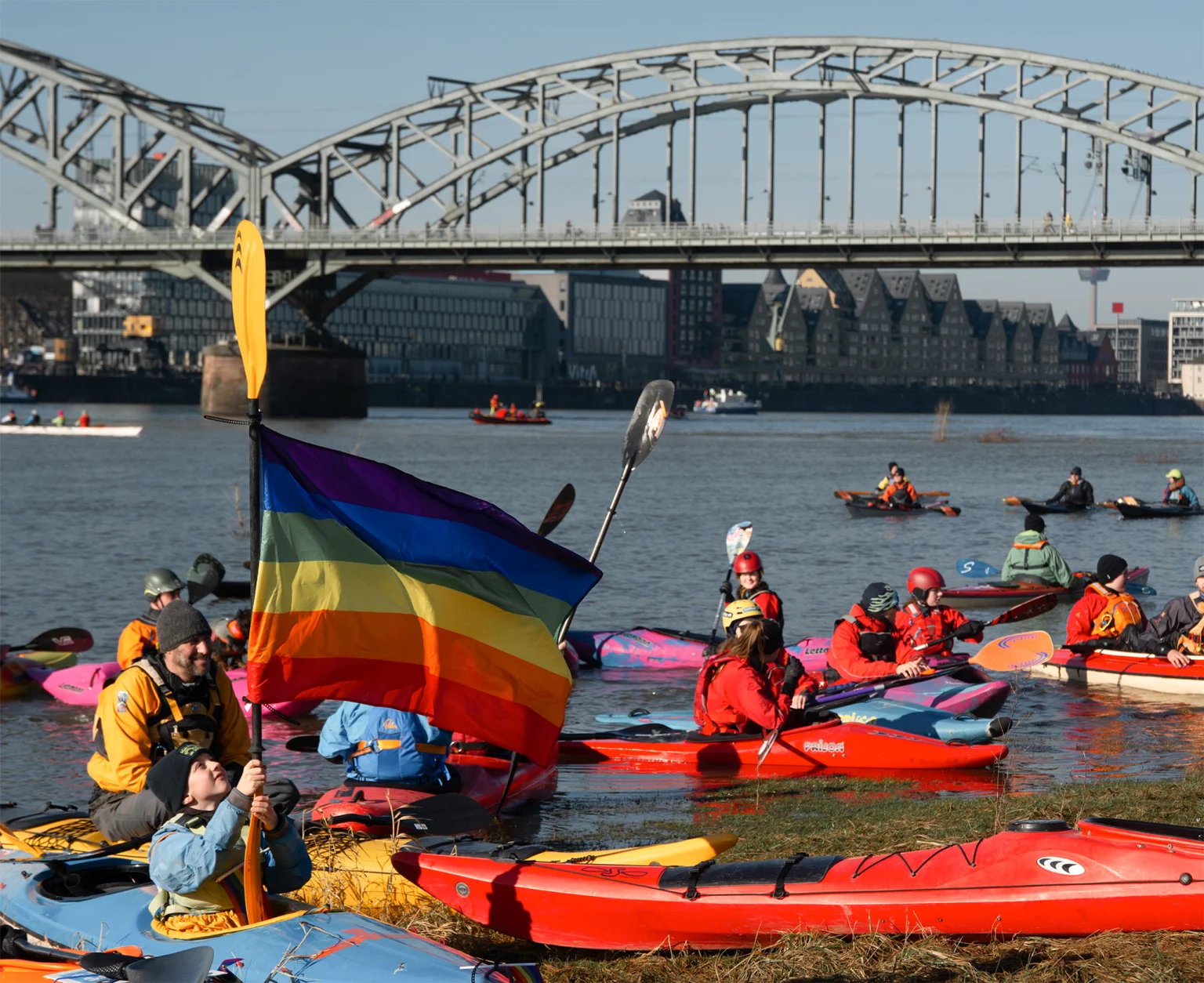
The proposal forms part of a Europe-wide campaign. In May, the European Commission registered the European citizens’ initiative Rights for Nature. From October, its organizers plan to collect one million signatures in an effort to persuade Brussels to consider a legal framework recognizing ecosystems as holders of their own rights.
The Rhine would then be only the beginning. The idea is not confined to rivers. Lakes, forests and even protected areas could likewise be endowed with rights.
The Rhine is an especially potent symbol for the movement. Around 300 million tonnes of goods are transported along it every year, while its ports, industrial sites and navigation channels tie together Switzerland, France, Germany and the Netherlands. The waterway is vital to Europe’s economy.
Who Speaks for a River in Court
The idea has precedents elsewhere in the world. In 2016, Colombia’s Constitutional Court recognized the Atrato River as a subject of rights in order to protect it from the effects of illegal mining. New Zealand recognized the Whanganui River as a legal person in 2017. There, its rights are exercised by two representatives, one nominated by Māori and one by the Crown.
In the case of the Rhine, neither its rights nor the question of who would represent the river has been settled. Should a panel of environmental associations decide what serves the river’s interests? Would all the riparian states have to agree? And what happens when flood protection, shipping, drinking-water supplies and the restoration of natural riverbanks conflict with one another?
The Rhine is hardly voiceless today. The International Commission for the Protection of the Rhine (ICPR) has coordinated cooperation among the riparian states since 1950. Its Rhine 2040 program covers biodiversity, water quality, flood protection and measures to address low water levels. There is also the EU Water Framework Directive, along with national authorities and courts.
Legal personhood would therefore not fill a gap in protection. Instead, it would make the Rhine an additional claimant whose broadly defined interests would have to be interpreted by representatives requiring a political mandate.
A New Wave of Litigation
Germany already has an extensive environmental review regime. Major infrastructure and industrial projects must be assessed for their effects on nature, water and the population before they can be approved. In addition to environmental impact assessments for individual projects, there are strategic environmental assessments for plans and programs, as well as public participation procedures under European and national law.
Recognized environmental associations may also challenge permits without having to show that their own rights have been violated. Such cases can concern, among other things, industrial facilities, waste incinerators, power plants, water permits and landfills, according to the German Environment Agency. The right of environmental associations to bring legal action is intended to ensure that existing environmental law is actually observed.
Major construction projects are already blocked or severely delayed because a rare species is found on a site or even merely suspected of being present. Germany’s conservationists are inventive.
Meanwhile, the federal government is trying to speed up planning and court proceedings. Infrastructure legislation adopted in 2026 exempts certain works from formal plan-approval procedures and allows selected projects to proceed while legal challenges are pending. The reform itself shows the extent to which lengthy procedures can hamper investment, modernization and the expansion of transport infrastructure.
Giving the Rhine rights of its own would create an additional basis for legal action. Deepening navigation channels, expanding ports, building bridges and power plants, discharging cooling water or constructing flood defenses would no longer be judged solely under existing rules. They could also be challenged in the name of the river itself.
The result would be a surge in lawsuits along Germany’s most important waterway. Even unsuccessful proceedings consume time, increase financing risks and create uncertainty over which activities remain permissible.
It would hardly stop with the Rhine. The Danube and the Elbe would follow. Why not forests, peatlands or entire mountain ranges?
In court, it would not be nature itself but organizations claiming to speak in its name. Politicians would have to decide who should appoint these representatives, how long they should serve and to whom they should be accountable. This exposes the true scope of the demand: defending the rights of natural landscapes would give environmental activists an entirely new tool for obstruction outside parliament and, in doing so, curtail governments’ freedom of action.