The move by the right-wing government in the US mirrors actions taken by liberal leaders in Europe, who have been accused of pressuring social media companies to crack down on voices critical of the political establishment.
As pressure mounts on social media companies to verify the identity of their users, it will add further to the concerns of free speech and privacy advocates regarding how companies and governments might use this information.
Trump Against Free Speech
In February of this year, the Trump administration twice sought search warrants for account information for the YouTube channels of Fort and Lemon, in connection with criminal charges regarding a protest at a Minneapolis church in January, which they were covering.
These requests were rejected both times by a judge, who said the government had failed to establish probable cause of a crime.
However, in March the DHS served Google with an administrative summons under a provision of federal law dealing with customs imports, which did not require a judge’s signature.
Besides Fort and Lemon, the Republican administration sought information on left-leaning outlet Democracy Now, the podcaster Megyn Kelly, the Milwaukee Journal Sentinel and an independent journalist named Brendan Gutenschwager.
The summons ordered Google to keep the request for data secret from those the DHS said they were investigating.
Google did not comply with the request, citing prohibitions under federal laws governing the disclosure of personal data to government entities.
This is not an isolated incident. In February, The New York Times reported that the DHS had served hundreds of administrative subpoenas on social media companies for information on users.
In one instance last year, the DHS served an administrative summons on Meta to unmask the user behind an Instagram and Facebook account that monitored ICE agent activities.
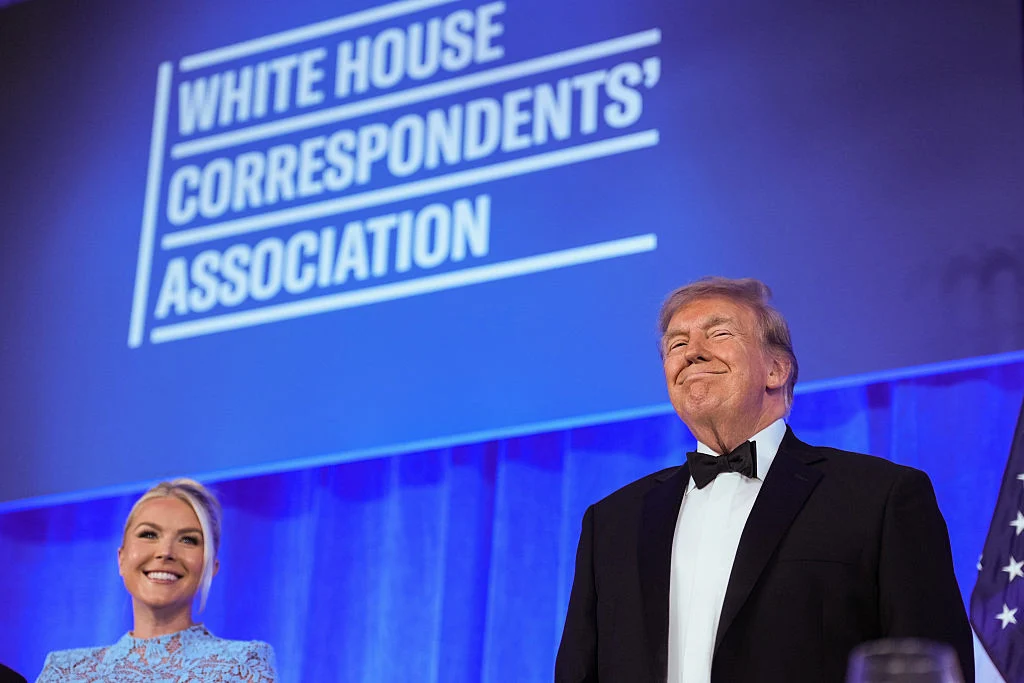
In addition to his controversial requests for data from social media companies, the Republican president has also tried to subpoena journalists to try and weed out their sources and threatened to revoke the licenses of broadcast stations for not airing some of his presidential addresses live.
While a series of settlements by media powerhouses with Trump may lend some weight to his complaints about mainstream media, his administration’s recent actions increasingly attack a good he has promised to uphold.
A Bipartisan Problem
The issue is not limited to Trump, however, coming against a backdrop of concerns over governments’ efforts to suppress speech on social media.
According to the 2025 report from the Republican-led US House Judiciary Committee, European officials have pressured social media sites to remove certain kinds of speech, often without the individual or group expressing the views knowing it.
These interventions potentially influenced the outcome of national elections by silencing conservative views, the report suggests.
Meanwhile, in the UK, police have repeatedly courted controversy for their investigations into online comments expressing conservative views on contentious public debates, while in April German Chancellor Friedrich Merz said that he found it “regrettable” that “on social networks, anyone can say what they think”. Merz’s comments came while discussing abuse directed at politicians online.
Similarly, in Ireland, centrist and left-wing politicians have proposed that social media companies should block the spread of content that highlights, for example, the negative effects of present immigration policies.
Rather than addressing citizens’ concerns, it appears that politicians would rather clamp down on critical commentary.
Age Verification
The hostile environment toward freedom of expression, both from the political left and right, is likely to add to concerns of free speech and privacy advocates over efforts to require age verification to access social media.
There is a global push involving both conservatives and liberals to impose age-based restrictions on social media use, including nationwide bans and regulations mandating safety features for younger users.
Meta, the owner of Facebook and Instagram, recently came to an agreement with attorneys general of 48 states and several territories that will see the social media giant introduce features aimed at improving online safety for young people.
However, critics say the measures would require age verification techniques such as collecting users' behavioral data and facial scanning to estimate their ages.
Some warn these moves will erode user privacy and raise concerns about increased surveillance by government agencies at a time when the West is seeing an authoritarian drift.
While the rise of the right in Europe and America has raised hopes among conservatives that a scene hostile to free speech can be rebalanced, the Trump administration’s moves are a warning that citizens and advocates cannot take it for granted.
The US president has cultivated an image of being a protector of free speech, but his administration’s recent moves threaten this very virtue.