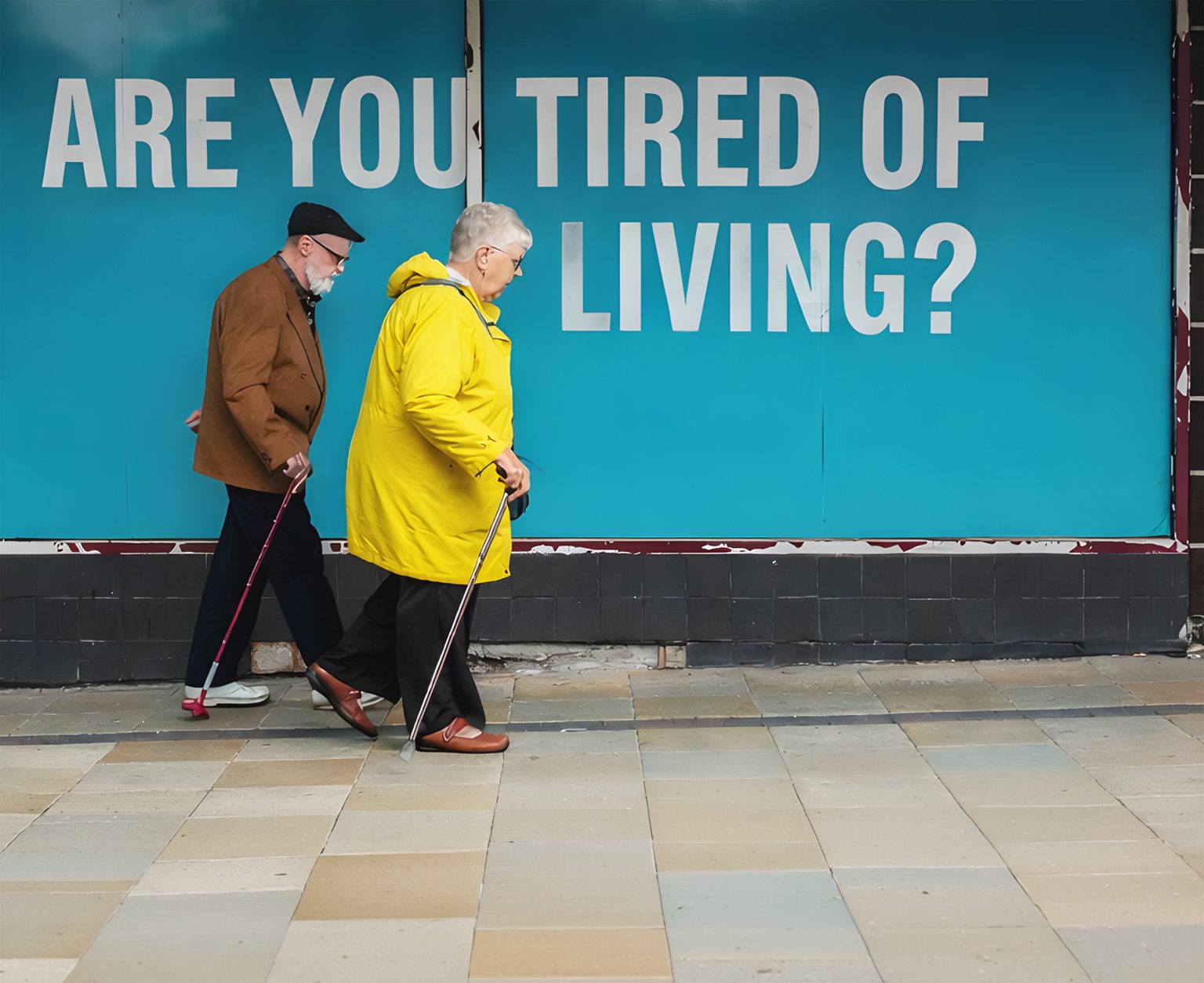
The demographic trap and the paradox of medicine
The question is no longer theoretical. It is being posed with increasing urgency by demographic and medical realities, from two directions at once.
The first is the paradox of modern medicine. While advances have made it possible to extend life to an unprecedented degree, they have also blurred the line between saving life and prolonging the process of dying. The final months of life often involve extremely costly interventions, frequently delivered in intensive care, which consume vast resources without offering a comparable quality of life.
The second is the ageing of the population. As medicine postpones death, birth rates continue to fall. The generation that must finance pensions and healthcare, and that might also care for the elderly in practical terms, is steadily shrinking.
Nowhere is this pressure more visible than in East Asia, which offers a glimpse of what may lie ahead. In Canada, a pioneer of assisted dying, there are roughly 30 people aged over 65 for every 100 of working age. In much of East Asia, the ratio is rising far more sharply.
South Korea is ageing faster than any other country. China faces an unprecedented rise in its elderly population. Japan represents the most advanced case: there are already nearly 51 older people for every 100 workers, meaning that two working-age individuals must support one retiree. By 2050, according to OECD projections, the figure could reach 79 per 100.
Such pressures intersect with cultural expectations. Confucian tradition places a strong duty on children to care for their parents. At the same time, particularly in Japan, the concept of meiwaku – the fear of becoming a burden – exerts a powerful influence. The result is a quiet contradiction: a moral obligation to provide care meets an equally strong impulse to refuse it.
The tension has surfaced openly at times. In 2013, Japan’s then deputy prime minister Taro Aso caused outrage when he said the country could not sustain its finances unless elderly patients were allowed to ‘hurry up and die’.
Popular culture has reflected similar anxieties. The 2022 film Plan 75 imagines a near future in which the state offers citizens over 75 the option of free euthanasia, accompanied by financial incentives. Its power lies not in overt brutality but in the normalisation of euthanasia as a form of public service – a stark illustration of a society that begins to measure human worth in economic terms.
Europe’s temptation and the price of the last days
Europe has not followed the same path. While assisted dying is legal in several Western countries, the social pressure seen in parts of East Asia remains less pronounced. Yet the underlying incentives are not absent.
Historical memory acts as a powerful restraint. The crimes of Nazi Germany, where ‘euthanasia’ served as a euphemism for the systematic killing of those deemed unproductive, have left Europe acutely sensitive to any state role in determining the value of life.
Yet similar questions are re-emerging in another form: through the rising cost of end-of-life care.
Modern medicine has become remarkably effective at delaying death, but at considerable expense. The issue is not that end-of-life care dominates overall spending, but that costs are heavily concentrated in the final phase of life. In the United States, around a quarter of Medicare spending goes to patients in their last year.
A comparable pattern is evident in Europe. Data published in 2022 by the British charity Marie Curie and the think tank Nuffield Trust shows that more than £22 billion was spent on people in their final year of life. Of that, 81 per cent of healthcare expenditure went to hospitals, with more than half linked to emergency admissions.
Across developed countries, the final 30 days of a cancer patient’s life in hospital can cost from around $3,000 in England to more than $10,000 in Canada.
Such figures can invite a troubling conclusion: that euthanasia might offer a straightforward way to reduce costs. That, however, is to pose the wrong question.
The high costs of the final weeks of life are not inevitable. They are largely the result of efforts to prolong life at almost any price, particularly through intensive care that offers little prospect of recovery. This is often described as ‘futile care’.
A different approach is available. Timely and well-developed palliative care can relieve suffering, preserve dignity and do so at significantly lower cost. Yet in many systems, patients still spend their final days attached to machines in the most expensive settings available.
Until healthcare systems shift resources away from ineffective intensive treatment towards high-quality palliative care, the financial and structural pressures that make a ‘quicker’ end appear attractive are likely to intensify.