
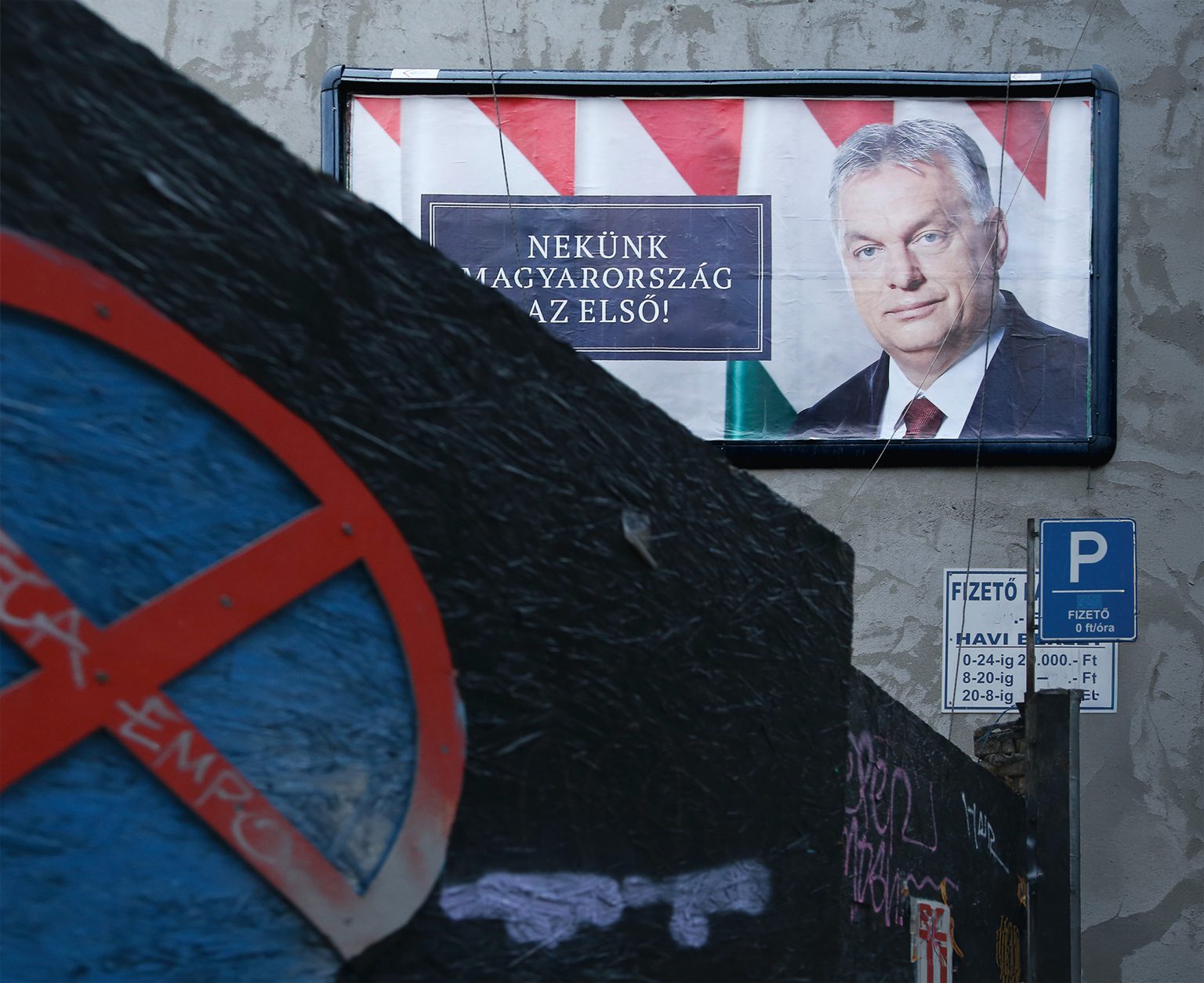
Hungary’s elections are drawing attention across Europe not only because of the controversy surrounding leaked communications involving Hungarian Foreign Minister Peter Szijjarto, but also because of the possibility that Prime Minister Viktor Orban could secure another term in office.
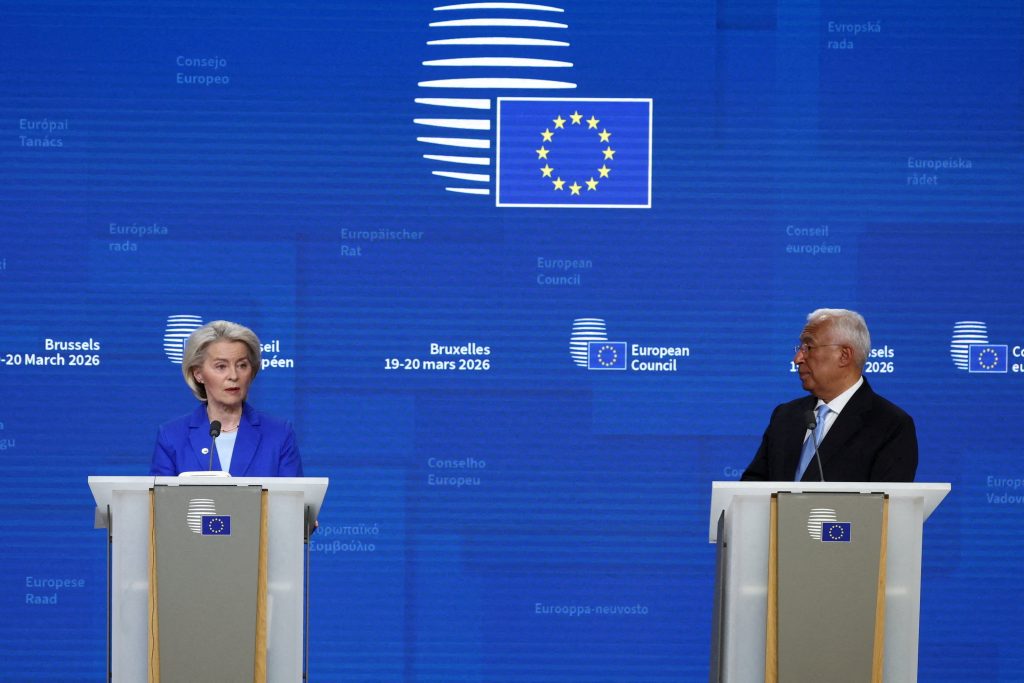
Under Orban, Hungary has repeatedly obstructed key EU decisions on Ukraine and Russia by using its veto. One of the most prominent examples was the blocking of €90 billion in financial aid for Ukraine, a move that provoked strong anger among European leaders. European Council President António Costa even described it as ‘blackmail’ of the Council.
Budapest has also blocked or watered down several sanctions packages against Russia over its invasion of Ukraine, especially measures linked to the energy sector, such as bans on oil and gas imports. It has repeatedly threatened to veto the opening of EU accession talks with Ukraine.
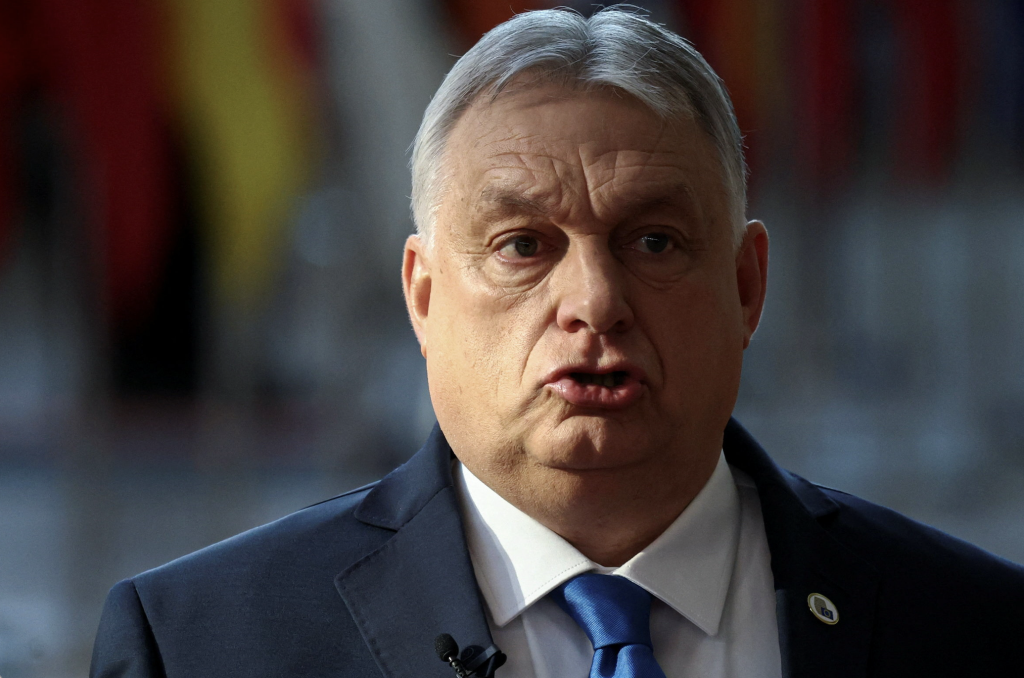
Orban’s possible victory alarms European leaders
The prospect of another Orban victory has fuelled fears in Brussels that Hungary will continue to reject common European positions, further weakening the Union’s ability to act on major issues.
As a result, discussion is intensifying over possible ways to break the deadlock. According to EU sources, concrete proposals are already circulating on how Hungary could be ‘brought into line’. Yet any such changes would not necessarily affect Hungary alone. In some cases, they could become a model for dealing with any Member State seen as obstructive.
Reuters recently reported that diplomats from several EU governments hope an Orban defeat would end Hungary’s blockade of policies ranging from loans to Ukraine to sanctions on Russia and violent Israeli settlers. Conversely, if Orban remains in power and continues to wield the veto, some officials expect pressure to grow to sideline Hungary.
Politico published a similar report under the headline ‘5 ways the EU could cope with Hungary if Orban wins again’, citing unnamed senior diplomats. In another article, it examined the wider push by Member States led by Germany and Sweden to abolish the veto altogether.
If Orban wins, diplomats say, ‘the gloves will come off’. Talks would resume on how to deal with him, with one official describing the Hungarian prime minister as a ‘Trojan horse’.
The reports outline a series of options under discussion inside the EU in the event of an Orban victory, all aimed at ensuring Hungary votes the ‘right way’.
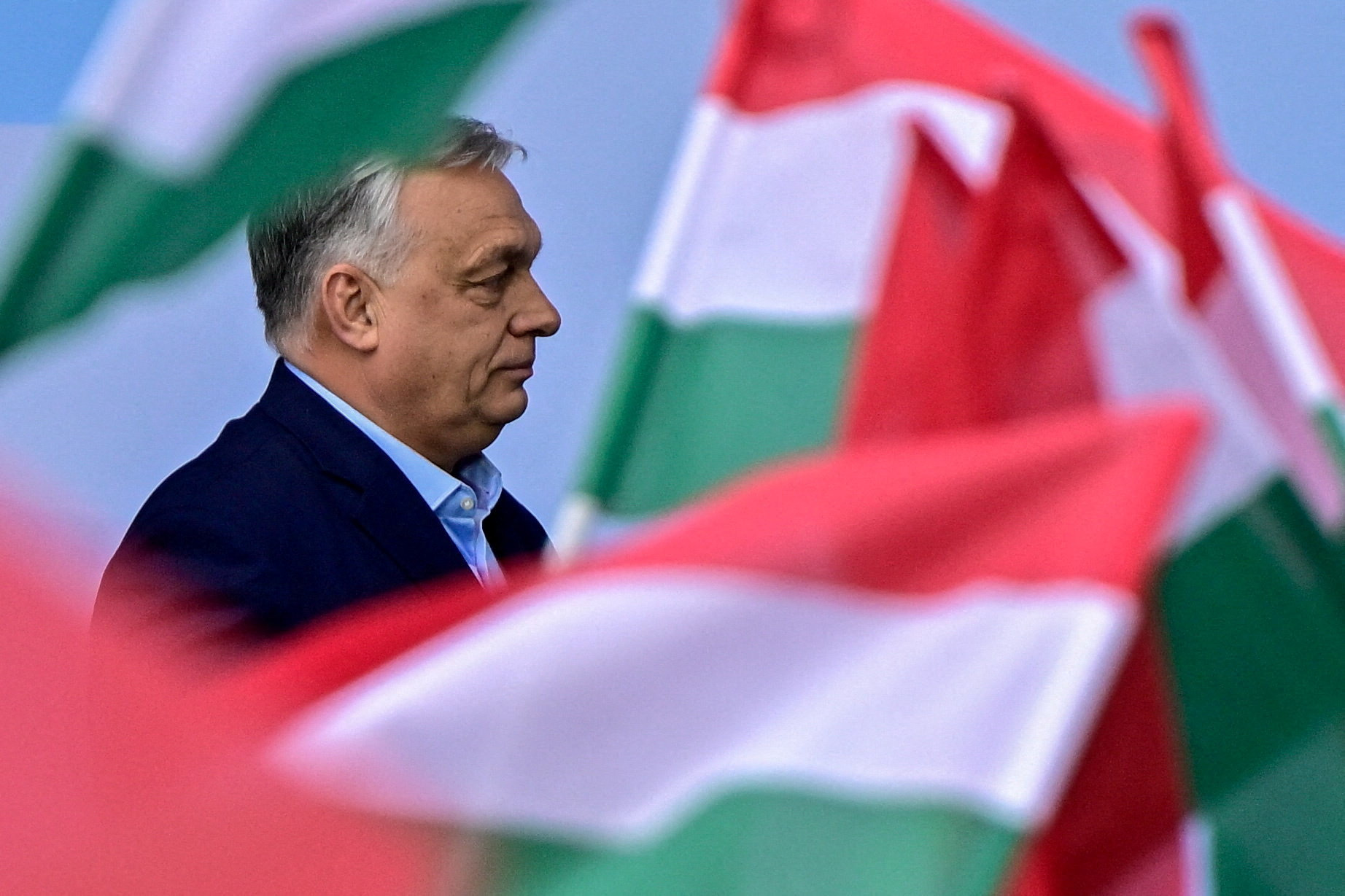
From restricting rights to talk of expulsion
One proposal is to expand the use of qualified majority voting to areas that still require unanimity, such as foreign policy and parts of the EU’s long-term budget. Under qualified majority voting, decisions require the support of 55 per cent of Member States representing 65 per cent of the EU population.
One diplomat said this was ‘something we are pushing for anyway, regardless of the very concrete case’ of Orban.
Such a change would effectively remove the veto in areas where it currently applies. Member States would no longer be able to defend their positions on key questions and would instead be forced to accept the will of the majority, even where the decision might directly harm them, for example on Russian gas supplies.
Other options being discussed include a ‘multi-speed Europe’, based on informal coalitions of the willing or closer cooperation among smaller groups of countries. A third possibility is the use of more aggressive enforcement measures, including the withholding of EU funds.
Costa has also argued that Hungary’s veto of the Ukraine loan breached Article 4(3) of the EU treaties, which requires Member States to act in a spirit of ‘loyal cooperation’.
The EU is likewise discussing the possible suspension of a Member State’s voting rights if it is found to violate the Union’s values. At the most radical end of the spectrum is even the idea of expelling Hungary from the EU, though diplomats themselves describe that option as unrealistic.
It should be stressed that none of these proposals represents an official EU position. They are informal views expressed by diplomats describing internal discussions and possible future steps in the event of another Orban victory.
A challenge to the EU’s legal foundations
Even if they remain informal, such proposals, set against years of frustration with Hungary, amount to a challenge to the legal foundations of the EU itself, simply because no agreement has been reached through normal political or diplomatic means.
If the Union were genuinely to move towards restricting the rights of Member States that reject measures in defence of their own national interests, it would fundamentally alter the nature of the EU and undermine the logic on which it was founded.
Instead of cooperation between states based primarily on mutual economic benefit, a principle already weakened by excessive regulation, there is a growing tendency to punish a Member State outside the treaty framework. This could take the form of bypassing its voting rights without a legal basis or applying financial pressure without any objective link to a breach of EU law.
At the heart of the dispute is a simple fact: a Member State, often a smaller one, is prepared to vote differently from the majority on major political questions.
It is no accident that the veto exists in the founding treaties precisely in these sensitive areas, such as foreign policy. It reflects the principle that all Member States are equal and that the Union respects their sovereignty and national interests, as set out in Article 4 of the Treaty on European Union.
A Member State’s use of its treaty rights cannot be regarded as an abuse of law. It is a legitimate tool for defending national interests, expressly anchored in the treaties. The real abuse lies in attempts to curtail the rights of others simply because agreement cannot be reached. The treaties are based on compromise, not coercion.
When politics fails, dissent becomes unacceptable
Of course, sovereignty within the EU is not absolute, and the principle of loyal cooperation does apply. A Member State cannot dismantle a common position once it has been adopted. But it does have the right to dissent while that position is still being formed.
In this regard, there is the recent Court of Justice of the European Union ruling in European Commission v Hungary (C-271/23), which found that Hungary had breached the principle of loyal cooperation when it voted against the Commission on the issue of narcotics.
But Hungary has not broken any rule by using its veto in areas where unanimity is required. The problem is political: other states simply dislike the result.
The veto in the European Union is a mechanism that allows Member States to block decisions requiring unanimous approval in the Council. It is therefore wholly illegitimate to circumvent Hungarian sovereignty in areas of unanimity through informal punishment, political pressure or the de facto removal of rights without a treaty basis.
Even where the treaties allow for limits on veto powers, or for changes to the current institutional set-up, such reforms themselves require the unanimous consent of all Member States, including Hungary. Without the agreement of the state concerned, such changes cannot be made. And it is highly unlikely that Hungary would vote to strip itself of one of its strongest tools for dissent on key issues.
A dissenting vote is not an unwanted technical flaw to be removed whenever the majority finds it inconvenient. It is an expression of democratic legitimacy. The founding treaties are built on compromise, not on the principle of ‘speak, then obey’.
Any attempt to remove compromise from sensitive policy areas and replace it with disciplinary command cuts directly against the spirit, and the text, of the treaties on which the European Union rests.
And the real reason for such efforts? Quite simply, the inability to resolve political disputes through politics.