

The week just underway has mirrored, in abbreviated form, what markets have experienced since the start of the Iran operation. Most stock exchanges were closed for several days over Easter, but the atmosphere nevertheless appeared calmer. This was reflected, for example, in the steady performance of Bitcoin and other cryptocurrencies, whose trading never stops.
On Tuesday morning, however, tension began to rise as the deadline of Donald Trump’s ultimatum approached. He warned that Iranian civilization could be destroyed, prompting debate about whether the US president was considering the use of nuclear weapons. Markets and oil prices reacted to the growing stress, although the response remained relatively restrained.
The reason was that Trump had already issued similar ultimatums several times during the conflict. Repeated threats of ever more massive bombing gradually lose their effectiveness. There also remained hope that the US president would once again reverse course.
Trump’s U-Turn and the Geopolitical Arteries
That expectation was confirmed on Tuesday evening. Instead of further escalation, a proposal emerged for a 14-day ceasefire intended as preparation for final peace negotiations.
Although the announcement came after US markets had closed, oil continued trading in Asian markets, and the effect was immediate. US light WTI crude fell to around $92 per barrel.
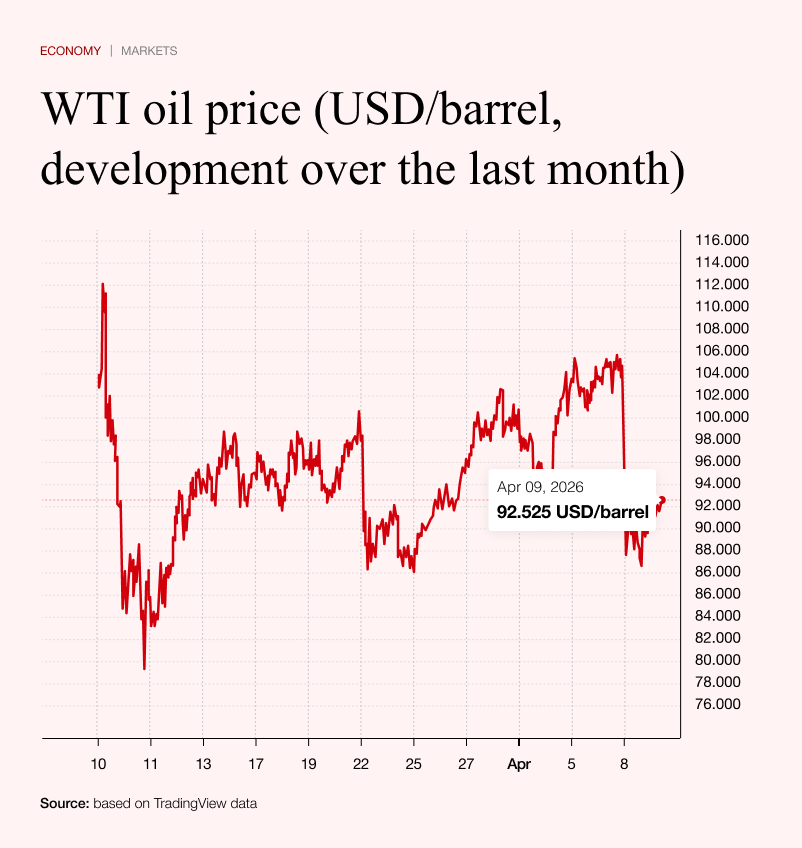
Two points are important. First, the escalation of threats from the White House demonstrated that Iran’s defensive strategy of blocking the Strait of Hormuz remains highly effective. The issue is not only oil, but control over one of the main arteries of global trade. In the future, it will be increasingly important to monitor such developments and the companies that manage these strategic routes.
At the same time, the episode illustrates how fundamental the process of deglobalization has become. The theme emerged strongly after the COVID-19 pandemic, when many companies found themselves dangerously dependent on supplies from the other side of the globe.
Many businesses subsequently began working to build greater resilience. This does not imply traditional national isolation, but rather diversification at a continental level. The objective is to ensure that production and sales can be secured within one region. The Iranian crisis is likely to reinforce this trend.
For long-term investors, the key question is whether companies are prepared for supply chain shocks and have credible strategies in place.
Oil and the Continuing Threat of Inflation
The second important point is that although oil fell by 12 percent in one day, prices remain elevated. At the beginning of the year, a barrel traded below $60. Current levels remain far above that benchmark. Even if the Strait of Hormuz remains open, oil is unlikely to become significantly cheaper by summer. Much will depend on the ultimate scale of damage to upstream infrastructure across the Gulf.
This is bad news not only for motorists, who will have to adjust to higher diesel and petrol prices, but also for central banks, which may again face inflationary pressure. During the previous inflation wave, central banks were criticized for reacting too slowly. This time, the opposite reaction cannot be ruled out.
At the same time, central banks need not fear that a one percentage point increase in interest rates would dramatically alter the overall economic environment. Economies have recently functioned in a higher-rate environment without triggering major financial disruption.
Stock Markets and the Gold Paradox
Stock market reaction was broadly as expected. Indices rose worldwide, pushing many back into positive territory for 2026. It appeared as if the Iranian crisis had never occurred. Markets tend to forget quickly.
US markets still require modest gains to return fully to positive territory. For the technology-heavy Nasdaq, an increase of roughly 2.61 percent would be sufficient.
Airlines benefited most from the announcement of a peace deal. Their share prices, particularly those of European carriers, had previously been pressured by rising fuel costs. Air France shares, for example, gained more than 10 percent.
The oil sector, by contrast, weakened. However, the decline may represent a new opportunity for investors seeking exposure to structurally high energy prices. The truce itself remains fragile. Since the first day, the parties have disagreed on whether the ceasefire also applies to southern Lebanon.
Many analysts are therefore cooling market enthusiasm. A two-week ceasefire does not mean the conflict has ended. If the parties ultimately fail to reach an agreement, which remains realistic given their very different demands, another escalation is likely.
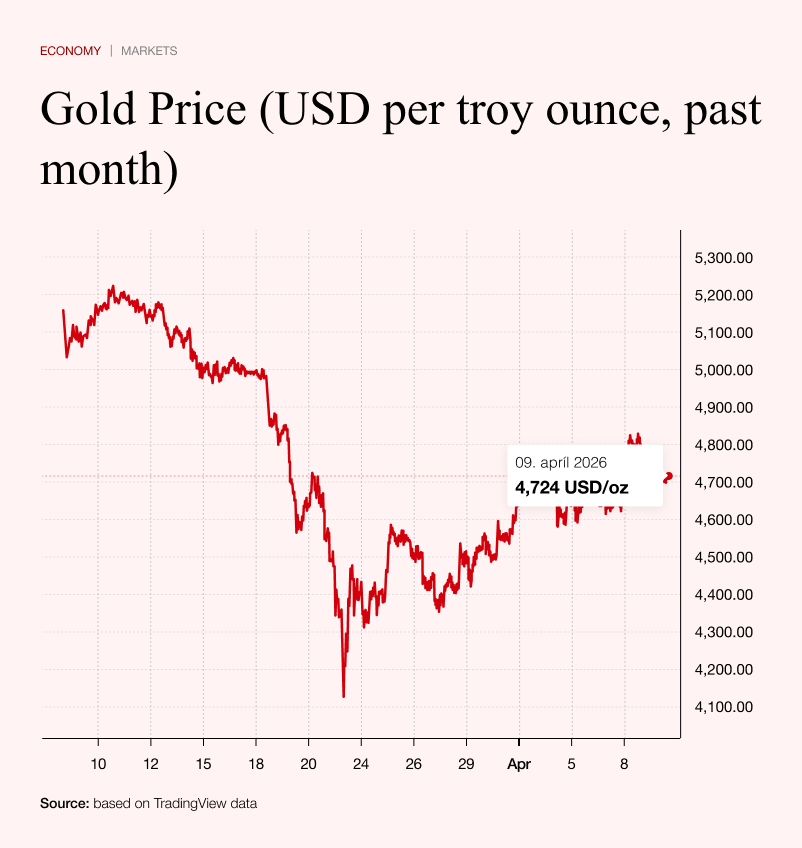
Gold also behaved counterintuitively following the ceasefire announcement. Normally, the price of the precious metal would be expected to fall as geopolitical risk declines. Instead, gold rose by more than four percent.
Central bank activity in emerging economies such as Turkey may help explain the move. Because of the oil shock and regional instability, authorities may need to stabilize local currencies. A currency collapse would amplify the effects of higher oil prices.
Such interventions can involve selling gold reserves and US bonds. In addition to Turkey, there is speculation that India and South Africa may be acting similarly. The gold market is sensitive to such behavior. If the crisis truly ends and reserve sales stop, gold prices may rise further.
Over the longer term, gold tends to appreciate not only when geopolitical tensions intensify, but also when markets anticipate another wave of inflation. The recent move suggests investors are already positioning for that possibility.