
The US-Israeli war against Iran has triggered a series of unintended effects with global repercussions. Since the final day of February, the allies have primarily targeted personnel or infrastructure, such as Israel’s bombing of railways, while Tehran has adopted a strategy known as horizontal escalation.
The Islamic Revolutionary Guards Corps and the regular army have begun shelling US installations in the Arab Gulf states, especially military bases. Iran has also targeted civilian facilities that have proliferated in the Arabian Desert in recent years – data centers.
While global attention has focused on the 35-km-wide Strait of Hormuz, through which a fifth of the world’s traded oil and liquefied natural gas flows, server facilities have come under attack as part of the horizontal escalation. The complexes contain extensive data halls along with their own cooling and backup systems.
Such infrastructure is central to the development of digital technologies, including artificial intelligence, which has been a priority of Donald Trump’s administration since the beginning of his term.
The Golden Age of Data Centers
As Chinese political analyst Xueqin Jiang noted in the early days of the war, the Gulf Arab states are a major pillar of the US economy, reinvesting profits from oil and gas sales into AI development in the United States.
However, the relationship is mutually beneficial, as the Arab monarchies host not only military bases but also data centers. One reason for building high-precision technological facilities in the Arabian Desert is that its roughly 2.3m sq km are extremely dry.
In general, the location of data centers is treated as a trade secret. This reflects the need to secure them as part of what is collectively known as critical infrastructure. Although most are civilian installations, they can become targets of terrorist or overt military attacks, disrupting the availability of services.
Artificial intelligence is increasingly used by the US armed forces to plan and coordinate operations. In a recent dispute with the Pentagon, AI developer Anthropic refused to supply software for military purposes. In response, the White House ordered the termination of the collaboration. This is cited as one reason why Iran is targeting data centers.
There are more than 11,000 data centers in operation worldwide, including more than 5,400 in the United States and a comparable number in the European Union. However, the fastest growth is in the Middle East, particularly in Israel and the United Arab Emirates.
In the Emirates in particular, companies involved in construction rely on access to an electricity grid intended to draw on renewable energy sources such as solar power. In Bahrain alone, the smallest Gulf Cooperation Council (GCC) state, there are currently five centers in operation, seven more in Qatar, 14 in the Emirates and as many as 30 in the Saudi capital Riyadh, alongside dozens more elsewhere in the kingdom and in neighboring Oman.
The trio of tech giants Amazon, Microsoft and Alphabet, the owner of Google, operate 632 centers that are either active or under construction. As many are located in areas at heightened risk of water scarcity, all three companies have faced criticism from environmental groups.
That concern was the subject of an investigative report by the Guardian and Source Material. “It’s no coincidence they are building in dry areas”, said Lorena Jaume-Palasí, a philosopher and founder of the Ethical Tech Society Foundation, adding that low humidity reduces the risk of metal corrosion.
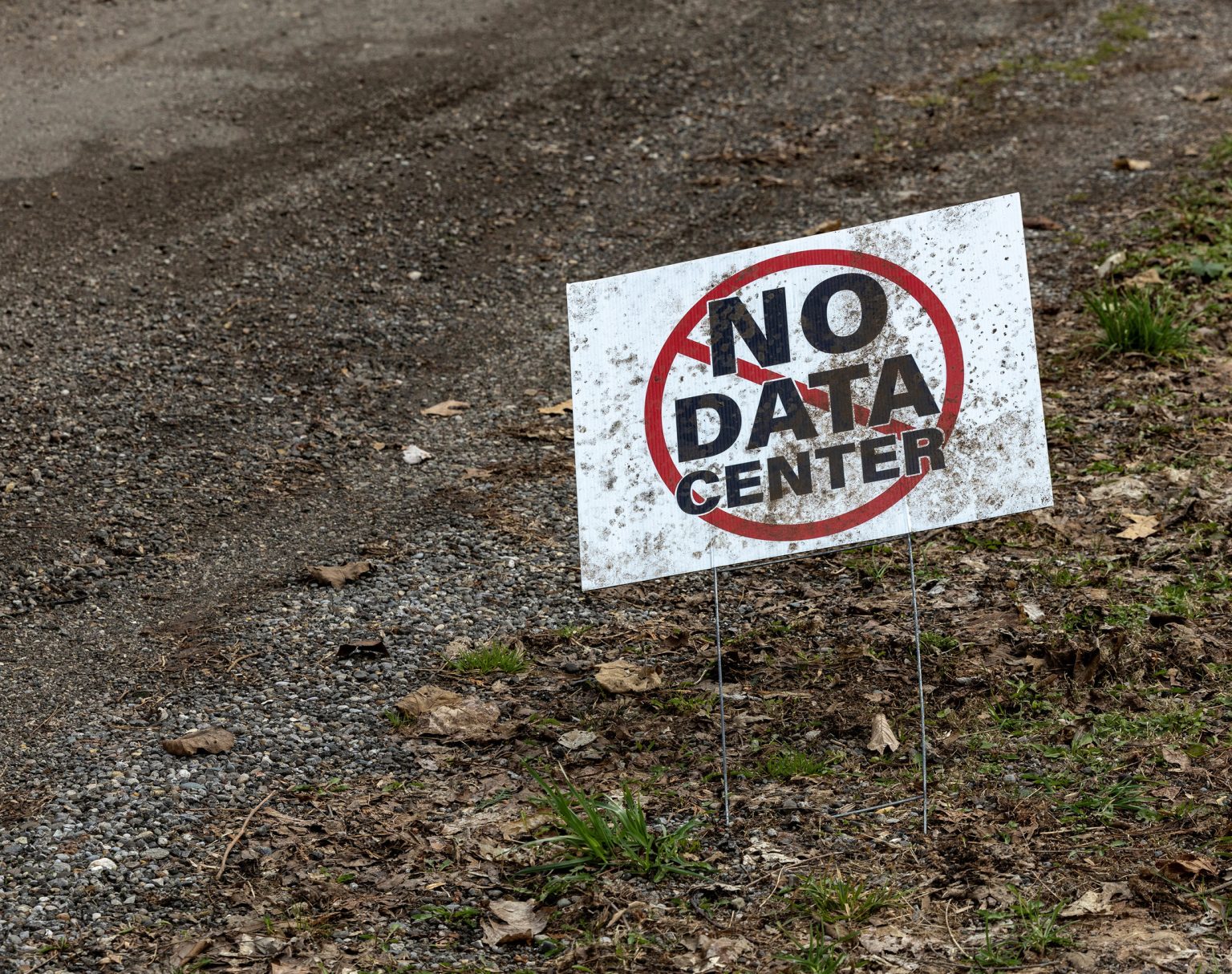
According to the Guardian, Amazon, Microsoft and Google plan to increase their data capacity by 78%, again primarily in regions with limited access to water. At EU level, this has led to the emergence of a protest group, Tu Nube Seca Mi Río (“Your cloud is drying up my river”), which is calling on the Spanish government to impose a moratorium on expanding data capacity.
In the Middle East, the development of data centers has met with broad acceptance. In addition to the use of renewable energy sources such as solar and wind, there are options such as building underground complexes or capturing excess heat for further electricity generation.

A Threat to the Whole Sector
An escalation of war in one of the world’s most volatile regions could disrupt these plans. Following the initial attacks, which killed Iran’s supreme leader Sayyid Ali Khamenei and dozens of military and political figures, Tehran responded by striking multiple locations, including the Palm Jumeirah resort in Dubai.
On 1 March, a swarm of Shahed-136 drones struck two Amazon Web Services (AWS) data centers in the Emirates, causing fires and internet outages in parts of the country. A server facility in Bahrain was first affected by a nearby strike and later directly targeted by Iran in early April.
The Revolutionary Guards also announced an attack on an Oracle data center in Dubai, though both the company and local authorities denied it. Iran’s paramilitary forces have threatened facilities linked to the Stargate project, partly backed by the US federal government and OpenAI.
A Guards spokesman, Ebrahim Zolfakari, drew attention to a “secret” data center linked to ChatGPT in Abu Dhabi. The facility, currently under construction, is said to have a computing capacity of one gigawatt.
On 1 April, the Guards warned of retaliatory attacks on 17 American technology firms if further representatives of the Iranian government were killed. An Oracle facility was the reported target of the April strike, though the company has not confirmed the claim.
Respondents cited by CNBC said tech companies are prioritizing the safety of their staff and are prepared to evacuate them immediately. They acknowledged that existing physical security is designed to counter theft or cyberattacks rather than military strikes.
Industry studies highlight that fences and security personnel form only the outer layer of protection. Amazon has already approached the Emirati and Bahraini governments to strengthen defenses. Security guards and perimeter fencing could be supplemented or replaced by air defense systems. Other companies are reported to have joined the request.
For now, the primary response to physical attacks is to evacuate staff and redirect cloud operations to more secure centers. At present, Arab monarchies do not classify data centers as strategic facilities, though that stance may change if attacks continue.
Whether the reopening of the Strait of Hormuz to merchant shipping following the ceasefire agreement in Lebanon marks a broader de-escalation, including a halt to attacks on data centers, will become clear in the coming weeks.