
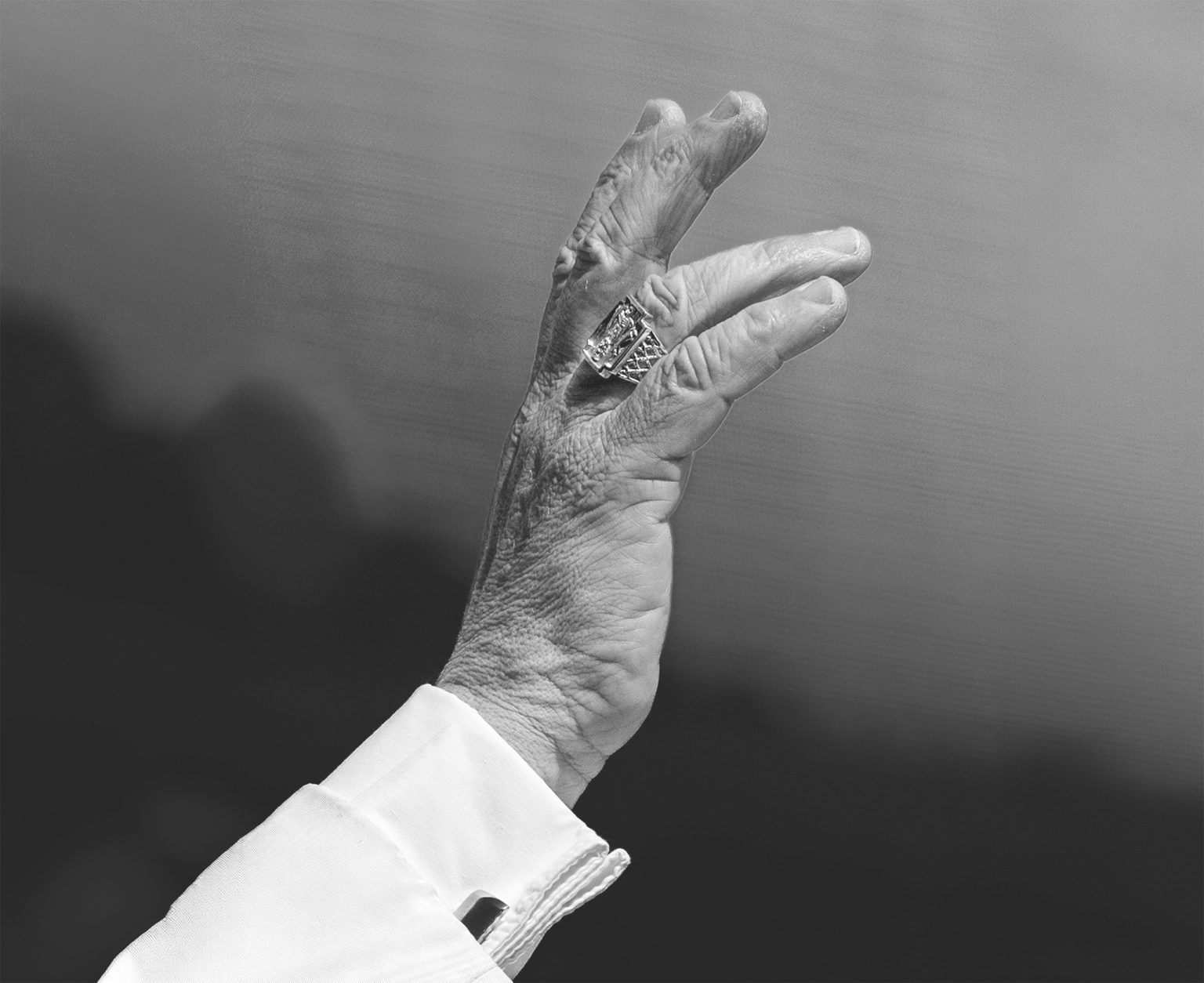
The Catholic Church, like the rest of Western society, has entered an era marked by a shortage of great and committed leaders. While the post-Vatican II period produced a host of theological figures and two strong popes, John Paul II and Benedict XVI, the present day is marked by a dearth of distinctive moral authorities.
That is not merely a question of declining numbers of priestly vocations; it reflects the broader social climate. At a time of growing pressure toward conformity of thought, that is hardly surprising. Moreover, the Catholic tradition does not inherently seek out secular visionaries advancing personal innovations.
True spiritual authority instead springs from something far more demanding: radical imitatio Christi, or imitation of Christ, and a deep personal identification with the Church’s centuries-old teachings. Such authentic witnesses to the faith are rare today.
While the teachings and personality of Pope Francis, with his inclination toward improvisation and global activism, unfolded gradually for the faithful over 12 turbulent years, his successor, Leo XIV, presents a markedly different profile.
At first glance, the American pontiff appears far more reserved and restrained. He has stated openly that he intends to focus above all on the internal healing of a polarized institution. “I do not consider my main task to be trying to solve the problems of the world”, he recently said in an interview with the American website Crux, adding that his primary duty is to “confirm others in the faith”.
The Pendulum of Power: From Personality Back to Institution
Looking at the last four pontificates, a striking pendulum effect emerges. John Paul II, whose reign was shaped by immense personal charisma and force of character, was followed by Benedict XVI, who insisted on strict theological rigor.
That approach inherently limits personal interpretation. A true theologian is wary of projecting personal preferences into the teaching of the Catholic Church, because the task is to develop doctrine on the basis of Scripture and centuries of tradition.
That submission to tradition necessarily restrains the individual ego, not out of false modesty, but in recognition of the greatness of God.
Benedict XVI carried that restraint to its logical conclusion. By resigning, he placed the institutional good of the Church above his own tenure in office. The papacy thus re-emerged as an institution that transcends the mere biological existence of its holder.
Personal Style Against Centuries-Old Symbolism
After Benedict’s departure, the balance between institution and personal profile swung sharply in the opposite direction. Pope Francis sought to redefine the office and imprint it with a distinctly personal style. He moved out of the Vatican’s Apostolic Palace into the Santa Marta guesthouse and visibly resisted when the faithful attempted to kiss his papal ring.
That detail is central to understanding the dynamic. The tradition of kissing the so-called Fisherman’s Ring, which dates back to the 13th century, has never been understood as submission to a particular individual.
The ring bears the image of St Peter and symbolizes the office itself. By kissing it, the faithful do not pay homage to a person, but to the unbroken institution of the papacy and the spiritual authority it represents.
Francis’s reluctance to encourage that gesture illustrated his effort to demystify the office and replace centuries of institutional symbolism with a more informal, personal pastoral approach. He also frequently bypassed traditional Vatican channels with spontaneous and at times doctrinally ambiguous remarks, often delivered on airplane journeys, placing personal style above institutional structure.
That dynamic helps explain Leo XIV’s approach. The new pontiff is not seeking to push the pendulum toward rigid conservatism, but to stabilize it at the center. By returning to the traditional papal apartments without fanfare, he has sent a clear signal that the papacy is reasserting its institutional character.
In that context, Leo XIV has also restored traditional ceremonies. Unlike his predecessor, he has no hesitation in allowing the faithful to kneel and kiss his ring according to long-standing custom. For the American pope, that is not an expression of personal cult, but an acceptance of a role in which personal identity recedes in favor of the office entrusted to him.
He thus demonstrates that empathy and advocacy for the poor do not require theatrical confrontation with tradition, but rather a calm and consistent stability in which the office once again stands above its temporary holder.
The Great Synthesis: The Pope of Reconciliation
Leo XIV now faces a task that appears almost superhuman: reconciling the legacy of the activist and informal Francis with the intellectual and traditional world of Benedict XVI. That effort is not merely diplomatic, but a deliberate strategy to guide the Church out of deep polarization.
From Francis’s pontificate, Leo XIV adopts concern for the poor as a central social theme. In his first major exhortation, Dilexi te, he affirms that the “preferential option for the poor” is not a political agenda, but an unquestioned Gospel imperative.
He understands that the approach to poverty is an essential expression of Christian life, one that should unite Catholics across divisions, from traditionalists to progressives. In his interpretation, that concern sheds any hint of populism and gains a firm doctrinal foundation.
At the same time, Leo XIV returns firmly to ecclesiastical principles which, in his view, cannot be shaped by shifting social trends. While Francis left some debates deliberately open, the new pope treats questions such as the diaconate of women or rites for LGBT couples as “non-issues”.
He warns against using the Gospel as a tool of ideology, whether from the right or the left. “My task is not to solve the problems of the world, but to proclaim the Good News”, he states, refocusing the Church on its spiritual mission.
In matters of internal order, Leo XIV follows closely in the line of Benedict XVI and his emphasis on liturgical beauty. He recognizes that the Tridentine Mass is not merely a nostalgic form, but for many, especially younger believers, a profound encounter with the sacred.
His policy of “silent reconciliation” in the liturgy, favoring “pastoral generosity” over prohibitions, is a clear attempt to heal divisions created by earlier administrative decisions.
In his first year in office, Leo XIV has shown that he is neither a revolutionary nor a reactionary. He is an American pragmatist with Andean experience who appears to understand that a return to institutional stability is essential for the Church’s survival in the 21st century.
His pontificate forms a bridge. It rests on Franciscan mercy for those in need, while remaining anchored in Benedictine order and truth. If successful, it may restore the papacy, after decades of turbulence, to a quiet yet unquestioned authority.