
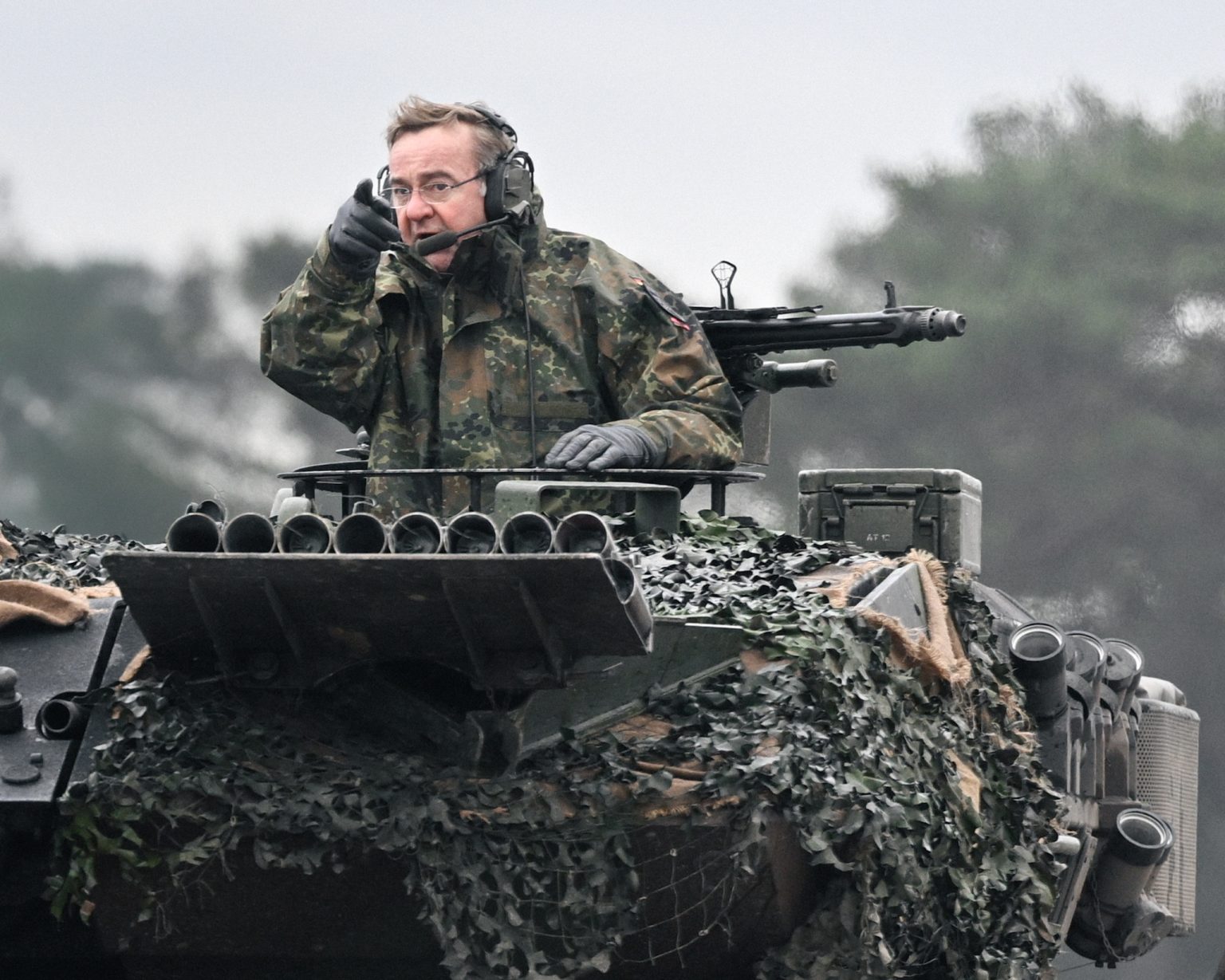
Germany’s Defense Minister Boris Pistorius has unveiled a new military strategy aimed at turning the Bundeswehr into Europe’s strongest conventional army. The policy papers represent an effort to adapt Germany’s armed forces to a changing security environment, while raising significant questions about how realistic these ambitions are.
At the core is, for the first time, a comprehensive military strategy that identifies Russia as the greatest threat to Europe and describes the US strategic focus on the Pacific as a challenge. War is no longer viewed as a clearly defined event. Cyberattacks, sabotage and disinformation are treated as integral parts of modern conflict alongside conventional warfare. The state, the economy and society are all seen as equally vulnerable targets. This blurring of boundaries forms the foundation of Germany's new approach.
At the same time, the defense ministry is placing strong emphasis on technological modernization. The Bundeswehr is expected to achieve technological superiority by 2039, with drones and networked systems becoming standard and new weapons such as hypersonic missiles gaining importance. Germany is responding to lessons from the war in Ukraine, where inexpensive, mass-deployed technologies have increasingly challenged traditional military concepts.
Personnel Targets with Political Consequences
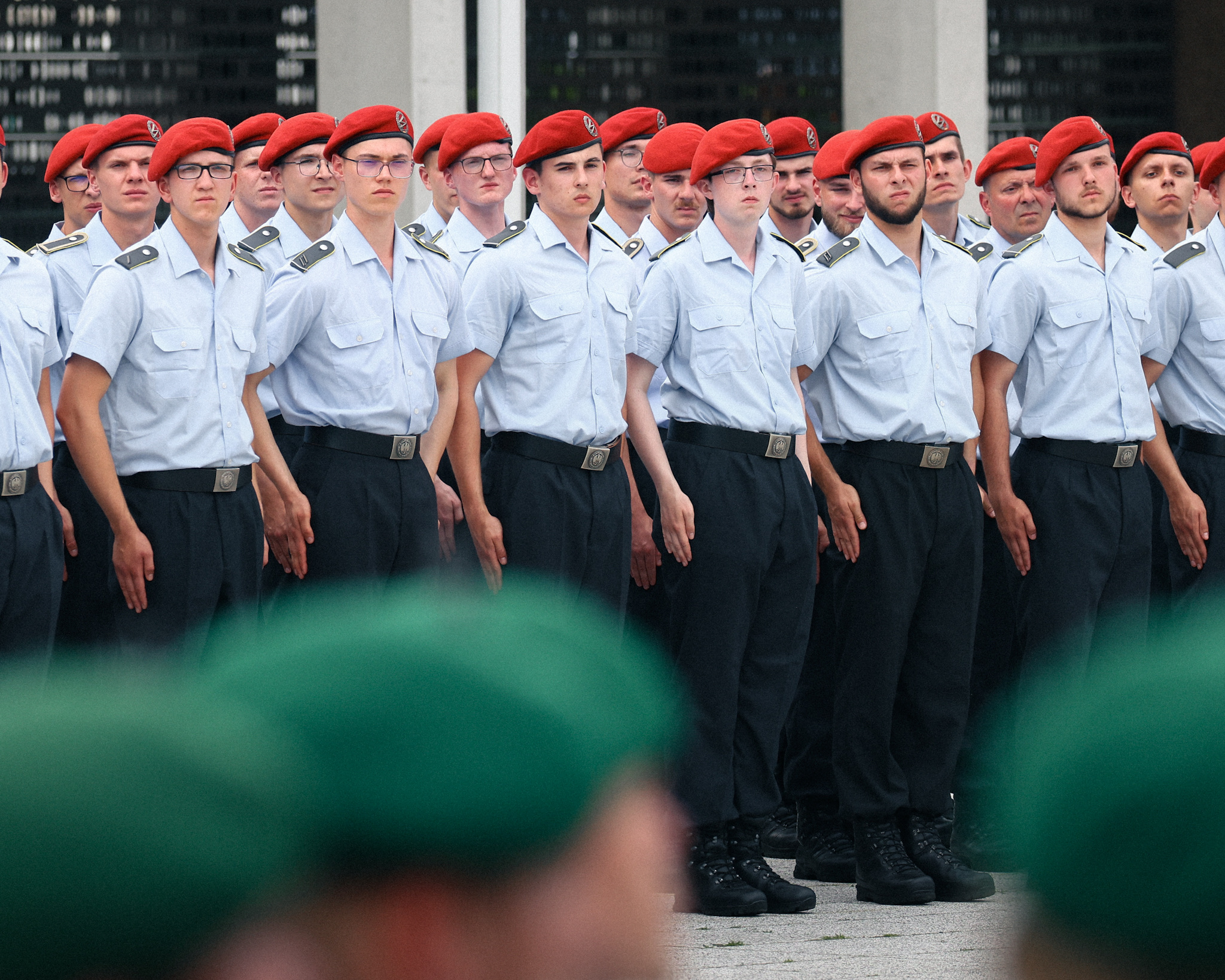
Even more ambitious than the technological agenda are the personnel targets. The Bundeswehr is to expand from around 186,000 to 260,000 active soldiers, supported by at least 200,000 reservists. For international observers, the scale is remarkable. Within a few years, Germany would be building one of Europe’s largest conventional forces – and doing so without conscription.
This is precisely where the main challenge lies. The Bundeswehr is already struggling with recruitment shortages and high dropout rates. A significant proportion of voluntary recruits leave service early. While application numbers have risen slightly, the gap remains substantial. The strategy proposes training more recruits to offset losses, but that amounts to damage control rather than a structural solution.
The politically obvious option – reintroducing some form of conscription – is only addressed indirectly. Pistorius has suggested that parliament may ultimately have to consider it. At the same time, it is clear that the issue remains politically explosive and would be difficult to push through even within his own party. For a country that suspended conscription in 2011 under Angela Merkel, such a move would represent a profound societal shift. In practical terms, the personnel targets appear difficult to achieve without it. For now, the strategy risks remaining aspirational.

Technological Catch-Up Under Time Pressure
A similar tension between ambition and reality emerges in the goal of technological superiority. Germany intends to accelerate procurement, deepen cooperation with industry and make greater use of data from real conflicts, particularly Ukraine. Yet procurement has long been one of the Bundeswehr’s weakest points. An army that has struggled to secure sufficient ammunition and equipment, and has faced operational limits due to spare parts shortages, will not quickly become technologically superior.
The key issue is that technological advantage is not a fixed state. While Germany is still catching up with other military powers, those competitors continue to advance. The United States and China are already developing the next generation of military technologies, while Europe is still addressing existing gaps. The Bundeswehr is therefore pursuing a moving target under considerable time pressure.
Whether the strategy proves more than a political signal will not be determined by terms such as “superiority” or “strongest army”. It will depend on whether Germany can address its structural weaknesses – personnel, procurement and efficiency. This is precisely where previous reform efforts have repeatedly failed. The new strategy sets out to break that pattern, but it still has to prove that it can do so in practice.