
Since the start of the conflict in Iran, US stock markets have remained strikingly optimistic. There are several reasons for this, the most obvious being that, as both a businessman and a politician, Donald Trump knows he faces crucial midterm elections in November. To stand a chance of winning, he will need to bring the conflict to an end as quickly as possible.
Markets therefore view the episode as temporary. During the earnings season of major US banks, executives repeatedly warned that the real risk to the US economy would emerge if the situation were to persist for one or two more quarters. Yet precisely because of the approaching elections, Wall Street does not expect the conflict to last that long.
The mood of US markets toward Iran is best described as fatigue. Trump continues to shift his position, most recently demonstrating another reversal just hours before the arms embargo expired. He extended the ceasefire indefinitely, arguing that Iran’s leadership lacks internal consensus. Until Tehran clarifies both its objectives and its power structure, negotiations are, in his view, pointless.
There is a certain irony in Trump accusing others of lacking political coherence. For a man capable of contradicting himself several times within a single day, the charge suggests limited self-reflection. Oil prices have become highly sensitive to his policy swings, moving in line with each new shift in tone.
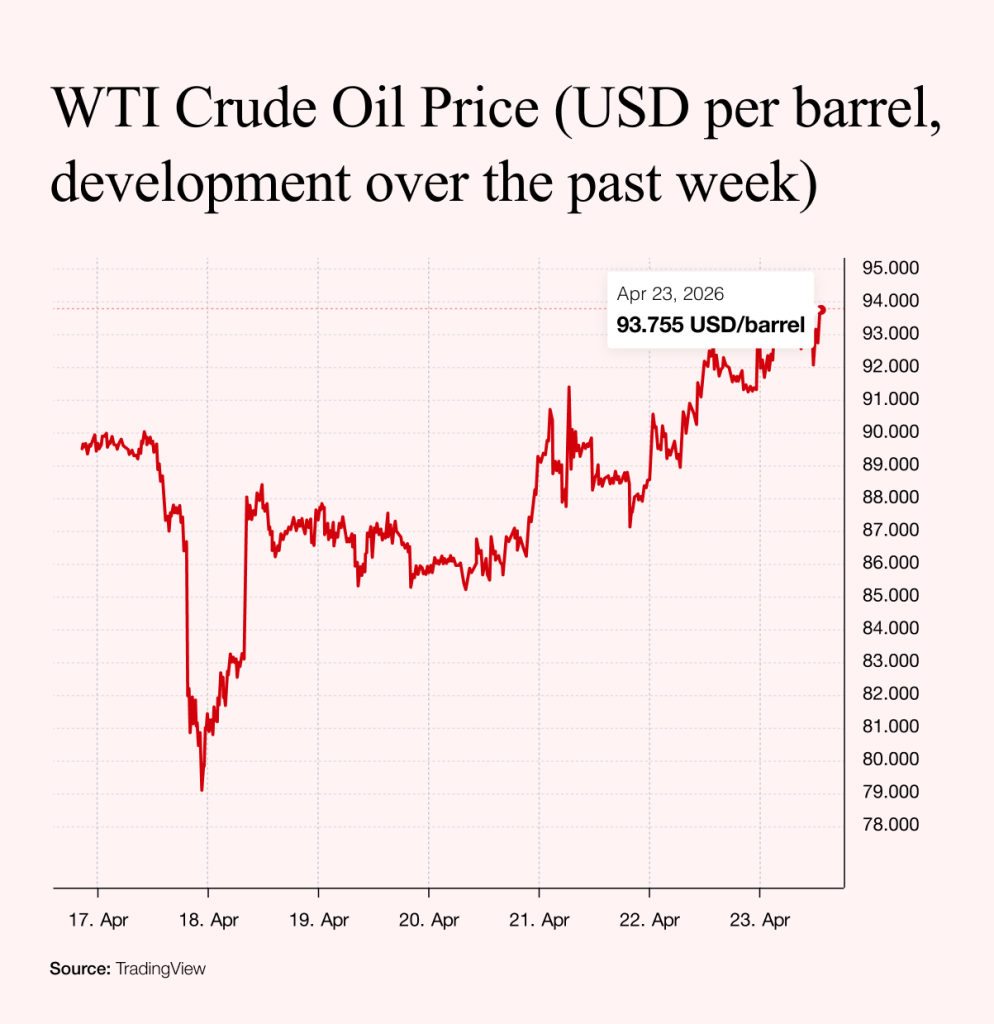
The indefinite extension of the ceasefire does not alter the fact that the US blockade of the Strait of Hormuz remains in place. The volume of shipping through the strait is therefore a more meaningful signal than the headline oil price. According to Hormuz tracking data, not a single vessel passed through the strait on 22 April, an unprecedented development since the conflict began.
It is therefore understandable that markets prefer to look elsewhere rather than focus on the gradual tightening of pressure on the global economy, particularly in Europe, where gas storage replenishment has yet to begin. This week, however, investors had several other developments to consider.
The New Era of Apple Under Ternus
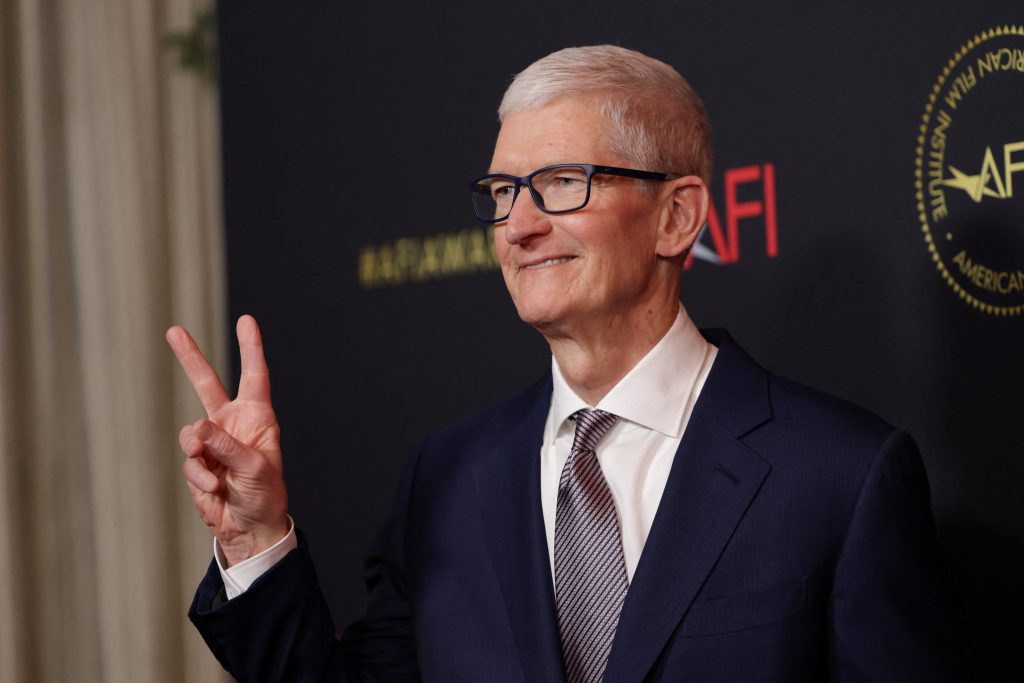
One of the most significant was the announcement that Tim Cook will step down as Apple’s chief executive officer on 1 September, handing over to engineer John Ternus.
Cook can look back on a highly successful 15-year tenure. During that period, Apple repeatedly held the position of the world’s most valuable company. Its market capitalization rose from $350bn to $4tn, while its share price climbed 1,932% under his leadership. Over the same period, the S&P 500 gained “only” 504%.
His departure marks more than a change in personnel. It signals a shift in corporate philosophy. Steve Jobs was a visionary who sought to define the direction of technological progress. Cook, by contrast, proved to be an exceptional manager who recognized early that future growth would come from services. Apple’s latest financial results confirm the strength of that strategy.
In the first fiscal quarter of 2026, Apple reported total revenue of $143.8bn. The services segment, which includes the App Store, iCloud, Apple Music, Apple Pay and Apple TV+, generated a record $30bn.
Services now account for nearly 21% of total revenue. More importantly, they continue to drive growth. While hardware sales may stagnate at times, services revenue rose 14% year on year.
Cook’s long-term vision of transforming Apple from a hardware-focused company into a subscription-based ecosystem has therefore been realized. He built a model in which customers not only purchase premium devices but also generate recurring revenue through ongoing services.
The outgoing CEO also demonstrates another hallmark of effective leadership: the ability to step aside at the right moment. While Apple’s financial performance remains strong, the company has clearly lagged behind in the development of generative artificial intelligence. Major upgrades to the Siri assistant have faced significant delays.
Originally expected as early as 2024, the new features are now unlikely to be fully rolled out before September 2026. Moreover, rather than relying entirely on in-house technology, Apple is expected to incorporate the Gemini language model developed by Alphabet as the core of its assistant.
Against this backdrop, the leadership transition appears logical. Over the course of his career at Apple, Ternus has worked as an engineer on the development of the iPhone, iPad and AirPods, and most recently played a key role in the success of the company’s most affordable computer, the MacBook Neo.
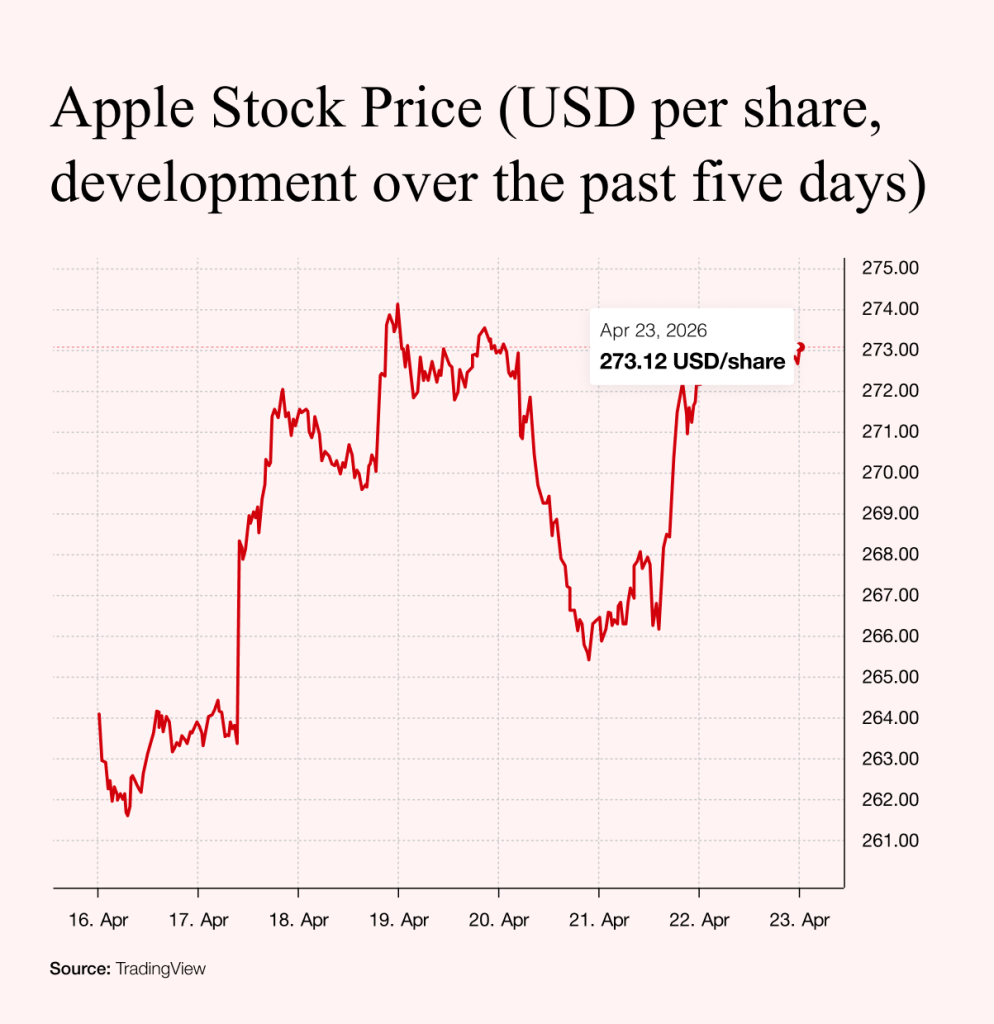
The appointment signals a clear return to Apple’s roots, with renewed emphasis on product development and innovation. Ternus’s task is to integrate artificial intelligence into Apple devices in a way that is both seamless and commercially significant. The market reaction has been cautious, with Apple shares falling more than 2% following the announcement. He now faces the challenge of succeeding one of the most influential executives in the company’s history.
Kevin Warsh and the Fight for Fed Independence
Another major development was the Senate hearing of Kevin Warsh. In an unusual move, his prepared remarks were leaked to the media the day before the session, allowing observers to anticipate his arguments in advance. The hearing itself made clear that the debate extended far beyond technical questions of interest rates, inflation and employment.
Warsh presented himself as a moderate and independent candidate. He stressed repeatedly that Trump had never asked him to commit to lowering interest rates and that he would refuse any such request. Yet the emphasis he placed on that assurance highlighted the central issue: credibility.
Republicans portrayed him as a reformer who would return the Federal Reserve to its core mandate and disengage it from climate, social and other political agendas. Democrats, by contrast, argued that his nomination formed part of a broader effort by Trump to exert political influence over the central bank.
Warsh cast himself as an advocate of a leaner, more disciplined institution. He argued that the Federal Reserve must remain within its defined remit and avoid overreach. That formulation became a central theme of the hearing. It reassured Republicans while allowing Warsh to sidestep more politically sensitive questions.
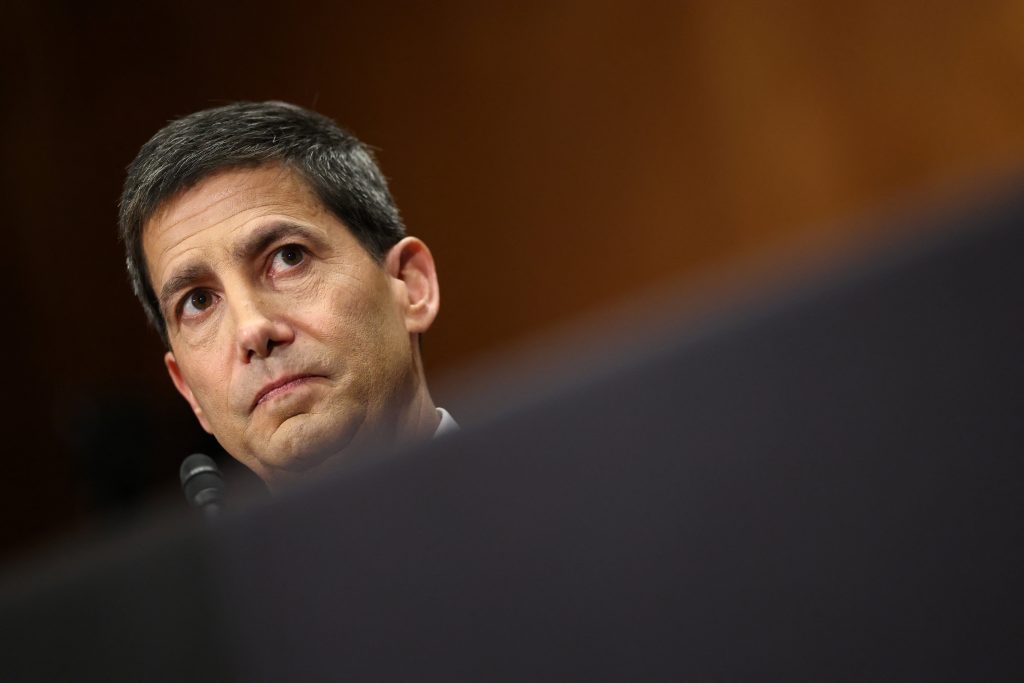
The main weakness of the hearing, however, lay not in its economic arguments but in the issue of trust. Although Warsh presented himself as a defender of central bank independence, he did not fully dispel concerns that he had been chosen precisely because the White House expects a more accommodating stance on monetary policy.
The proceedings ultimately reflected a broader struggle over the role of the Federal Reserve. Should it function as a narrowly focused institution dedicated to price stability or as one of the few remaining centers of authority capable of resisting direct political pressure?
Warsh’s nomination has yet to be confirmed. As long as the conflict in Iran continues, the Federal Reserve has a strong incentive to maintain its current policy stance. A shift in monetary policy is therefore likely only once there are clear signs of stabilization.