
The United States and Iran are likely to sign a memorandum in the coming days aimed at ending the conflict and establishing a framework for negotiations on the nuclear program, anonymous White House sources have indicated to Axios.
The one-page list of key points, whose adoption would ease tensions in the Strait of Hormuz and the broader Middle East, has not yet received a response from Tehran, two officials in Donald Trump’s administration acknowledged. But they added that Iran has 48 hours to respond and that the sides are closer to such an agreement than at any point since the war began.
The new US proposal again includes a commitment by the Shia government to halt uranium enrichment, in return for which the US would agree to lift sanctions and release frozen funds. Both sides would also remove their restrictions on seaborne shipping through Hormuz, through which 20% of the world’s traded oil passed before the war.
A Framework for Talks
Several of the conditions proposed by the White House would take effect only after a final peace deal was reached, creating uncertainty among US officials, Axios noted. The Trump administration believes that Iran’s leadership is politically divided, with different figures taking different views on a deal with Washington.
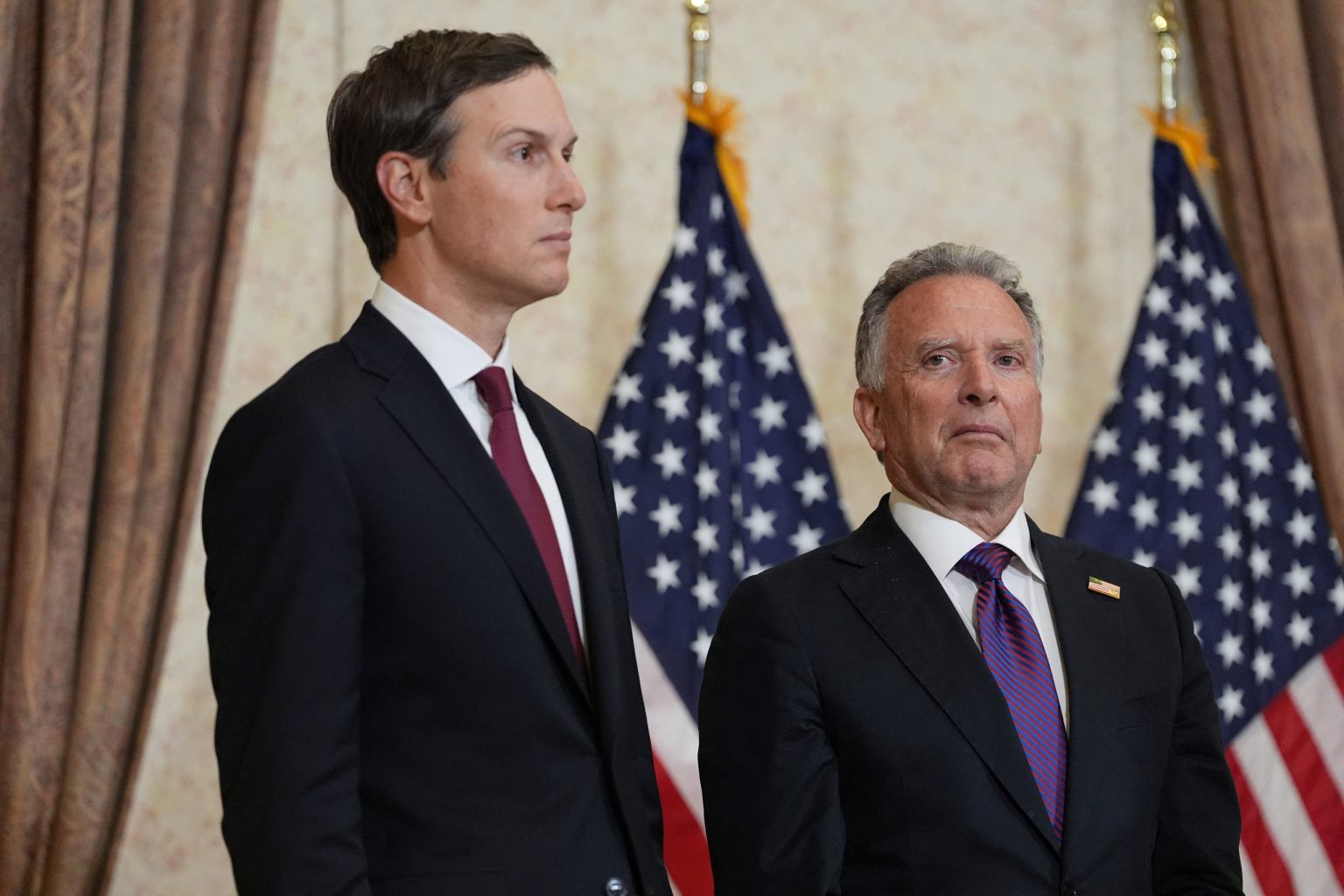
Two White House sources said Trump’s decision to step back from a newly announced operation in the Strait of Hormuz was based precisely on that progress. They credited negotiators Jared Kushner and Steve Witkoff, who continued talks even against the backdrop of war.
“In its current form, the MOU [memorandum of understanding] would declare an end to the war in the region and the start of a 30-day period of negotiations on a detailed agreement to open the strait, limit Iran’s nuclear program and lift U.S. sanctions”, Axios editor Barak Ravid wrote. Ravid is a former member of Unit 8200, Israel’s signals intelligence unit.
Direct negotiations would take place in Islamabad or Geneva during that period, with both the Revolutionary Guard’s restrictions on shipping and the US naval blockade being phased out.
If negotiations failed again, the Navy would restore the blockade and the amphibious battle groups of the aircraft carriers USS Abraham Lincoln or USS George H. W. Bush would resume combat operations, a US official warned. Trump said the same later in the day.
“If they don’t agree, the bombing starts, and it will be, sadly, at a much higher level and intensity than it was before”, he wrote in a post on Truth Social.
Uranium, Sanctions and Oil Prices
The suspension of enrichment would remain in place for 12 years, according to some sources, while others have told Ravid of a 15-year framework. Tehran has proposed a five-year moratorium, while the United States has proposed 20 years. Under Washington’s proposal, any Iranian violation of the moratorium would extend its duration. After that, Iran would be allowed to enrich uranium to no more than 3.67% purity, enough to operate the Bushehr plant.
Under the memorandum, Tehran would pledge never to develop a nuclear weapon or “carry out activities related” to converting nuclear material into weapons. According to the White House, the Islamic Republic would also be willing to accept a broader inspection regime, including random United Nations inspections.
Existing enriched uranium, estimated by the International Atomic Energy Agency at 400 kg, would be exported from the country with Iran’s consent. Although the theocratic government has rejected that condition since the start of the war, it is now reportedly under discussion.
Following the report, oil prices fell below $100 a barrel, the British Financial Times said. Markets reacted almost immediately to the speculation and officially unconfirmed information about peace negotiations by pushing prices lower.
The price of Brent crude fell 11% to just under $98 a barrel, its lowest level since 22 April. The benchmark WTI light crude index was down 12% at $90 a barrel. Share prices moved in the opposite direction, rising sharply in Europe, the US and Britain. The Stoxx 600 index and London’s FTSE 100 gained 2.3%.