
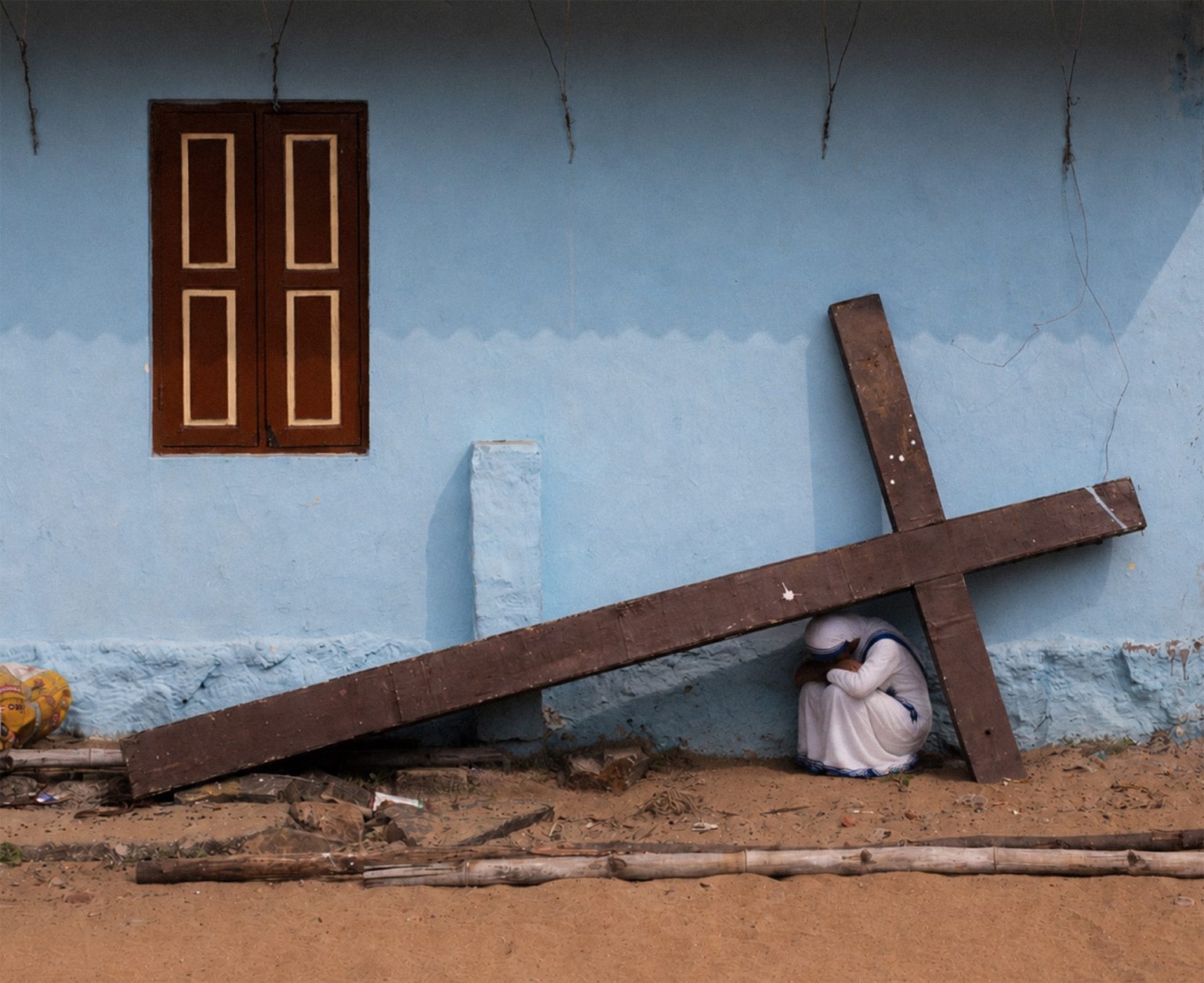
Following anti-Christian incidents including the arrest of four Catholics on allegations of “forced conversions” and the invasion of a Catholic mass by Hindu activists, Indian bishops have warned that Christians are facing increasing hostility and “constant surveillance”.
Indian church leaders also warned that recent victories by the ruling Bharatiya Janata Party (BJP) in state elections in West Bengal and Assam “sends a red signal round the nation”.
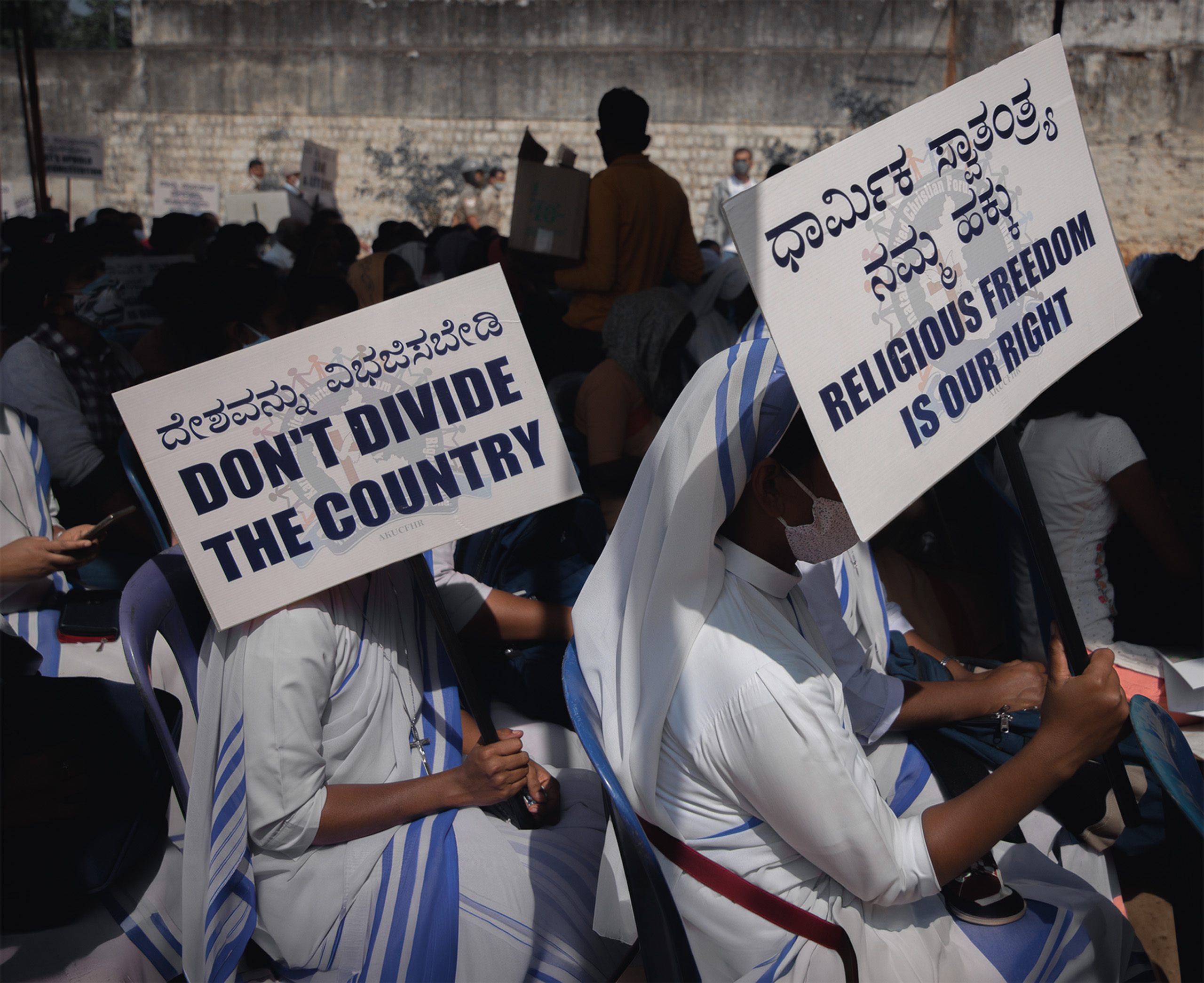
The incidents come against a backdrop of tension and controversy in India over anti-conversion laws and accusations by Hindu nationalist groups that Christians use coercive or deceptive methods to convert people. Church leaders have repeatedly denied these allegations.
In the latest incident, four Catholics were arrested in the north-west Indian state of Rajasthan after an outdoor mass – held in the village of Kalinjara in the build up to a May 7 feast day – was disrupted by right-wing Hindu activists.
They accused worshipers of engaging in religious conversions and, according to local Catholic officials, became embroiled in a confrontation when the Indian Catholics saw one of the intruders holding a knife.
When police arrived, officers detained four Catholic men at the gathering, rather than initiating an inquiry into the allegations, according to Father Arvind Amliyar of Trinity Parish in Kalinjara.
Anti-Conversion Laws
The Catholic men were charged by police under multiple sections of the penal code, including under the BJP-led state’s anti-conversion law and for attempted murder.
“They immediately took four individuals into custody – a retired government school principal, a young man, and two middle-aged men”, Father Amliyar told the Rome-based Catholic newsite Crux Now. “All of them are Catholics. There was no question of conversion.”
Efforts by the local community to file a criminal report were reportedly unsuccessful. “Our complaint was not registered despite repeated attempts, even when a large group approached the police station”, the priest said.
Archbishop Thomas Menamparampil accused India’s national leaders of “conniv[ing] at these instances of violence”. “Over 640 such incidents were reported in 2024”, the retired archbishop of Guwahati told Crux Now, referencing a report from the Evangelical Fellowship of India (EFI). “Every year there has been a steady increase.”
Anti-Christian Violence Increases
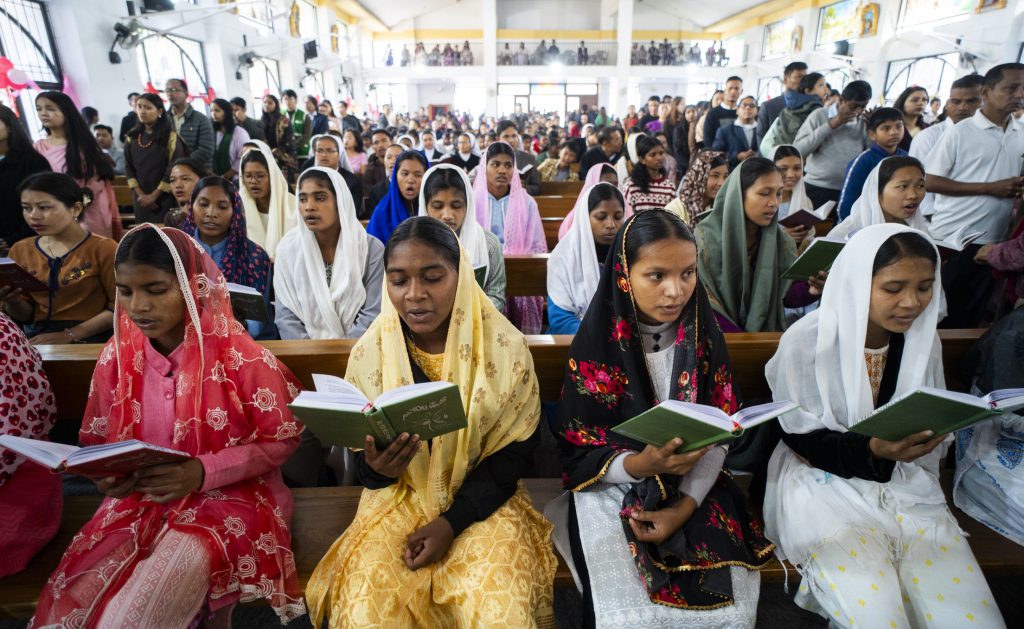
The EFI reported an increase in violence against Christians in 2025, with 747 verified incidents of hostility against Christians in India documented by its Religious Liberty Commission.
Christians make up about 2.3% of India’s population of more than 1.4 billion people, according to government data, while around 80% are Hindu. In Rajasthan, where Hindus account for nearly 90% of the population, Christians represent roughly 0.14%.
Hindu nationalist groups have campaigned aggressively against alleged religious conversions, and in several Indian states, including Rajasthan, so-called illegal conversions can carry penalties including fines and prison sentences.
India has been led since 2014 by the Bharatiya Janata Party (BJP), which governs most of the states in which anti-conversion laws are active and is closely associated with Hindu nationalist organizations, including the Rashtriya Swayamsevak Sangh (RSS).
The RSS were compared to the racist American organisation the Ku-Klux Klan (KKK) by Archbishop Menamparampil. “The other day, Dattatreya Hosable, the General Secretary of the RSS, claimed that his organization was not an Indian version of the Ku Klux Klan”, said the archbishop. “In the mouth of some of our leaders today, a denial is the assertion of a fact. It has become a standard mode and widely acceptable.”
The archbishop also warned that the victory of the BJP in the recent assembly elections in West Bengal and Assam, not traditional strongholds for the party, “sends a red signal round the nation”.
“Cow-protection forces will increase”, he said. “There will be fresh volunteers to enforce the meat ban near temples; new scholars to distort history in revised textbooks; ready accusers of forced conversion.”

Political Set-Backs
While these victories presented a set-back for the Christian community, India’s ruling party failed to break through in the southern state of Kerala and in Tamil Nadu.
With a Christian community making up 18% of the local population, Kerala is a Catholic heartland home to the native Syro-Malabar community. Despite fielding Christian candidates, the Bharatiya Janata Party failed to win in four constituencies in the area.
The ruling communist alliance – the Left Democratic Front, led by the Communist Party of India (Marxist) – was decimated, falling to 35 seats out of 140 seats in Kerala. The opposition, the United Democratic Front – an alliance led by the Indian National Congress – ended its 10-year rule in the April 9 election, winning 102 seats.
The result brought an end to India’s last communist-led state government.
In neighboring Tamil Nadu, with a population of 77 million, the new political party TVK (Tamilaga Vettri Kazhagam – Victory Party of Tamil Nadu), founded by Catholic actor Joseph Vijay, stunned the Dravidian parties that had held power for nearly six decades between them.
Under Vijayʼs leadership, the TVK he founded in 2024 won 108 of the 234 seats in the state legislature, with the ruling DMK reduced to 73 and the opposition AIADMK left with 53 seats.
Commenting on the election results, Cardinal Anthony Poola, president of the Catholic Bishops' conference of India, in a 6 May statement said: “The true measure of a vibrant democracy lies not just in the successful conduct of elections but in the steadfast commitment of elected leaders to serve the most vulnerable. We urge the new governments to work hand-in-hand with all institutions to build a more just, inclusive, and equitable India.”