

The collapse of communism set Eastern Europe one clear task: catch up with the West. Parts of Central Europe have come close. Poland, the Czech Republic and Slovakia locked themselves into the single market, pulled in investment and kept their institutions strong enough to weather emigration without lasting damage.
The Balkans faced the same challenge under far harder conditions. The violent dissolution of Yugoslavia, a decade of war, fragile institutions, entrenched corruption, a slower path into European structures and persistent political instability all pushed the region's starting line back.
By the time conditions improved enough to close the gap with the West, the outflow of people had already begun.
The Burden of Aging Without Prosperity
The Balkans face a cruel paradox: the region is converging with Western living standards at the very moment its working-age population is shrinking. Western Europe aged gradually, after generations of wealth accumulation. The Balkans are aging now before that wealth has arrived.
As far back as 2020, The Economist warned that the Balkans were not simply replicating the Western European pattern of aging. The region has added a more damaging dimension: young and working-age people are leaving to work abroad, some returning only in old age. The domestic economy therefore misses out on their taxes, careers and consumption during their most productive years, yet later shoulders part of the costs of their old age.
The exodus is broader than the standard "brain drain" narrative suggests. Alongside doctors, engineers and scientists, the Balkans are losing the drivers, nurses, construction workers and craftsmen who keep the daily economy moving. The departures span the full working population: not only those with university degrees, but those who pay taxes, staff public services and form the family-raising core of society.
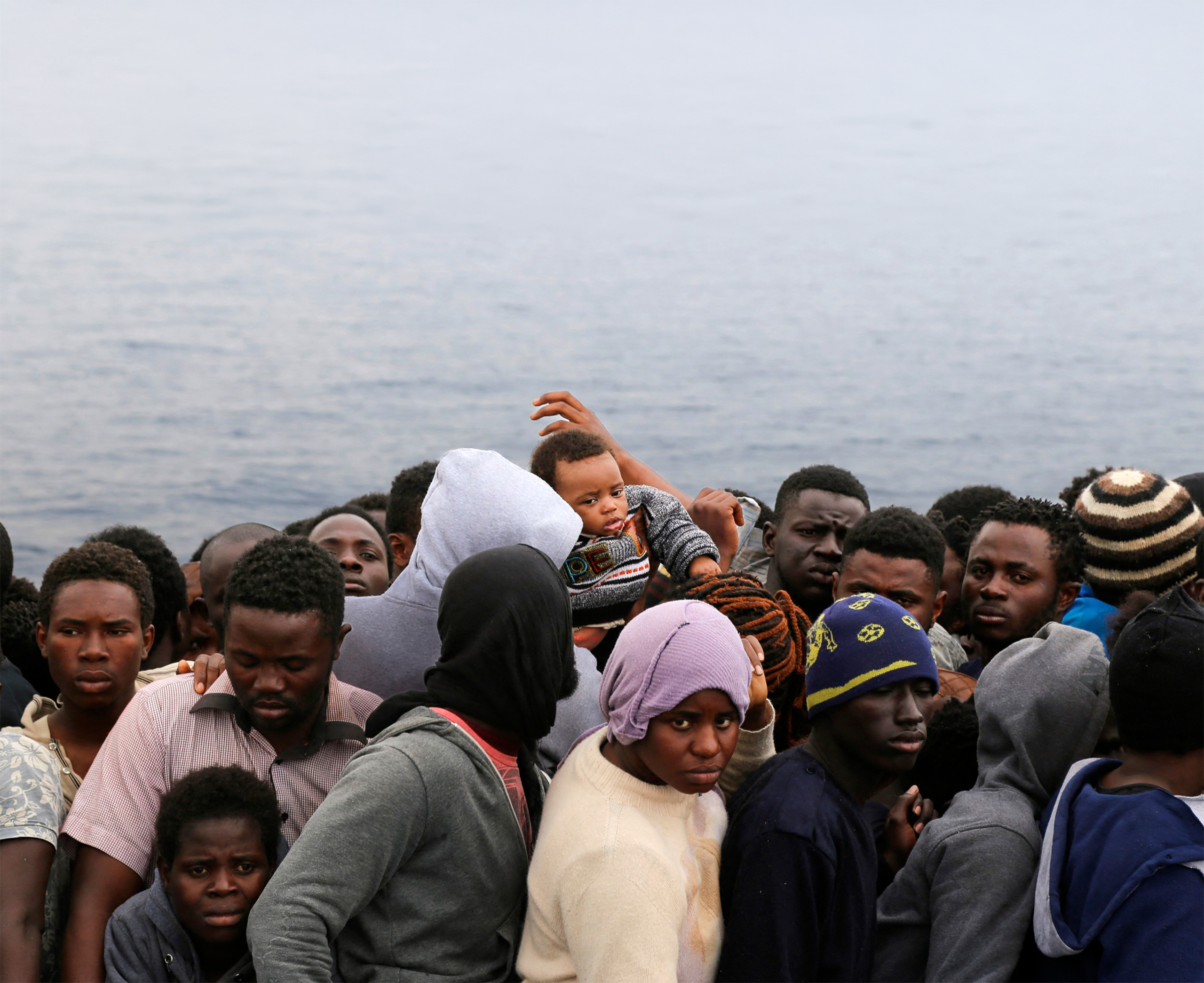
The True Scale of Emigration
The scale of the problem is hard to pin down. Because of the region's layered history, many former Yugoslav citizens are entitled to citizenship in neighboring states. Someone leaving Bosnia for Germany on a Croatian passport may never appear in the data as a Bosnian emigrant at all.
Official figures may therefore paint a rosier picture than reality warrants. The Balkans do not lose people only when they formally deregister. They lose them every time they take their working lives, their taxes and their plans for a family somewhere else.
The dynamic is also convenient for the receiving countries. Western Europe recruits Balkan workers during their most productive and tax-generating years, while the costs associated with aging are at least partly repatriated. The mechanism requires no coordination or intent. It is simply how labor markets work: people move toward higher wages, and the economies they leave behind bear the long-term demographic cost.
When The Economist wrote that the Balkans were "running out of people", it may have sounded like a striking metaphor. The data suggest it was a description of fact. According to a 2025 analysis by the Polish Centre for Eastern Studies (OSW), the population of the six Western Balkan countries has fallen by almost 2.5 million over the past two decades and now stands at just over 16 million.
The Serbian case is the most instructive. Between the 2002 and 2022 censuses, the country's population fell from 7.5 million to 6.7 million. The loss was not the result of any single shock but of steady, compounding attrition. At roughly 40,000 people per year, the decline was easy to overlook in any given year. Across two decades, it has carved out a demographic gap larger than the combined populations of Novi Sad and Nis, Serbia’s second- and third-largest cities.
Remittances Are Not a Demographic Strategy
The Economist also warned in 2020 that Kosovo, then the youngest country in the region, was squandering its demographic advantage. At the time it had a median age of 29 and a fertility rate of around two children per woman. By 2023, according to the World Bank, that rate had fallen to 1.5.
Kosovo has thus converged with the rest of the Western Balkans in the worst possible way: according to OSW, not one of the six countries in the region now reaches the 2.1-child threshold required for natural population replacement.
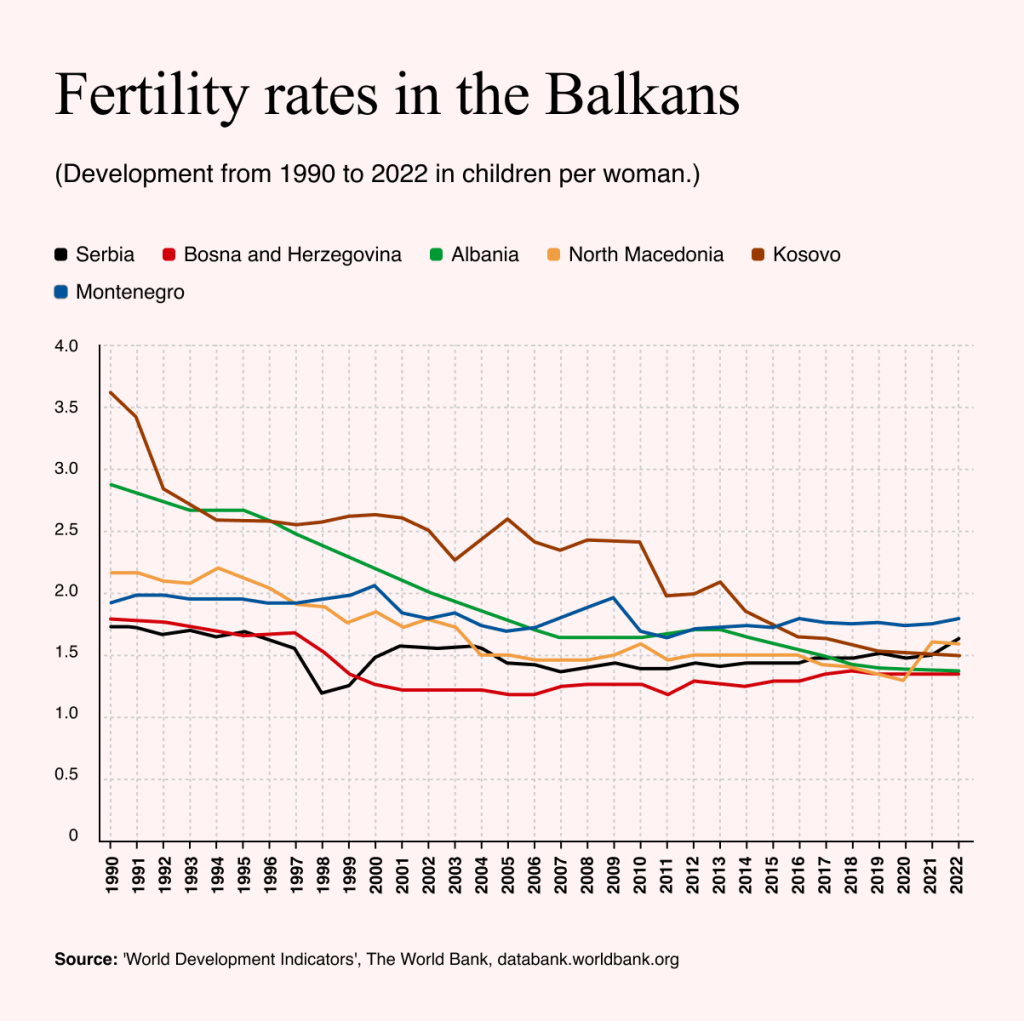
Sustained emigration would be less damaging if a large younger generation were coming up behind it. But that cohort is shrinking too. The Balkans are losing not only today's workers, but also tomorrow's parents and taxpayers.
More than five years on from The Economist article, two conclusions stand out. The first is political: governments have long known about the problem yet been slow to confront it. Emigration served as a silent social valve. It brought down unemployment, muffled discontent and channeled money back home. For governments, the arrangement was convenient: part of the problem took care of itself.
Remittances are a poor substitute for the labor that has left. They can fund consumption and smooth household finances, but they do not rebuild the stock of teachers, doctors, entrepreneurs or future parents that emigration has eroded. More troublingly, they can mask underlying weakness: a steady inflow of money from abroad can make an economy appear more resilient than its demography warrants.
The second conclusion is simple: demographics do not lie. Inflation, elections and economic growth all resist reliable forecasting. Demography is different. We know with reasonable certainty how many children are starting school today, how many will enter the workforce in a decade and how many are nearing retirement. That predictability should make it a far greater priority in political decision-making.
The Balkans have not drawn the right lessons. For too long, low birth rates, the exodus of young people and dependence on remittances were treated as inconveniences to be managed rather than problems to be solved. But demography does not arrive as a single crisis. It accumulates quietly: an emptier classroom, a shortage of doctors, a shrinking city, a pension system under growing strain.
The Balkan experience carries a warning that reaches beyond the region. A country does not begin to fall behind only when it runs short of capital. It can fall behind just as surely when it runs short of people.