
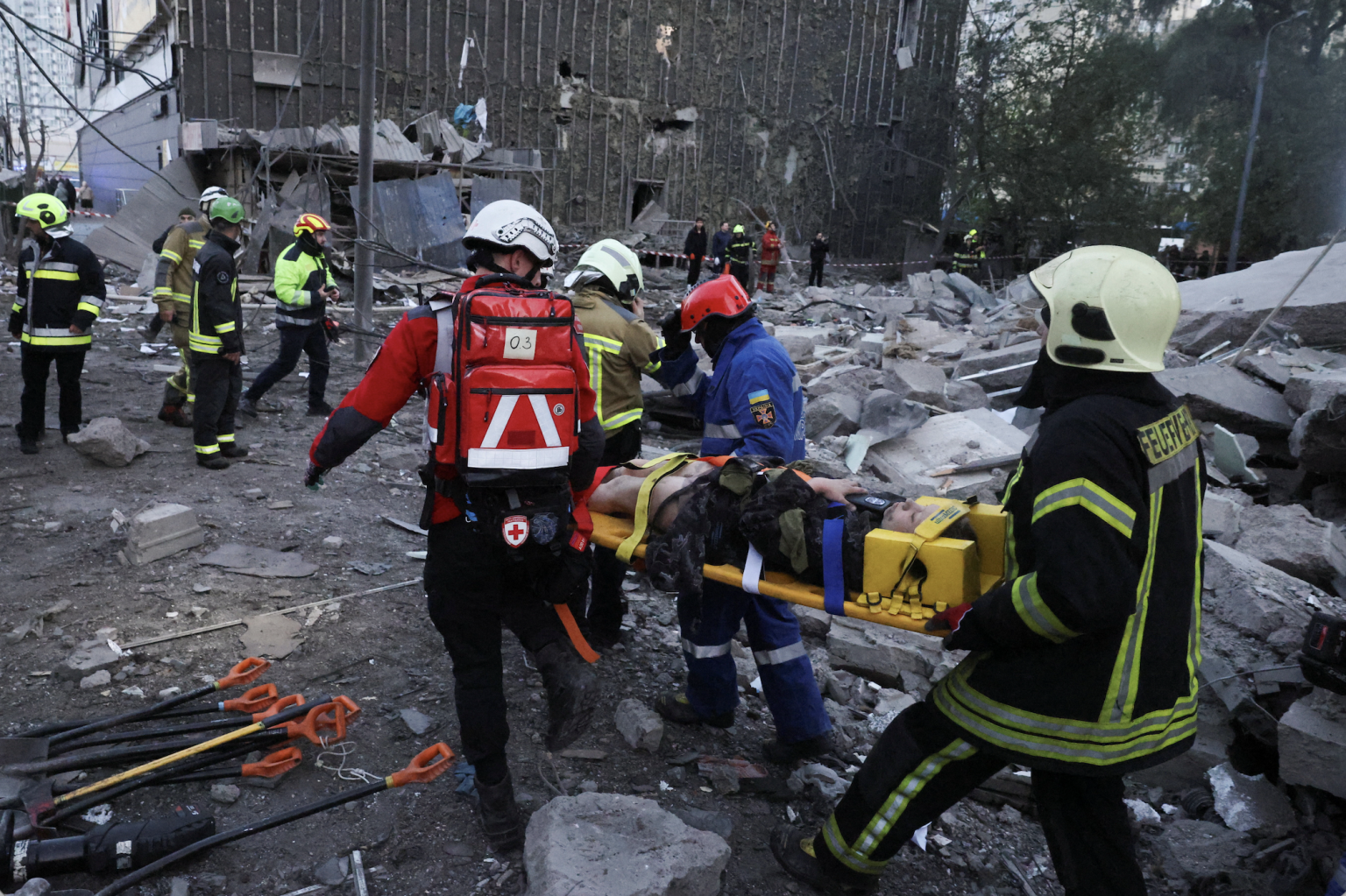
Moscow attacked Kyiv with drones and missiles early on Thursday, injuring people and damaging buildings across the capital. Rescuers believed residents were trapped under the rubble.
Russian forces launched 675 drones and 56 missiles at Ukraine in the massive overnight attack, Kyiv’s Air Force said on Thursday. In a statement, it reported that air defenses had downed 652 drones and 41 missiles, while 38 hits were recorded across 24 locations. Damage from falling debris was reported at another 18 locations.
Tymur Tkachenko, head of the capital’s military administration, said that part of a residential building had collapsed in the eastern Darnytskyi district, injuring four people. Kyiv Mayor Vitali Klitschko later put the toll at nine people hospitalized and two others treated on an outpatient basis.
The strikes hit several widely separated parts of the city. Tkachenko said that in one neighborhood, drone debris had fallen on the roof of a residential building.
Klitschko also reported damage to buildings across Kyiv. In the northern suburbs, debris hit two buildings and sparked a fire in a 12-story apartment block.
Reuters TV footage showed emergency crews moving carefully across piles of rubble as smoke rose from a wrecked section of an apartment building. Other footage on unofficial Telegram channels showed parts of apartment buildings on fire.
In Kyiv, the air raid alert remained in force for more than four hours after it was imposed. The Ukrainian Air Force warned that Russian drones were still moving around the capital and over other regions in central and eastern Ukraine.
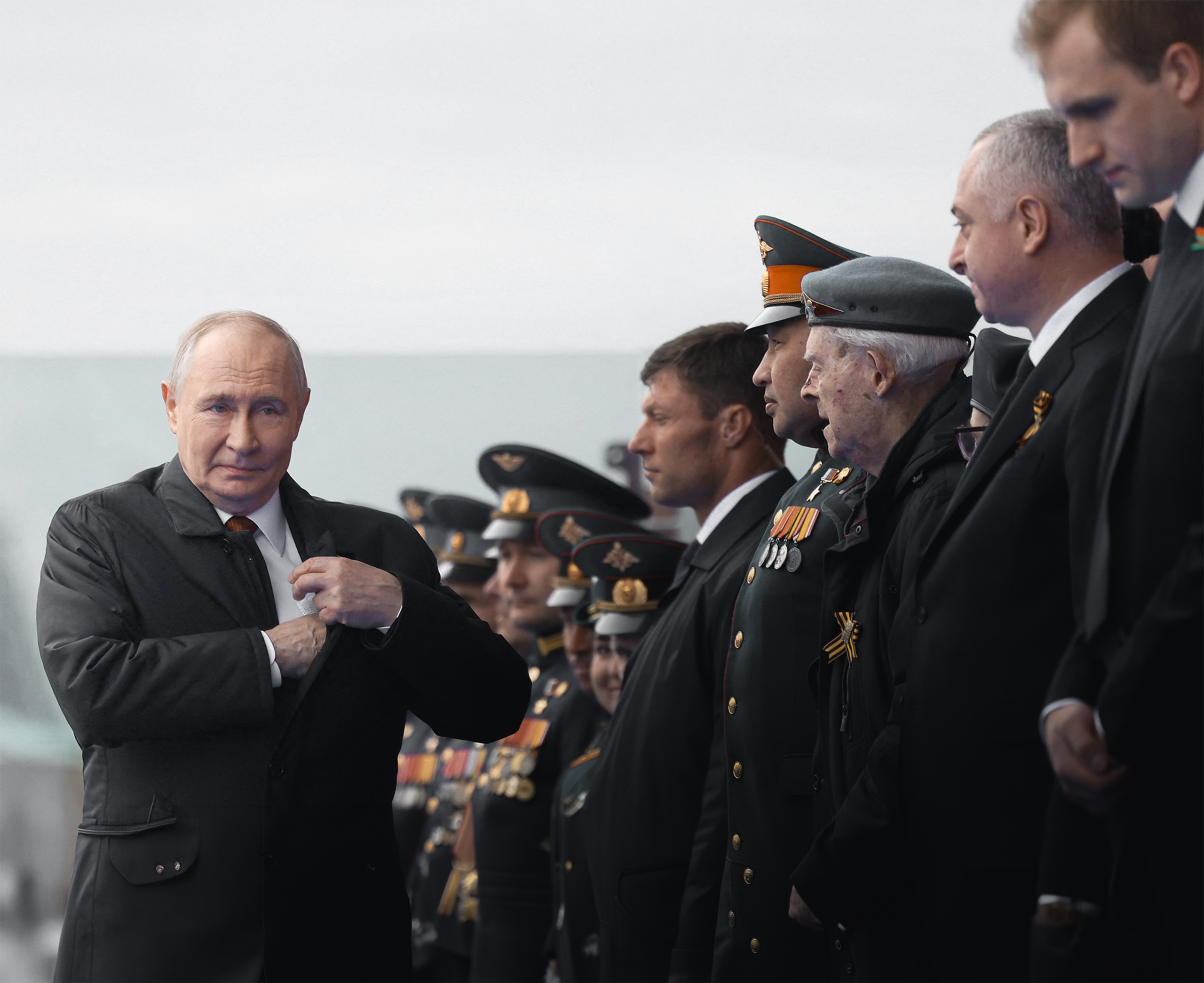
Hundreds of Drones the Day Before
Thursday’s attack followed a wave of large-scale Russian strikes on Ukraine on Wednesday. President Volodymyr Zelensky said the Russian military had launched more than 800 drones since the first minutes of the day.
According to the Ukrainian president, it was one of the longest mass attacks since the start of the war. Russian forces mainly targeted areas near the NATO border, including the Transcarpathian, Lviv, Volyn, Ivano-Frankivsk and Rivne regions.
According to the Kyiv Independent, Uzhhorod, near the Slovak border, also came under attack. Local residents reported explosions.
Zelensky warned that the attack continued after the first waves, with more drones entering Ukrainian airspace. He added that missile strikes were also expected, according to military intelligence.
“At this difficult geopolitical moment, Russia is clearly trying to spoil the overall political climate and draw attention to its evil – at the expense of Ukrainian lives and Ukrainian infrastructure”, Zelensky said during US President Donald Trump’s visit to China.
Attacks Kill Six and Draw Responses From Neighbors
Wednesday’s attacks killed six people across Ukraine. The Rivne region reported the highest toll, with three people killed and four others injured. One death was reported in the Zaporizhzhia region and two more in the Kherson region.
The incident also affected Moldova. The country’s Defense Ministry confirmed that one of the drones had violated Moldovan airspace during the attack.
According to Ukrainian authorities, the Transcarpathian region faced its most massive attack since the Russian invasion began in February 2022. Eleven Shahed and Geran drones entered its airspace.
Myroslav Byletskyi, head of the Transcarpathian regional state administration, said most of the drones had been shot down or disabled by air defense and electronic warfare systems. However, he confirmed that some had hit their targets. He said the strikes had caused no deaths or injuries and had not disrupted critical infrastructure.
Slovakia Briefly Closes Border Crossings
Slovak security forces also responded to the situation. Police said they were monitoring the eastern border and paying increased attention to the country’s internal security. The Slovak Financial Administration said all border crossings with Ukraine had been temporarily closed on Wednesday afternoon for security reasons.
The Armed Forces of the Slovak Republic said they were continuously monitoring the country’s airspace and taking part in NATO’s information-sharing system.
Hungary also responded to the attacks. Foreign Minister Anita Orban said Budapest strongly condemned the strikes and was following the situation with particular attention. Prime Minister Peter Magyar described the attack on the Transcarpathian region as the most violent since the start of the war.
The Hungarian government also summoned the Russian ambassador to the Foreign Ministry.
(reuters, max)