
There are places in the world where arrival feels like a homecoming. Perhaps you have felt it too. I have heard it described with wonder by many people, and I am glad to count myself among them.
Even the most celebrated cities in the world - Vienna, Prague, Rome - have something distinct and singular about them, something that is called genius loci.
Where the Saint Came to Rest
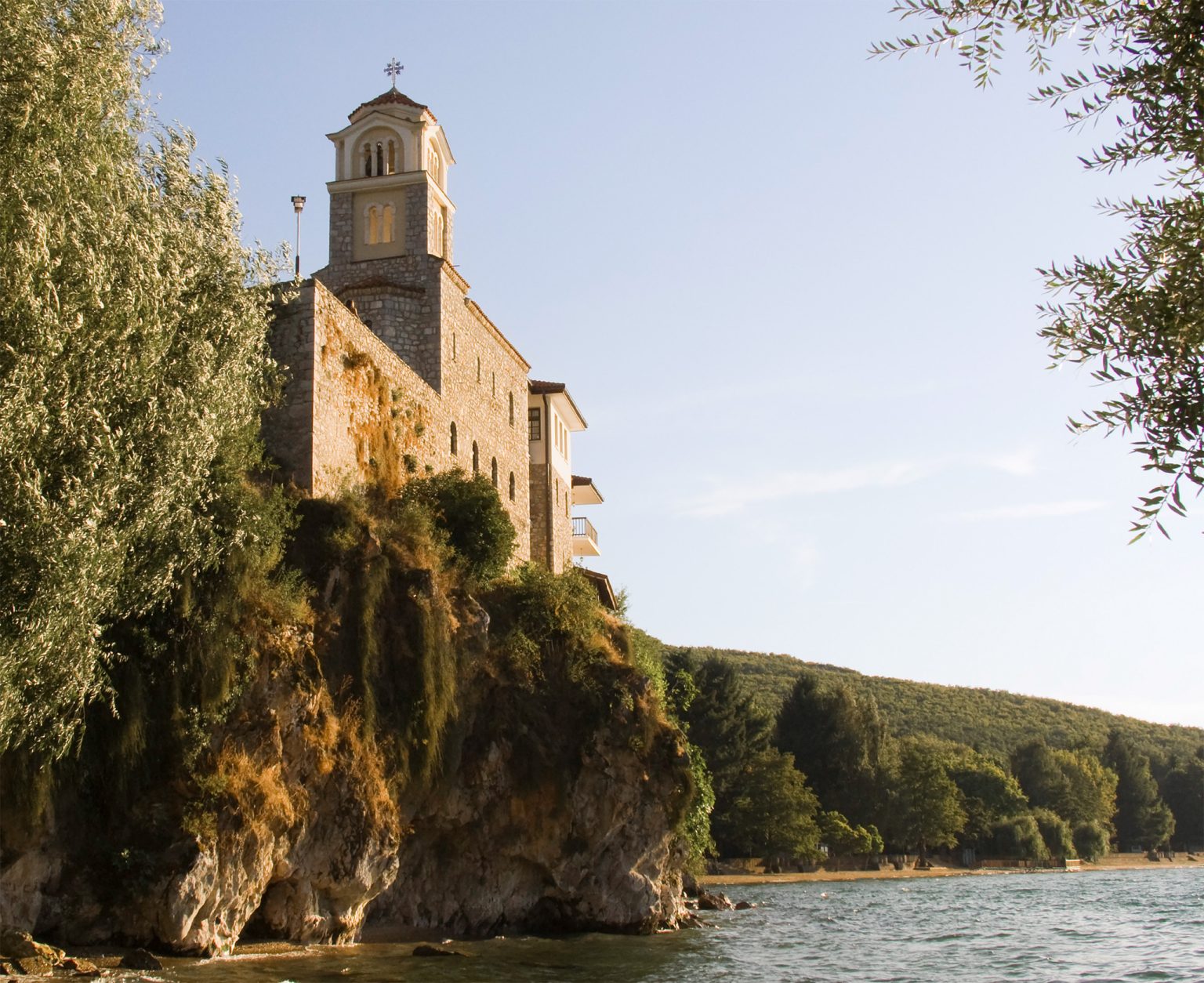
I happened upon that feeling, years ago, on my first visit to Macedonia and the legendary Lake Ohrid, home to the ancient Monastery of St Naum. A disciple of Sts Cyril and Methodius, St Naum settled here alongside other followers expelled from Great Moravia, a ninth-century Slavic realm in Central Europe.
I doubt that choice of location was a coincidence. The monastery sits on slightly elevated ground beside the lake, with a pleasant breeze coming off the water. It is a place where one breathes more deeply. And to breathe deeply is to feel life, freedom and joy.
Whenever I read of Paul’s vision in the Acts of the Apostles, I think of Lake Ohrid. “During the night Paul had a vision of a man of Macedonia standing and begging him, ‘Come over to Macedonia and help us.’ After Paul had seen the vision, we got ready at once to leave for Macedonia, concluding that God had called us to preach the gospel to them.” (Acts 16:9–10)
The Monastery of St Naum is an important place of pilgrimage, though monks no longer live here. A rather expensive, well-appointed hotel occupies the site instead, something the exiles from Great Moravia could not have imagined. St Naum is buried in the church, and many healings are said to have taken place at his grave.
At that monastery by Lake Ohrid, I felt as though I had come home. Strange as that may sound, it was as if two pieces had fallen into place, and everything was suddenly right. I would perhaps feel differently today, but it struck me profoundly then, and I have not forgotten it.
A Holy Landscape
Not far away lies the ancient city of Ohrid. It is said to have had 365 churches, so that liturgy could be celebrated in a different church on each day of the year. Some have disappeared, while others still stand. At one time, the city was among the most devout and holy places in the Christian world.
In 1767, under Ottoman rule, the Archbishopric of Ohrid was abolished, ending the city’s role as one of the Balkans’ great Orthodox Christian centers. St Sophia, Ohrid’s central church, had already been converted into a mosque centuries earlier. Thankfully, that chapter, at least, is closed.
Follow the path along the lake from Ohrid and, within a short distance, you cross into Albania. It is a beautiful and rugged country, though one that lived for decades under the iron rule of the communist dictator Enver Hoxha, who governed from 1944 until his death in 1985 and banned all religion and any outward expression of it.
In doing so, he was preparing for war against the entire world. Every Albanian was to have a bunker, or so locals told me.
It is sometimes said that without religion there would be no conflicts or wars in the world. Enver Hoxha suggests otherwise.
On the other side stands St Naum: teacher, miracle worker and mentor to hundreds of disciples, a man who changed the lives of thousands of young people and who, it is said, continues to do so even after his death.
This text was originally published on DoKostola.sk, a Slovak Catholic website.
Štefan Chrappa is a Slovak author, broadcaster and cultural journalist. A former literary studies lecturer at Comenius University and long-time Slovak Radio editor and presenter, he has written some 20 books and received the Fra Angelico award for contributions to Catholic culture.