
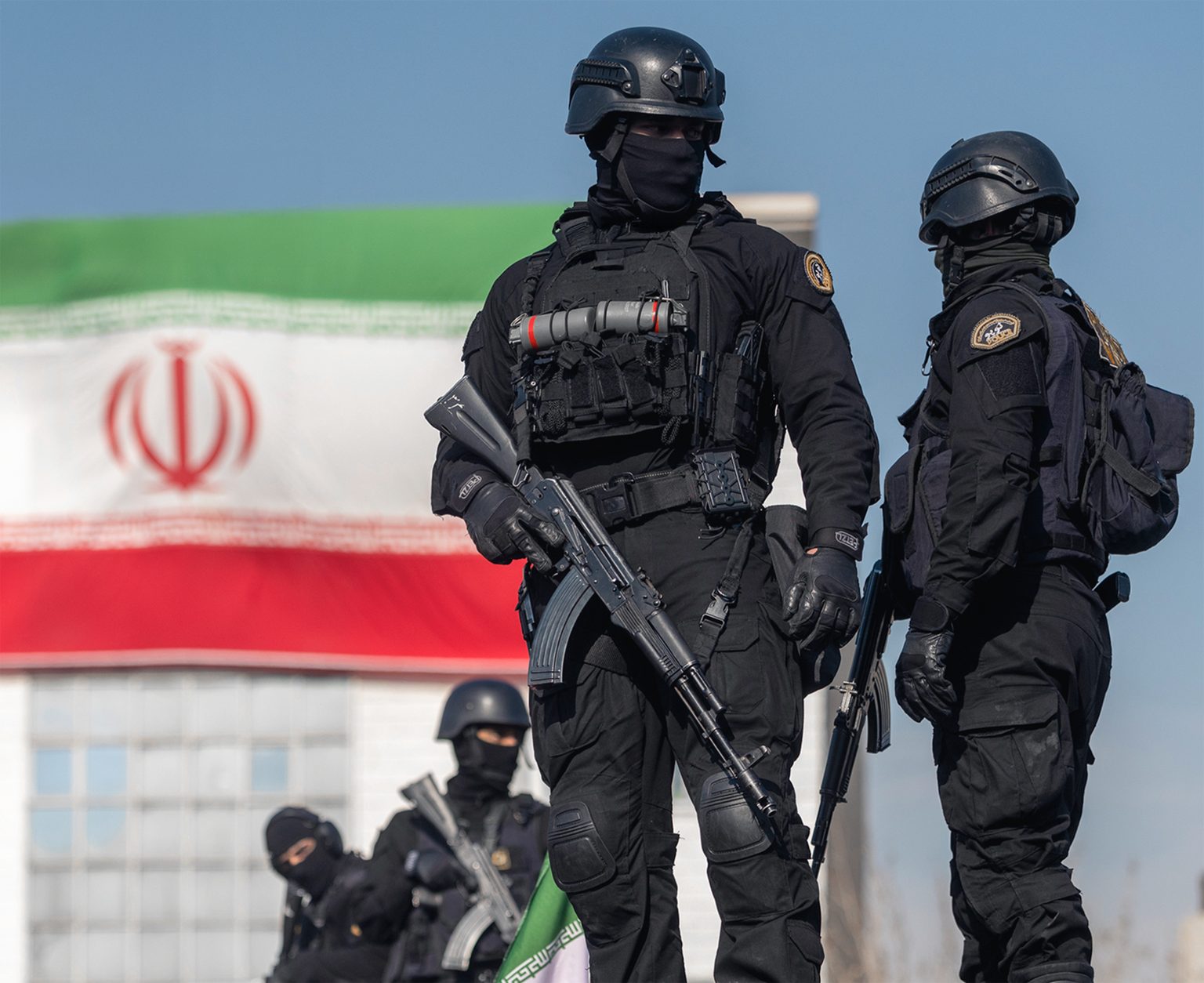
Over the weekend, US President Donald Trump again warned the Islamic Republic of Iran, which has been at war with the US and Israel since 28 February. He urged Tehran to move quickly on the US proposal for a peace deal and threatened further destruction if it refused.
“For Iran, the Clock is Ticking, and they better get moving, FAST, or there won’t be anything left of them. TIME IS OF THE ESSENCE!”, Trump wrote on Truth Social on Sunday.
Just one day earlier, he had met National Security Council officials at his golf club in Virginia. The president spoke with the council’s interim chairman and Secretary of State Marco Rubio, Secretary of War Pete Hegseth, CIA Director John Ratcliffe and special envoy Steve Witkoff, an anonymous source from the meeting told CNN.
The officials discussed the possibility of renewed fighting just hours after Trump returned from an official visit to China, which Washington regards as an ally of Iran.
Beijing, however, has long supported the United Arab Emirates in particular. The Emirates is the lead negotiator for a free trade deal between China and the Gulf Cooperation Council, a grouping of six Arab countries on the Gulf coast.
The military transshipment point in Urumqi, the capital of the Xinjiang Uyghur Autonomous Region, transported military materiel for the Emirates at least twice in the past week.
Rival Peace Terms
Under its unofficial policy of supporting both sides in the conflict, China also backs Iran by buying its oil over the long term. The crude is shipped by tanker through the Strait of Hormuz, now closed by Iranian Revolutionary Guard mines and a US Navy blockade in place since 13 April.
Because of this economic support, Tehran is not expected to yield to US-Israeli pressure and would probably return to military defense and escalation if combat operations resumed.
Iran’s armed forces still possess roughly 70% of the country’s prewar missile stockpile and mobile launchers, according to US intelligence assessments cited by the New York Times. Trump and Hegseth have repeatedly claimed that Iran’s ballistic missile launch capabilities and navy had been largely destroyed.
The retention of most of its warfighting capacity has allowed Tehran to repeat its tough demands for a peace deal. Since Washington and Tel Aviv attacked first, the Islamic Republic is demanding war reparations, the release of all frozen assets, the lifting of sanctions, a ceasefire on all fronts, including Lebanon, and recognition of its sovereignty over Hormuz.
The White House, according to Fars News Agency, has restated its five demands, which are almost entirely at odds with Iran’s. It has flatly rejected compensation for war damage, as well as the unfreezing of foreign assets.
The Trump administration is also demanding that Iran export 400 kg of enriched uranium to the United States, while allowing the Shia government to keep only one nuclear facility in the entire country. The US government has also refused to guarantee a permanent ceasefire.
Arab States Enter the Conflict
More than two months into the war, a ceasefire still seems an unattainable goal. Gulf Arab states have also helped push it further out of reach, according to reports so far, by beginning to join the war on the side of the US and Israel.
The United Arab Emirates in particular, which signed the Abraham Accords in September 2020 and has hosted Israel’s Iron Dome air defense system on its territory, has emerged in recent weeks as the most committed ally.
President Mohammed bin Zayed Al Nahyan approached Saudi Crown Prince Mohammed bin Salman and the leaders of Bahrain, Kuwait and Qatar shortly after the war began to agree on a joint response to Iranian retaliation, anonymous Emirati sources told Bloomberg. The other leaders rejected the president’s offer.
Only recently, the Wall Street Journal reported that the Emirates had secretly engaged in countermeasures against Iran, a claim denied by a federal government spokesman. The country, whose form of government Israel has proposed for the Palestinians, had already attacked Lavan Island in April, the Journal claimed on 11 May.
Just one day later, anonymous US and Iranian officials told Reuters that Saudi Arabia was also involved in attacks against the Islamic Republic. The Royal Saudi Air Force is said to have responded to air strikes by the Revolutionary Guards, although the locations could not be verified.
The air forces of both the monarchy and neighboring Kuwait also intervened during the war against the Iraqi Popular Mobilization Forces, a Shia militant coalition backed by Tehran. Iraq, meanwhile, last drew media attention when it was leaked that Israel had set up at least two covert air bases on its territory.
A War of Nations or Religion
Baghdad’s army later came under fire when Iraqi troops nearly discovered the base in the western desert. Washington knew of the Israeli outpost, according to the Wall Street Journal, while the US denied involvement in the strike.
It is not yet clear what form the widening war will take. Iran’s tactics appear to be working, even if this kind of horizontal escalation was probably not what the theocratic government intended. An ethnic war between Arabs and Persians would draw in the Arab-inhabited parts of Iran, while a religious Shia-Sunni conflict would shift the center of gravity to Bahrain and Saudi Arabia’s eastern provinces.
Shia Arabs live in south-western Iran. Although they share the same faith as the theocratic government in Tehran, their ethnic loyalties could become uncertain in a war between nations.
In Bahrain and parts of eastern Saudi Arabia, however, large Shia populations live under Sunni-led governments. If the war took on a religious character, those divisions could in turn fuel unrest inside Arab states.