
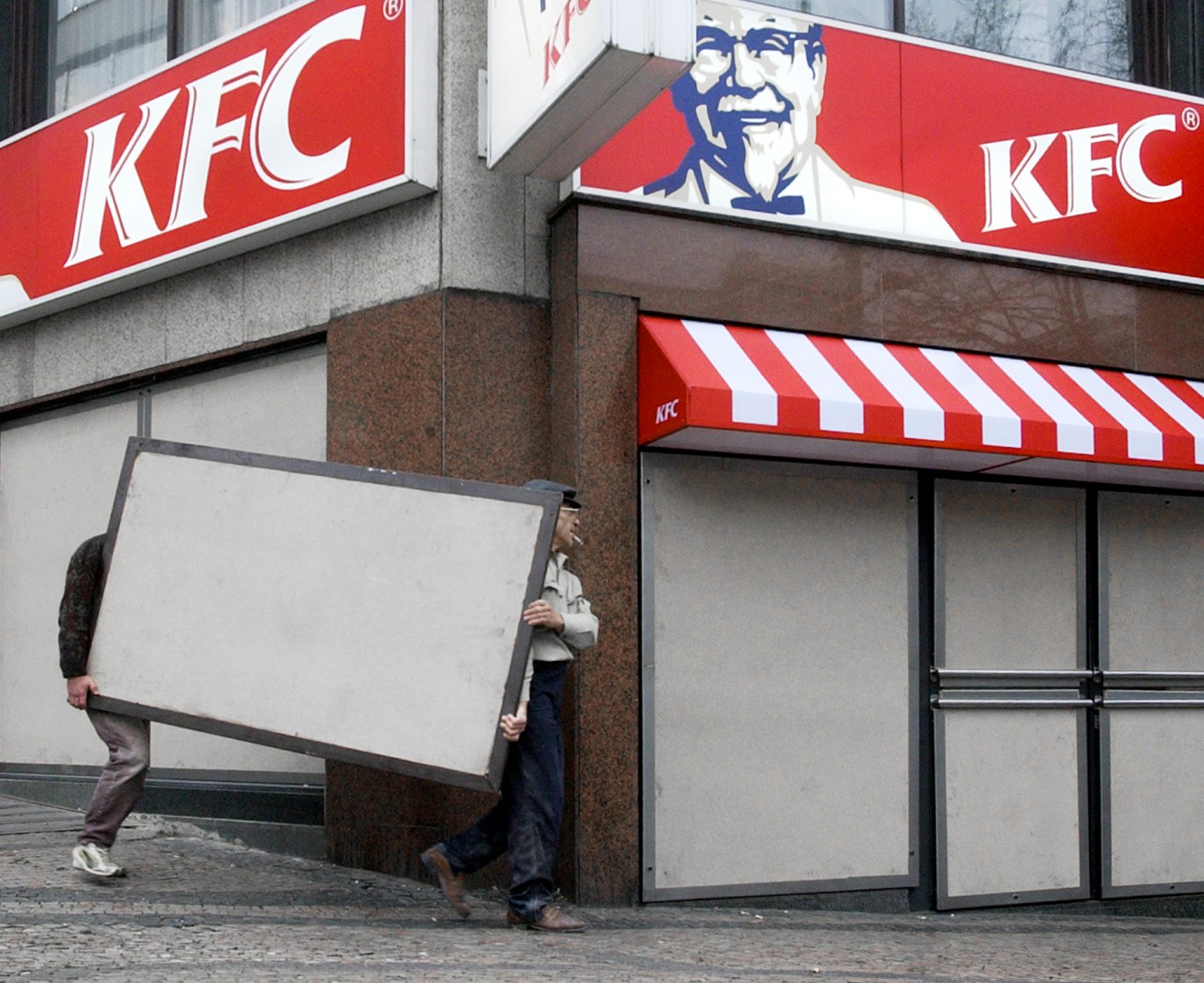
The Czech Republic has seen an unprecedented upheaval in its fast-food market. The multinational chain Kentucky Fried Chicken (KFC) took a radical step: at 9 a.m. on Tuesday 26 May, when its restaurants usually open, it locked the doors of all 140 branches across the country. The move brought the chain’s operations to a complete halt for two hours.
Employees were instead given training manuals, while programmers hastily installed a new digital food-safety system. Although the restaurant chain was back in operation after 10 a.m., the costs and symbolism of the controlled restart will have long-term consequences for the Czech food-service business.
The question every investor and competitor is asking now is clear: how much will the two-hour shutdown cost the operator, and can such a visible reset restore trust after past mistakes?

How the Crisis Began
The economic logic behind the move is clear. Tuesday morning’s lost sales did not come out of nowhere, but marked the logical culmination of a deep structural crisis.
AmRest, the operator of KFC in the Czech Republic, has been under unprecedented pressure since last autumn. After investigative journalists and, later, the Czech Agriculture and Food Inspection Authority exposed systematic fraud involving tampered use-by labels on meat and deplorable hygiene conditions at several branches, Czech consumer loyalty took a severe hit.
In addition to the relabeling of use-by dates for chicken, the public also learned of the use of foul-smelling or spoiled meat. Subsequent inspections found, among other things, marinated meat past its use-by date and moldy muffins. They also revealed that meat had been defrosted in stagnant water.
As a result, AmRest woke up in the first quarter of 2026 to the harsh reality of a year-on-year sales drop running into tens of percent. For a company that generates annual sales of more than 6bn Czech crowns ($291m), that means only one thing: a financial hemorrhage amounting to hundreds of millions of crowns in lost profit.
The Cost of Closure
Seen through the lens of accounting alone, the direct cost of closing KFC restaurants for a few hours is high, but not ruinous for a corporation of this size.
Although the morning hours before 11 a.m. are a weaker part of the day in sales terms, with customers mainly buying breakfast menus and coffee, the immediate loss of revenue across the 140 closed restaurants is estimated at between 3m and 5m Czech crowns ($145,000–$242,000).
Fixed costs must also be added. Rents in premium shopping centers or at busy transport hubs do not stop for internal training.
Thousands of employees also had to be physically present and complete more than 34,000 hours of additional recertification. Those hours must be paid by the employer, even though they generated no revenue at the time.
Once the investment in the technological solution itself is included, namely the introduction of automated data-label printing and software for remote manager oversight, the one-off bill for Tuesday morning comes to approximately 5m to 10m Czech crowns ($242,000–$484,000).
Reputational Capital
The real cost of Tuesday’s action, however, lies not in the cash register, but in reputational capital. From a crisis-management perspective, KFC staged a costly acknowledgement of the problem in an effort to restore stability: a hard reboot.
Had the company continued with defensive silence and piecemeal apologies, consumer skepticism would have further eroded the brand’s market share. By theatrically stopping the machines, KFC’s management sent a clear and costly signal to the market: it knows mistakes were made and is investing millions of crowns to correct them.
The psychological effect is risky, because it may remind people just how deep the problems in KFC’s kitchens were. Yet without a visible break from the past, the brand may have had little chance of stopping a lasting customer drain.
McDonald’s Benefited
The food-service business, however, is a zero-sum market. What one player loses, another immediately gains. The situation has benefited McDonald’s, KFC’s arch-rival, above all. While KFC was counting the losses from closed branches, queues were forming at drive-through windows under the golden arches.
McDonald’s also showed notable marketing discipline. Instead of attacking a weakened rival, it adopted a strategy of silence, thereby taking on the role of a stable, trouble-free alternative in the eyes of consumers. Every percentage point of market share that AmRest has lost in recent months has flowed, to a large extent, into the coffers of McDonald’s restaurants.
A Godsend for Popeyes
The predatory newcomer on the Czech market should not be forgotten either: Popeyes. The chain entered the Czech Republic with the ambition of competing with KFC in its strongest discipline, fried chicken.
For Popeyes, the current crisis at the market leader is a godsend. It can build its communications around 100% freshness and uncompromising quality, systematically siphoning off a younger, socioeconomically stronger customer base for whom hygiene standards are the top priority.
Nor should internal cannibalization within AmRest be overlooked. Although the group also operates Burger King in the Czech Republic, a chain based on entirely different beef supply lines that has not been affected by the crisis, the financial and personnel strain on the parent company has logically hampered the development potential of all its brands in the country.

A Rational Calculation
Tuesday’s two-hour closure of KFC branches was a harsh but rational economic calculation. AmRest staked everything on a single move. The short-term financial sacrifice of a few million crowns is intended to save billions of crowns in future years.
Only the financial results for the second quarter of this year will show whether Czech consumers, known for their sensitivity to price but increasingly also to quality and business ethics, will forgive KFC after the reboot.
One thing is certain, however: the era when fast-food chains could deal with hygiene offenses simply by replacing the branch manager is over. Food safety has become a key economic indicator.
This article was first published on lukaskovanda.cz.