VW’s New China Gamble Leaves Germany in the Rear-View Mirror
Volkswagen is betting billions on China. But the wager is risky. Its new cars will be developed, built and sold there. For Germany, the question may ultimately be what remains of the old VW success story.
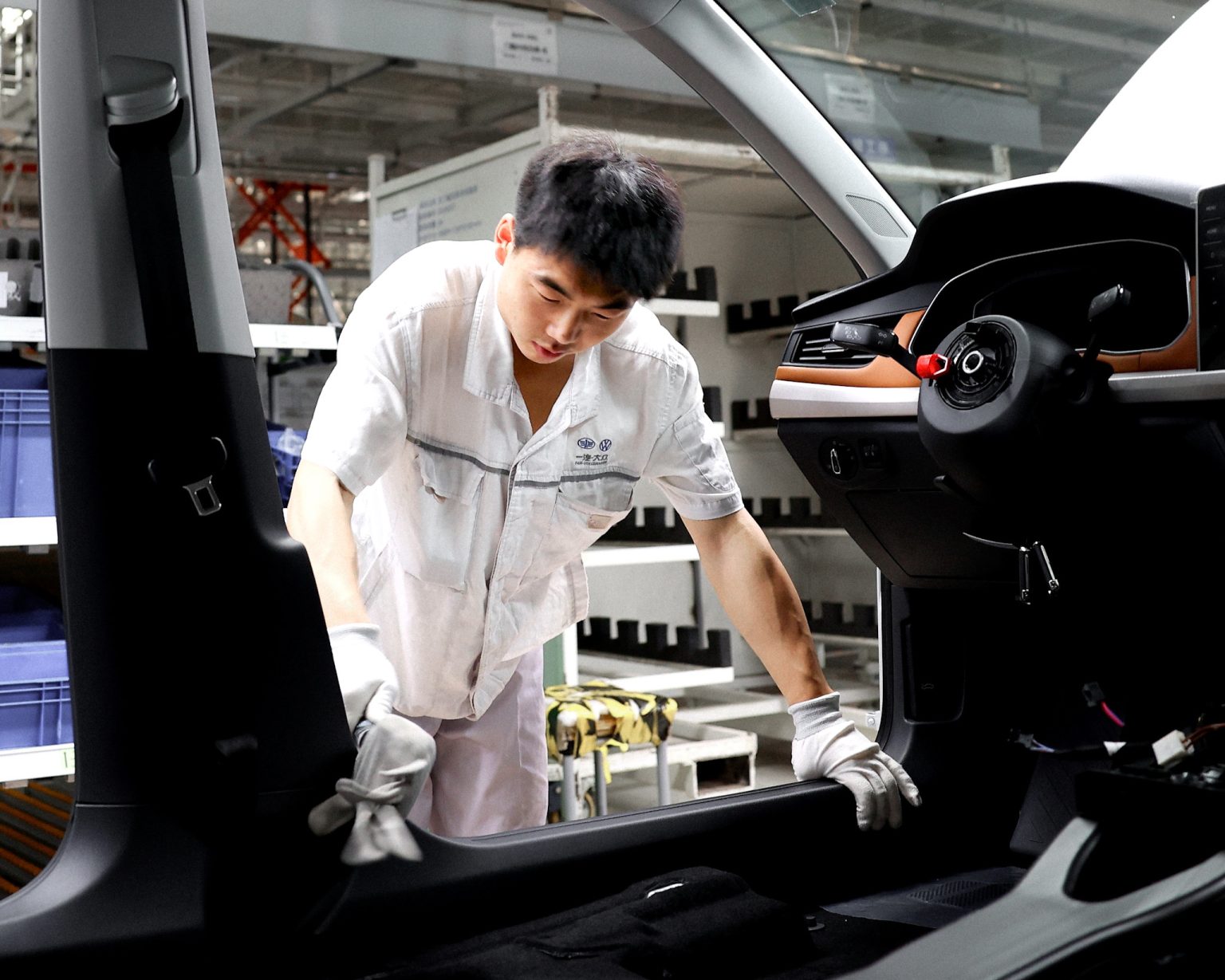
A worker on the assembly line at FAW-Volkswagen’s plant in Qingdao, part of VW’s deep industrial footprint in China. Photo: VCG/VCG via Getty Images
|
Volkswagen spent decades presenting itself as one of globalization’s great winners. No other German carmaker benefited so much from China’s rise. VW entered the country early, built joint ventures, sold millions of cars and generated huge profits. China was not merely a sales market. It was an earnings machine. At times, more than half of the group’s profit is said to have come from the Middle Kingdom.
That era is over. And the problem is no longer confined to China.
Volkswagen is under massive pressure as a group. Profits have collapsed, the shift to electric mobility is costing billions, competition is intensifying and its German sites are coming under strain. The former industrial giant has to cut costs, reduce spending and recalibrate. In Germany, confidence in automotive strength has turned into a defensive debate about restructuring.
Yet in precisely this situation, VW is placing one of the riskiest bets it can make. It wants to reinvent itself in China, the very market where Volkswagen once triumphed but is now being shown up by domestic manufacturers. BYD, Xpeng and other Chinese brands develop faster, price more aggressively and often understand the digital tastes of young Chinese buyers better than the old Western incumbents.
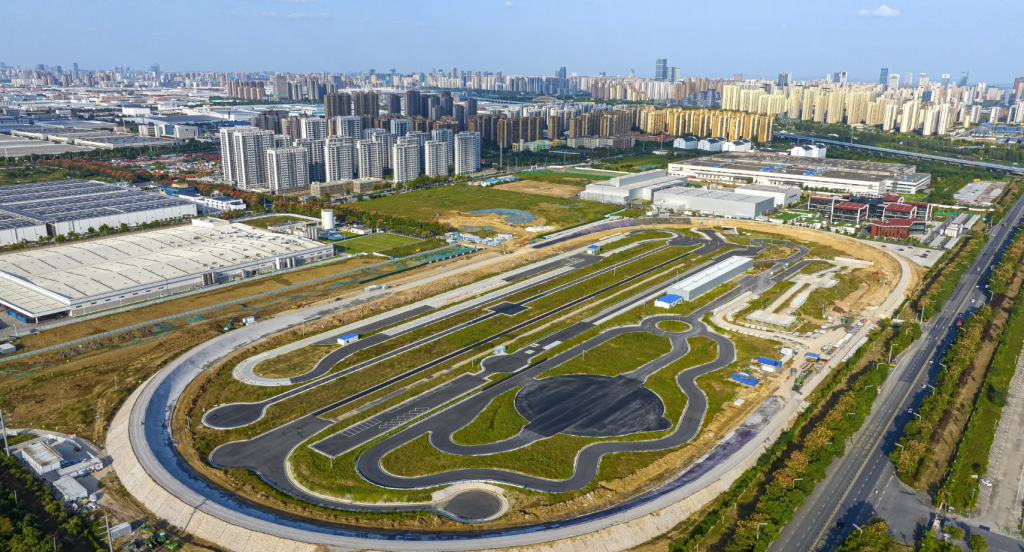
Volkswagen has invested billions to develop cars “in China, for China”. In Hefei, it has built a vast development center which, according to the group, is as large as 18 football pitches. New models tailored specifically to Chinese customers are tested there, with faster software, digital assistants, greater autonomy and artificial intelligence in the cockpit. In other words, Volkswagen is trying to offer everything Chinese manufacturers have long since made standard.
That means Volkswagen is no longer competing only with BMW, Mercedes or Toyota. The group is up against a Chinese car industry that is now confident enough to flood the world with its vehicles. China exports electric cars to Europe, South America, the Middle East and South-East Asia. Its manufacturers deliver cheaply, quickly and, increasingly, with convincing technology. What was once a sales market for Western carmakers has become a global challenger.
Volkswagen’s new factory in China. Photo: NurPhoto via Getty
That is exactly where VW now hopes to engineer its recovery. The group is launching more than 20 new models in China this year. They include the new ID. UNYX model line, with which Volkswagen hopes to reach younger buyers.
The brand that stood for solid German quality in China for decades is now fighting a different image. Many young Chinese no longer associate Volkswagen with progress, but with the past.
Whether they will change their minds is the big unanswered question. Volkswagen has not won anything yet. The group has invested, developed partnerships and announced new models. But in the end, the matter will not be decided at a motor show presentation. It will be decided by buyers in Chinese car dealerships. And those buyers now have more options than ever, many of them a threat to Volkswagen.
To close the gap, VW has turned to Chinese partners. Since 2023, the group has held almost 5% of electric car start-up Xpeng and is working with Beijing-based Horizon Robotics on driver assistance systems. German knowledge once flowed to China. Today, Chinese knowledge flows into Volkswagen models. That alone shows how deeply the balance of power has shifted.
Little Is Left for Germany
From the group’s point of view, the strategy is understandable. Volkswagen has to survive in the world’s largest car market. Losing China would not mean losing just another regional market. It would mean losing a central pillar of the business model.
But understandable is not the same as promising. VW is betting that Chinese customers will trust a German group, of all companies, to build cars for China better than Chinese manufacturers themselves.
For Germany, the wager is even more problematic. The new China strategy is not an industrial rescue plan for Wolfsburg, Emden or Zwickau. Development takes place in China. Production takes place in China. Sales take place in China. The jobs are created in China. The value added remains in China. And taxes are paid where cars are produced and sold. Germany receives little more than the hope that the group as a whole will not sink even deeper into crisis.
That is the real break. Volkswagen’s old China success story had a clear benefit for Germany: German engineering, German headquarters, German licensing flows, strong profits and secure jobs. The new China wager looks different. Its first purpose is to keep VW relevant in China at all. But above all, it strengthens a local ecosystem of Chinese developers, suppliers, software firms and factories.