
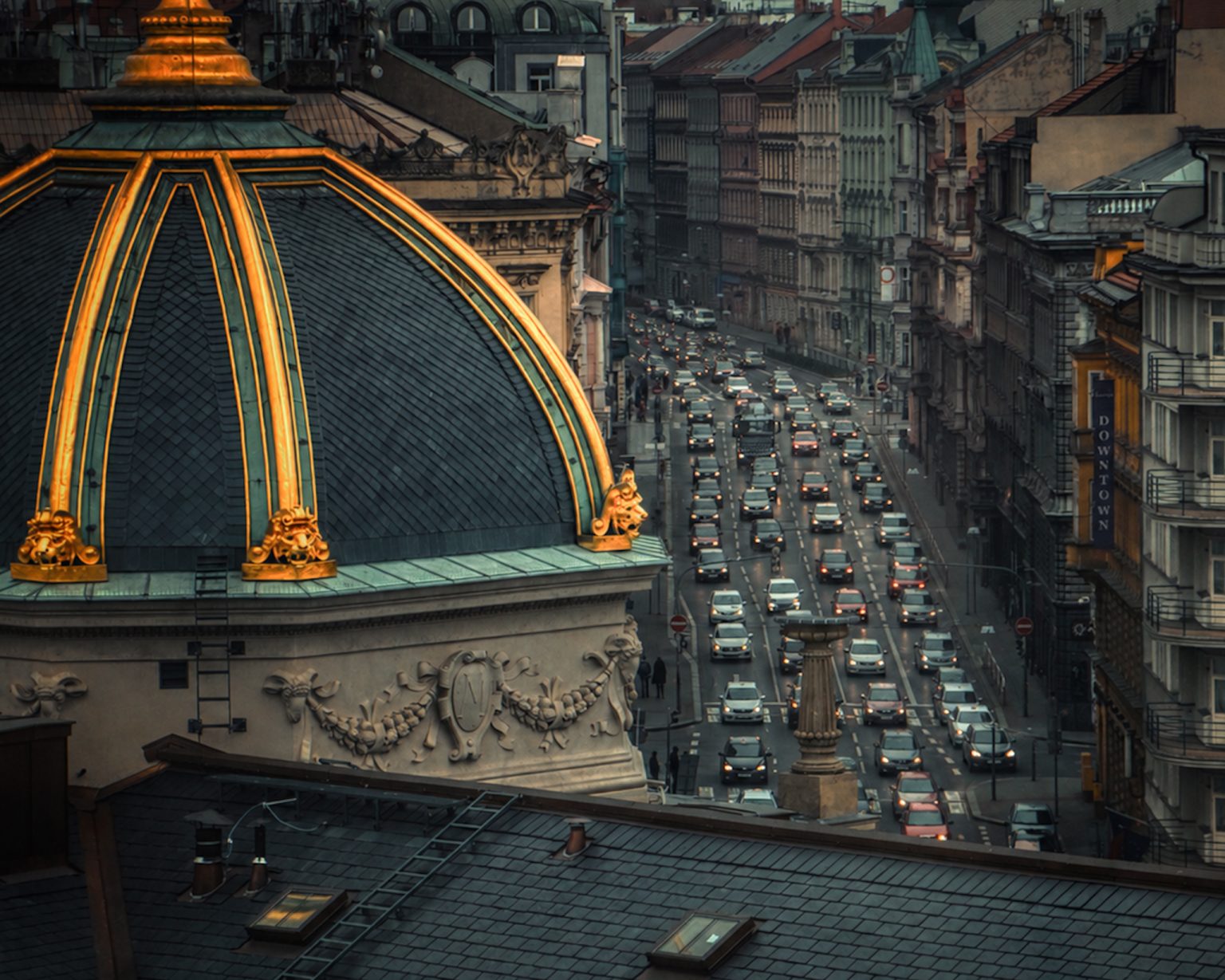
Over the past decade, the number of passenger cars in Prague has risen sharply. In 2013, the Czech capital recorded 565 cars per 1,000 inhabitants. By 2023, that figure had climbed to 753 – a gain of nearly 190 vehicles per thousand inhabitants that places Prague among the ten most motorized regions in the EU.
In absolute terms, the registered fleet grew from 821,000 vehicles in 2013 to 1,186,209 in 2023. Only two Italian regions and Romania recorded a comparable increase in motorization across the EU over the same period.
Romania and the two Italian regions were, in each case, recovering from an unusually low starting point. Romania had only 242 cars per thousand inhabitants in 2013, far below the EU average of 493 and less than half of Prague’s figure of 565, which was itself already high by European standards. That Prague has grown rapidly from an above-average base makes the trend harder to dismiss.
What Registrations Do Not Show
The figures do, however, come with a qualification. They record registrations, not road use. Prague's status as the national capital and the registered address of many large companies means that a significant share of vehicles counted in its statistics may rarely, if ever, operate within city limits.
The two Italian regions – Valle d'Aosta and the Autonomous Province of Trento – owe their positions largely to favorable tax conditions for vehicle registration rather than to genuine levels of car use. Valle d'Aosta recorded 2,295 passenger cars per thousand inhabitants in 2023, a figure that reflects its registration environment as much as its roads. Italy accounts for six of the ten most motorized regions in the EU overall.
The Prague figures point to something more straightforward: the car is becoming a standard feature of Czech life. Rising household purchasing power has allowed more families to buy a new or second vehicle, a trend that even the inflationary pressures of recent years have not significantly interrupted.
The rise in car ownership is not without consequences. Greater vehicle numbers place mounting pressure on infrastructure, air quality and the livability of densely populated areas. Prague faces the familiar urban challenge of accommodating private transport without sacrificing the sustainability and livability that make a capital city function.
Originally published on lukaskovanda.cz.