
The Old Continent of today is defined by military buildup – a prospect that would have seemed implausible just a few years ago. For decades, Europe outsourced its security to the United States and directed public funds toward other priorities.
The price of that arrangement is now clear. The full-scale war in Ukraine, entering its fifth year, has exposed not only Europe's vulnerabilities but, in a broader sense, those of the entire West.
The scale of the problem was captured bluntly by NATO Admiral Rob Bauer, who remarked in October 2023 that "the bottom of the barrel is now visible". The West had not prepared for a war of attrition. Warehouses were far from full, and production capacity was calibrated for peacetime.
The ammunition figures made the disparity stark. The United States could produce around 168,000 rounds of 155mm artillery ammunition per year; Europe's manufacturers managed around 240,000. Russia, at that point, was firing comparable volumes every month.
The years since have brought a concerted push to close that gap. Military spending has risen sharply across Western countries, and vast sums of public money have flowed into the defense sector. Yet money alone does not automatically expand production capacity, and progress has been uneven – stronger in some areas, slower in others.

The Ammunition Boom Has a China Problem
Artillery ammunition is where Europe has made its most significant gains. Early difficulties in scaling up production and supplying Ukraine have largely been overcome, and by the end of 2025 arms manufacturers had expanded combined capacity to two million projectiles per year.
The contribution of a single company illustrates the scale of the shift. Germany's Rheinmetall now produces more than one million 155mm shells annually – roughly 15 times its 2022 output.
The gap with Russia, however, remains wide. According to Rheinmetall CEO Armin Papperger, Russia produced four to five million artillery shells last year. The United States has tripled its output since the start of the war to around half a million rounds.
The surge in ammunition production has a significant vulnerability beneath it. Gunpowder and its key component, nitrocellulose, are produced in Europe in relatively large quantities, but their manufacture depends on cotton fibers, the bulk of which come from China.
In 2024, Rheinmetall CEO Armin Papperger put the scale of that dependence plainly: European manufacturers rely on China for more than 70% of the raw material. American producers face the same problem.
Efforts to build domestic capacity are under way, but progress is slow. The European Policy Centre estimated last year that European nitrocellulose production stands at a maximum of 10,000 metric tons per year, enough to cover Kyiv's needs of around 6,000 metric tons, but well short of the roughly 14,000 metric tons Europe as a whole requires, Ukraine excluded.
The Interceptor Output Is Growing – but Slowly
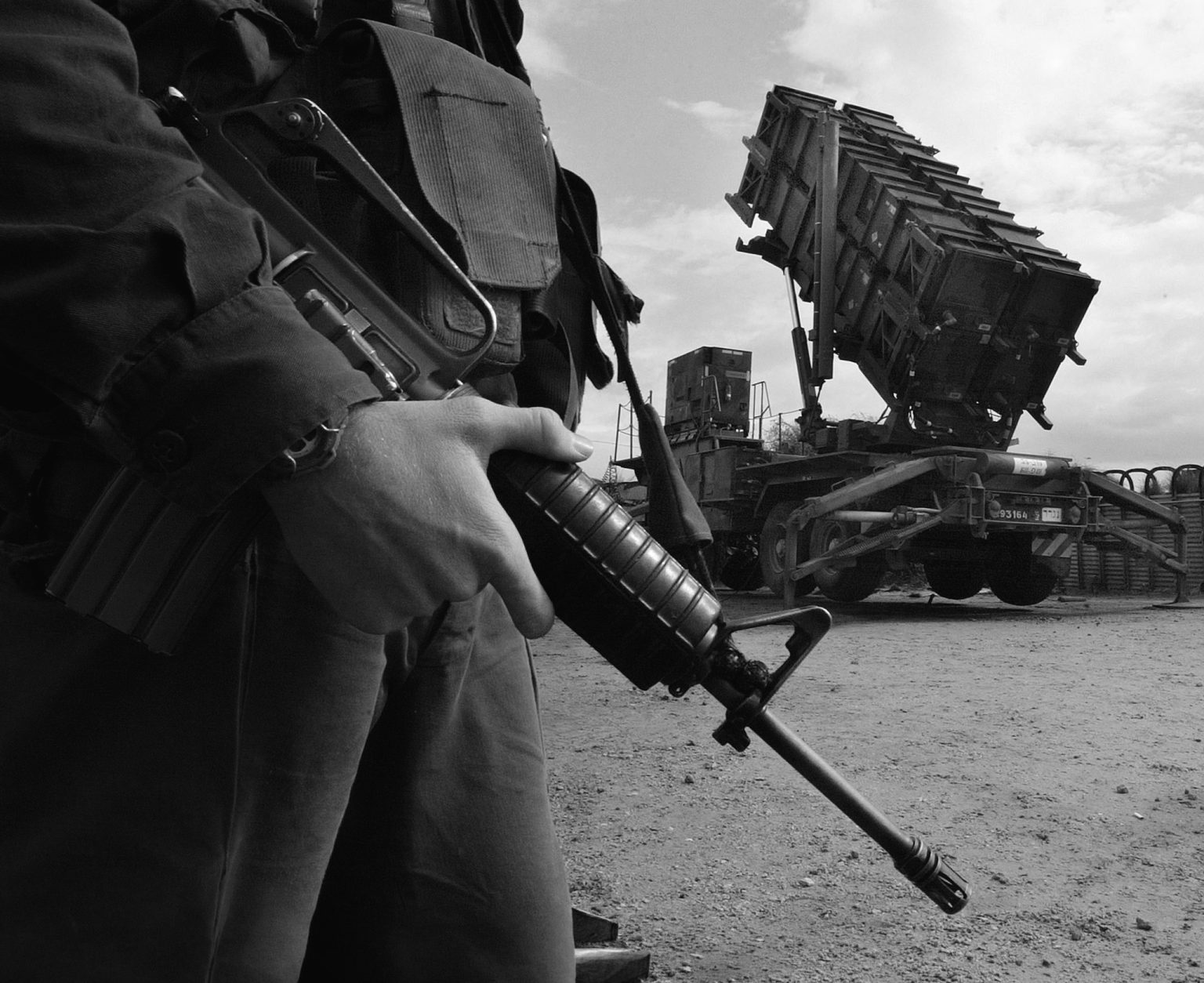
Air defense systems and their missiles represent an even more critical component of Ukraine's defensive arsenal – particularly those capable of intercepting ballistic missiles. The American Patriot system and its PAC-3 MSE interceptor sit at the center of that capability.
Europe has considerable ground to make up here. Demand for the Patriot from Ukraine, Arab states, the US and Israel has created a backlog that leaves many European countries facing extended waiting times for a system they have long relied on.
Lockheed Martin's production capacity currently stands at around 620 units per year. The company has announced plans to reach 2,000 units, but that target is seven years away.
Europe does have its own alternative to the Patriot. The SAMP/T system, manufactured by the Franco-Italian consortium Eurosam – which brings together MBDA and Thales – uses missiles from the Aster 30 family and offers specifications that are "comparable on paper", according to analysts at the Center for Strategic and International Studies (CSIS). In practice, however, operational use has so far been "more limited".
That limited track record has consequences. The Patriot's prestige, combined with years of relatively low demand for a European alternative, has made scaling up SAMP/T production considerably harder.
The picture is shifting. MBDA currently holds orders from Italy, the United Kingdom and France for roughly 1,000 Aster units and in April Denmark became the latest country to join the list, having chosen SAMP/T batteries over Patriots.
MBDA does not disclose the breakdown between Aster 30 and Aster 15 – the shorter-range variant – within its order book. Fabian Hoffmann of the Center for European Policy Analysis (CEPA) nonetheless argues that since the war in Ukraine, buyers have "likely favored the Aster 30 model".
Orders, however, are not the same as output. To assess actual production capacity, Hoffmann worked from data on production volumes and the ratio of individual models recorded in 2011.
With no capacity increases announced before the war in Ukraine, Hoffmann puts baseline Aster 30 production around 2022 at "152 to 166" units per year.
Since MBDA announced a 50% increase in production in 2025, he estimates the number of these interceptors reached around 250 units per year last year.
It should be noted that since Hoffmann's calculation, the company has announced further growth. According to a statement by CEO Éric Béranger in March 2026, Aster production is expected to double this year, which would bring the total to 500 units per year.
The Air Defense System Has More Layers – and More Gaps
The overall trajectory in European projectile production is positive. Ballistic missile defense, however, represents only one layer of a broader air defense architecture.
Europe produces a range of other advanced systems designed to counter cruise missiles, aircraft and drones. Two systems stand out in this category. CSIS analysts describe the Norwegian-American NASAMS medium-range system as having "significant operational use", while the German IRIS-T SLM is characterized as a "cost-effective workhorse" for defeating mass attacks.
Saturating air defenses with large drone swarms is one of Russia's established tactics in Ukraine, and it exposes a fundamental cost problem. Intercepting a drone worth tens of thousands of euros with a missile costing hundreds of thousands to millions of euros is economically unsustainable. Closing that gap is one of the most pressing challenges facing European defense planners.
At the highest tier of air defense, Europe's autonomy is even more limited. No European system exists that is capable of intercepting strategic intercontinental missiles outside the atmosphere – a role filled by the American THAAD and the Israeli Arrow. For that layer of protection, Europe depends entirely on its allies.
Both systems have seen heavy use. CSIS analysts estimate that during last year's 12-day war with Iran, the US expended roughly 150 THAAD missiles – approximately one and a half years of normal production. In the current conflict, consumption had reached 290 missiles by the end of May.
By comparison, Lockheed Martin currently produces 96 THAAD interceptors per year. Its plans to quadruple that figure will not be realized for another seven years.

Better Armed, but Still Buying American
The Europe of today is a more capable military force than the Europe of 2022. Some of the weaknesses exposed by the war in Ukraine have been addressed. Others have not, and the gaps in Europe's ability to defend itself independently remain significant.
Two areas stand out. Europe lags behind the US in stealth technologies – the systems that make aircraft and ships difficult to detect – and in the development of very-long-range strategic missiles.
Aviation is a third area of concern. Europe produces capable fighter jets in the Eurofighter, Rafale and Gripen, but none of them belongs to the fifth generation. The continent has no domestically produced alternative to the F-35.
The uncertainties surrounding European aviation were compounded by the collapse of the Future Combat Air System (FCAS), the joint German-French project to develop a sixth-generation fighter jet, which fell apart over disagreements among the participating companies. The aircraft was designed to operate in concert with unmanned aerial vehicles and to incorporate advanced communications infrastructure.
The gap extends beyond aviation. Europe also lacks satellite systems and early-warning technologies capable of detecting ballistic missile launches at a level comparable to those maintained by the United States.
The cumulative effect of these dependencies is visible in the import data. Between 2021 and 2025, European arms imports tripled relative to the previous five years, with 48% of those imports coming from the US.
Europe is no longer scraping the bottom of the barrel. But strategic autonomy remains a distant prospect.