Ten years after leaving the European Union, Britain is still arguing over what it achieved. Supporters cite sovereignty, while critics point to weaker growth, strained trade and a political system still shaped by the referendum.
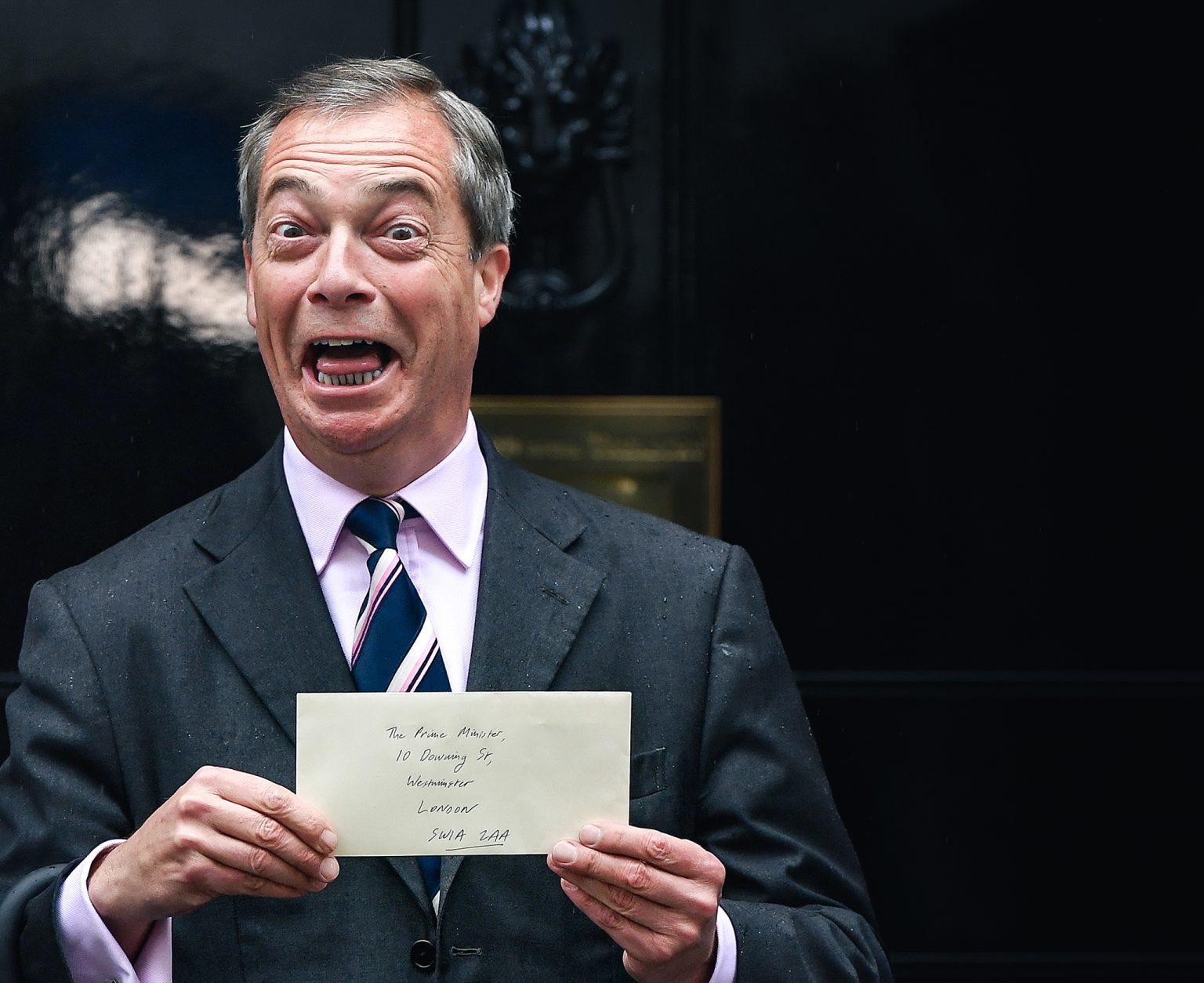
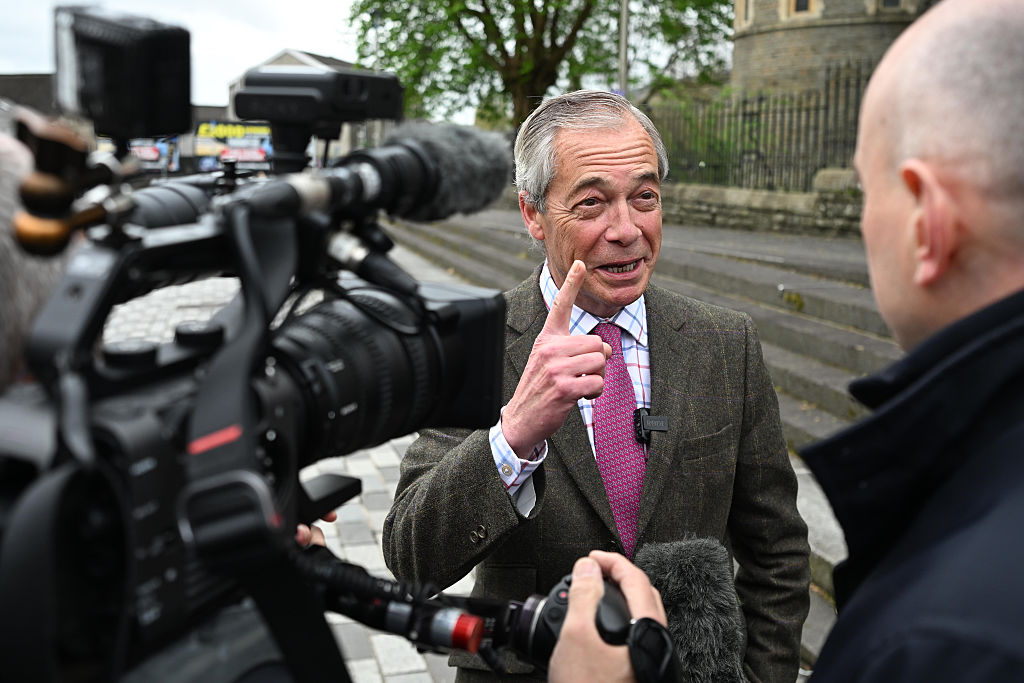
Nigel Farage delivers a petition setting out his vision and demands for Brexit to 10 Downing Street on 7 June 2019 in London, England. Photo: Jeff J Mitchell/Getty Images
|
For a decade now the politics of the United Kingdom have been dominated by two warring tribes, whose roots lie in the Brexit campaign of 2016.
On the one side are the veterans of Vote Leave, the official campaign to leave the European Union, dominated by Boris Johnson, the charismatic, bumbling blond who as prime minister both got Brexit done and then betrayed it by opening the borders to an unprecedented wave of post-EU immigration.
On the other side are the veterans of Leave.EU, the insurgent campaign, dominated by Nigel Farage, who were pushed to one side in the referendum but now, in the form of Reform UK, are poised to become the next government and undo the mistakes of Johnson.
Poised on the sidelines, like a mischievous fairy in Shakespeare, is Dominic Cummings: the brilliant but difficult mastermind who helped win the Brexit referendum and then propel Boris Johnson into government in a landslide, only for them to fall out spectacularly. He was then ejected from the government he helped usher in. Ever since he has been reading and writing on his Substack, preparing a set of tactics to completely reshape Britain. Foes or not, many of Farage’s plans for government sound remarkably similar to his blog posts.
Meanwhile, ranged against them are the reactionary forces who lost the referendum. Not just the parties of the left but the establishment itself: the judges who tried to frustrate Brexit, the civil servants who preferred to stay in a bureaucrat-ruled EU, and a swath of politicians and journalists for whom the post-Brexit culture wars have become all-encompassing.
Now, with Prime Minister Keir Starmer’s fall, battle is rejoined. In the next few years, the UK must either rejoin the EU or forge a distinct path for itself. The battle for Brexit was won, but the war over Brexit rages on.
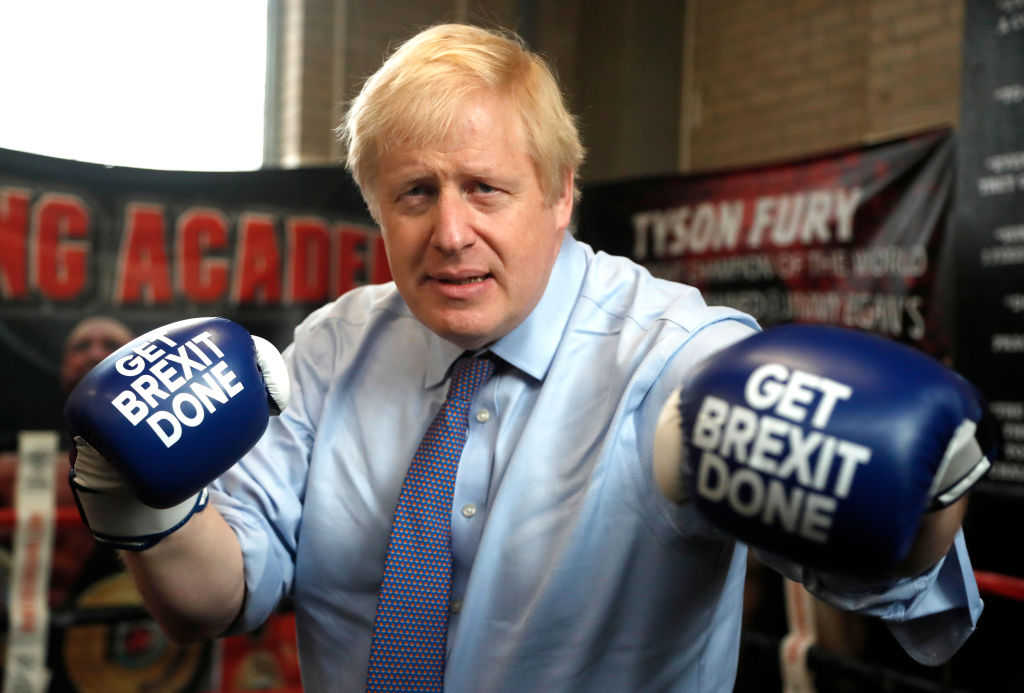
Britain’s then Prime Minister Boris Johnson poses for a photo wearing boxing gloves emblazoned with “Get Brexit Done” during a stop in his general election campaign in 2019. Photo: Frank Augstein/WPA Pool/Getty Images
Get Brexit Done!
Boris Johnson, seated on a forklift, smashes through a wall on camera. That was the sort of fresh campaigning that helped Johnson romp to victory for the Conservative Party under the slogan “Get Brexit Done” in 2019. The country’s mood was mutinous and frustrated. It had been three years since the Brexit vote, won by the slimmest of margins.
Since then, Brexit had consumed the ruling Conservative Party, which had promised voters a referendum only because it did not think it would win the votes needed to form a government. The prime minister who campaigned against it, David Cameron, had resigned in 2016. How was his party to deliver something that had divided it since the 1990s?
The first attempt to deliver Brexit fell to Theresa May, a politician whose status as the daughter of a vicar in the Church of England was supposed to emphasize her reasonableness. In reality, her attempts to develop a compromise pleased nobody, leading to her own toppling.
After years of bitter struggle, anti-democratic demands to reverse the referendum or to hand it over to dubious citizens’ assemblies, and no space in politics to discuss anything else, the British people simply wanted an end to it all. At that point, Johnson, who had helped lead the Brexit referendum campaign but then lost out on the Conservative leadership afterwards, set out to rescue Brexit.
With Cummings as his chief strategist, and the New Zealand ad agency Topham Guerin to help craft their message, they conquered first the Conservatives and then the country. They were willing to be ruthless: when some Conservative MPs refused to back their plans, they were summarily dropped by the party. That convinced others that this time the leadership was serious.
They were equally happy to take on the Supreme Court and emphasize that parliamentary sovereignty meant that elected politicians ruled, not judges. After all, this was what Brexit was about: returning power to the people.
Within a few months of their electoral victory, they had indeed delivered Brexit. But then the problems started.
Johnson had always been an exuberant and clever politician. Born into privilege, with family roots in Turkey and a birthplace in the United States, his self-presentation as a messy-haired bumbler had allowed him to constantly defy expectations. Those who took it seriously were often surprised when he outmaneuvered them.
Yet to judge him by his wild hair was not entirely wrong. Triumphant, with his foes defeated and the future stretching out before him, Johnson was tempted. As Cummings tells it, he decided that having done the hard work, now he wanted his reward of being loved by those in the Westminster bubble. Part of the problem, according to Cummings again, was that Johnson had a new love. Carrie Johnson had her own views on what the Conservatives should do in office.
What that meant was focusing on environmental politics and social issues, like allowing gay men who are HIV positive to serve in combat. For Cummings, who as an adviser in earlier governments had decided that the way Britain was ruled was out of date, this was not where he wanted to focus precious political capital. Instead, he wanted to make Britain into a brave pioneer of frontier technology, as it had been in the Industrial Revolution.
That meant emphasizing artificial intelligence, reforming a broken planning system that made it impossible to build the houses or industry needed, and opening the borders to smart graduates from around the world.
Although Cummings rarely talks about it, this was his contribution to the fall of Johnson. A special visa was created, allowing graduates to stay and work automatically for a few years. It was intended to catch the best and brightest of the globe.
In reality it was quickly abused by those from the Third World who worked out that a master’s degree in a forgettable subject was their path to several years of illegal working and a few more legally. In many cases, they did not even speak English well.
Immigration had always been the hidden side of the Brexit vote. Britain had never voted for mass immigration and yet politicians had thrust it upon them. One particular issue was the accession of Eastern European countries. Civil servants confidently claimed that very few would come to Britain. Instead, millions did. Focusing on these legal EU migrants was a way to discuss the subject without the inevitable accusations of racism.
Indeed, the most controversial image of the campaign had been unveiled by Nigel Farage and Leave.EU, showing a wave of migrants heading to Britain. Angela Merkel’s unilateral decision to open the EU borders in order to assuage Germany’s war guilt was still strongly felt. Britain had largely escaped the wave of terror and sex attacks, but the EU’s failure to maintain its own borders had scared people. The EU’s bubbling desire to admit Turkey was another concern, promising that free movement might now stretch to the border with Syria and include tens of millions of Muslims.
Together with Cummings’s graduates, Boris Johnson presided over a great relaxation of the requirements for immigration. Having taken control of their borders from the EU, they set about opening them. Refugees from Ukraine and Hong Kong were given generous rights to enter. A visa for care workers was not capped, allowing hundreds of thousands of low-skilled workers and their families to come. Requirements and salary levels were dropped.
The result was an unprecedented wave of migration, dubbed the “Boriswave” by critics. For the Conservative Party, which had once promised to reduce net migration – not gross – to the tens of thousands, to allow new migration to soar to over one million people in a year was utterly discrediting.
At the same time, Johnson and Cummings had fallen out over Covid-19. The emergence of the virus shortly after Brexit was achieved had sucked up all the energy that was due to go into their reforming plans. There was a stark divide between the two men, with Cummings favoring listening to the scientists and imposing lockdowns, while Johnson preferred much more of a libertarian approach. By the end of 2020, Cummings was out. Johnson would fight on, but without the guiding hand of his chief strategist, his fall was inevitable.
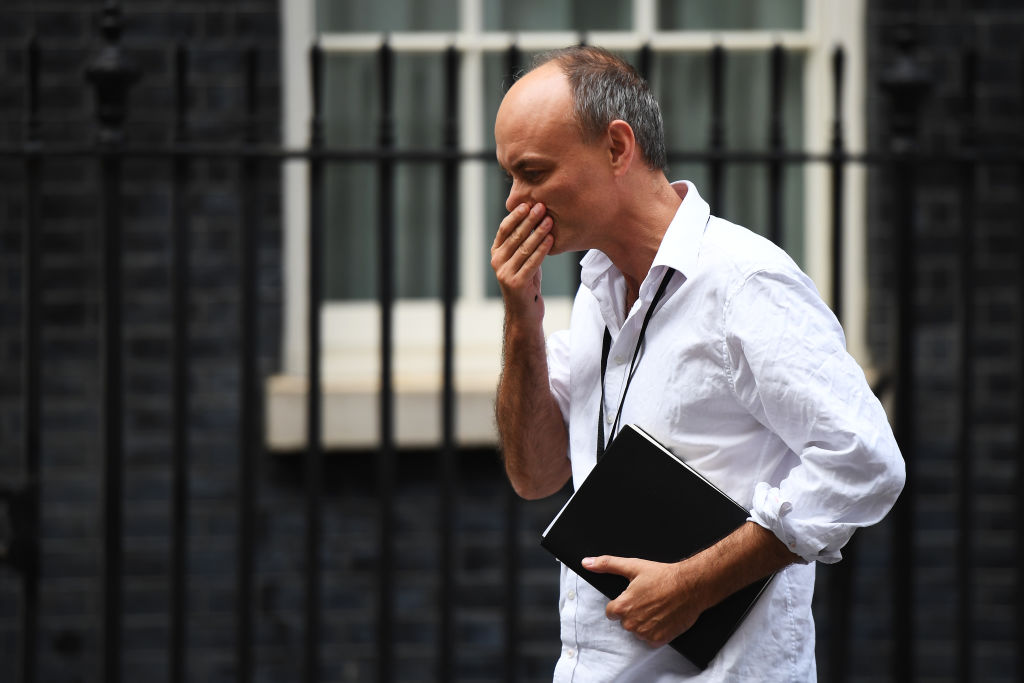
Dominic Cummings, special adviser to then Prime Minister Boris Johnson, leaves 10 Downing Street. His departure marked a point of no return and ultimately signaled the end of Johnson's premiership. Photo by Chris J Ratcliffe/Getty Images
Trussed and Bound
With the chief architects of Brexit gone, the Conservative ship wobbled. The first successor to Johnson as prime minister was Liz Truss, a longtime advocate of a free-market Brexit whose role in the referendum had been limited. She promised tax cuts funded by borrowing and more migration from India. The bond markets were unconvinced. Facing economic crisis, short of allies and up against resistance from many inside government, she resigned on her 50th day in office. That made her the shortest-serving prime minister of all time.
She was replaced by the man she had beaten in the Conservative Party leadership contest, the former chancellor of the exchequer, Rishi Sunak. He planned to improve the economy and to stop the small boats of illegal immigrants crossing the English Channel. To do the latter, he had the post-Brexit freedom of no longer being bound by the European Court of Justice. The Rwanda plan aimed to take illegal immigrants and fly them to Rwanda. They would still have their asylum cases heard, only in a different country. Should they succeed, then they would also receive asylum, only in safe but poorer Rwanda.
Yet even having used Parliament to overrule those in the British courts who wanted to block the plan, the policy was sunk at the last minute by a Rule 39 order from the European Court of Human Rights, which prevented the flight of the first cohort of illegal immigrants to Rwanda. It turned out that, even outside the European Union, there remained many international laws which continued to bind Britain.
Although Sunak had voted for Brexit, he had also backed May’s failed attempts at compromise. Among his final decisions was an attempt to ban smoking for anyone born after 2009 and to make math mandatory for students until they turned 18. He was definitely not a Brexit buccaneer. Facing a difficult situation, he decided the only way out was to hand the decision to the country and called for a general election.
The Conservative Party had finally got Brexit done but had then squandered that victory with higher taxes and stratospheric levels of immigration. Unsure what Brexit should mean once it was achieved, they failed to take advantage of many of their new freedoms. The ability to opt out of the EU’s plans on Covid-19 vaccines had shown that these freedoms could translate into tangible benefits, yet too often central government had tried to carry on as normal.
Exhausted and, to many, discredited, they were beaten in a landslide by the Labour Party, led by Keir Starmer, a human rights lawyer who had backed Remain and called for a second referendum on Brexit. In some ways, that suggested voters felt confident Brexit had been made permanent and that even a figure like Starmer would not be able to reverse it. Labour’s triumph also disguised a weakness: although the party won a landslide, its vote total was actually lower than in its great defeat of 2019. Rather than winning over voters, Labour had benefited from right-wing voters choosing to stay home.
There was, however, one final coda. Nigel Farage, who had played such an important role in getting a Brexit referendum and winning it, finally won a seat in Parliament, alongside a few others. Reform UK had succeeded where the earlier UK Independence Party and the Brexit Party had failed. They only had a few MPs but it was a sign that Brexit was challenging the traditional two-party structure of British politics.
Farage has always been what in Britain they call a “Marmite politician”, after the yeast-extract spread that advertises itself as either loved or hated. He had first risen to prominence as a member of the European Parliament, building an anti-EU party on the generous funds offered by the EU. Despite electoral successes in EU and local elections, that had never translated into wider success. Yet his persistent presence on the right of the Conservatives meant that the anti-EU view could never be dismissed.
Now, with Reform UK, he finally led a party that had reached Parliament. Some of those angry Conservative voters had given up and turned to him. After the Conservatives, under the new leadership of Kemi Badenoch, announced that they would undertake a lengthy process of self-examination, there was an opportunity. Farage seized it: as Keir Starmer became increasingly unpopular, it was Reform that positioned itself against him.
Many Conservatives felt that their own party had betrayed the promises of Brexit and had contributed to the wider issues Britain faced. Some had joked about wanting their party to win “zero seats” in the general election. Others muttered about “14 years”, in reference to the period of time the Conservatives had had in office. Like many ruling parties during the Black Lives Matter period, the Conservatives had attempted to compromise with identity politics, alienating many in their base. Reform was there for those people.
Theirs was a narrative of Brexit betrayed, of a people who voted for freedom and especially for less immigration, who were let down by the political class and by civil servants who had their own agenda. It meshed with the wider criticism that Cummings was making in his blog, writing enormously long entries which ranged from the Manhattan Project to Bismarck to the “Blob”, the permanent class of bureaucrats who he argued secretly ran the country.
Britain is an almost unique country because its unwritten constitution means that Parliament is sovereign. Judges can be overruled, civil servants fired, government departments closed and new ones created with the stroke of a pen. With Brexit, there was no EU to stop them. The ECHR and other forms of international law are only impediments if Britain chooses to remain bound by them.
Farage promised he would leave. Now polls show Reform has supplanted the Conservatives and will likely form the next government. Drawing on Conservative failures, the party is promising a revolution in how Britain will be governed. That may be the real legacy of Brexit.
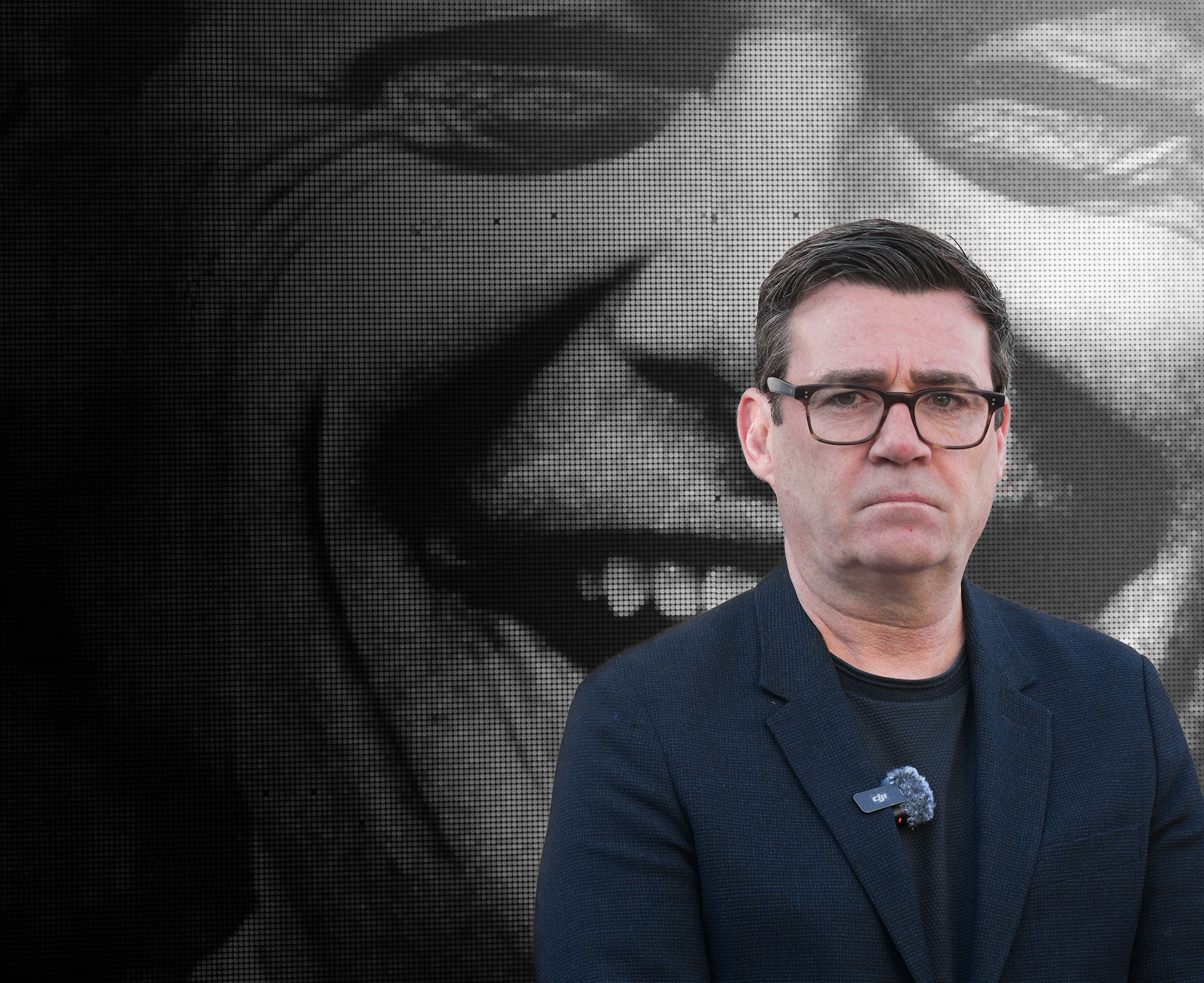
Keir Starmer was an embodiment of the pre-Brexit establishment. In office he struggled to adapt to the changing circumstances of Britain. His likely successor, Andy Burnham, may make much of his credentials as an outsider from the North. His popularity is genuine. Yet he too has struggled to suggest what he will do differently. It remains a matter of time before the Labour government will fail yet again.
Johnson and the Conservatives of Vote Leave succeeded and lost. Now Nigel Farage and his team from Leave.EU have their chance. Whether they succeed depends on whether they have learned from the failings of their one-time allies. They will need the right people and the political will to take on the civil service and political elite. Yet if they can reform the state, then they will be able to control migration, restore law and order and enable businesses to thrive.
The real legacy of Brexit might be delivered by those who were pushed to the margins in the referendum itself.
Welcome to the comments section of the Štandard daily. Please take note of our guidelines, comments are moderated by us. You can contact the moderators at support@statement.com.
Participate in the discussion
Comments are available to subscribers only. If you'd like to join the discussion, choose a subscription starting at €6.72 per month.
All comments 0
Register
Comments are available to registered users only. If you'd like to join the discussion, register here.