

In August 2018, Poland introduced new regulations aimed at simplifying the planning and implementation of housing investments. The legislative package, known as Lex Developer, was adopted by Warsaw in an effort to resolve the country's housing crisis.
Under the new rules, investors could build even on plots without an approved zoning plan, as long as the proposed buildings did not conflict with basic zoning documents. Most construction took place on former industrial or military sites, and a company seeking to build needed only the approval of the municipal council.
A Win for Developers, Not Always for Residents
According to a representative of a Czech development group also active in the Polish market, the difference in efficiency was striking: the firm had waited 13 years in Prague for a building permit for an apartment building of similar size, with no need to amend the zoning plan, compared with just six weeks in Warsaw, the representative told the Czech e15 portal.
Critics saw this as a win for the developer lobby, arguing that such projects do not always genuinely serve the interests of future residents. Lex Developer does, however, require construction projects to meet urban planning standards, such as access to public roads, sidewalks, public transportation stops, elementary schools or preschools, sports facilities and public green spaces or recreational areas.
The law further specified a maximum height for new buildings, aimed at preventing significant disruption to the character of smaller municipalities. New residential buildings could have no more than four stories in cities with fewer than 100,000 residents and no more than 14 in larger cities.
However, municipalities directly affected by the construction could set their own urban planning standards for developers, as long as they did not deviate from the law by more than 50%. This frequently meant that a new apartment building ended up farther from a school than required, or had a different number of stories than mandated. Critics said this created opportunities for bribery in municipal councils.
A Drop in the Ocean
The mayor is required to publish any request to designate an investment site in the public information system within three days, giving residents the opportunity to comment on the proposed change to the town's development plan. Local council members then have 60 days to issue a decision, taking into account input from residents and civic initiatives.
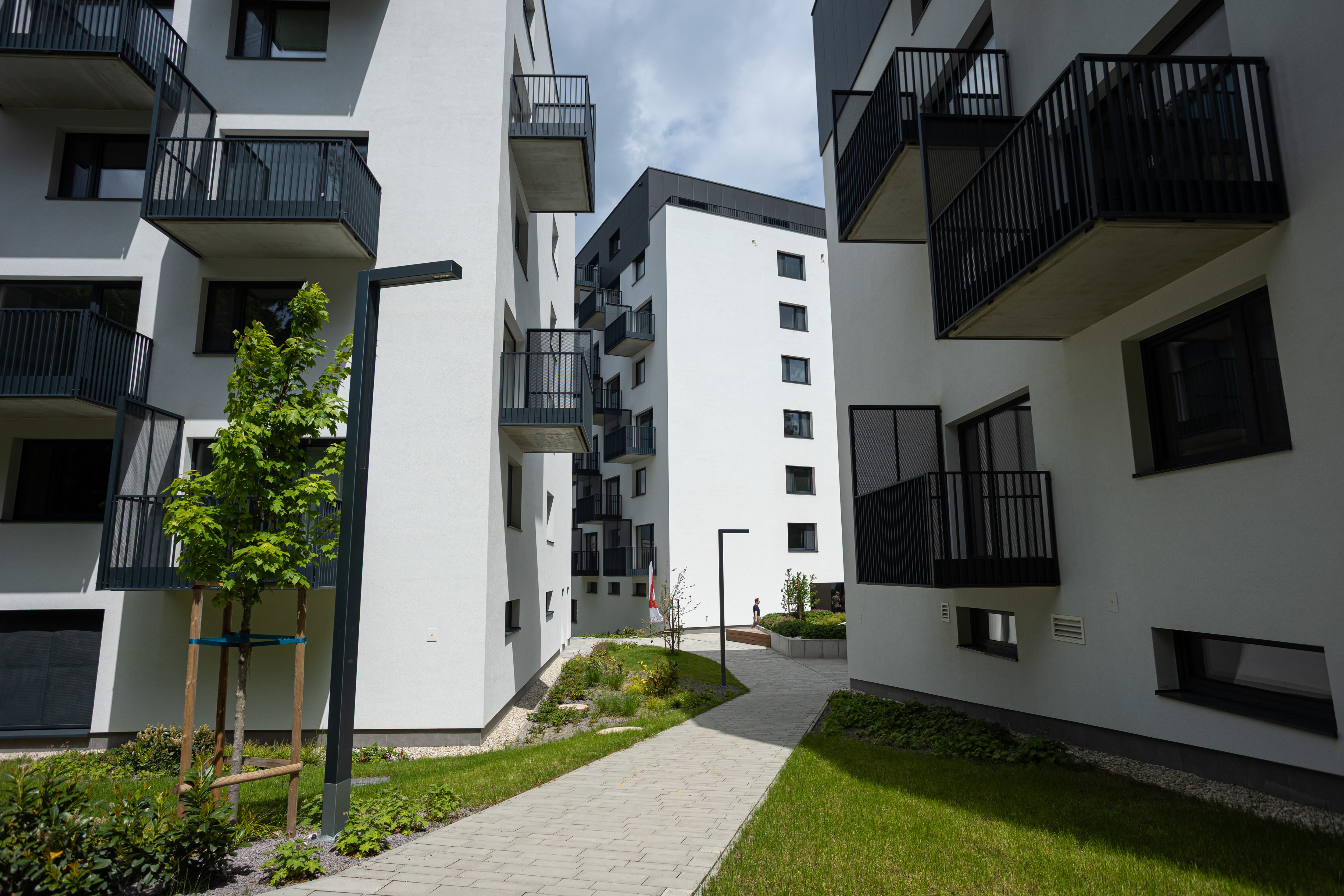
Municipal councils throughout Poland have approved approximately 500 applications of this kind. Although the approved resolutions resulted in new apartment construction, the volume of housing built has fallen well below what the country requires, contrary to expectations.
This shortfall stems in part from broader demographic pressures on the real estate market, which is shaped not only by Poles moving from the countryside to cities but also by more than two million foreigners from outside the EU. Alongside 1.5 million refugees from Ukraine and more than 150,000 emigrants from Belarus, this group includes legal migrants from Africa and Indians, currently Poland's fastest-growing immigrant community.
More than 4,000 apartments were built in Gdansk between 2023 and 2025 across six projects, yet Warsaw approved only 14 of 78 project proposals, a figure far from sufficient for the capital. According to Tomasz Lewandowski, Deputy Minister of Development and Technology, the Lex Developer initiative produced roughly 80 residential buildings a year, accounting for only about 1.5% of new residential investment in Poland during that period.
Given that the Polish market is short by at least 1.5 million apartments, the law has plainly failed to solve the country's housing problem. That shortfall does not even account for student housing, seasonal workers or refugees from Ukraine, whose arrival after Russia's invasion drove a sharp rise in real estate prices for Poles. The total housing deficit could run as high as two million apartments.
More than a quarter of Poles find themselves caught in an income trap, earning too little to qualify for a mortgage or pay rent reliably, yet too much to qualify for public housing. The government, meanwhile, offers substantial support to families with children seeking to buy a home, part of a broader effort to address the country's demographic decline.

A Legacy of Loopholes and Land Speculation
Developers themselves understandably favored the simplified construction regime, but many initiatives and activists disagree. Lex Developer not only had almost no effect on the country's housing crisis, it also generated problems for numerous municipalities.
The Committee for Spatial Development of the Polish Academy of Sciences criticized the legislation as far back as 2018, contending that the law was not really intended to accelerate construction but instead to speed up land speculation and encourage greater corruption in the sector and among local authorities.
The law went further still, sidelining zoning plans to the point that the last remnants of local-level zoning planning were effectively eliminated. Some of the warnings issued by scientists and activists before and shortly after the law's passage proved unfounded, while others have since been borne out.
In numerous cases, construction proceeded in direct violation of local zoning plans, overriding residents' protests and disregarding the character of the surrounding community. Warsaw's Szamoty district illustrates the scale of the problem: even as objective factors supported acceptable living conditions for only 30,000 residents, city council members considered proposals that would have added another 20,000 people to the area.
As far back as 2018, opponents launched a petition against the law, arguing that construction overriding already approved zoning plans serves private developers at the public's expense. The then President Andrzej Duda dismissed the petition and signed the legislation into force that summer.
Although the Lex Developer was due to expire at the end of 2025, it will now remain in effect until 1 July of this year, following numerous requests, including from the Association of Polish Cities. It will then be replaced by the Integrated Investment Plans (ZPI), a system that, unlike its predecessor, will not permit developers to circumvent the zoning plan, the very feature of the outgoing law that attracted the most criticism.
In the end, Poland and Poles appear to have lost more from the law than they gained, and as in the other Visegrad Four countries, a genuine solution to the housing crisis remains elusive.