UEFA Had Little Moral Standing Against Infantino's Rapacity
FIFA’s aborted proposal to sell off chunks of the World Cup prompted UEFA to threaten a boycott. But European football has helped create the commercial culture it now condemns.
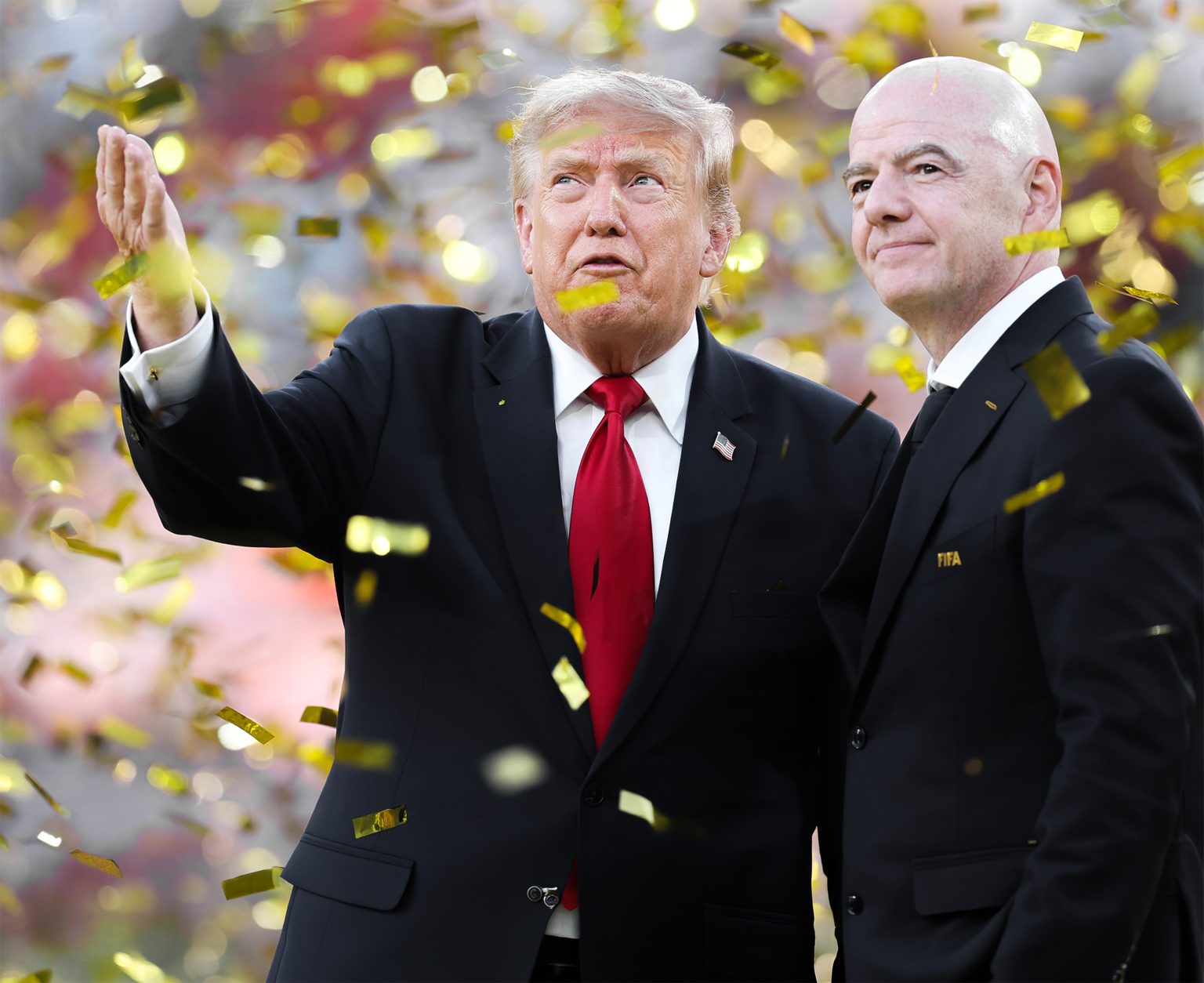
FIFA President Gianni Infantino with US President Donald J. Trump during the FIFA World Cup 2026 final match between Spain and Argentina. Photo: Catherine Ivill - AMA/Getty Images
|
Critics of the United Nations have long enjoyed one particular joke: it concerns that body's Human Rights Council.
That august institution, whose official purpose is to "promote universal respect for human rights", counts among its members the communist dictatorship of Cuba, repressive Islamic autocracies such as Qatar and Egypt, and such African beacons of human liberty as Angola.
To Western eyes, this is self-evidently absurd. Yet this is the fate of most global organizations, where Western nations, wealthy and influential though they are, remain in an absolute minority.
FIFA is no different, a global organization built on the principle of one member, one vote. It was this very principle that UEFA had to undermine, by threatening a boycott of the next World Cup, in order finally to kill Gianni Infantino's proposal to sell off chunks of the tournament.
That UEFA is entirely correct in this instance is, in one sense, beside the point. European nations, we are told, are moving to protect football from excessive commercialization. It is rather like the Cookie Monster from Sesame Street becoming an advocate for healthy eating.
FIFA's Corruption in Plain Sight
Western observers are often baffled by the tolerance shown toward FIFA's outrageous corruption, much of which occurs in plain sight. Media coverage of Gianni Infantino's mooted, and now dead, plan to sell off part of the World Cup's commercial future to private investors, through a vehicle linked to Donald Trump's extended family, is a case in point.
The reason is simple. Infantino proposed the idea knowing full well that he could command majority support within FIFA. And while it may be politically incorrect to say so, one reason for his confidence is that in many of the countries whose votes he needs, patronage and corruption are not aberrations from public life but ordinary features of it.
This is why UEFA had to resort to the extraordinary measure of threatening a full-scale boycott of the next World Cup. Had the European nations simply been able to outvote Infantino, no such threat would have been necessary. It was needed only because, until the eleventh hour, Infantino had the votes for his plan, and every confidence he would get away with it.
After all, he had gotten away with it before.
The Suspicious Saudi Switcheroo
Take, for example, the 2034 World Cup, due to be held in Saudi Arabia.
Saudi Arabia is a poor venue for a football tournament, not least because of its brutally oppressive weather. Deadening summer heat means the World Cup may, once again, have to become a winter tournament, as it did in Qatar.
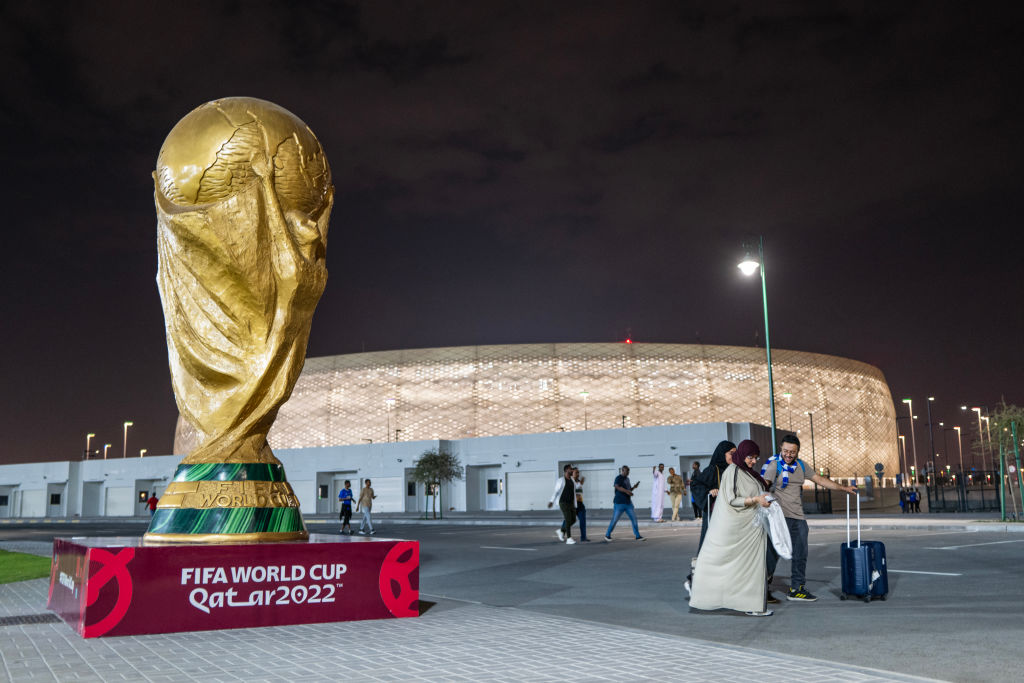
Fans leave Al Thumama Stadium in Doha, Qatar, beside a giant World Cup trophy. Photo: Matthew Ashton/AMA/Getty Images
So how was the world's greatest football spectacle awarded to a kingdom with little historic pedigree in the sport and horribly unsuitable weather?
Well, consider the rules.
Under FIFA's confederation-rotation policy, the World Cup cannot ordinarily be hosted by the same continental confederation twice in quick succession. With the 2026 tournament being held in North America, the 2030 edition had to go elsewhere.
And so it came to pass that the 2030 tournament was awarded jointly to Spain, Portugal and Morocco.
After that arrangement had been devised, however, FIFA added a novel twist. In recognition of the centenary of the first World Cup, three matches would also be played in South America, one each in Uruguay, Argentina and Paraguay.
Romantic? Perhaps.
Yet it also had the entirely coincidental effect of treating both Europe and South America as hosts of the 2030 tournament, ruling bidders from both continents out of contention for 2034. North America was already ineligible, having hosted in 2026.
The field was thus left virtually clear for Saudi Arabia, and for the billions of dollars the kingdom is investing in sport. Or in sportswashing, if one is inclined to cynicism.
This sort of decision-making, suspiciously convenient to put it euphemistically, runs deep in FIFA's DNA. Predictably, it provokes outrage in Europe at every turn.
But the reality is that Europe's football associations are a minority within the global organization. They are powerful, certainly. They are rich. But they can still be outvoted.
There should, therefore, have been little suspense for Infantino over his project to sell part of the World Cup's commercial future to private investors.
He had already prepared the ground by offering each national governing body a stake reportedly worth around $20m, had the plan proceeded. The English, French and German football associations can easily afford to turn that money down and stand on principle. But for the Guyanese Football Federation, or the football authorities in Burundi, the financial incentive would have been extremely difficult to resist.
And perhaps, in its own way, adopting the plan would have amounted to a form of justice.
Europe in a Glass House, Throwing Stones
The European domestic game is the pinnacle of world football. It swims in money and then uses that money to denude the rest of the world of its talent and its viewers.
Fans of South American clubs are accustomed to watching their favorite players snapped up by European sides, sometimes clubs with far less history or prestige than the ones they are leaving. Such is the financial power of the modern European game that even middling Premier League clubs can routinely outbid the giants of South American football.
Indeed, it is rich for Europeans to accuse Infantino of selling football when some of the continent's leading clubs, Paris Saint-Germain and Manchester City among them, are owned in all but name by Arab states.
It is hypocritical when clubs such as Chelsea game financial rules by amortizing enormous transfer fees across absurd eight-year contracts.
It is a little nausea-inducing when season tickets at clubs such as Manchester United grow ever more unaffordable for ordinary supporters.
And it is hard to stomach when European football has sold itself almost wholesale to subscription broadcasters, erecting ever higher financial barriers around the simple act of watching it.
Of course, what Infantino proposed was a bad deal for football. Let there be no doubt about that.
A Bad Deal, Inspired by Europe
As the sport's popularity grows, so too will the value of the commercial assets Infantino proposed to place partly in the hands of private investors. Poorer football associations were being offered cash today in exchange for something that may be worth vastly more tomorrow.
In the process, the game would have become still more commercialized, more remote and more apparently corrupt.
But the problem for Europe is this: while it dominates the sport economically, it does not make the rules.
UEFA therefore had only two real options. It could have accepted Infantino's plan if, as seemed likely, the vote went his way. Or it could brandish the one weapon that might genuinely frighten FIFA: a boycott of the World Cup, combined with a threat to withdraw from the organization and set up a rival international structure. It chose the latter. This time, it worked.
The irony, of course, is that it worked because UEFA, having pioneered the commercialization of football, is now too rich and powerful to ignore. UEFA was Infantino before Infantino.
For the ordinary supporter, meanwhile, the long-term consequences of the proposal could have been grave, had it meant the European model becoming the global one.
The World Cup has traditionally been shown on free-to-air television across much of Europe. In Britain, that arrangement is already secured through 2030. But should a private company acquire a substantial financial interest in the competition's commercial rights, there can be no guarantee that future offers from subscription broadcasters will not eventually prove too lucrative to resist.
The last World Cup controlled wholly by FIFA could, in time, have been followed by the first World Cup placed largely behind a paywall. That would be a tragedy.
So the European boycott was, one must reluctantly conclude, a good thing on balance. But it was necessary only because European football is itself the author of the commercialization it now laments. Where else, after all, did FIFA get the idea?