
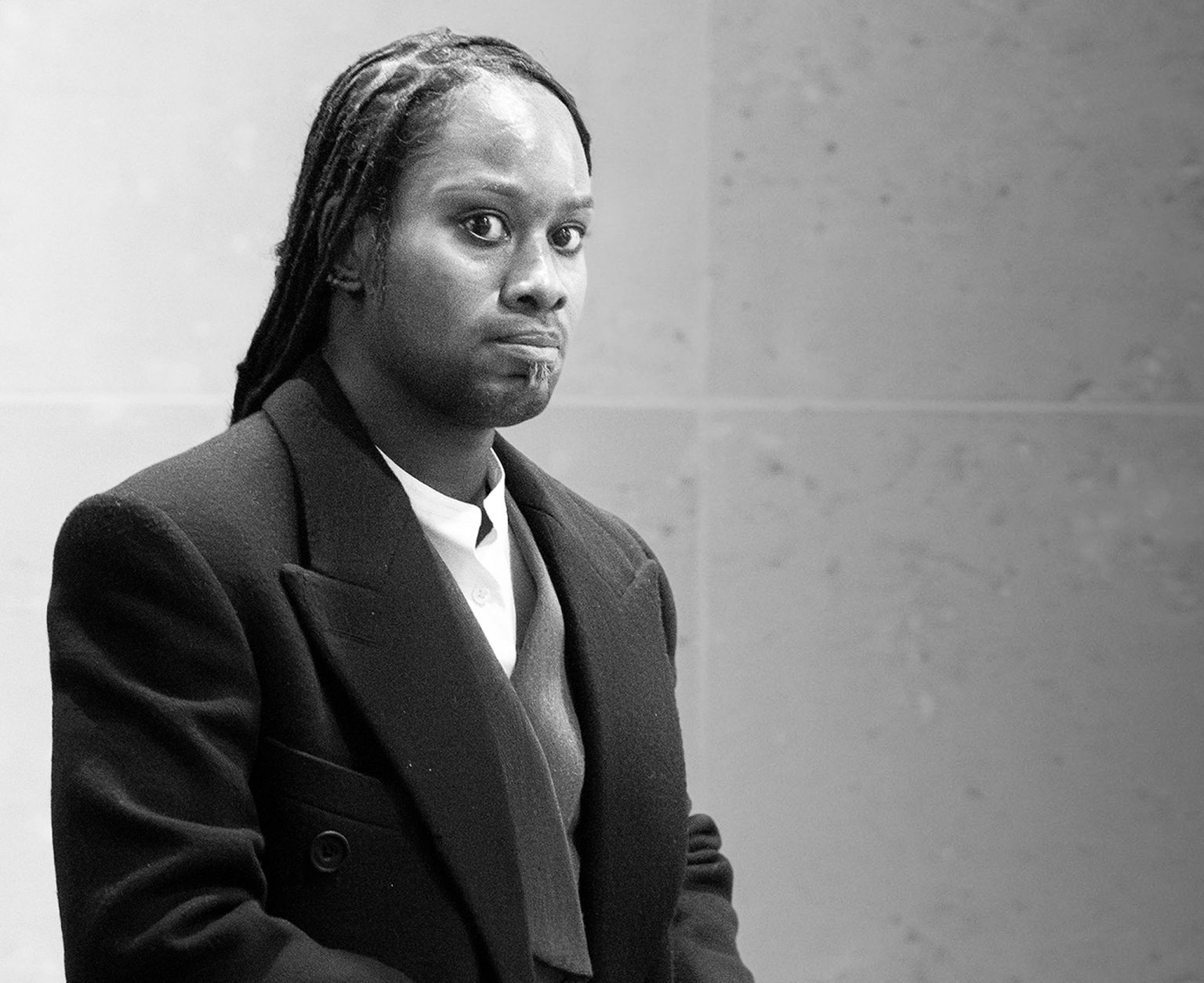
Of the tragedy of Jason Arday, many millions of words have now been written. The former Cambridge professor, found dead at his home in Battersea on Friday, has become a touchstone for a conversation that is painful and necessary, yet also one that the academic and cultural establishments in the West desperately wish to avoid.
His death has bequeathed those establishments – which had showered him with rewards across the two decades of his adult life – one final gift: an opportunity to change the focus of the discussion and to make villains of those who saw in his elevation something deeply troubling about the progressive mindset so dominant in the West.
A word first on Arday: it is not Christian to speak ill of the dead, but on occasions it is necessary to speak plainly. It is notable that the public mythology Arday helped to create around himself had a constant theme: whenever life tossed adversity in his path, Arday conquered it.
In the autobiography that will, surely now, become a bestseller, Arday detailed these many challenges: autism, illiteracy, racism, violence, mockery. In the inspiring story that he told, each time he faced the demons of the modern world, he overcame them, with a smile and with confidence.
There is irony, then, that when a challenge arose which could not easily be incorporated into that heroic narrative – the unraveling of his career and public image – the story ended not with another conquest, but with tragedy. In the end, the ending was at odds with the character who had bestridden the stage for so long.
The Curse of Good Intentions
That Arday was a sweet and probably gentle man at heart does not really seem to have been in dispute. Indeed, a great many progressives are. It is the curse of progressivism that those who espouse it are often doomed to mistake the righteousness of their instincts for something that legitimizes their actions and policies.
There is little reason to doubt that Arday genuinely believed that his work was in the cause of making the world a gentler, kinder, more inclusive place. The error embedded in that worldview, and perhaps the central moral error of our age, is believing that this makes everything okay.
One of the striking things about the Arday case was that, to the end, his public defense contained no meaningful admission of wrongdoing. His letter of resignation, posted to the website of the British progressive lobby group Good Law Project, conceded nothing to his critics. Instead, responsibility flowed outward: Arday said that the pressure to answer questions about his record had taken a profound toll and that he had reached “the limits of what any person should reasonably be expected to endure”. He specifically insisted that his resignation should not be mistaken for acceptance of the narratives surrounding him.
This is no coincidence, and nor does it, in fact, offer any specific insights into Arday’s character. Indeed, the telling thing is that even now, acknowledgment from British academia of the deeper implications of the Arday story remains about as rare as teeth in a hen.
The Changed Purpose of Education
Cambridge, to be fair, has promised an investigation into the circumstances surrounding his appointment and tenure, with the vice-chancellor acknowledging concerns about the case and promising a review of appointments to senior academic roles. That is welcome, if long overdue. But investigating how Arday passed through the machinery is not quite the same thing as asking whether there was something about the machinery’s underlying assumptions which made his elevation more likely in the first place.
Last week, The Spectator pointed out that Arday may merely have been the tip of the iceberg. At Cambridge, in the very same Faculty of Education in which he worked, one Farah Ahmed has been appointed assistant research professor of education.
Ahmed is a former supporter of Hizb ut-Tahrir, a group proscribed in Britain as a terrorist organization since 2024, and wrote in a Hizb ut-Tahrir pamphlet that “Western education is a threat to our beliefs and values”. She later distanced herself from the organization and said that she no longer agreed with all its political views. Emphasis, perhaps, on “all”.

Like Arday, Ahmed’s writings appear to suggest a conception of education in which its purpose is not simply to develop young minds by teaching students how to think, but rather to develop social progress – or social change – as the educator defines it, by teaching students what to think.
That significant parts of Arday’s public life story have either collapsed under scrutiny or remain seriously contested matters surprisingly little, in this mindset. Questions have been raised not merely about his academic work but about extraordinary claims involving his athletic achievements, charitable fundraising and elements of his personal biography. Some were quietly removed from promotional material before the present controversy erupted; others remain disputed.
The Enticing Danger of the Good Lie
Where claims were false, they were good falsehoods, in that they advanced the correct narrative. At their heart, and at the heart of how such things are perceived by progressives, lies a central moral conundrum to which there remains an easy answer for the establishment: if dishonesty can be harnessed to make the world a better place, is that really immoral?
Students of the news will recognize the instinct. One of the greatest fixations of modern life is that held by Europe’s governing classes with the concept of "fake news" and "misinformation". Yet those who observe closely will notice that it is rarely the lie itself which generates the greatest outrage, but rather the perceived impact the lie might have.
Publish misleading crime statistics which overstate crime among migrants, for example, and the misinformation is treated not merely as an error but as a social danger, because of the risk that it might negatively affect attitudes toward migrant communities. Make the opposite error, understating the problem, and one rarely encounters the same moral panic about the corrosive danger of false information. The difference is not the relationship of the claim to truth. It is the anticipated political consequence of the claim.
One of the great differences between modern progressivism and the conservative tradition is that the former is overwhelmingly outcome-focused, while the latter has traditionally been – correctly, but sometimes to its disadvantage – process-focused.
Arday's Posthumous Lesson: Process Matters
For progressives, both Arday’s elevation and the dubious parts of the mythology surrounding him served the same purpose in that they satisfied the need for outcomes. At a stroke, his elevation made the academy more diverse. And over time, his life story, fictional or otherwise, would inspire other young black people. Besides that, what matters the crime of biographical inflation?
By contrast, traditional conservatism demands – or at least should demand – that outcomes are subordinate to the correct process. It maintains, or should maintain, that excellence and positive change are tied to the maintenance of rigorous standards. The rule matters even when the rule produces an outcome you dislike. Standards matter even when enforcing them frustrates some desirable social end. Truth matters even when a lie would be more useful.
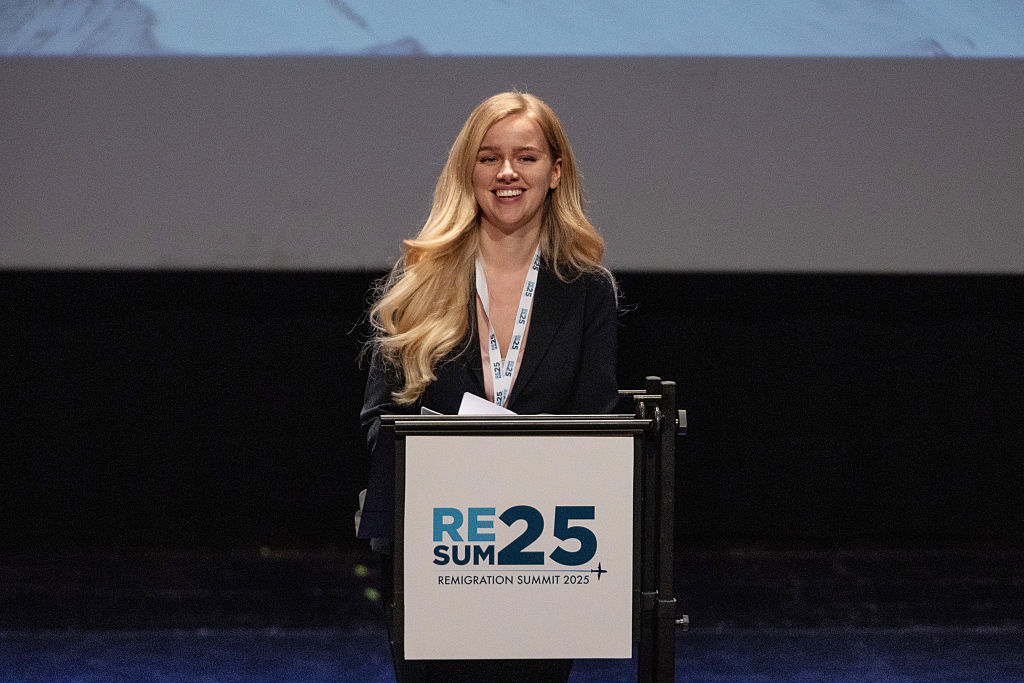
It is this tension, arguably, that has given rise to so-called post-liberalism, a movement on the right which is growing and which, at its heart, essentially wishes to ape progressivism’s demand for results ahead of process. One need only look at the debate around remigration to see that. Or at the increasingly fashionable argument on parts of the right that courts, conventions and other procedural restraints should simply be brushed aside whenever they obstruct a sufficiently important political objective.
Of Jason Arday, then, this much can be said: that his life and career were almost entirely a progressive creation. That his story, some combination of mythology built atop a few grains of truth, seasoned with an irresistible hunger for identity politics, became simply too good to check. That the system itself has been constructed not to filter out the likes of Jason Arday, but to elevate them and remove all obstacles to their elevation. That if standards stand in the way of the most desirable outcome, the standards themselves must be abolished or ignored.
As to the conversation that is desperately needed, it is this: if an ideology requires, for its outcomes to be achieved, the abolition of rigor and standards and barriers erected to maintain excellence, then what does that say about the ideology itself? When that question is asked plainly, it perhaps becomes apparent why progressives are so desperate never to answer it.