
There is a particular kind of politician who regards a free press in much the same way that a stern 1950s matron might have regarded children: delightful in principle, provided that they are quiet and obedient.
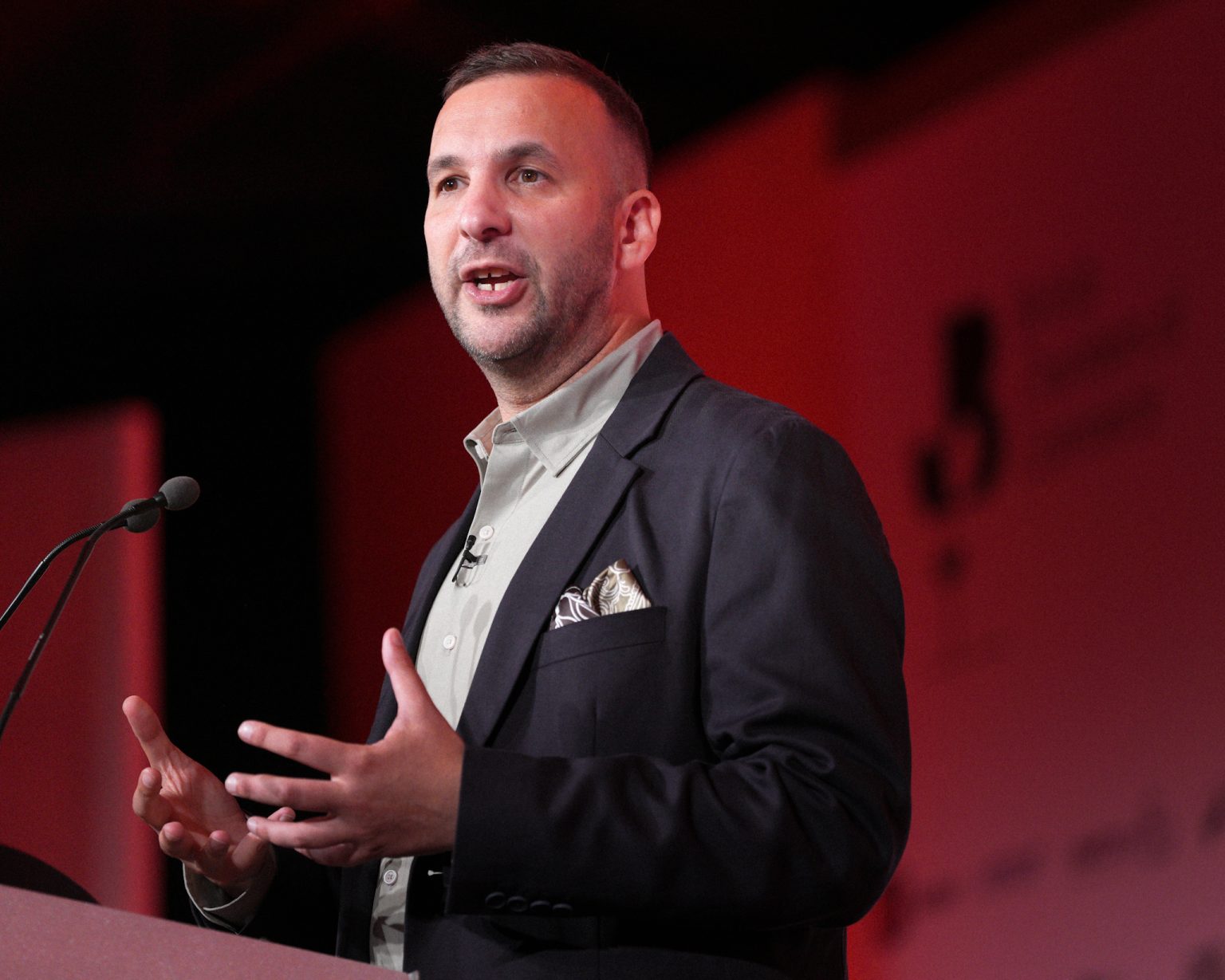
It will come as no surprise to any observer of UK politics that Zack Polanski, leader of Britain’s Green Party, appears to be one of them.
Over the past few days, Polanski has discovered an alarming and urgent problem that he alone can solve: newspapers sometimes print things he dislikes. His litany of complaints is long, and it seems to matter not a jot to him that they are entirely contradictory.
A Contradictory Complaint
Earlier this week he complained that parts of the media were failing at the most elementary journalistic task: “reporting the truth” – in the context of climate change.
In what other less enlightened folk might regard as a contradiction, he then attacked Andy Burnham’s response to the death of Cambridge professor Jason Arday as “spineless”, because Burnham had failed to grasp the opportunity to “tackle the press”. And, responding to a Daily Mail column about the hot summer, Polanski finally arrived at the formulation which should make anyone who values a free society sit up: “It’s time we sorted out the press.”
By “sorted out” he appears to mean “ensure that it prints the truth when the Green Party finds it convenient and obscures the truth when the Green Party would prefer the truth to be hidden”.
The context from which we might derive that conclusion is a Green Party conference motion, first reported by Noa Hoffman in The Spectator, entitled Justice for Jason Arday: Stopping Racist Smear Campaigns and Reforming Media Power. It was submitted after Arday’s death and had attracted 89 supporters when Hoffman reported it. The Times subsequently wrote that the number had risen to 108. It has not yet become official Green policy – and would still have to be selected, debated and approved at conference – but given the tone of the Greens these days, that should be a formality. Ever more so since the idea has now been embraced by the party leader.
And what an idea it is.
Full State Control of Media
Under the motion, every major national newspaper would be required to join a state-recognized regulator with statutory enforcement powers. New mechanisms would “map and address” “racism and ableism” in media output. Ofcom would gain wider powers over “harmful” content and algorithms. Large online platforms would be required to promote a prescribed diversity of voices and to enforce stronger moderation of material deemed hateful, discriminatory or conspiratorial – categories which, notably, need not be confined to illegal speech.
There would also be a statutory right of reply for people or communities who believe coverage of them to be defamatory, misleading, racially motivated or discriminatory; rules to break up concentrated media ownership; restrictions on foreign ownership; and roughly £1bn ($1.36bn) a year of public money for an “Independent Media Commons” of non-profit and “public interest” outlets, administered through media councils.
In other words, having spent years complaining that rich proprietors should not decide what the public gets to read, parts of the Green movement have landed on an alternative arrangement whereby the Green Party gets to decide instead.
There are of course perfectly respectable arguments about British media ownership, tiresome and dull as they tend to be. There are respectable arguments about privacy, harassment, libel, corrections, the behavior of tabloid newspapers and whether the current system of press regulation works as well as it should. Newspapers, like politicians, are capable of disgraceful behavior. This is, for example, why libel laws exist.
Who Decides? Whoever Has Power
But the democratic answer to bad journalism cannot be to give the state a roving commission to decide what counts as “misleading”, “discriminatory”, “conspiratorial” or otherwise socially harmful journalism.
The problem is not merely that such powers might someday fall into the hands of people the Greens dislike. Though one would have thought that possibility might occur to them.
Imagine, for a moment, a Reform government – currently a substantially more likely possibility than a Green one – appointing regulators charged with mapping “anti-British bias” in newspaper coverage, ordering platforms to promote “patriotic voices” and distributing £1bn annually to approved “public interest” media organizations. The screams from the people presently demanding media reform would be loud enough to puncture the vacuum of space and be audible from Alpha Centauri.

Because of course the deeper problem is that state regulation of political speech inevitably answers the question “who decides?” with the worst possible answer: whoever has power.
Polanski’s own language illustrates the danger. One of his recent complaints was that coverage of British wildfires did not sufficiently connect them to climate change. Another arose from an opinion column taking an insufficiently alarmed view of a hot summer. These may be stupid arguments. They may be scientifically illiterate arguments. They may even be arguments that deserve to be torn to pieces.
But “the government must step up” because somebody wrote them?
That is not a theory of press freedom. It is a theory of press freedom for newspapers which arrive at the correct conclusions.
The British press is rude, partisan, hypocritical, sensationalist and frequently wrong. And this, in fact, is a good thing, so long as the public and the politicians have the freedom to criticize the press and – imagine this – found alternative media outlets to correct what they see to be in error.
"Sorted Out"
Politicians are not owed fair coverage. They are not owed sympathetic coverage. They are not even owed intelligent coverage. They are owed the same protection from defamation and harassment as everyone else, and no more. The press does not exist to make political life healthier for Zack Polanski. It in fact exists, among other things, to make political life uncomfortable for Zack Polanski.
The most revealing words in this whole episode are therefore the simplest: “sorted out”.
Britain has had politicians who wanted to reform the press, cajole the press, flatter the press, bully the press and occasionally sue the press. It should be wary of politicians who talk as though the press were a troublesome administrative problem awaiting solution.
Because once the government gets to “sort out” the newspapers, the newspapers cease to be the people who sort out the government.