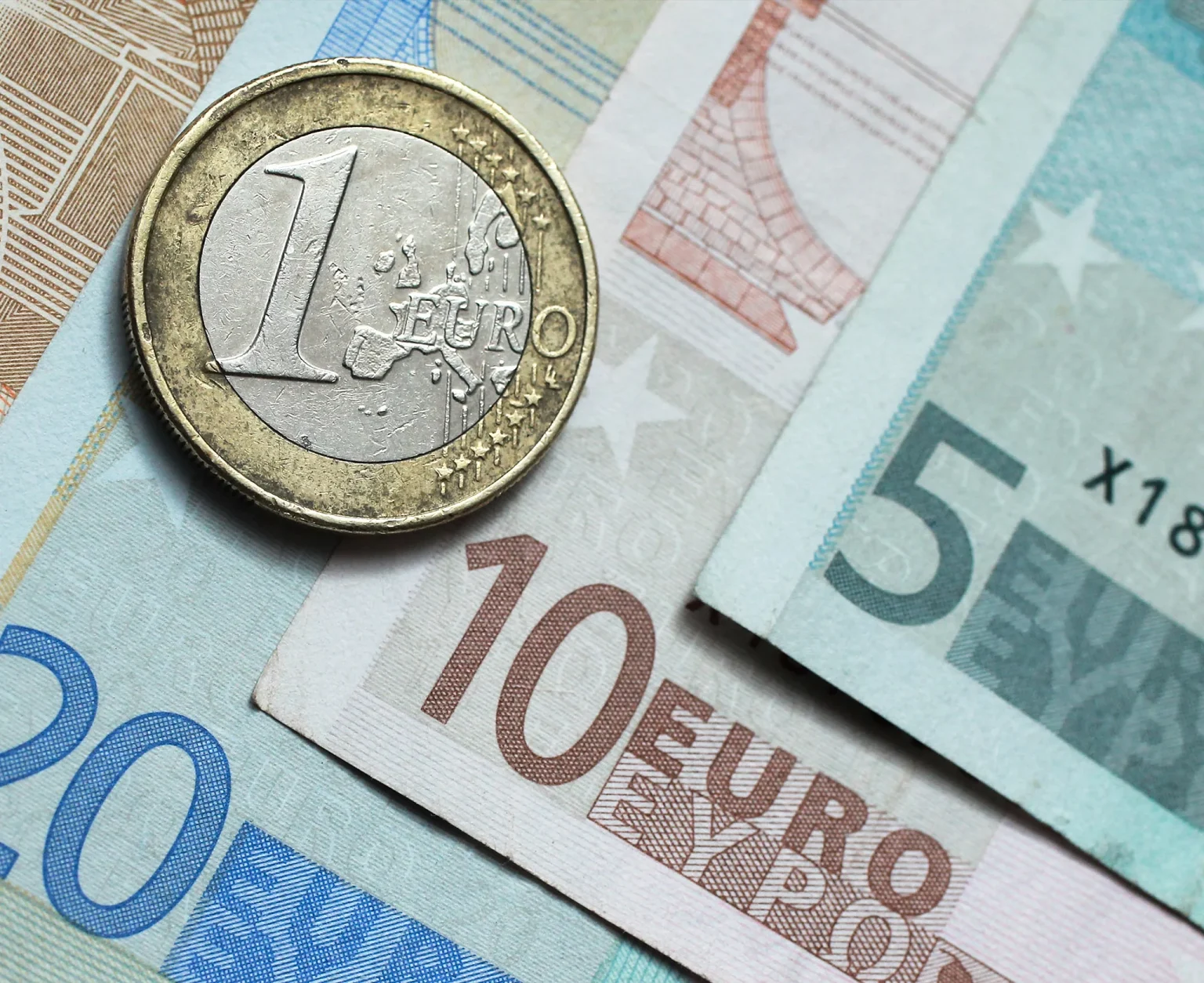
The demise of cash may have been declared a little too soon. In Europe, consumers are increasingly paying by card, phone or online, while automated teller machines (ATMs) are gradually disappearing from city centers and villages. At the same time, the European Central Bank (ECB) is preparing for the possible introduction of a digital euro. And yet, the amount of euro banknotes in the monetary system continues to rise.
According to ECB data, the value of euro banknotes in circulation has risen from approximately €1,000bn ($1,116bn) in 2016 to about €1,600bn ($1,867bn) in recent years. The figure is staggering, but it needs some context.
An Increase in Cash Holdings
The ECB’s statistics reflect banknotes that have been issued and have not returned to the Eurosystem. Some are used for transactions, others are held as savings or precautionary reserves, while a significant portion circulates outside the eurozone. Since the euro is an international currency, demand for banknotes from countries outside the euro area also contributes to the increase in the stock of banknotes.
Another factor must be considered when comparing current figures with those from 2016: the euro area itself has expanded. Croatia adopted the euro in 2023, followed by Bulgaria in January 2026, bringing the number of eurozone countries to 21. The addition of new countries to the currency area inevitably increases the amount of cash in circulation.
However, the expansion of the eurozone alone is far from enough to explain the trend. The increase in the stock of banknotes began before Croatia and Bulgaria joined. Above all, the ECB’s research reveals a more interesting trend: the use of cash for payments and its use as a store of value are increasingly diverging.
Cash is steadily losing ground in everyday transactions. In the euro area, the proportion of cash payments made at retail outlets has fallen sharply in recent years, while cards and contactless payments have become the norm. The growth of e-commerce has further accelerated this trend. Between 2019 and 2024, cash’s share of transactions at physical retail outlets in the euro area fell from 72% to 52%. At the same time, the use of contactless payments grew significantly. By 2024, cash accounted for only 24% of everyday payments when online transactions are also included.
Despite this trend, the stock of banknotes continues to grow. The explanation lies in a basic property of money: a banknote does not necessarily need to be in circulation to retain its economic utility. It can simply be kept aside.
You might be interested
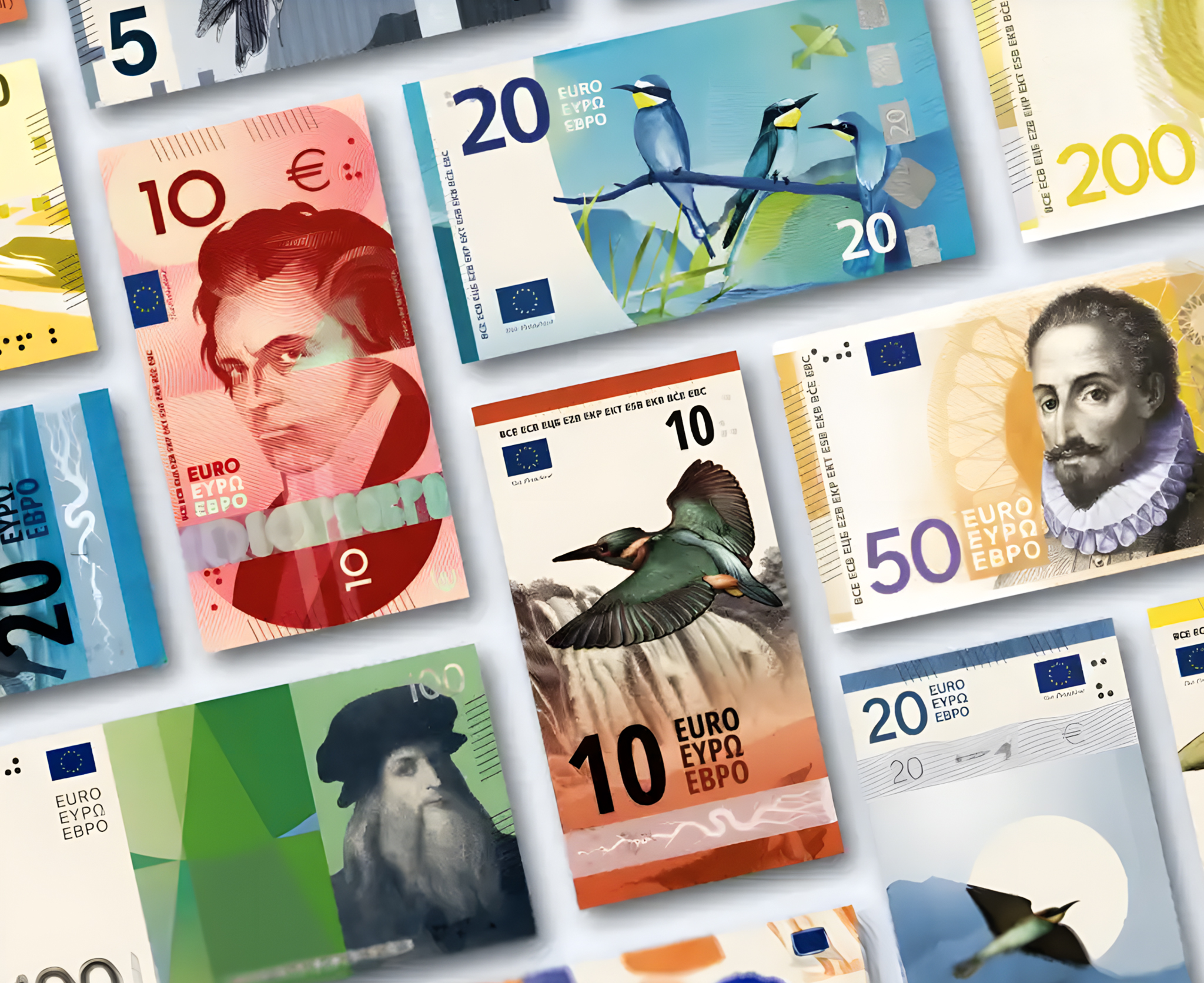
Europeans Turn Proposed Euro Banknotes into a Meme Contest
Cash Becomes an Insurance Policy
The ECB estimates that only a portion of the banknotes in circulation meets the needs of daily transactions. A substantial proportion is held as a store of value, while another portion corresponds to international demand.
This puts the apparent resurgence of cash in a different light. Rather than a return to cash, it reflects the emergence of a new role for banknotes as a form of insurance.
A banknote has one advantage that a digital payment lacks: it does not require a functioning payment network. It works without a banking app or an internet connection and remains usable in the event of a failure of a payment terminal, a telecommunications network or the power supply. Its tangible, indestructible nature is deeply reassuring in a doomsday scenario.
That advantage becomes particularly important at a time of geopolitical tensions, cyberattacks and concerns about the resilience of critical infrastructure. The ECB has observed that demand for banknotes increased during several major crises, such as the Y2K bug or, more recently, during the COVID-19 pandemic. During these times, individuals and businesses sought a means of payment that was immediately accessible in the face of uncertainty. Physical currency retains practical and psychological value that goes far beyond its use simply as a means of payment.
In France, the government has recently helped reinforce the image of cash as a safety net in times of danger. The official website of the French Civil Protection Agency explicitly recommends including cash in its “72-hour emergency kit”, with the following justification: “ATMs may not be working.” This recommendation is listed alongside water, medication, a battery-powered radio, a flashlight and non-perishable food.
While the European Union has also established an emergency plan for citizens, it has not included the need to have cash on hand in its recommendations. But the underlying logic is the same: to prepare for any eventuality, including the collapse of a system that relies on constant access to digital infrastructure and electricity.
You might be interested
The Rising Price of Government Debt
Europe Goes Digital, Banknotes Stay
Europe is moving rapidly toward an increasingly digital payment system, while the ECB is preparing for the possible introduction of the digital euro. Cash is becoming harder to access in many parts of Europe as bank branches and ATMs close. The ECB itself acknowledges that declining access could make it harder for people to use cash when they choose.
At the same time, physical currency continues to accumulate within the system. This creates a paradox in Europe’s monetary transition: access to cash is declining even as demand for banknotes remains surprisingly resilient.
And it has nothing to do with age. Cash could be seen as a habit of older generations, who are less willing to abandon a form of currency they have always used, but the data paints a more complex picture. Older people do indeed use more cash for their daily payments, but when it comes to holding cash as a reserve, the relationship with age becomes much less clear.
A study published by the ECB in 2025 highlighted a particularly strong tendency among young adults to hold onto cash. Young people are certainly among the most enthusiastic users of contactless payments, digital wallets and online banking. However, this does not necessarily mean they consider banknotes obsolete. A young consumer might never pay for a coffee with a €20 note and yet still choose to keep €200 or €500 in cash at home.
This behavior makes perfect sense if cash is no longer seen primarily as a convenient means of payment, but rather as a safeguard against exceptional circumstances. The phenomenon may therefore say less about nostalgia than about the pursuit of resilience. As digital payments become ubiquitous, cash remains valued precisely because it remains outside the digital system. Its appeal no longer lies in its efficiency, but in its independence.
The two seemingly contradictory trends can therefore coexist: the decline in the everyday use of cash and the growth in the stock of banknotes. There is a kind of schizophrenia here that speaks volumes about how much people trust today’s political and economic system.