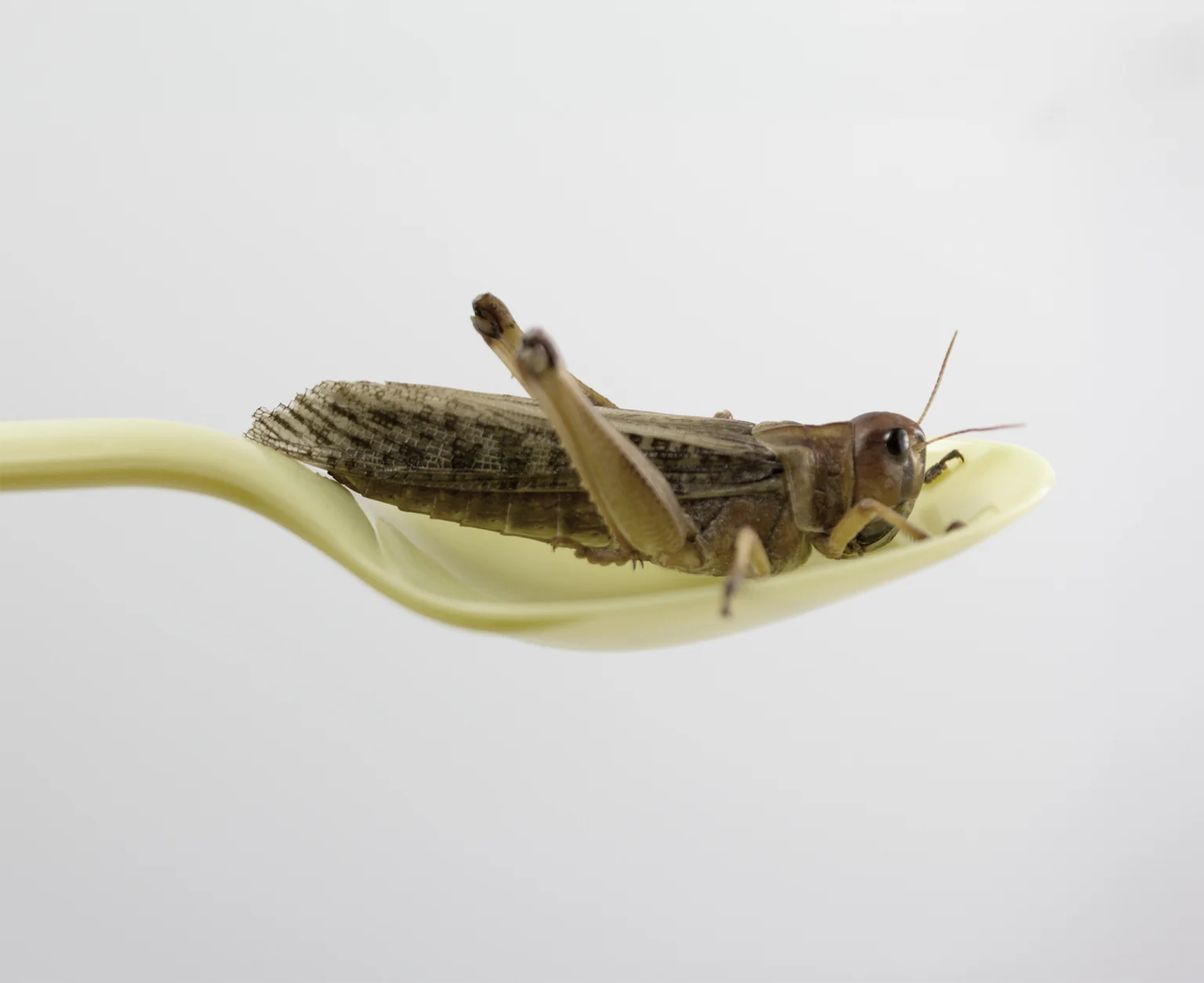
Get rid of the cattle, eat the bugs, and Ireland might well hit its climate targets. Or so goes the theory. Mathematically, it is not entirely wrong.
The Problem for Progressives: Bugs Are Icky
The problem with this otherwise attractively simple solution is an obvious one: most people are broadly repulsed by eating bugs.
That this basic truth is the basis for most populist opposition to bug-eating schemes should not deter an honest conversation about it. Is there, in fact, any rational reason why insects should not be part of the food chain?
On the face of it, the answer is a clear no. Many insects are entirely edible and high in nutrients such as protein and form a relatively uncontroversial part of the diets of humanity’s closest relatives in the various ape species. Further, insects are a widespread, easily replenishable source, can be produced on a mass scale and, from an ethical perspective, do not appear to have the same capacity for pain or suffering as a slaughtered cow or goat.
Even taking the climate issue out of the equation, there is probably a fairly clear case to be made that eating insects inflicts less net suffering on other creatures than eating a steak or a fish killed by suffocation having been taken from the sea.
But that still leaves the fundamental problem: there are lots of things which would be better for humans to do, but which a great many people do not enjoy. Top of the list, for example, is regular exercise. Yes, it would improve the health of all nations were the government to mandate and enforce daily five-mile runs for adult citizens under the age of 55. But it also might make their existence a more miserable experience in the round.
The Search for Perfect Food Is Not New
Science fiction has long produced entirely unpalatable, but entirely logical, alternatives to meat-eating. For example, in the smash-hit Apple TV series Pluribus (spoilers ahead) a hive-mind version of humanity committed to “doing no harm” decides that it would be entirely more logical to turn human corpses into food, rather than to “waste” them by burying them. The concept of Soylent Green in the 1973 movie of the same name is another expression of the same concept. In both cases, the viewer is expected to be horrified by the concept, even if the base efficiency of the idea is hard to deny at the level of ruthless logic.
So no, the trouble with eating insects or bugs is not really a moral one, but a question of choice and fanaticism. It is not that there is or should be a particular problem with providing climate-minded members of the public with the choice to ask for grilled housefly salad in a restaurant. The problem instead is the potential for a regulatory class that desires to push grilled housefly on those who do not wish to eat it.
The Dangerous Electric Car Precedent
Here, too, the populist imagination likely needs some correction. There are those, no doubt, who believe that regulators intend to change the law to make eating bugs mandatory. But that is neither the primary threat nor the way regulators operate in the modern world.
No, if the objective becomes changing what Europeans eat, the more likely scenario is a policy of nudging: increasing the subsidies to cricket farmers at the expense of beef producers and using differential taxation to drive up the cost of lamb stew while seeking to make toasted beetle cereal the most cost-effective breakfast product on the market through subsidies.
This is exactly how the EU and other similarly minded governments have gone about the whole business of electric cars: simultaneously driving up the cost of acquiring and running a trusty internal combustion engine while lavishly subsidizing the production of electric vehicles. What works in the automotive industry – “works” perhaps being the wrong word – might well provide a blueprint for the new bug economy.
Choice Has No Losers – Unless You Are a Cricket
In the end, the position with bug-eating should be summarized thusly: the disgust of one side is not an argument for prohibition, and the enthusiasm of the other is not an argument for coercion.
The policy of a sensible conservative should be, in this case, live and let live. Unless, of course, one is a cricket, about to get powdered. No matter what the political debate, somebody always loses. In this case, it is the cricket.