
‘This is not our war.’ Such is the dictum of Chancellor Friedrich Merz in response to Donald Trump’s campaign against Iran. The German leader has received applause from most of the country’s media and – a rare occurrence – backing from parties across the political spectrum, from the far left to the right. He also aligns himself with a broader European front of reluctance, stretching from France’s President Emmanuel Macron to Britain’s Prime Minister Keir Starmer and Spain’s Prime Minister Pedro Sánchez.
Politically, it is always possible to reject participation in a war. But that does not mean events in the Persian Gulf are of no concern to Germany or the European Union, nor that they carry no political or economic consequences. Yet that is precisely what the phrase ‘not our war’ suggests.
Not our war – but very much our problem
Trump is not asking Europeans to take part in combat operations, not least because they lack aircraft carriers and strategic bombers. What he has requested is their participation in securing the Strait of Hormuz, through which a significant share of global oil and gas trade passes. Iran may have lost most of its fleet in the opening days of the conflict. But it still retains the ability to attack tankers in the 22-kilometre-wide shipping lane using explosive boats and missiles. American and Israeli forces are currently working to contain that threat.
Trump’s appeal to European NATO partners is aimed less at immediate combat than at the long-term protection of a waterway on which a large part of the global economy depends. Yet even that has been firmly rejected in Berlin, London, Paris and Madrid.
‘Being an ally does not mean you have to go along with every piece of nonsense,’ the German political scientist Peter Neumann, who teaches at King’s College London, remarked recently on German television. He gave voice to what European leaders tend to express more cautiously but clearly believe. His argument is that such an operation would be ‘totally risky’. That, of course, applies to anything beyond the comfort zone.
In European – and especially German – public debate, many appear to overlook the fact that the United States depends far less on the free flow of goods through the Strait of Hormuz than the EU. Thanks to fracking, the US is largely self-sufficient in fossil energy. Few on the European side of the Atlantic have fully grasped how profoundly that economic shift has altered Washington’s strategic calculus.
Iranian attacks on Gulf gas fields and tankers in the strait are already pushing up global liquefied natural gas prices. But shortages are more likely to threaten Europe than the United States. Within the continent, Germany occupies a particularly exposed position. In 2022, at the height of the energy crisis, it shut down its last nuclear power stations. It also remains firmly committed to phasing out coal. As a result, the entire energy transition now rests on a single pillar: gas.
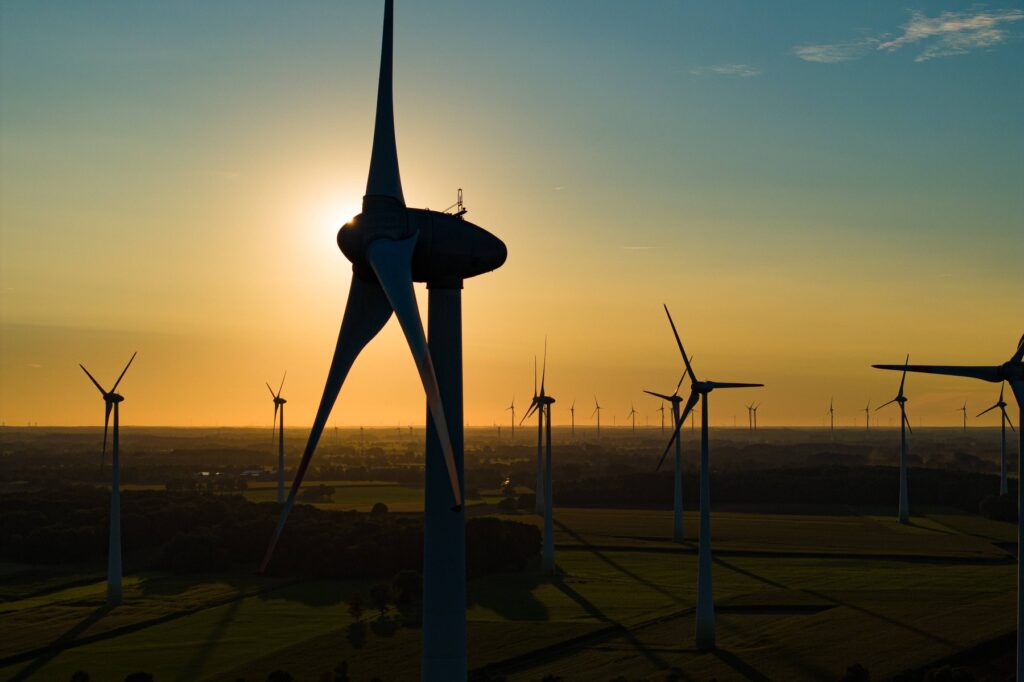
When the wind does not blow and the sun does not shine, gas-fired power plants must supply electricity for what is still the world’s third-largest industrial economy. When gas prices rise, they feed through particularly quickly into electricity costs and thus into the prices of almost all goods and services. Power prices have already climbed to nearly €100 per megawatt-hour, the highest level since early 2025.
Germany also relies heavily on gas for heating. Storage levels are low after a relatively cold winter. At present, the country imports no liquefied natural gas from Qatar. Although the then Green economy minister Robert Habeck suggested such a deal during a visit to the Gulf in 2022, it never materialised. Most of the LNG Germany consumes comes from the United States and Norway. But prices from those suppliers also rise when global markets tighten, as they do when Hormuz is disrupted.
The comfort of distance
Among European states, Germany therefore has perhaps the strongest interest in ensuring free passage through the Persian Gulf. In principle, at least. In practice, Berlin appears to be relying, without saying so explicitly, on US and Israeli forces to do the job, while watching from a safe distance with folded arms.
The Foreign Office has even launched a legal review into whether the United States may use the Ramstein air base in Germany for supply flights to the Gulf. Everyone knows how that review will end: with approval. Anything else, as the head of the Munich Security Conference Wolfgang Ischinger put it, would mean ‘the end of NATO’.
Trump has warned that if European allies maintain their refusal, it would send a very negative signal for the alliance. Should a rupture occur – not likely, but not impossible – there is no plan B in Berlin, Paris or Madrid for establishing an independent defence capability.

Only recently, plans for a joint Franco-German fighter jet collapsed. Hypersonic weapons, large-scale drone fleets and advanced missile defence systems remain the preserve of the United States. Western Europe alone would not be able to defend itself, yet it draws few practical conclusions from that reality. Doing so would require decisions that are unpopular at home.
Nevertheless, the United States is unlikely to struggle to assemble a multinational force to secure the Strait of Hormuz when the time comes. The Gulf states will almost certainly take part. If Europeans stay away, Washington’s strategic focus will shift even further away from the continent.
That is likely to apply beyond Donald Trump’s presidency.