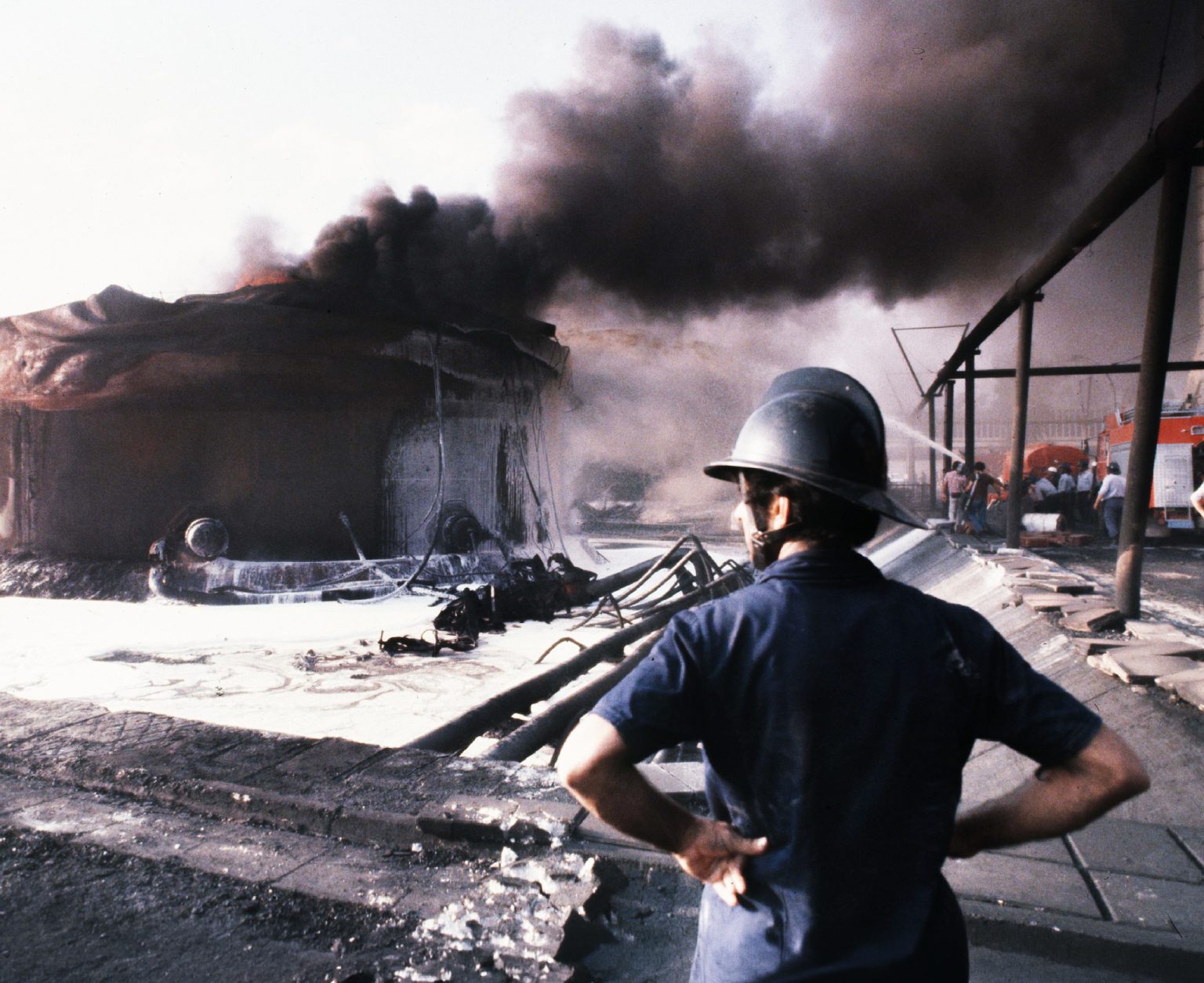
Illustrative photo. Photo: Francoise De Mulder/Roger Viollet via Getty Images
Oil trades on screens as flows collapse at sea
The Strait of Hormuz crisis is not only a price shock, but a rupture between paper markets and physical supply.
The Strait of Hormuz, a narrow maritime corridor connecting the Persian Gulf with the Gulf of Oman and the Arabian Sea, is the most vital artery of global energy trade. Recent events at the end of February, which led to the de facto closure of the strait to commercial shipping during the military conflict with Iran, represent a shock that analysts say is unprecedented in modern history.
Over the past month, the figure of 20 million barrels of oil per day has come to define the strait’s importance. This simplified number captures its scale, but a closer look at shipping data provides a more precise picture.
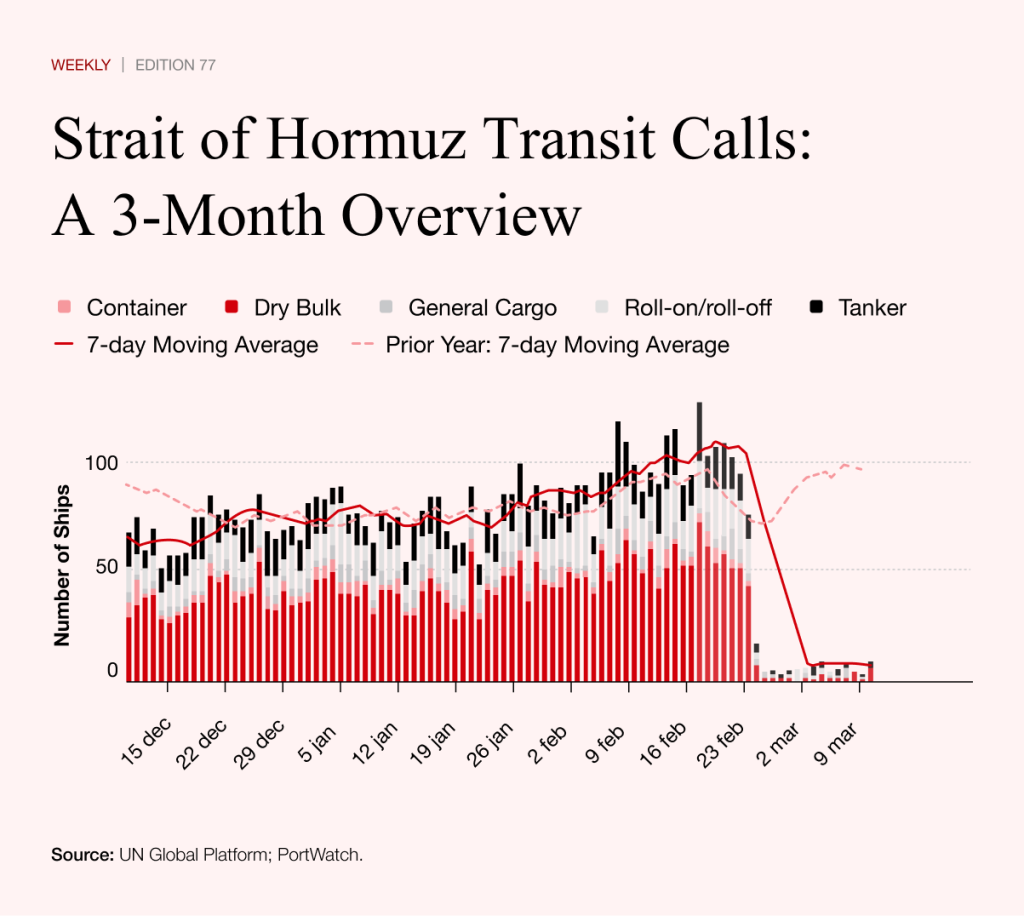
Detailed data from maritime tracking systems show not a slowdown in traffic, but a complete halt.
In the first four weeks of February, from 1 to 26, the strait operated with near-perfect regularity. On average, almost 96 commercial vessels passed through each day. Tankers carrying oil, gas and chemicals accounted for the largest share, with an average of 53 daily crossings. At peak times, such as 22 February, more than 70 were recorded.
But the Strait of Hormuz was not solely about energy. Each day, around 17 large container ships pass through, supplying the region with consumer goods, alongside a similar number of dry bulk carriers transporting grain into the Gulf and exporting industrial fertilisers.
When military tensions escalated at the end of February and the threat of attacks became real, the market reacted rapidly. Marine insurers and fleet operators effectively pulled the emergency brake overnight.
By 27 and 28 February, the number of transiting tankers had fallen to around 40, while container traffic dropped to ten vessels. This proved only a prelude to a full collapse in the weeks that followed.
Strait of Hormuz Transit Calls. Source: UN Global Platform; PortWatch
The end of a global trade artery
Data from the first half of March paint an unprecedented picture of a maritime standstill. Average daily traffic collapsed from 96 vessels to just six, a fall of nearly 94 per cent.
Tanker movements dropped to just over two vessels per day on average, with no commercial tankers passing through on several days, including 4 and 6 March.
Trade in consumer goods and agricultural commodities effectively ceased. Container traffic fell to roughly one ship per day, with multiple days registering zero movement. Dry bulk traffic followed a similar pattern, averaging only two vessels daily.
Set against these figures, the familiar benchmark of 20 million barrels tells only part of the story. The world has not simply lost a fifth of its oil supply. It has lost a critical trade artery. The Middle East has been cut off from imports of food, machinery and electronics, while Asia and Europe have lost access to plastics, sulphur and synthetic fertilisers. Transit did not slow. It stopped.
A crucial point is that this disruption is physical. Oil is not merely delayed, it is not arriving at all. Suppliers in the Middle East are invoking force majeure clauses in long-term contracts. For refineries in Asia and Europe, this means expected deliveries will not materialise and alternative sources must be secured immediately.
Buyers, particularly in China, India and Japan, which rely heavily on Middle Eastern supply, are scrambling to source oil elsewhere. Supplies from the US, Oman, West Africa and Brazil are commanding significant premiums. Physical barrels for immediate delivery are trading far above benchmark prices, with differentials reaching up to $70 per barrel.
The shortage of physical oil has not reduced speculative activity. High trading volumes in oil derivatives create the impression of abundant supply.
Daily volumes on the ICE exchange, typically around one million contracts, rose to more than 3.5 million in March. Retail investors have also entered the market in large numbers, treating oil increasingly like a speculative asset.
According to Vanda Research, net purchases of oil exchange-traded funds by retail investors reached a record $211 million on 12 March, surpassing the previous peak during the market turbulence of May 2020.
Viewing the crisis through price movements alone is misleading. The key analytical error lies in equating the situation with oil prices. A fall in prices may create the impression that the crisis has passed, but this would be deceptive.
A return to pre-war levels is unlikely. Even if prices fall below $80, the underlying disruption to physical supply would remain.
The central issue is not price, but the extent to which markets have failed to reflect the scale of physical disruption. Chevron chief executive Mike Wirth noted at the CERAWeek conference that the closure of the Strait of Hormuz has not been fully reflected in forward curves, with traders operating on limited information and perception.
In other words, prices capture sentiment, not the full extent of logistical breakdown and infrastructure damage.
Fatih Birol of the International Energy Agency has described the situation not simply as a transport shock, but as systemic damage to energy infrastructure. At least 40 facilities across nine Middle Eastern countries are reported to be seriously damaged. Global supply has been reduced by around 11 million barrels per day, exceeding the combined impact of the oil crises of the 1970s.
This marks a fundamental shift in how the crisis should be understood. It is not a temporary disruption, but the convergence of three forces: a blocked transport route, physical destruction of capacity and a broader collapse in regional security.
At the start of this article, the Strait of Hormuz was described as the most vital artery of global energy trade. It is now clear that it did more than transport oil. It underpinned the assumption that supply would always be available to those willing to pay.
Here is placeholder for Article excerpt Here is placeholder for Article excerpt Here is placeholder for Article excerpt Here is placeholder for Article excerpt
Here is placeholder for Article excerpt Here is placeholder for Article excerpt Here is placeholder for Article excerpt Here is placeholder for Article excerpt
Here is placeholder for Article excerpt Here is placeholder for Article excerpt Here is placeholder for Article excerpt Here is placeholder for Article excerpt
Welcome to the comments section of the Štandard daily. Please take note of our guidelines, comments are moderated by us. You can contact the moderators at [email protected].
Participate in the discussion
Comments are available to subscribers only. If you'd like to join the discussion, choose a subscription starting at €6.72 per month.
All comments 0
Register
Comments are available to registered users only. If you'd like to join the discussion, register here.