

Following the two state elections in Baden-Württemberg and Rhineland-Palatinate, in which the Social Democratic Party (SPD) once again suffered significant losses, the debate on higher taxes has broken out, as observers had expected. In the current governing coalition, the Social Democrats are formally the junior partner to the Christian Democrats (CDU). However, since the beginning of Friedrich Merz’s chancellorship, it has become clear that the vice-chancellor from the SPD is setting the political direction and, as finance minister, above all controls the money.
On several occasions in the past, the CDU has had to withdraw decisions because the Social Democrats refused to go along. And although the SPD has just suffered heavy losses in two elections and should therefore, in principle, be losing rather than gaining political influence, the opposite appears to be the case. In the debate over raising or introducing new taxes, it is the SPD that sets the tone for the CDU, while the chancellor nods through what the junior coalition partner demands.
A signal from the vice-chancellor
In a speech last Friday, Germany’s finance minister and vice-chancellor Lars Klingbeil called, among other things, for a longer working life for graduates, the abolition of income splitting for future marriages and higher taxes for high earners and the wealthy. Klingbeil described the free co-insurance of spouses in the statutory health insurance system as a labour market disincentive. In Germany, income splitting ensures what is presented as fair taxation of married couples by adding together both partners’ incomes and then dividing the total in half to determine the applicable tax rate. As a result, married couples – because they are assessed jointly – are taxed somewhat less than if they were assessed individually. Income splitting is particularly effective where one partner earns significantly more than the other.
A similar principle applies to statutory health insurance. A spouse with no income or only a marginal income is insured free of charge in Germany and receives the same level of cover as the contributing partner. For political forces on the left, both income splitting and free co-insurance are a thorn in their side, as they argue that such arrangements discourage women from taking up employment and instead support the role of the housewife. Feminist groups also oppose the arrangements, as they seek to push women into the labour market and children into early institutional care. In fact, both instruments strengthen the family by providing greater freedom of choice and financial relief within the household.
All taxes in focus
Alongside other considerations, value added tax is also in the finance minister’s sights. Although any increase is currently being played down, it could quickly re-emerge in the debate as part of a broader package if the CDU parliamentary group in the Bundestag refuses to agree in other areas, such as income tax or income splitting.
The introduction of an additional wealth tax, often referred to as a ‘tax on the rich’, is also under discussion. This is a long-standing project of the Social Democrats, under which already taxed income would be taxed again once it has been accumulated as wealth above a certain threshold. Anyone who saves and invests rather than spends would therefore be taxed again on their accumulated assets. Income generated from wealth is already subject to income tax. Critics describe the wealth tax as an ‘envy tax’.
Similarly damaging are the Social Democrats’ still-unabandoned plans to raise income tax by increasing the top rate. In Germany, income is taxed progressively – the higher the income, the higher the rate. Critics point out that the current top rate of 42 per cent already applies at levels only slightly above the average income. This is one of the reasons why taxes in Germany are widely regarded as too high. The planned increase in the top rate to 49 per cent would significantly raise the burden on middle incomes compared with the current situation.
Maximum revenues
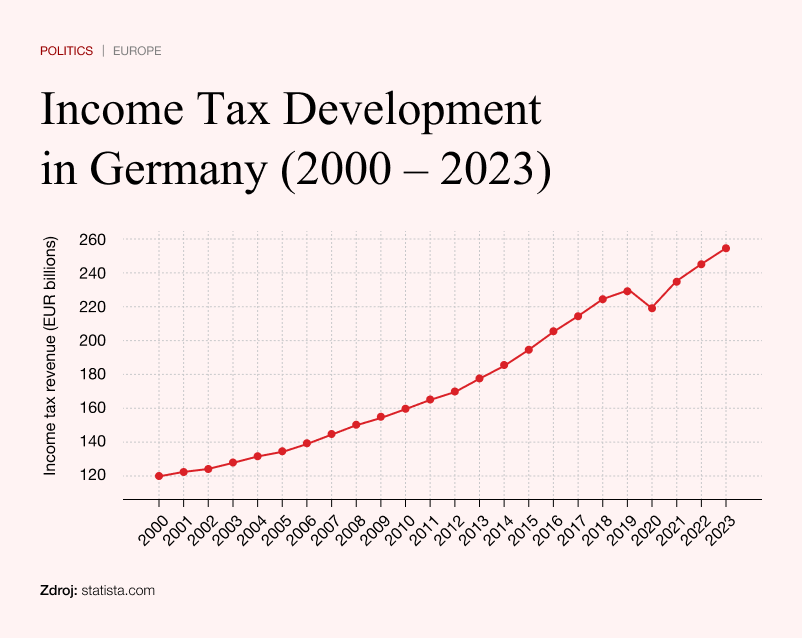
It is also open to criticism that the government is planning tax increases at a time when both tax revenues and public debt are at record levels since the founding of the Federal Republic. The largest source of revenue for the German state is income tax, which has risen from €120 billion in 2000 to €258 billion in 2023. For 2026, tax estimates put income tax revenues at a conservatively estimated €263 billion. Even before taking office, the current chancellor Merz had a €500 billion debt package approved by the previous Bundestag. Total public debt currently stands at around €2.6 trillion, including federal, state and municipal levels.
The federal government alone accounts for the largest share, around 60–65 per cent of total debt. This corresponds to current federal debt of approximately €1.6–1.7 trillion, for which the government must pay around €110 million per day in interest alone. The massive increase in borrowing has already had consequences: at the most recent auction of government bonds, not all the securities offered could be placed on the market as planned. The remainder was taken up by the Bundesbank, which will sell them later. Weak demand is seen as an indication that investors are demanding higher yields or perceive greater risks. This could lead to higher refinancing costs for the federal government in future and thus to a further rise in the interest burden.
No problem on the revenue side
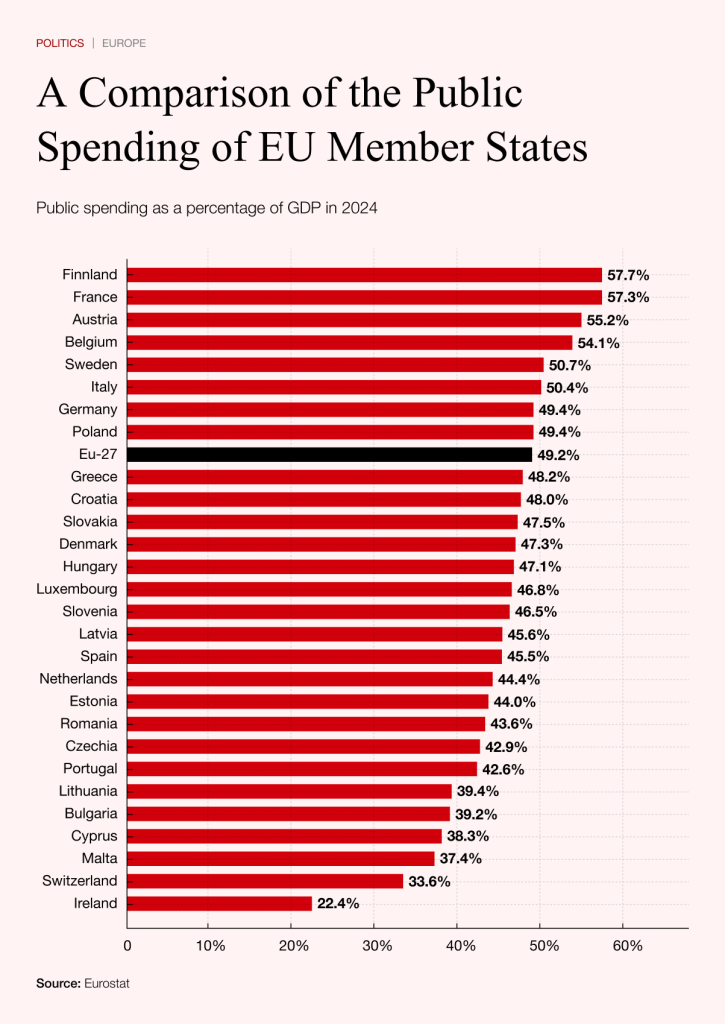
Developments show that Germany does not have a problem on the revenue side. Government income continues to rise. Total tax revenues are expected to reach €990.7 billion in 2025 and €1.0165 trillion in 2026. The state’s share of economic output – the proportion of gross domestic product managed and spent by the state – is approaching a level of more than 50 per cent.
After three years of a de facto shrinking economy, Germany’s economy minister Katherina Reiche has forecast moderate growth of 0.6 to 0.8 per cent for 2026. By stating that she cannot rule out tax increases, however, the minister relativises that forecast, as a renewed burden on the economy through higher taxes could choke off the modest recovery just as it begins.
Another problem on the expenditure side is the federal government’s lack of willingness to save. If, despite record debt and record revenues, the money is still not sufficient, it would be time to subject government projects to closer scrutiny. There is no doubt that investment in Germany’s ageing infrastructure is beneficial. However, such projects are still more subject to funding reservations than the pet projects of the left and the Greens, such as the entirely pointless energy transition, the costs of which can hardly be isolated in the federal budget but which consumes billions. Funding for supposed civil society engagement through programmes such as ‘Demokratie leben’ alone amounts to more than €220 million. No one is willing to cut here.
The Laffer curve
If all subsidies, support programmes and concessions are taken together, there could be potential savings of €30 to €50 billion if reductions were approached with political judgement. This figure emerges from a combined view of assessments by economic research institutes and the Federal Court of Auditors. Bürgergeld alone is projected to cost €51 billion in 2026 – a non-earned income for people in Germany who do not work, cannot work or are not permitted to work. This payment is criticised above all because it creates incentives not to take up employment even where it would be possible.
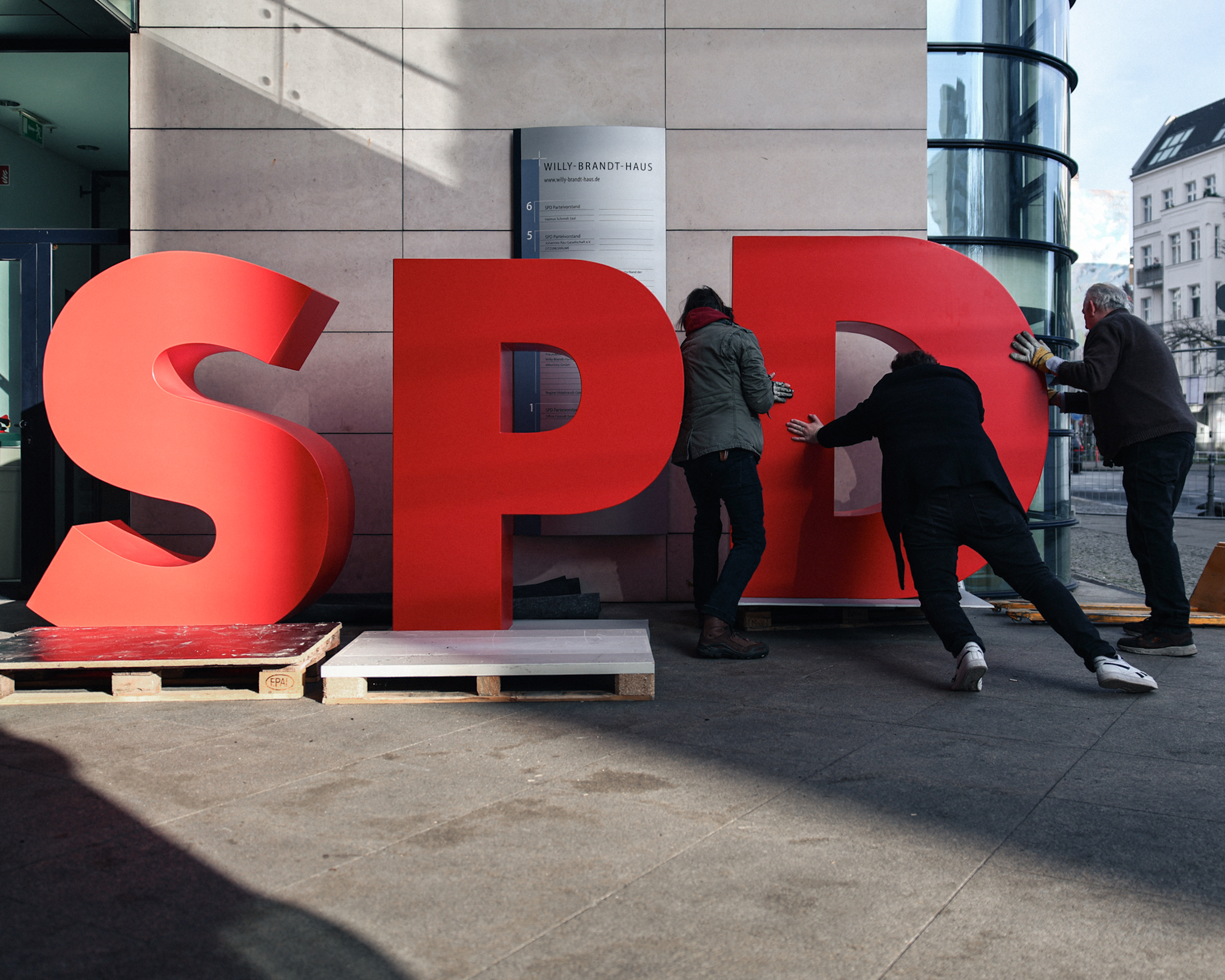
Given that substantial relief for citizens and the economy from heavy tax burdens would be necessary, tax increases also carry an additional risk identified by the American economist Arthur B. Laffer as early as 1974. According to the Laffer theorem, tax revenues initially rise as tax rates increase, but after reaching a maximum they begin to fall. Beyond a certain threshold, higher taxes lead to declining revenues because the willingness to pay taxes diminishes noticeably.
The migration of labour, as well as the reduction or relocation of business activity, are possible consequences of excessively high taxes. Although many economists argue that a radical programme of spending cuts and significant tax relief would be both necessary and effective in stimulating Germany’s economy, the state is pursuing the opposite course.