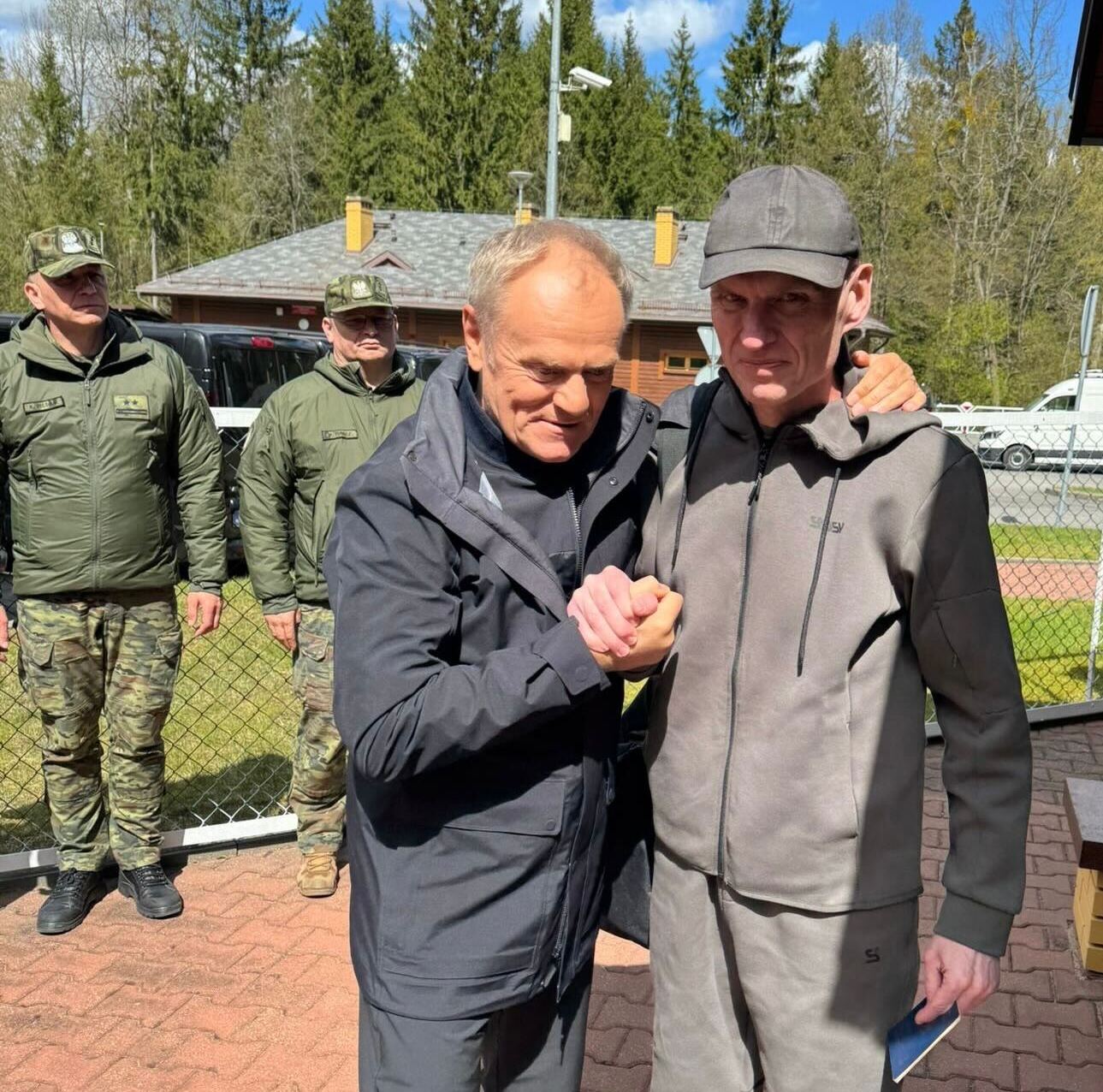
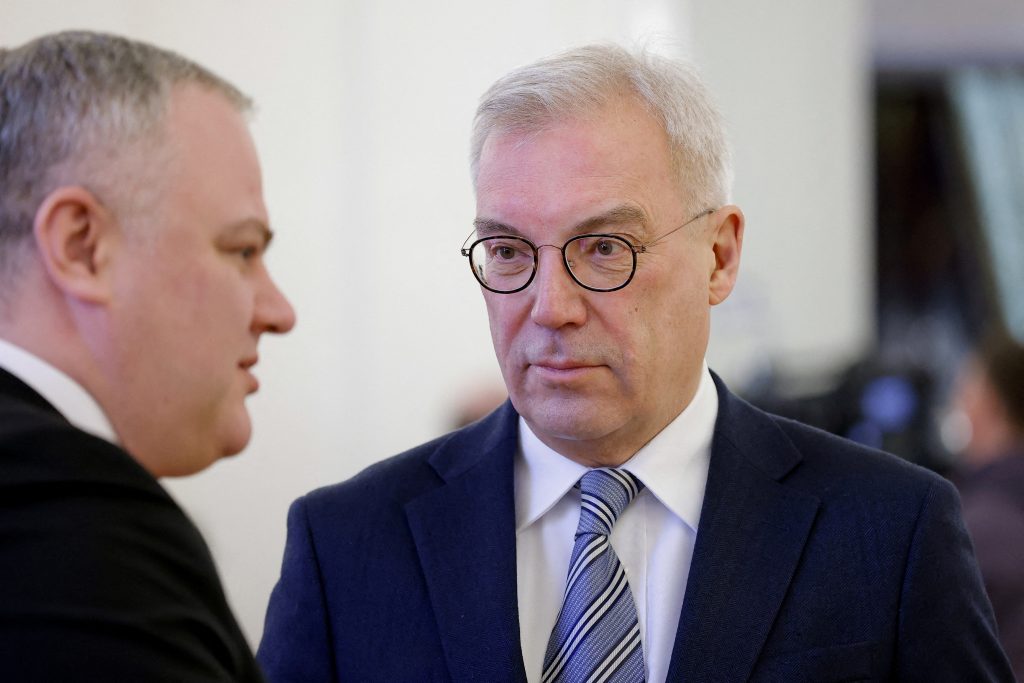
In an interview with the Russian state news agency RIA Novosti, Alexander Grushko, Russia’s deputy foreign minister, said several European states were preparing a blockade of the Kaliningrad region and a possible invasion of its territory.
“NATO is purposely following the path of increasing confrontation in this part of Europe… There is a growing activity of the UK-led Joint Expeditionary Force (JEF), which is tasked to respond operationally in the Far North, the North Atlantic and the Baltic Sea”, he said.
Kaliningrad and NATO’s Eastern Flank
Darius Yurgelevicius, a Lithuanian intelligence officer, diplomat, lawyer, former adviser to Lithuania’s president and former deputy foreign minister, told the Ukrainian channel DumaJ in an interview in January 2026 that “one of the real scenarios of a confrontation between NATO and Russia is indeed a blockade of the region”.
During the interview, the channel’s host spoke Ukrainian while Yurgelevicius spoke Russian. Yurgelevicius, however, refused to use the city’s current Russian name, Kaliningrad, arguing that it had no connection with the Russian Federation.
Instead, he used Königsberg, the city’s original name, known for centuries in Slovak as Kralovets and in pre-revolutionary Russia as Korolevets. The current name dates from 1946, after part of Prussia was annexed by the Soviet Union.
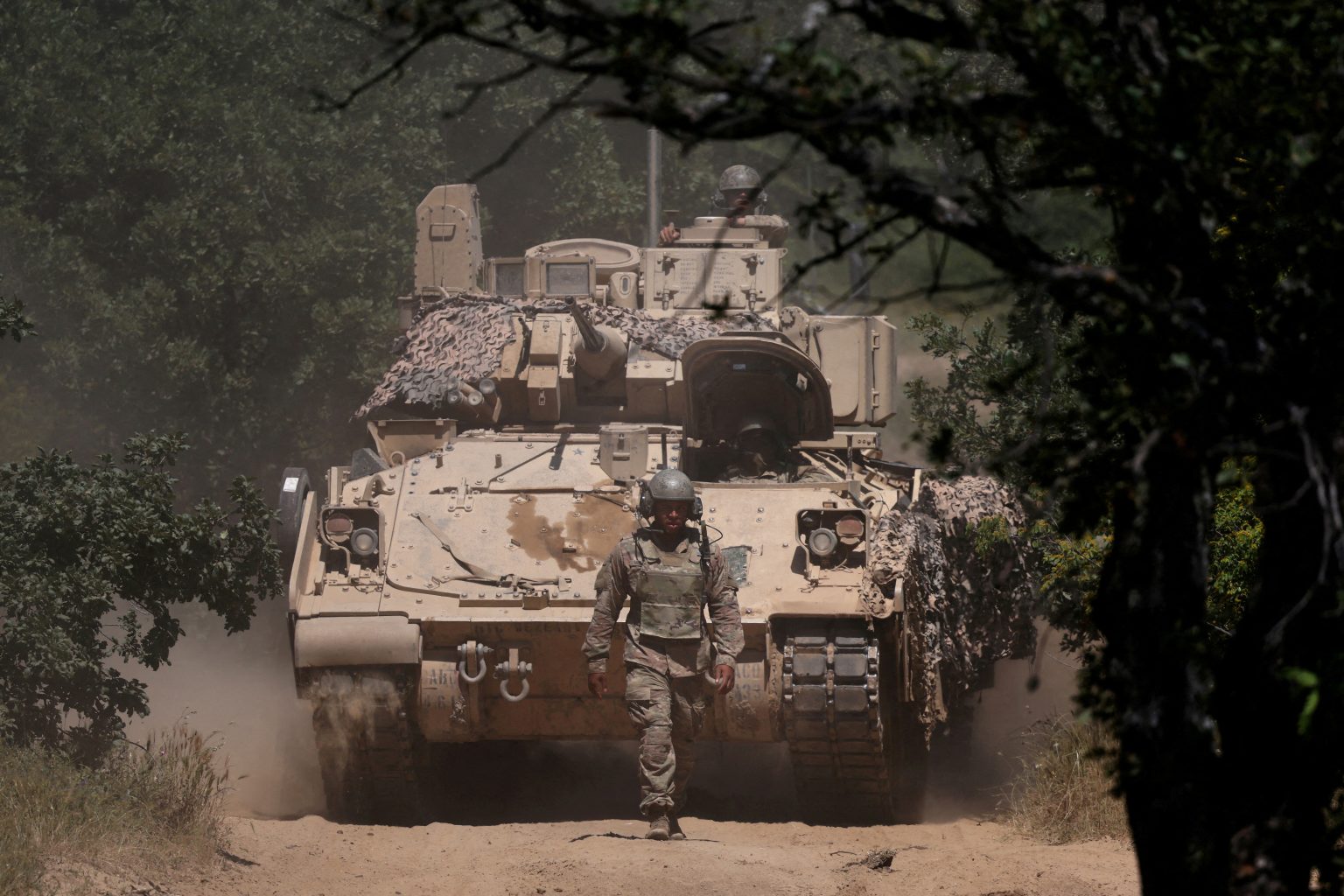
In July 2025, General Chris Donahue, commander of US Army Europe and Africa, declared that North Atlantic Treaty Organization forces could, if necessary, capture the heavily fortified area “in an unprecedented time frame”.
He said the alliance had begun implementing its Eastern Flank Deterrence Line, a plan aimed at strengthening ground-based capabilities and developing standardized systems, common launchers and cloud-based coordination. Donahue said such capabilities could allow NATO forces to “take down” Russian anti-access and area-denial systems from the ground.
As part of that effort, Donahue said NATO had already procured Palantir’s Maven Smart System, an artificial intelligence platform that processes large volumes of data and rapidly analyzes information to help military commanders make decisions.
Earlier this winter, Ben Hodges, the former commander of NATO forces in Europe, added that NATO troops would be capable of destroying enemy forces and military infrastructure in Kaliningrad “in the first hours” in the event of a Russian attack on one of the military bloc’s countries.
Russian MP Leonid Slutsky, chairman of the Russian parliament’s foreign affairs committee, warned that “an attack on the Kaliningrad region is tantamount to an attack on Russia”, which does not rule out the use of nuclear weapons.
Last year, on the eve of the winter solstice, a Polish court ordered a Polish man into 90-day detention over his alleged readiness to cooperate with foreign intelligence and document military transports. According to the Internal Security Agency (ABW), he had collected material that included documentation of rail transports of military equipment.
The Polish prosecutor’s office said at the time that the man was from the Tricity area in north-western Poland, in the Kashubian region, where it is called Trzegard. The area comprises Gdansk, Sopot and Gdynia in Pomeranian Voivodeship, whose north-eastern border lies only a few kilometers from Russia’s Kaliningrad region.
Military Significance
In addition to Poland, Kaliningrad Oblast also borders Lithuania. After the Armed Forces of the Russian Federation launched a ground attack towards Kyiv from Belarusian territory on 24 February 2022, Lithuania also began preparing for a Russian ground offensive from Belarus.
Vladimir Shayanek, a civil protection specialist and security analyst, told Statement in May 2025 that if a Russian invasion of Lithuania took place, it would most likely be launched from Belarus and the Kaliningrad region in order to seize the Lithuanian-Polish border from the Lithuanian side.
The Lithuanian-Polish frontier is the Suwalki Corridor, an almost unprotected, roughly 65 km-long, sparsely populated strip. It is the only land link between the Baltic states - Lithuania, Latvia and Estonia - and the rest of NATO and the European Union.
The Suwalki Corridor also separates Belarus from Russia’s Kaliningrad region, where the Russian Baltic Fleet is anchored in addition to a sizeable ground force.
A strike on what Shayanek called this “undefended backwater of Europe” would give Russia a strategic advantage, both by creating a land link to its current Kaliningrad exclave and by cutting the Baltics off from Poland. It is therefore not inconceivable that NATO has plans for its forcible military occupation.
This is not the first statement of its kind from Russia. On 23 September 2025, the press department of Russia’s Foreign Intelligence Service (SVR) claimed that Brussels was determined to keep Moldova aligned with its anti-Russian policy, adding that this could involve the deployment of troops and the “actual occupation of the country”.
According to the SVR, the scenario for the deployment of NATO forces had been rehearsed several times. Shortly before Moldova’s parliamentary elections on 28 September 2025, Russian intelligence claimed that the country would be occupied either by election day or by 30 November. Both dates, however, proved wrong.