
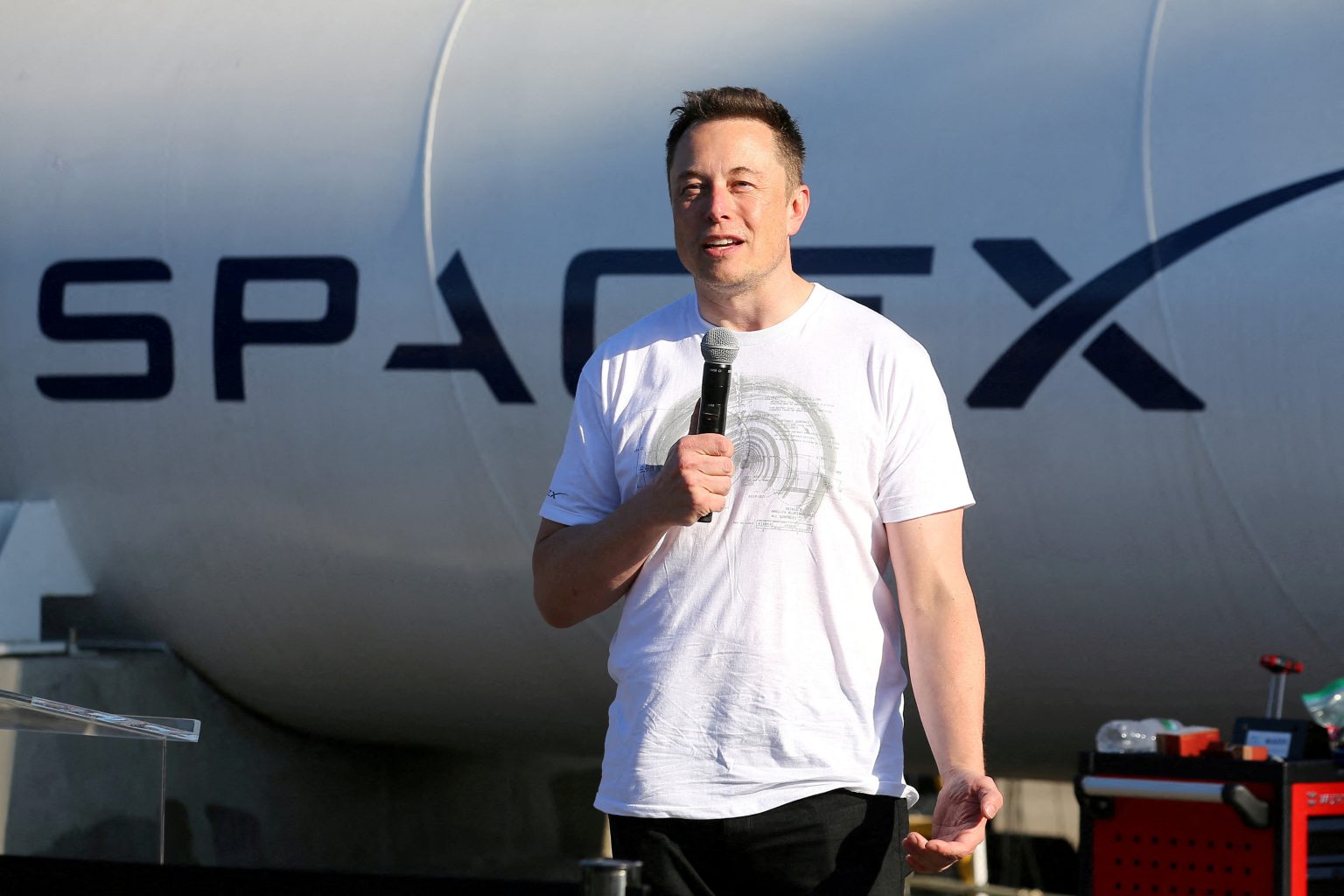
The end of last week belonged to the Dow Jones index, which climbed to a new all-time high. The index, made up of 30 traditional US companies, may not be as fashionable as the Nasdaq technology index, but its record sends an important signal.
Optimism on Wall Street is beginning to rest on a broader base than the largest technology firms alone. Under calmer circumstances, that would be reassuring. But with the Strait of Hormuz under threat, inflation gathering pace and the bond market flashing warning signs, the mood looks harder to justify.
An optimistic investor might argue that all these problems will soon be resolved. He may well be right. The real source of astonishment at the record highs, however, is that equities need stability and predictable conditions above all if they are to rise in a lasting way. That is precisely what markets lack right now. Last weekend offered a clear illustration.
Middle East Jitters and Trump’s Maneuvers
That something significant was afoot in the White House was already clear on Friday night, when Tulsi Gabbard, the head of US intelligence, resigned. Trump then announced that he would not attend his son’s wedding for “important national reasons”.
Dan Scavino, deputy White House chief of staff and Trump’s closest media adviser, also posted a video on X showing a US B-2 Spirit strategic bomber flying through clouds. It felt like déjà vu: he had published a similar post the day before the strikes on Iran began.
With US markets closed for the weekend, investors assumed that any strike on Iran would most likely come before trading resumed. The immediate market reaction would have been delayed, at least until Wall Street reopened. Nervousness was growing.
Yet, as is often the case with Trump, events developed in exactly the opposite direction. The president surprised observers by announcing that a final deal was imminent.
With markets closed, only the cryptocurrency market, which trades continuously, reacted to the announcement. Bitcoin initially rose by more than $1,000. The euphoria then faded as it became clear that the main issues remained unresolved.
The positive news is that no attack appears imminent for now. The United States is seeking another 60-day ceasefire. The upcoming World Cup in the US is also looming on the calendar. The White House will certainly not want the crisis to escalate during the event, driving oil prices sharply higher and affecting both spectator attendance and spending.
Israel has made clear that it will not consider any deal final until Iran’s nuclear program is resolved. Iran has responded in similar fashion, saying that it does not actually know exactly what has been agreed and that it will not accept foreign dictates under any circumstances.
On Sunday, Trump toned down his enthusiasm for the deal somewhat, saying that the process was still unfinished. In any case, both the oil market and Asian stock markets reacted positively to the outline of an agreement. On Monday, oil fell by more than 5% and the Japanese stock market added more than 3%. That came despite the fact that the situation in the Strait of Hormuz has not changed and shipping remains vulnerable there.
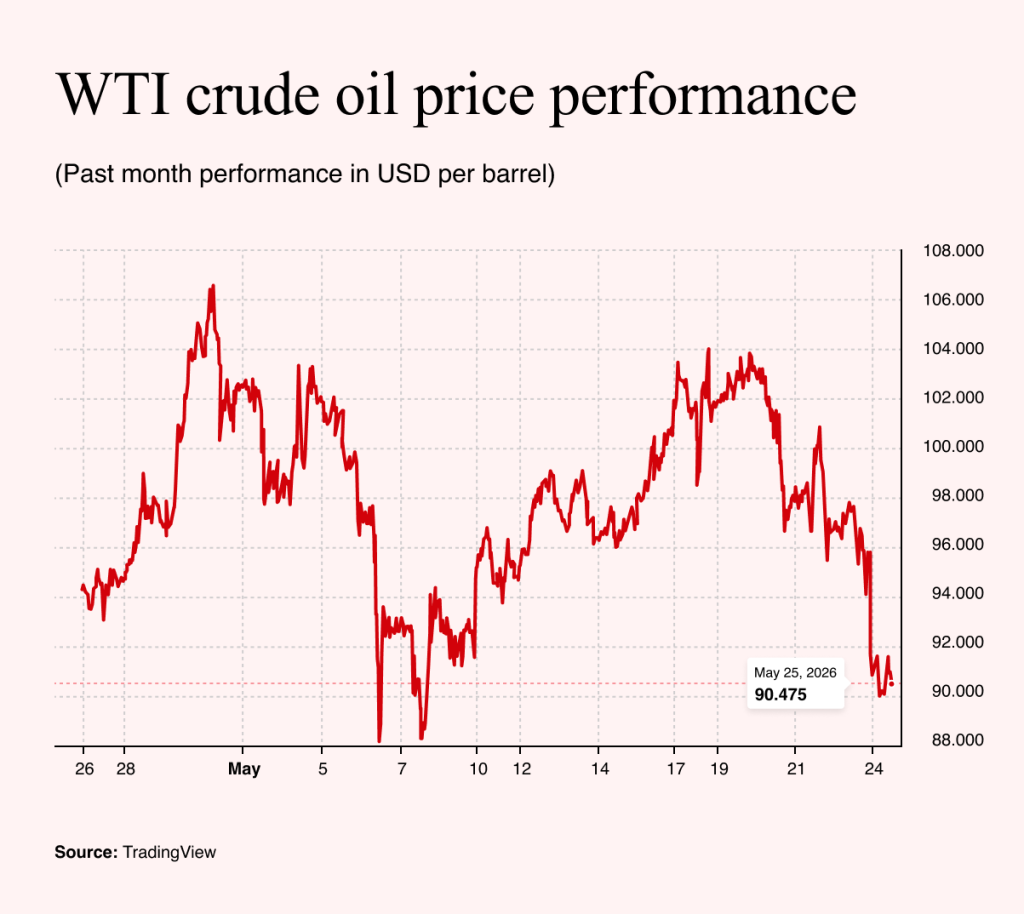
Whatever the outcome of the deal, Trump has gained a little more time and room for maneuver. Core personal consumption expenditures (PCE) inflation for April will be released this week. If oil remains below $100 a barrel, Trump will be able to play down the issue and declare that the end of expensive gasoline is in sight.
The rise in the stock market and the fall in oil prices will also relieve pressure on the bond market. Trump has therefore bought himself at least a week. If he does not use it to move events forward, however, oil could very quickly climb back above $100 a barrel.
A Megalomaniacal IPO and SpaceX’s Vision for Space
Markets will, however, have a chance to catch their breath from the Iran crisis, with several large and closely watched initial public offerings (IPOs) approaching, led by SpaceX, OpenAI and Anthropic. Musk’s space giant is closest to going public, having placed a key S-1 document on the desk of US regulators at the end of the week. The filing has now revealed the contours of the plan.
Musk wants to raise more than $80bn from investors, which would put SpaceX’s target valuation at about $2tn. If the plan succeeds, even on paper, it would immediately catapult the company into the elite group of the world’s 10 largest publicly traded companies by market capitalization.
The plan is bold even by Elon Musk’s standards, especially given that the company generated only $19bn in revenue in 2025 and $4.7bn in the first quarter of 2026.
The fundamentals therefore lag far behind the projected market capitalization. Investors, however, do not seem to care. What matters is Elon Musk’s vision – or at least his ability to persuade the market of it.
The same logic is reflected in the extremely ambitious bonus program revealed in the document. Musk will receive one billion new shares if he succeeds in building a permanent colony on Mars. It is a bold plan indeed. Under normal circumstances, it might look like a mockery of conventional corporate governance. In Elon Musk’s case, however, the ambitions appear almost unstoppable.
Artificial Intelligence as a Black Hole
The objective also points to a major paradox in the upcoming IPO. SpaceX may present itself as a space company, at least according to the milestones on which Musk’s bonus is based. Yet a look under the hood shows that the artificial intelligence division will play a crucial role.
That creates a drastic financial gap. While the satellite-based Starlink business acts like a golden goose, keeping the company afloat with operating profit of $4.4bn, the newly integrated xAI division is a black hole that burned $6.4bn last year alone.
Small investors will therefore not know for certain whether they are buying a space company or a technology company focused primarily on artificial intelligence. Musk’s decision to target small retail investors is reflected in the strategy he has chosen. In a historically unconventional move, the shares will also be offered directly through popular trading platforms such as Robinhood and SoFi.
As already noted, the market does not appear troubled by these inconsistencies and risks. For now, Elon Musk’s vision seems large enough to make the fundamentals look secondary.