
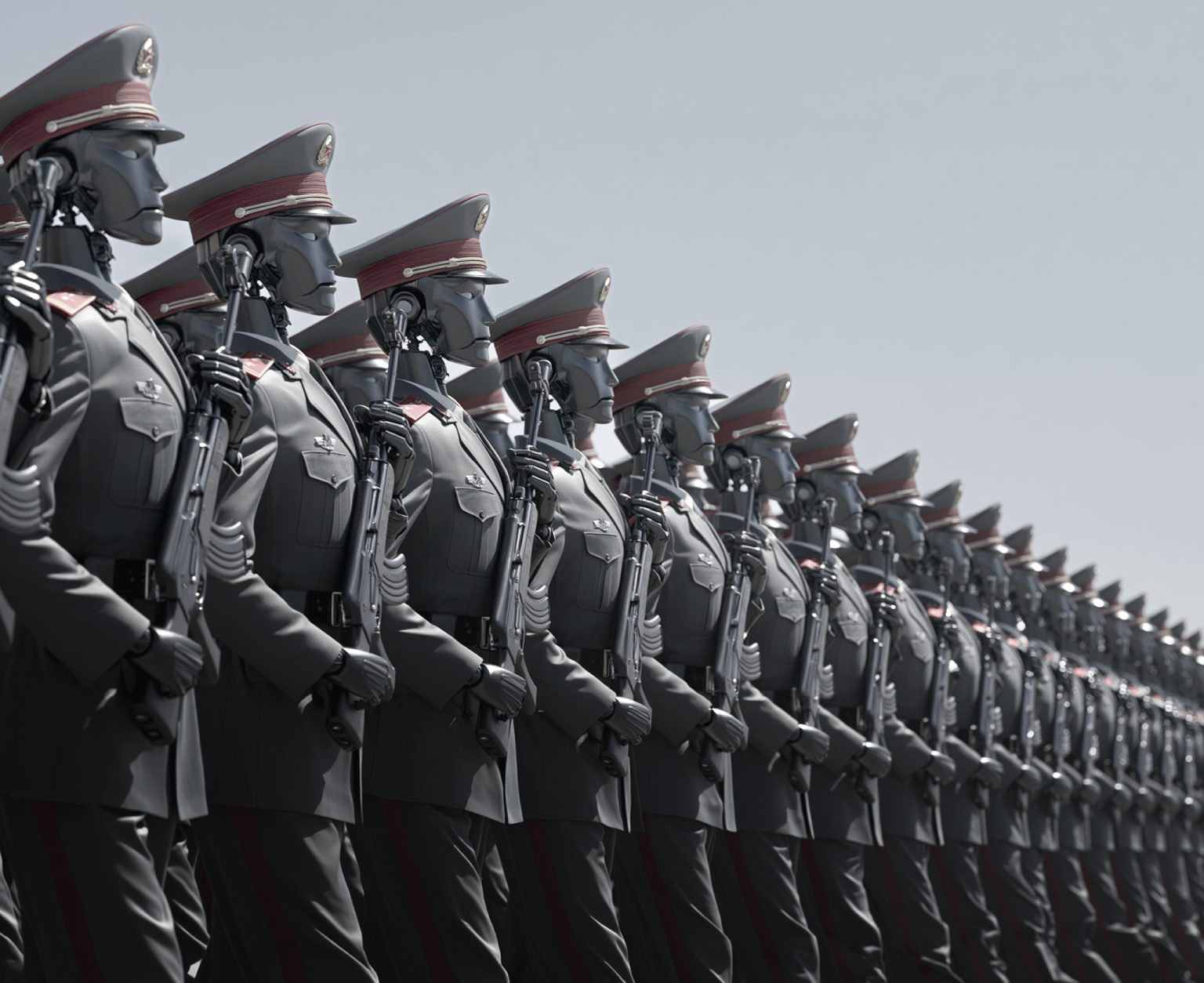
Small, single-purpose attack drones are inexorably changing the face of war. Since Russia's invasion of Ukraine in February 2022, they have taken center stage for militaries around the world, irreversibly altering the tactics and strategy of 21st-century warfare.
The transformation has not been confined to the skies. On the Black Sea, compact unmanned boats and vessels equipped with weapon systems have opened a new maritime front, while land-based versions have been tested successfully beyond the Ukrainian theater as well.
The war has repeatedly knocked out Ukraine's power grid, yet the pressure of self-defense has driven a remarkable expansion of the country's military industry. Kyiv is widely expected to emerge as a major exporter of combat drones once the conflict ends – and countries such as Qatar and the United Arab Emirates may benefit from Ukrainian expertise well before then.
Among the most successful and closely watched of these new companies is Fire Point, which until recently operated under the name Centrocast as a film casting agency. The Czech pro-Ukrainian fundraising initiative A Gift for Putin raised 16m Czech korunas ($770,000). Of that sum, 12.5m korunas was earmarked for a Fire Point missile, but the manufacturer agreed to supply two for the same amount. They were named DANA-1 and DANA-2 in honor of the late Czech nuclear physicist and nuclear safety chief Dana Drabova.
Fire Point's reputation took a hit when a corruption scandal led to the suspension of the Czech purchase. That did not deter former US Secretary of State Mike Pompeo, who joined the company's board of directors last November – a signal that at least some figures from Donald Trump's first administration remain bullish on Ukrainian defense production.
Drones Were Always There – Now They Are Everywhere
Military aerial vehicles known as drones first entered public consciousness during the US war in Afghanistan, when the Air Force began operating the MQ-1 Predator unmanned aircraft. The Predator was replaced by the more capable MQ-9 Reaper in 2007.
But the technology soon spread beyond conventional militaries. During the conflicts in Iraq and Syria, the Islamic State began operating drones from the early 2010s onward, relying not on purpose-built military hardware but on cheap commercial models purchased in large quantities and adapted for use in combat.
The gap between these two approaches gradually narrowed in the Middle East, where Turkey and Iran became the first countries to mass-produce inexpensive drones for purely military purposes – the Bayraktar and the Shahed respectively.
It was the Shahed, whose name derives from the Arabic for a witness to the faith or a martyr, that attracted global attention in the autumn of 2022, when Kyiv accused Moscow of deploying the weapons against Ukrainian forces and published images of a downed example.
Azerbaijani forces were among the first to deploy drones in active combat, doing so as early as 2016 during the Nagorno-Karabakh conflict – a war that had simmered since the collapse of the Soviet Union. Armenians endured two further outbreaks of serious violence, in 2020 and 2023. During the second, nearly 100,000 people fled the self-proclaimed Republic of Artsakh.
Analyst Lukas Visingr has pointed to Paul Scharre's book Army of None as an early warning of where this trajectory leads. Scharre identified the ethical dangers of developing autonomous weapons systems and raised the prospect of machines eventually fighting each other, though he stopped short of predicting the complete removal of humans from the equation.
The Nagorno-Karabakh conflict offered the clearest early preview of what future warfare might look like. Despite long-held assumptions that drones were too vulnerable to air defense systems to be decisive, their low cost and sheer numbers gave Azerbaijani forces a decisive edge – a lesson that militaries around the world took note of.
Ukraine as the World's Drone Laboratory
Ukraine transformed the nature of air warfare in ways that forced Russia, China and Western nations alike to pivot toward low-cost technologies. The shift was not lost on Moscow. In May 2024, President Vladimir Putin replaced General Sergei Shoigu with the bureaucratic technocrat Andrei Belousov, who wasted no time in establishing the Rubicon drone unit – a formation that Ukrainian soldiers would come to describe as a "menace".
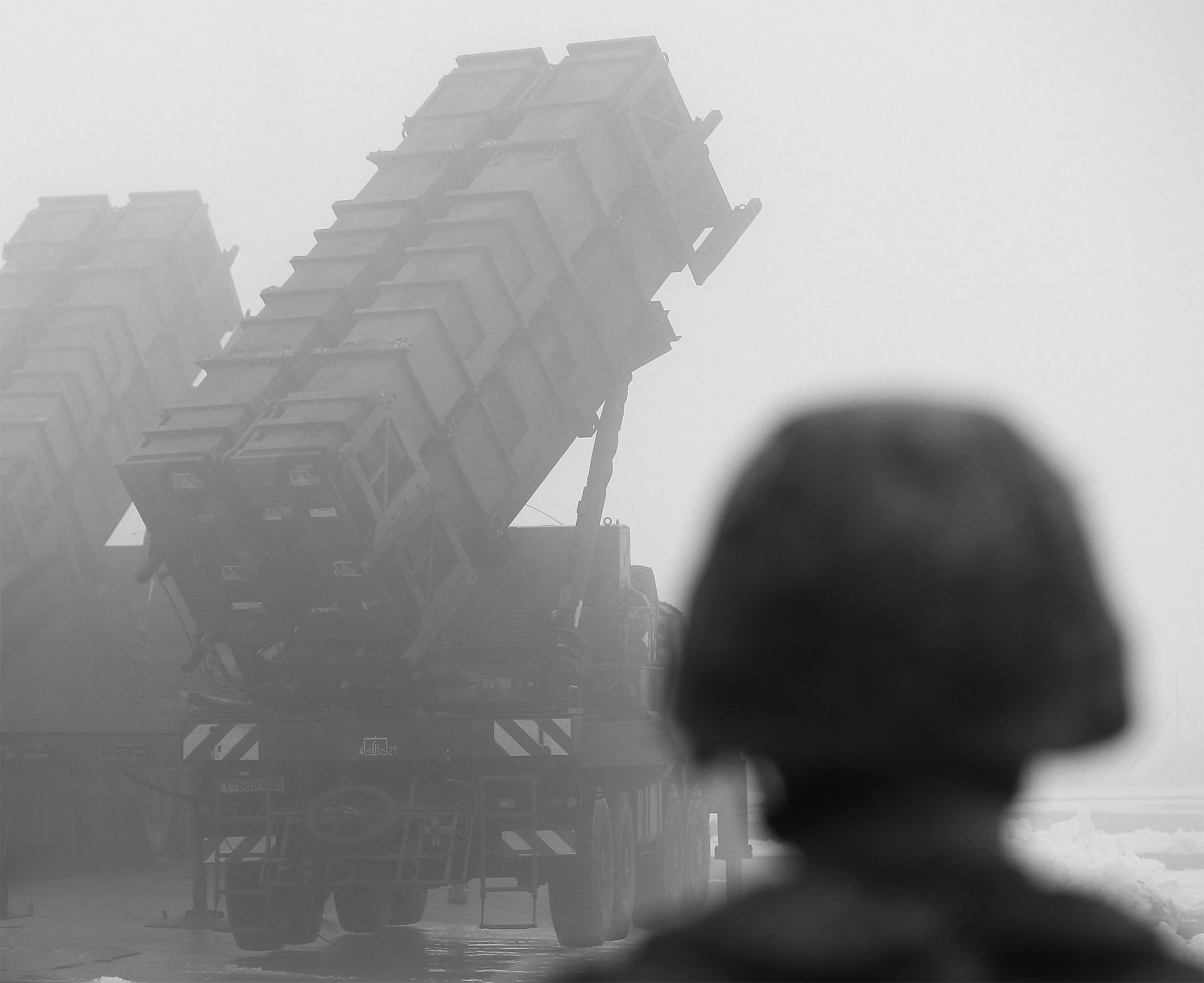
Kyiv, however, was not standing still. At the end of May 2024, Ukrainian forces struck the Voronezh-M and Armavir early-warning radars, both part of Russia's nuclear defense system. A year later, Operation Spiderweb brought the campaign deeper into Russian territory, destroying several Tupolev-class strategic bombers and hitting a base in the Amur Region on the border with China.
The drone war has also given rise to a distinct new tactic: swarming. In regular nighttime strikes, dozens or even hundreds of drones are launched alongside ballistic missiles to saturate and overwhelm air defense systems. Not every drone carries explosives, but defenders are forced to engage them all the same.
Kyiv has turned to jammers to counter the swarms, pushing some drones off course and away from civilian areas – in some cases into neighboring countries, including Poland and Belarus. Moscow, in turn, has adapted by deploying drones guided by fiber-optic cables, removing the dependence on radio signals that jammers exploit.

Iran, however, was the original source of Russia's drone advantage. Both governments deny that Shahed drones have been deployed in the war, yet it is these weapons that have appeared most consistently across the Donetsk and Luhansk regions. Their battlefield credentials were on display again recently in the Persian Gulf conflict.
Iran Reaches for a Weapon It Knows
When Iran launched its first retaliatory strike following the US-Israeli attack of 28 February – the opening blow of a new Middle Eastern war – it reached for a weapon it knew well. Coalition forces had killed Supreme Leader Ali Khamenei and dozens of senior figures from the theocratic government and armed forces. Iran's response, directed at neighboring countries and US facilities across the region, relied heavily on Shahed drones.
The Islamic Revolutionary Guard Corps (IRGC) deployed Shahed-type drones across a range of target sets, from military bases to data centers, applying the swarm tactics that had already proven their worth on the Ukrainian battlefield.
Part of what makes drones and smaller cruise missiles so attractive is their low flight altitude, which analysts say makes them considerably harder to intercept than ballistic missiles. Last October, the RAND Corporation went further, describing such weapons as the "future of warfare" outright.
The price comparison helps explain why. The highest reported unit cost for a Shahed-136 drone is around €43,600 ($50,000). A single Tomahawk missile costs approximately €1,745m ($2m). Those figures alone go a long way toward explaining which model of future warfare most countries are likely to pursue.
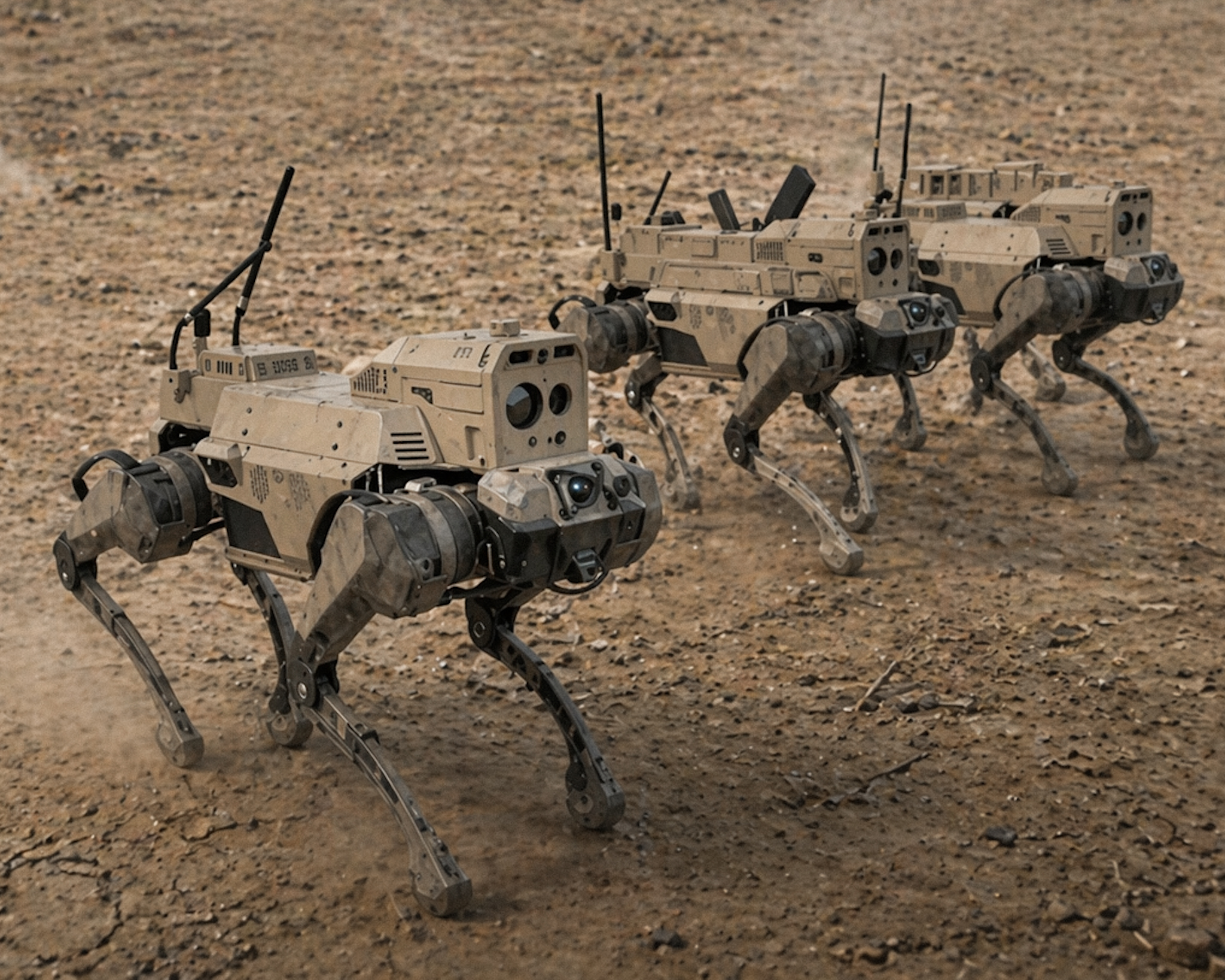
China is also betting heavily on drones as the defining military technology of the coming decades. Among the systems it has already tested are robotic wolves – four-legged machines that can navigate obstacles far more readily than tracked vehicles, giving them a significant mobility advantage in complex terrain.
These machines share more than a design philosophy. Built on a common operating system, they run a single software platform across multiple hardware units – an approach the US Department of Defense has identified as the most promising direction for drone development. In January, the Pentagon issued a restricted solicitation for precisely such a system: a drone swarm operating on a unified platform.

The Best Answer to a Drone Is Another Drone
Expending costly anti-aircraft missiles on cheap drones is a losing equation, and on the Russian-Ukrainian battlefield forces have drawn the logical conclusion: the most effective counter to a drone is another drone. As Artem Boliukh, commander of the 3rd Separate Assault Brigade, told the Wall Street Journal, the soldiers who have excelled most in these high-speed aerial engagements are young men whose reflexes were sharpened by years of video games.
The demands of the role are unforgiving. Intercepting one autonomous drone with another leaves no margin for slow reactions. Boliukh's unit shot down 507 Russian drones this way in June alone, a figure that climbed to 866 by September. An anti-drone drone that misses its target is not wasted, the Journal noted – it can return and fly again in the next engagement.
Scharre's vision is edging closer to reality, and the reason is less philosophical than practical. No politician can afford to be seen as indifferent to soldiers' lives, which means that wherever a drone or robot can be sent instead of a person, it will be. Commanders do not need to be ordered to make that choice – they will make it instinctively. Repeated often enough, that instinct points toward a front line manned entirely by machines.
The Russian pro-government Telegram channel Rybar has arrived at much the same conclusion. Writing recently, the channel's analyst argued that drones were quietly assuming the role in modern warfare that the Kalashnikov once held – cheap, simple and available in such variety that the full range of their applications was difficult to grasp.
The analyst went on to argue that the basic components of a drone – a motor, wings and a warhead – were enough to produce a weapon capable of stretching air defenses, hitting infrastructure, disrupting logistics and unsettling any command that had assumed its rear areas were beyond reach.
Range and payload, he acknowledged, were relevant considerations. But the strongest case for drones, he argued, had nothing to do with specifications: it was the assurance that when a mission goes wrong, no family loses a member.
Europe Changes Course as the Future Outpaces Its Plans
Germany's withdrawal in early June from the Future Combat Air System (FCAS), a joint European project to develop a next-generation combat aircraft, came as a significant blow to the continent's defense ambitions. Berlin had been working with Paris and Madrid on the so-called combat cloud, and while much of the subsequent commentary centered on Franco-German rivalry, the real reasons for the breakdown may be more fundamental.
At the heart of FCAS was a new generation of fighter jets to be developed jointly by French manufacturer Dassault and the multinational Airbus, eventually replacing Eurofighter-class aircraft. The jets were to operate alongside a dedicated drone fleet, with both elements tied together through a unified operating system linked to an onboard computer.
The concern had been voiced at the highest level as far back as February, when Federal Chancellor Friedrich Merz used an appearance on the podcast Machtwechsel to ask openly: "Will we still need a manned fighter jet in 20 years' time?" He added the question of whether a project of this scale could be justified given what he called the inevitable "great expense".
The questions were framed in economic terms, but they pointed toward something larger. Autonomous drone swarms and packs of robotic wolves are no longer the stuff of speculation, and Merz's remarks implicitly acknowledged as much. The logic is straightforward: the fewer soldiers a military needs to put in harm's way, the nearer we come to a war fought entirely by machines.
Europe has yet to translate its drone ambitions into operational reality. The "drone wall" proposed by European Commissioner Andrius Kubilius, which had been under discussion since last September, was set aside at the Copenhagen summit in October after both Merz and French President Emmanuel Macron judged the underlying technology to be insufficiently developed.
Until that changes, it is human lives that continue to fill the gap – pilots scrambled in manned jets to intercept incoming drones. The pressure to find a better answer is mounting.