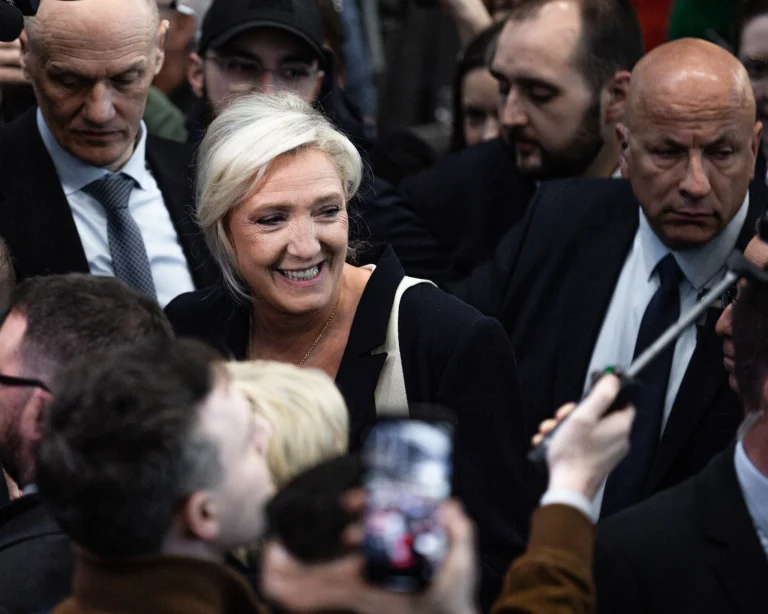
But the former MEP has found a way around this: she intends to appeal to the Court of Cassation against this second judgment. She is challenging the legal principle that a Member of the European Parliament cannot be involved in national political activities on behalf of their party. Legally, this will have the effect of suspending the sentence and allowing her to campaign without the ankle monitor while the appeal is pending.
In all likelihood, the timetable will therefore be as follows. The judgment was handed down on 7 July. Le Pen has until 20 July to confirm her intention to appeal to the Court of Cassation. From that point, the time limit for proceedings before this court of last resort will begin to run. Processing times are usually quite long – up to 18 months or two years – but given the highly specific and urgent nature of her case, they could be shortened to around nine months.
Le Pen can therefore reasonably expect a new judgment in February or March 2027. Until then, she can campaign without an electronic tag, while once again benefiting from the presumption of innocence, and she has no intention of missing out on this opportunity, as she explained.
An Unusual Ticket
One question inevitably arose from the journalist conducting the interview – and one that many French people are asking themselves: what about Jordan Bardella, who has been preparing for months for the possibility of standing as a candidate himself, not without some success, given that numerous polls show him performing better than Marine Le Pen herself?
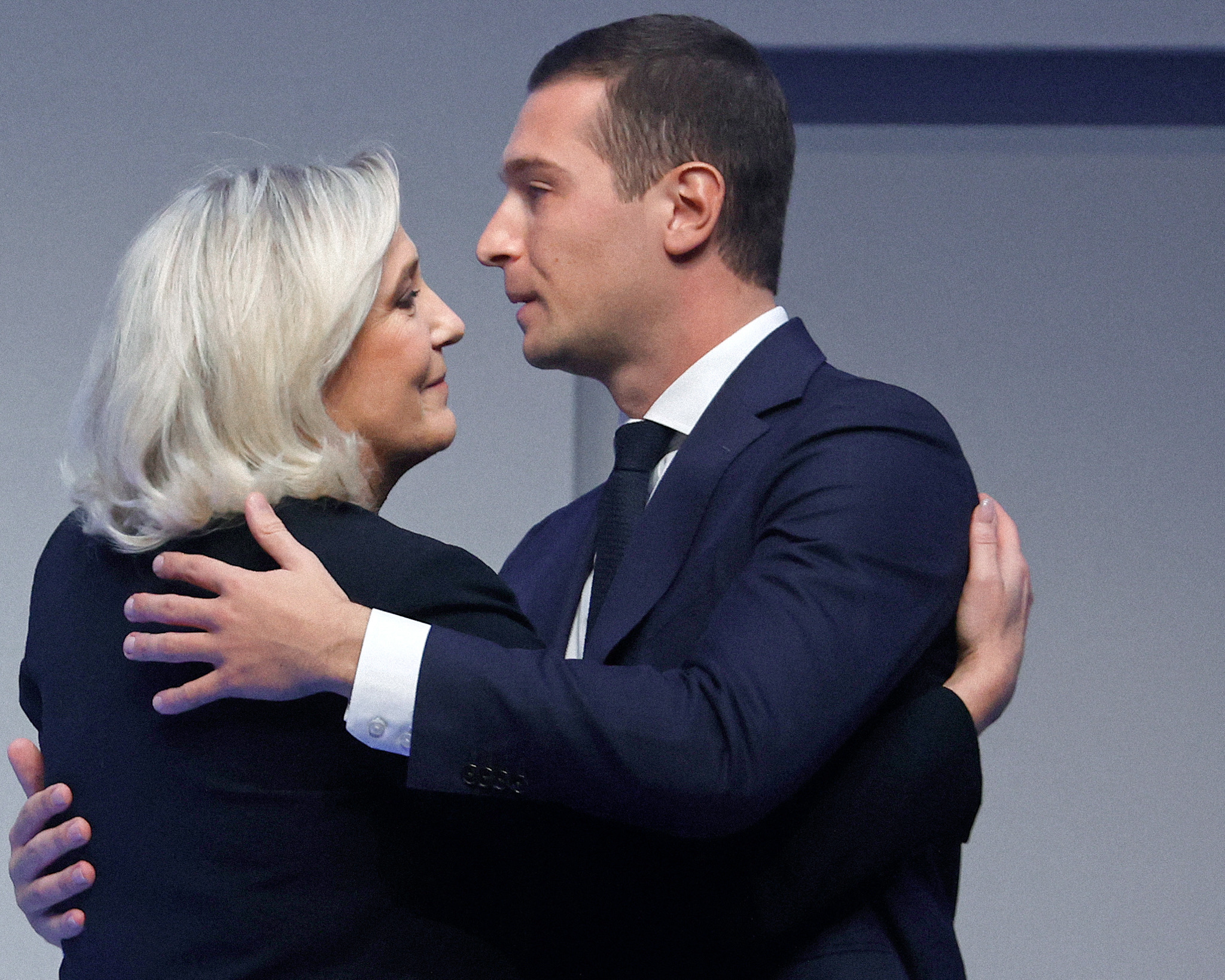
Le Pen chose to sidestep the issue, pointing out that within the RN, the defense of France and the French people takes precedence over personal ambitions, and that they would campaign as a pair. Following her statement, political analysts emphasized that the existence – entirely unprecedented in French politics – of a ticket such as that formed by Bardella and Le Pen was a prerequisite for a possible victory for the RN, as their two personalities enable them to unite and thus reconcile electorates that are sociologically different, and whose expectations regarding the party’s program also differ.
Reactions from Left and Right
Upon the announcement of her candidacy, which took many by surprise, reactions from the French political establishment poured in. On the left, the line of attack is clear: Marine Le Pen is a “liar”, in the words of Manon Aubry, MEP for La France Insoumise, a criminal and a convicted offender, which strips her of any legitimacy to hold the highest office – disregarding the law which holds that, until the end of the appeal proceedings, she remains presumed innocent.
Some even fear a Trumpian moment for the right-wing candidate. The center’s favorite candidate, former Prime Minister Édouard Philippe, has been more measured in his attacks, arguing that she is free to make her own choices, and that it is up to the French people to decide at the ballot box.
Within the national right, the news has been greeted with delight. Éric Ciotti, president of the Union des Droites pour la République (UDR, or Union of the Right for the Republic) – an ally of the RN – described Le Pen’s candidacy as “good news for French democracy”. Even Éric Zemmour, despite being very reserved about his main rival on the right, said he was pleased that Le Pen’s fate now lay in the hands of the voters rather than the judges’.
As soon as the appeal proceedings were over, Le Pen launched her campaign. She is expected to appear with Jordan Bardella in the town of La Flèche in the west – led by an RN mayor – to meet with her supporters. She said she was “delighted that the freedom to vote has now been restored to the French people”.