It is hard to grasp the sheer scale of the Volkswagen Group's planned job cuts. The company intends to lay off 100,000 employees in the coming years – a staggering number, even for a manufacturer of Volkswagen's size. That amounts to more than 15% of its workforce. On top of that, it also plans to close four plants in Germany.
But can we really be surprised? Or even criticize the company?
Its actions make clear that it is doing everything it can to survive. After all, demand for its vehicles is no longer what it was.
At first glance, the group’s revenue and sales figures do not suggest a company in deep crisis. Although it is no longer delivering the more than 10 million vehicles it sold at the end of the last decade, annual deliveries have remained around nine million over the past five years.
What has changed, however, is profitability. A growing share of the company's revenue is being absorbed by higher costs.
The company faces growing competition from lower-cost Chinese manufacturers. Not in the segment where European automakers have dominated for decades, but in electric vehicles – precisely the sector that European regulation has designated as the industry's only path forward.
Because BYD, SAIC and other Chinese competitors can manufacture and sell electric vehicles at relatively low prices, European producers have little room to raise prices, even as their costs continue to rise. Otherwise, they risk losing market share. And the greater the share of electric vehicles in their production, the more pronounced this trend becomes.
You might be interested
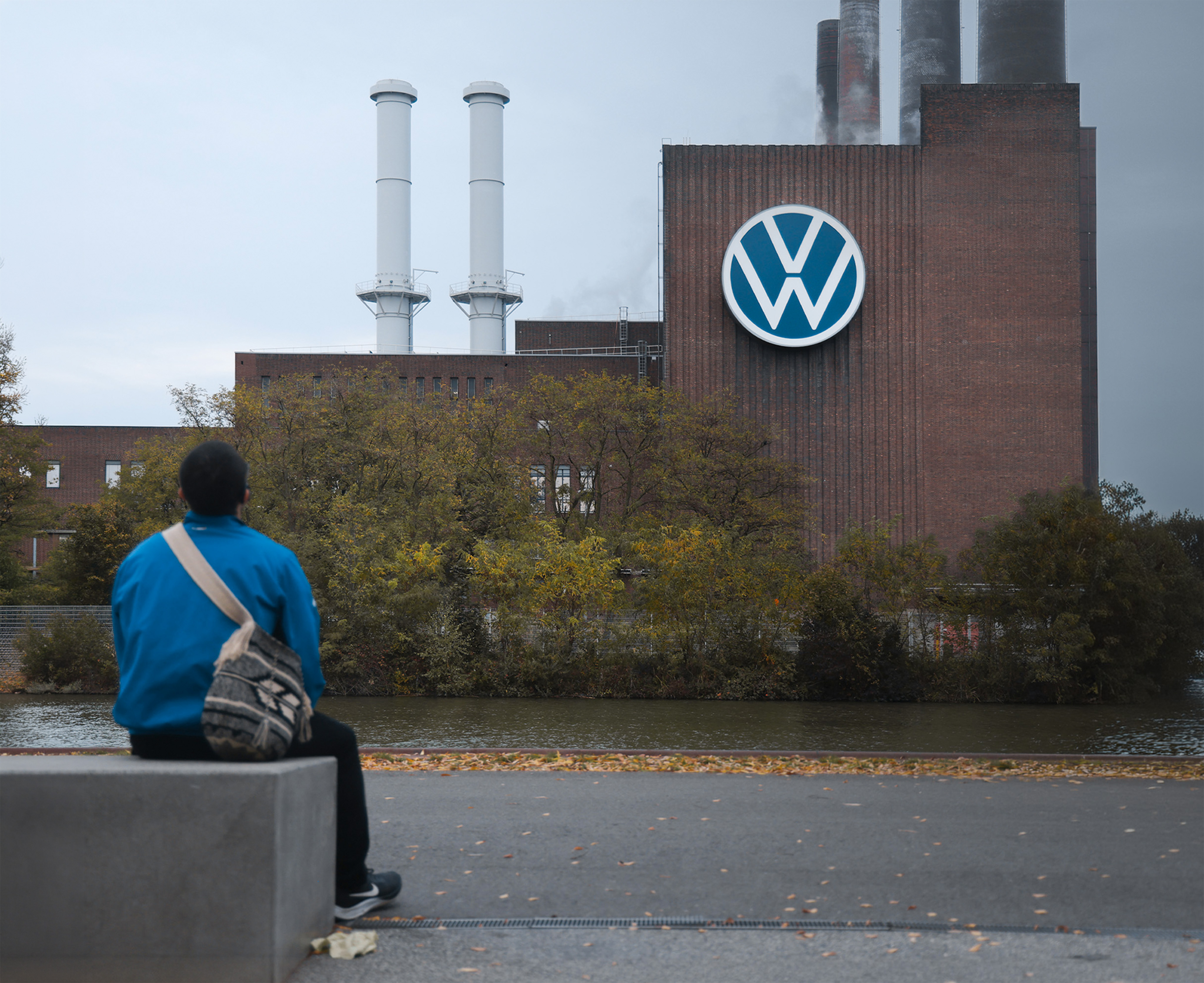
Volkswagen: The Fall of an Industrial Giant
Who Is to Blame for the Rising Costs?
One of the most fundamental questions – and arguably the most complex – is what lies behind Europe's high production costs. In reality, there is no single explanation.
The prevailing narrative attributes the situation largely to a series of external events over which Europe had little or no control. To some extent, that is true, particularly in the case of the latest supply shock following the attack on Iran and Tehran's response through the blockade of the Strait of Hormuz.
However, temporary external shocks tell only part of the story, and probably not the most important part.
Political decisions made in Brussels – such as imposing emissions charges and severing ties with Russian energy – have also played a significant role.
The objectives behind these policies can certainly be defended. Protecting the environment and reducing dependence on Russia after it launched a full-scale war in Europe are understandable goals. But their implementation has been far less successful, and the economic consequences are now becoming increasingly apparent.
Although automakers themselves are not directly covered by the European Union Emissions Trading System (EU ETS), much of their supply chain is. As a result, manufacturers pay more for steel, aluminum and plastics, while also facing higher energy costs.
The very existence of the Carbon Border Adjustment Mechanism (CBAM) is an indirect acknowledgement that emissions allowances have driven up production costs for European industry, prompting Brussels to shield domestic producers from foreign competition.
At the same time, however, tariffs on imported commodities deprive automakers of access to cheaper raw materials from abroad.
You might be interested
Can the EU Force the World to Adopt Its Climate Rules?
Europe's Costly Break With Russian Energy
Even in the case of Russian energy, it is worth asking why pragmatism has given way to an outright break. Rather than diversifying energy sources and transit routes, the European Union has effectively abandoned a relatively inexpensive supplier whose gas reached Europe efficiently through existing gas pipelines.
Just compare gas prices in the US and Europe. During much of the second half of the last decade, gas prices were roughly twice as high on the continent as they were overseas. But over the past three years, even after the initial shock of the war subsided, they have generally remained four to five times higher. In May 2026, the difference was even greater.
Europe pays more for gas because liquefied natural gas imported from the US must be transported to export terminals, liquefied, shipped across the Atlantic, and then regasified on arrival.
That entire process costs more than the gas itself at the point of extraction. Estimates of those logistical costs range from 18 to 30 euros per megawatt-hour. By comparison, transporting Russian gas through existing pipelines cost only a small fraction of that amount.
Europe could have chosen a more pragmatic path by gradually developing alternative suppliers and transit routes until Russian gas ceased to be a strategic necessity. Throughout that period, it could also have monitored further geopolitical developments. After all, Russia had a strong economic incentive to continue selling energy to Europe.
Diversification does not mean completely ending trade with a single supplier. It means ensuring that the loss of that one source cannot jeopardize the functioning of the economy. If sufficient alternatives had been developed – even with public support for private investment – Europe could have continued benefiting from cheaper Russian gas without being vulnerable to energy blackmail.
A complete shift away from Russian gas was therefore not an economic necessity, but a political decision – one for which European industry is now paying the price.
You might be interested
Germany’s Wrong-Way Energy Policy
Staying the Course at Any Cost
Although many European policymakers now acknowledge the continent's poor economic situation, they rarely examine the underlying causes, as doing so would create pressure to reconsider certain policy decisions. For the current leadership, the political costs have become too high.
Instead, Brussels patches one economic intervention with another – whether through subsidies, support schemes or additional regulation, such as countervailing duties on Chinese cars.
These measures stir up a hornet’s nest, as Beijing could retaliate at any time. They also mean that Europeans will not be able to buy cheaper cars, because even Chinese imports will become more expensive.
Instead of addressing the root causes of Europe's competitiveness problem, policymakers add new layers of regulation, reducing efficiency in the process. This is a natural consequence of a policy approach that seeks to control the market rather than create the conditions for it to function.
Volkswagen is not laying off 100,000 employees because Europeans have forgotten how to make cars. It is doing so because the EU, in the name of political objectives, is making car production progressively less competitive.