The vegan revolution meets market reality as a former meat-disruptor pivots to protein drinks. Photo: Scott Olson/Getty Images
Beyond Meat's Losing Fight for a Place at the Table
The vegan revolution has collided with market realities. The company that once promised to end beef consumption is now trying to survive on protein drinks.
When Beyond Meat went public in 2019, its soaring share price seemed to promise that the Beyond Burger, its flagship product, would by now sit on every supermarket shelf, steadily eating into beef consumption.
The past decade brought remarkable technological progress, and many expected it to be followed by a revolution in eating habits. The Beyond Burger was meant to embody exactly that: a beef substitute, or artificial meat, produced through a highly environmentally intensive process.
The case for meat substitutes was never just environmental. It was also economic. Widespread adoption was expected to make them competitive with traditional beef, whose price is set to rise across the globe.
Energy, input and labor costs are all climbing. At the same time, the world's population is growing and living standards are rising, meaning ever more people will be able to afford meat, a trend that will push prices higher still.
Nor was the rationale purely economic. There was an ethical dimension too. For many younger consumers, killing animals for food is simply unacceptable, and choosing a plant-based alternative was framed as more than a passing fad. It was a triumph of conscience over appetite, a decision to choose the better option over the easier one.
In the end, judging at least by the share price, the hedonists won out, although at the outset the outcome looked far less certain than it does today.
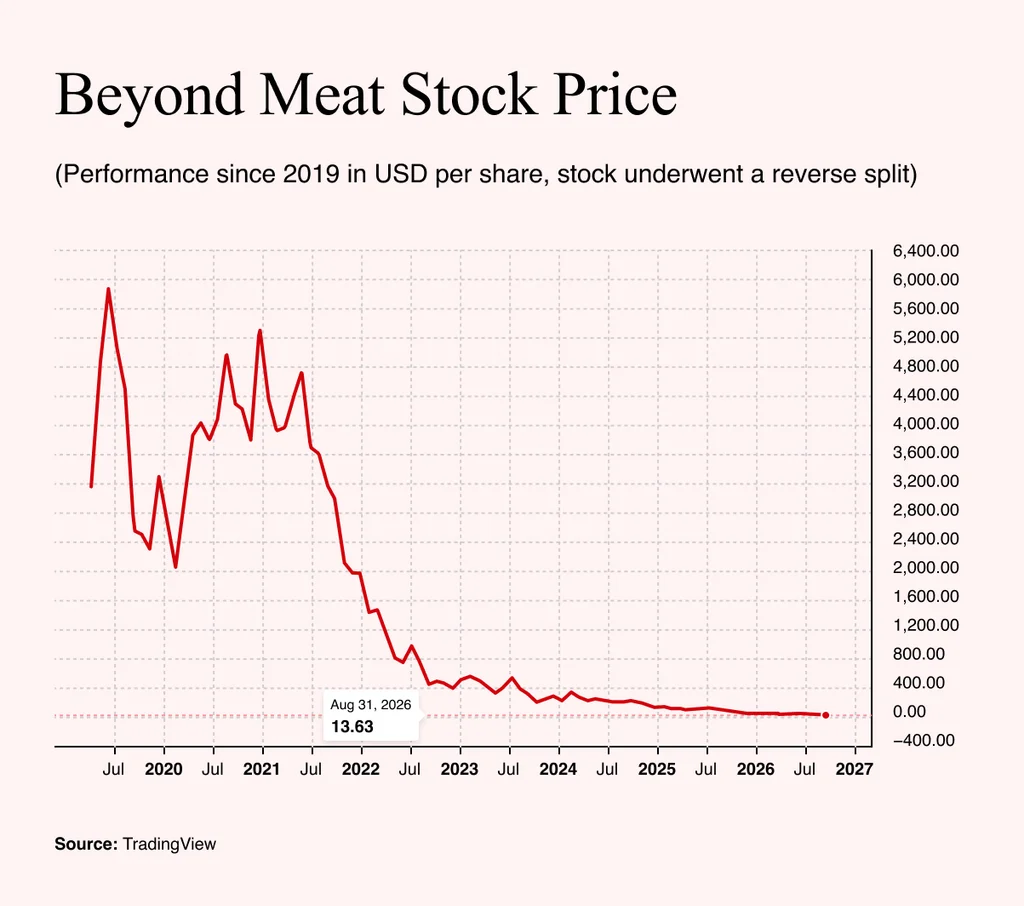
Beyond Meat went public on the Nasdaq on 2 May 2019, under the ticker symbol BYND. The offering was priced at $25 per share, raising approximately $252m in net capital, and demand for the shares soared.
The stock peaked in July 2019 at $240 a share, and the outlook remained promising for the first two years, even on fundamentals. Seven years later, the company carried out a 1-for-30 reverse split, a maneuver in which a company reduces its number of outstanding shares while proportionally raising the price of each one, simply to keep the stock listed on Nasdaq. Since that 2019 peak, the shares have lost virtually all their value.
Revenue climbed from $298m in 2019 to nearly $465m within two years, growth of roughly 56%. To investors, that looked like the beginning of something much bigger: hundreds of millions of dollars is still a small slice of the global beef market, and for Beyond Meat to justify their expectations, revenue needed to head quickly toward the billions. Instead, the opposite happened.
Source: TradingView
The year 2022 marked the turning point. Revenue not only stalled but fell by 9.9% year-on-year, to $418m, a decline management attributed partly to the lingering effects of the pandemic.
Over time, though, it became clear this was no temporary COVID-related dip. The problem ran deeper, and revenue has been sliding ever since. This year, the company is projected to report revenue of just $246m, less than when it went public in 2019. Adjusted for inflation, the picture looks even worse. So where did it go wrong?
There was no single mistake. The numbers show that while media attention quickly raised consumer awareness and got people to try the products, it failed to turn them into regular buyers. A first taste never translated into a lasting change in eating habits, and the investment thesis built on rapid substitution began to unravel.
Price was the second problem. The meat substitute remained expensive next to the real thing, and while beef prices are rising, not by enough to push shoppers toward artificial meat. The company itself acknowledged that price was putting off many customers, and from there it slid into a downward spiral.
Management had expanded production capacity in anticipation of higher demand. That demand never materialized. Instead, the costs of running underused plants rose, and margins melted away like snow in spring.
The third, and perhaps most telling, factor is illustrated by 2025 figures showing that US sales of refrigerated plant-based meat alternatives fell by 17% year-on-year. This was not simply a case of Beyond Meat getting something wrong. The entire plant-based meat sector failed to win over American consumers.
There is a paradox here, too. The meat substitute ultimately proved less healthy than expected, and someone who genuinely wants to eat well would do better buying beans and lentils outright rather than eating them disguised as meat.
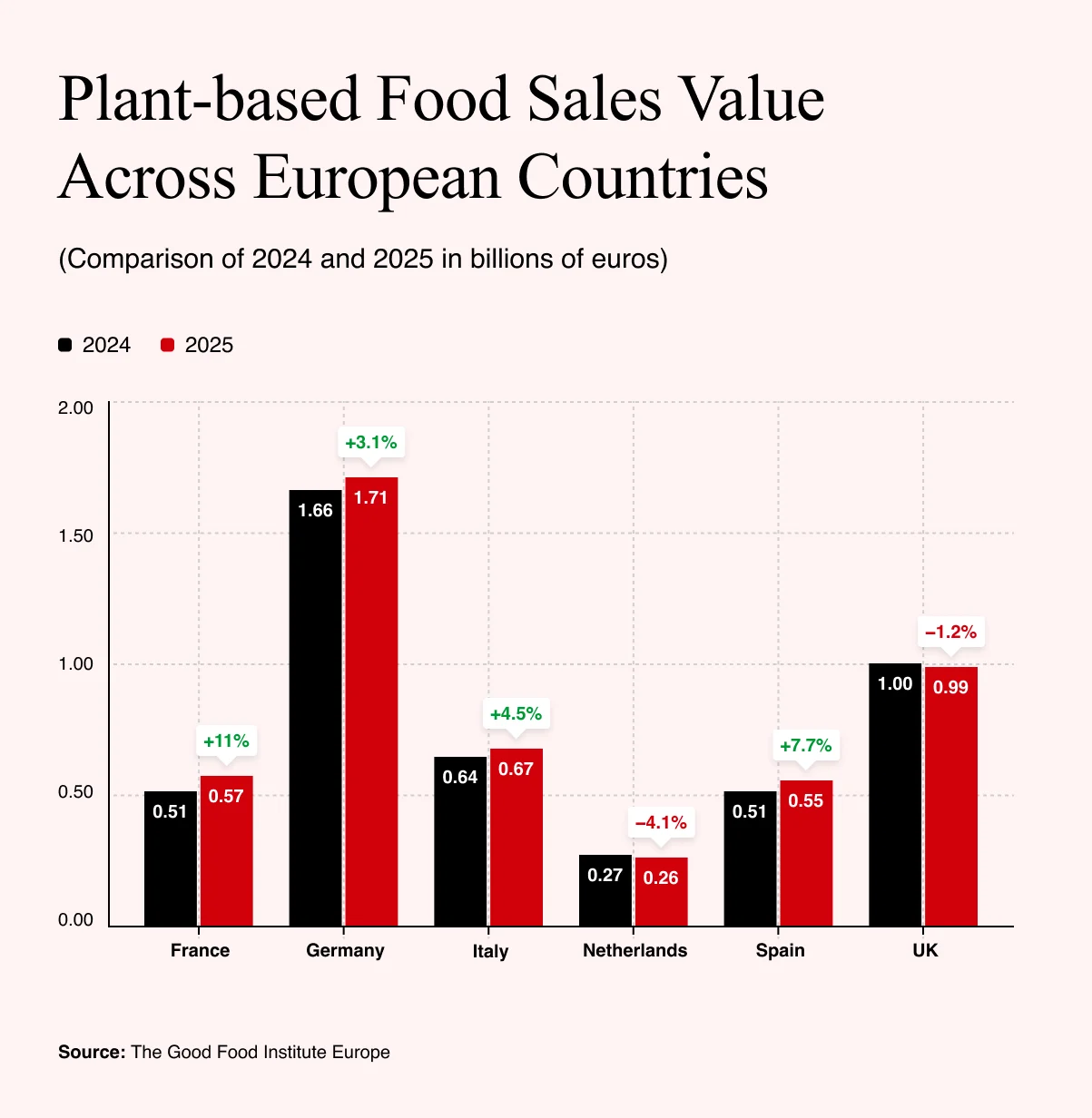
Does this mean plant-based meat is finished, slowly heading for extinction? The picture is not as clear-cut as the US numbers suggest, since the market is, surprisingly, growing in Europe. In France, for instance, retail sales of alternative foods rose 11% year-on-year in 2025, from around €513m to €572m ($595m to $663m). The sector, in other words, is expanding in Europe even as it shrinks in the US.
Source: The Good Food Institute Europe
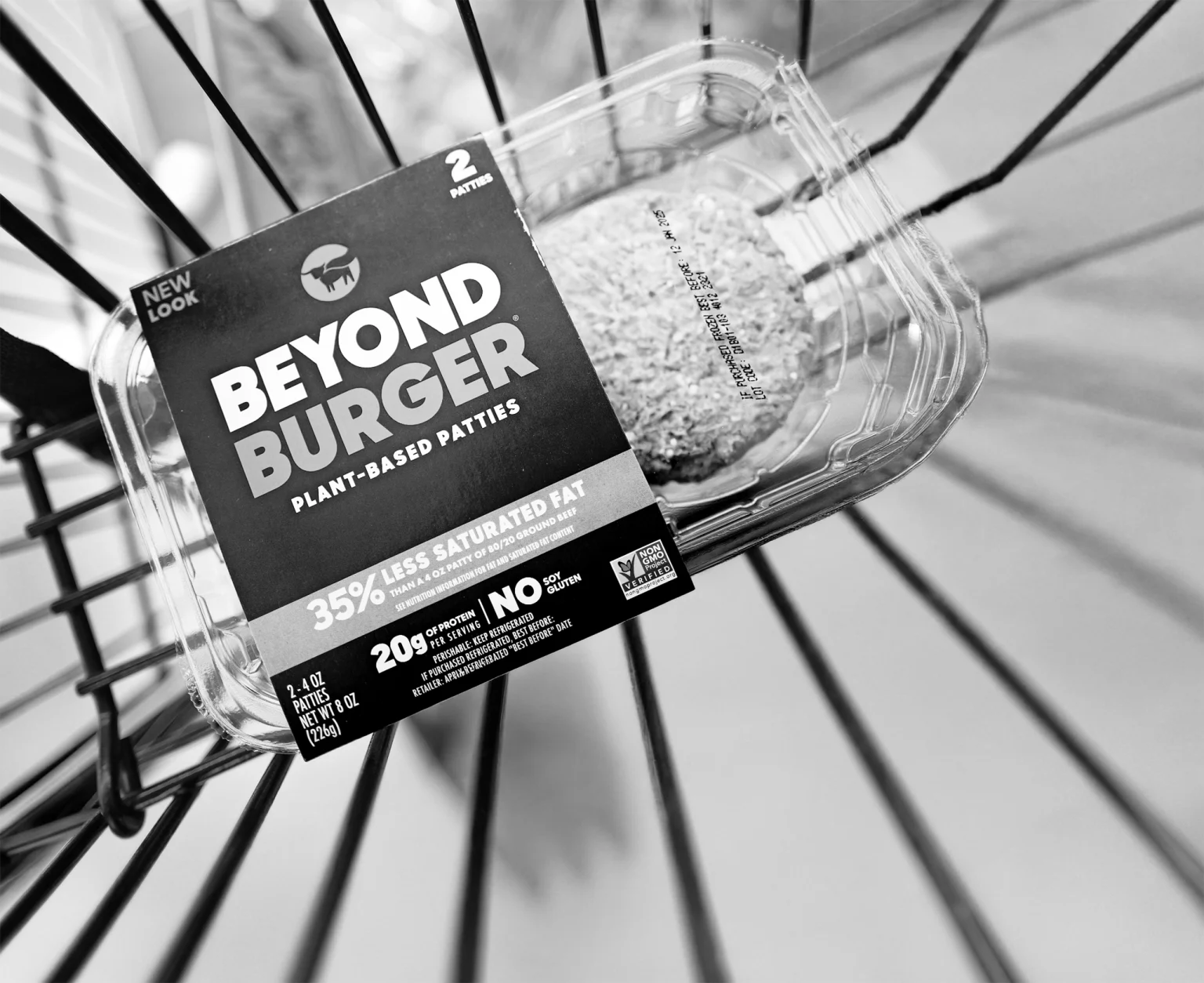
Beyond Burger, Beyond Meat
A new trend has emerged that helps explain why meat substitutes ultimately failed to catch on. Sales of protein-enriched milk drinks, whey protein, high-protein yogurts and other foods marketed specifically for their protein content are all climbing. Consumers, in other words, have not turned against protein. If anything, they want more of it. It simply turns out they do not need it disguised as meat.
Beyond Meat's own management has jumped on this trend. The company now markets itself as Beyond The Plant Protein Company and is pushing to expand well beyond traditional meat substitutes, most notably with a new protein drink, Beyond Immerse.
It is a striking shift for a company that once symbolized the vegan meat revolution and is now searching for growth anywhere but the burger.
Perhaps the clearest evidence of plant-based meat's troubles is that even Beyond Meat no longer wants to be just a plant-based meat producer.
Welcome to the comments section of the Štandard daily. Please take note of our guidelines, comments are moderated by us. You can contact the moderators at support@statement.com.
Participate in the discussion
Comments are available to subscribers only. If you'd like to join the discussion, choose a subscription starting at €6.72 per month.
All comments 0
Register
Comments are available to registered users only. If you'd like to join the discussion, register here.