
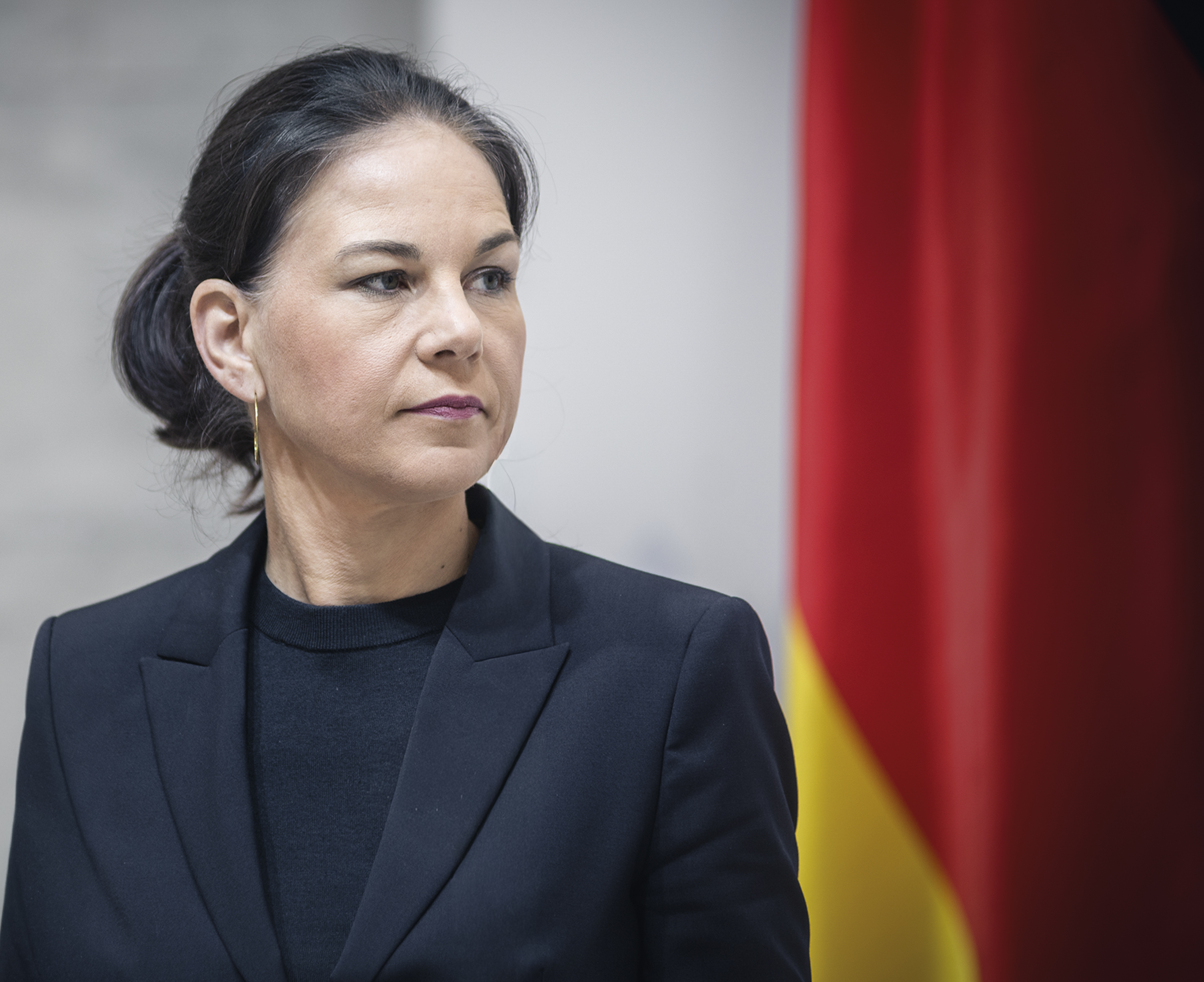
Stuttgart/Berlin. At the CDU party conference in Stuttgart, Friedrich Merz placed a sentence on record that will shape the remainder of his term. ‘I have reached a final decision,’ the Chancellor and CDU leader declared, ‘to seek majorities only in the political centre.’ In Berlin parlance, that means majorities with his coalition partner, the SPD, and – on matters such as the election of constitutional judges or amendments to the Basic Law – also with the Greens, or if necessary even with the Left Party.
Yet what can be observed there is anything but the centre. There is not even a moderate left. Even within the party Merz leads, not all influential figures belong to the bourgeois-liberal camp – take Schleswig-Holstein’s Minister-President Daniel Günther, who recently denounced media outlets from the moderately right-wing spectrum as ‘enemies of democracy’ that might have to be fought, if necessary, with censorship. He received a fair measure of approval within the CDU and only muted criticism.
A centre without boundaries
The SPD and Greens, for their part, include a radical fringe whose representatives are gaining influence – for example when Social Democrats in Berlin seek to place the property market under such extensive state control that it would effectively amount to the expropriation of private owners. Above all, neither party draws a clear line against violent left-wing extremism and antisemitism. A German firewall to the left does not exist. By staking out his position as he has, Merz aligns himself – without saying so explicitly – with an alliance that also encompasses left-wing extremist terrorism. For some, that may sound harsh. Yet events in recent days have made the point unmistakably clear.
In the federal state of Bremen, the Left Party recently resolved that the ‘Interventionistische Linke’ should be regarded as part of its political orbit, as a highly valued component of ‘civil society’. The term will mean little to most Germans. The violent riots in Hamburg during the 2017 G20 summit, however, remain widely remembered – including abroad. At the time, left-wing extremists from across Germany and Europe turned parts of the city into what resembled a civil war zone: black-clad groups looted supermarkets, set fire to a savings bank branch and hurled chunks of concrete from rooftops at advancing police officers. In total, 476 police officers were injured – and an entire city was left shaken.
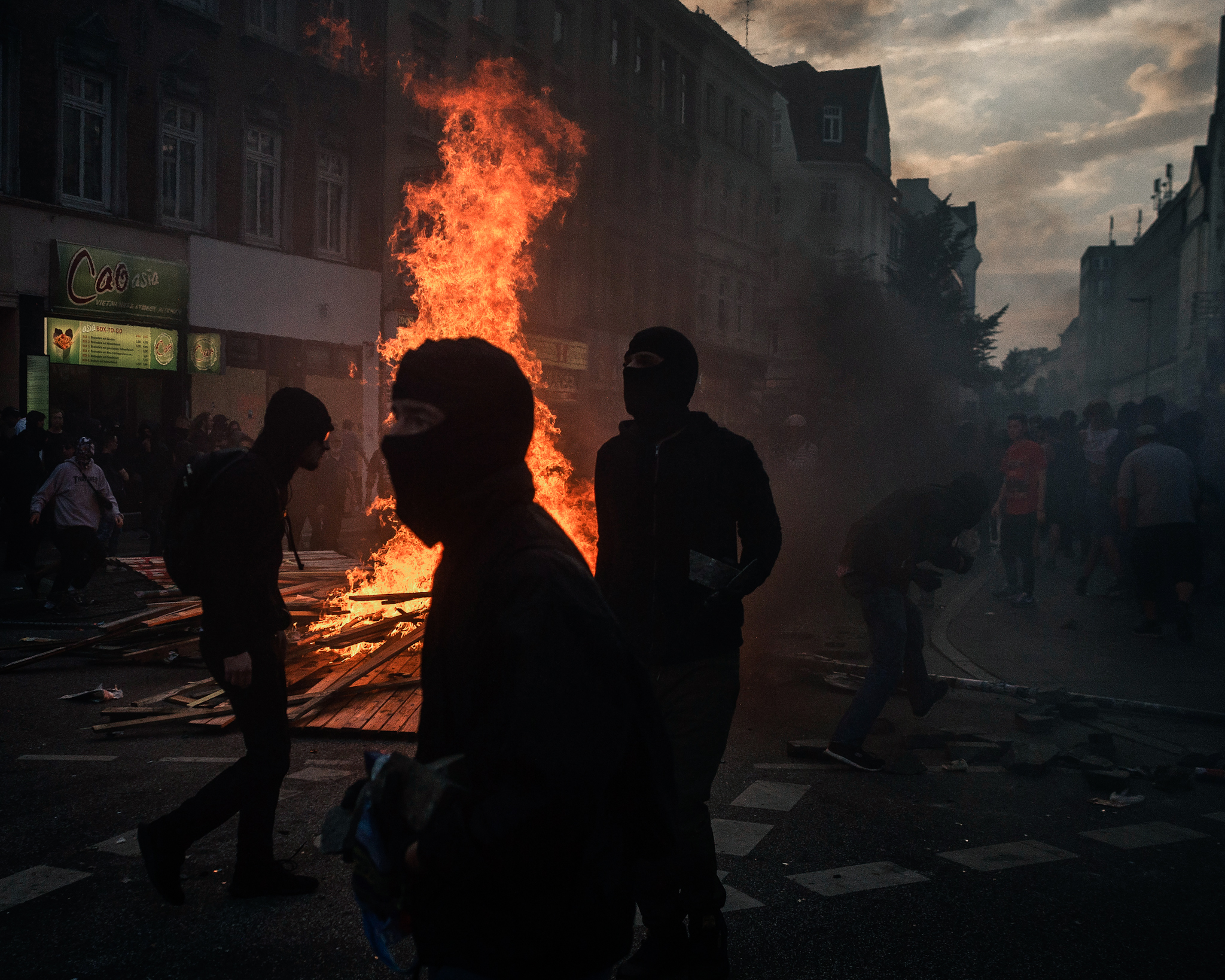
The ‘Interventionistische Linke’ was among the organisers of the violence and openly endorsed force as a legitimate means of struggle in advance. It does so to this day. Germany’s domestic intelligence service classifies the group as part of the violent extremist spectrum. The novelty lies in the fact that Bremen’s Left Party has now formally embraced the organisation. Two senators, effectively state ministers, in the Bremen regional cabinet also voted in favour of the conference motion. Members of a government openly expressing solidarity with political militants – that has never happened before in the Federal Republic. The SPD and Greens, as coalition partners, did not terminate the alliance. Instead, they offered mild distancing along the lines of: we do not think violence is a good thing – but if our partner sees it differently, we will not make a drama of it.
The episode would offer the CDU leader the perfect opportunity to demand from the SPD and Greens a firewall against the far left – and, if they refused, gradually to dismantle his own cordon sanitaire vis-à-vis the AfD. Instead, he raises it a little higher and meets the openness of his preferred partners towards extremists with silence. He can rely on the assistance of many German media outlets, which play down the Bremen affair as a curious exception: in that small federal state, they argue, there happens to be a lunatic fringe – but the Left Party as a whole is moderate, unlike the AfD, which many journalists portray as a resurrected Hitler party. Neither claim withstands scrutiny.
Double standards in politics and media
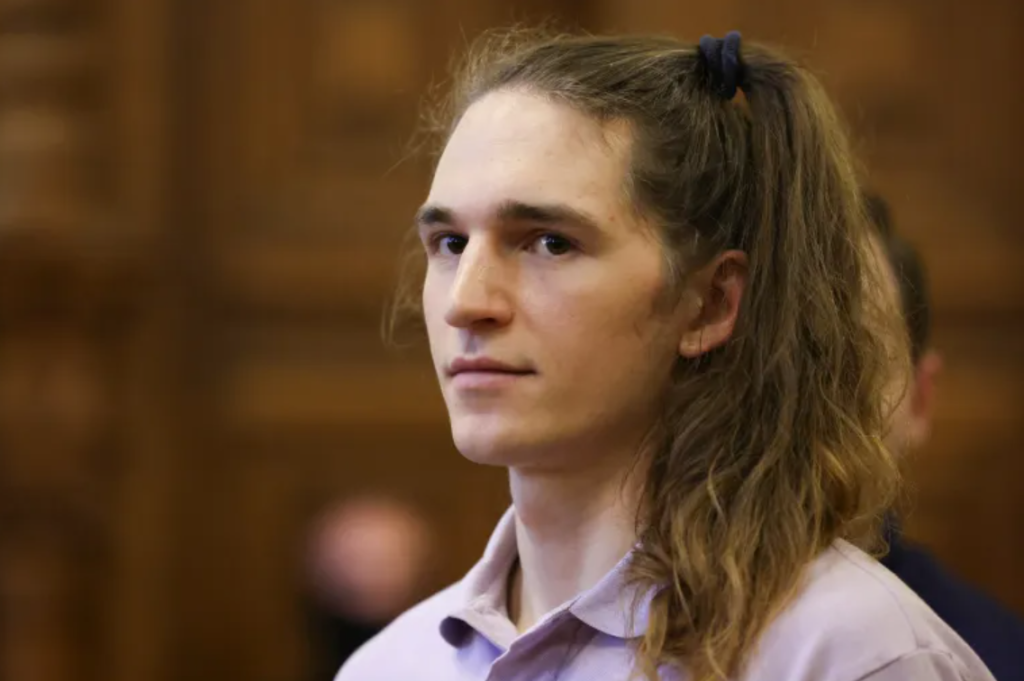
When Simeon T., a member of the so-called ‘Hammerbande’, stood trial in Budapest, Martin Schirdewan, a Member of the European Parliament for the Left Party, travelled there to express solidarity with the defendant and to berate the Hungarian judiciary for putting him on trial at all. In 2023, Simeon T. travelled to Budapest with two dozen other German left-wing extremists to attack individuals they believed to be ‘Nazis’ using hammers and telescopic batons. Video footage shows him striking a man repeatedly on the back of the head with a hammer and continuing even after the victim had fallen to the ground.
The Left Party describes the extremist, who has since been sentenced to eight years in prison, as an ‘anti-fascist’ – while in custody he declared himself non-binary – and makes no mention of the victims. The underlying message is familiar: violence is not bad if it serves the right cause. The Green Bundestag member Katrin Göring-Eckardt also paid a visit to the imprisoned T. in Budapest and likewise made no reference to his actions or the injured parties.
One need only imagine the reverse scenario: a gang of right-wing extremists travels to France to beat up leftists or supposed leftists. The AfD then expresses full solidarity with the perpetrators, and an AfD politician is given airtime on the evening news to question the legality of the verdict against one of the attackers. There would be nationwide mass demonstrations, and proceedings to ban the AfD would begin at once.
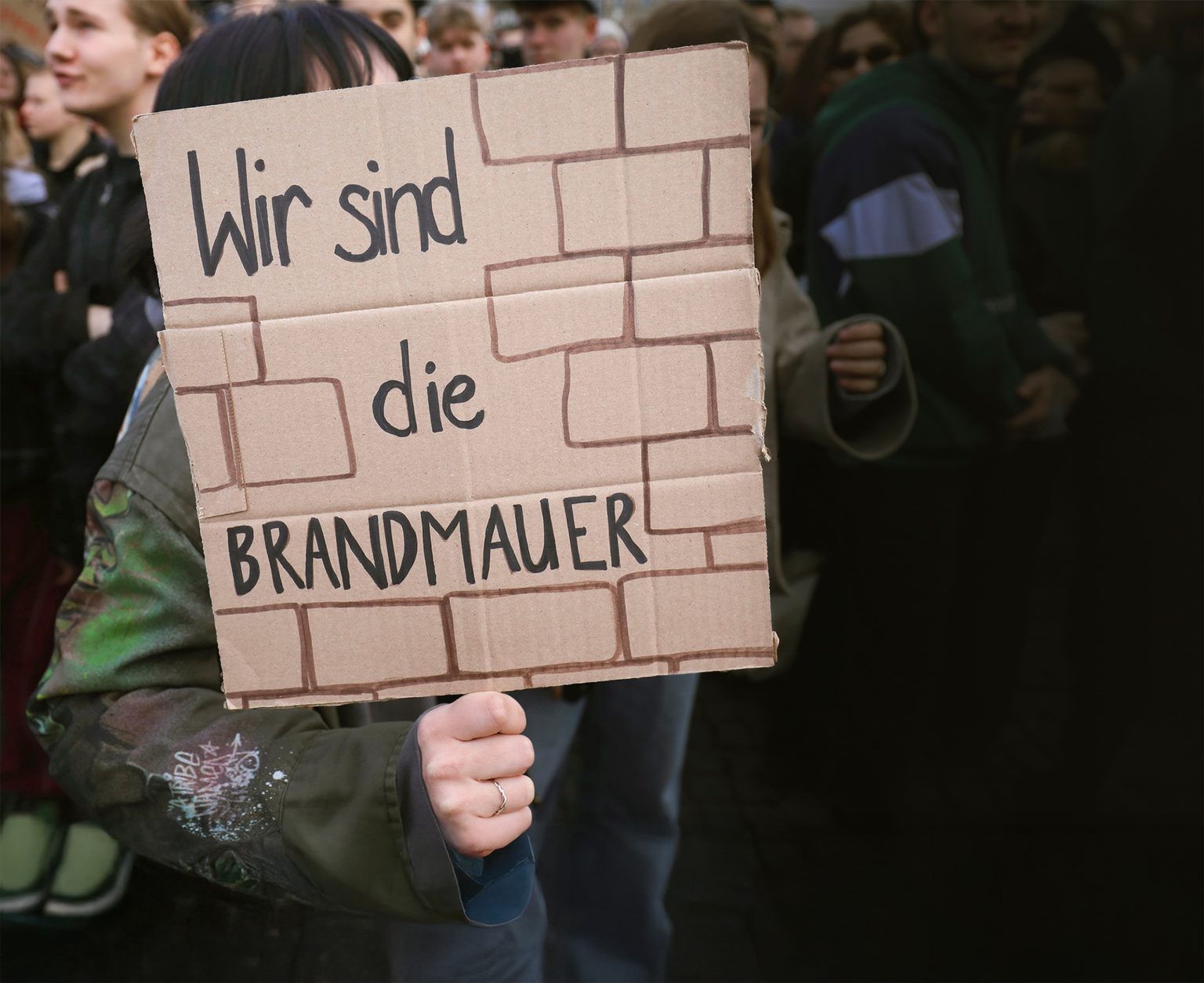
When Friedrich Merz declared in early 2025 that he was prepared to accept AfD votes for two largely symbolic motions in the Bundestag aimed at curbing illegal migration, such protests did indeed erupt. Demonstrators forced their way into a CDU party office and intimidated staff. Suddenly there was the smell of street battles and brawls in assembly halls, reminiscent of the late Weimar Republic. The rather stolid Union party does not feel equal to that pressure. Were it to set aside the firewall against the AfD, marches would promptly reappear outside its offices, accompanied by a barrage of hostile media coverage. Cooperation with parties that themselves draw no line against violent left-wing extremism, by contrast, meets with no orchestrated outrage. On the contrary, many commentators urge the Union finally to ‘open up’ to the Left Party, praising such a step as wise, statesmanlike and up to date.

A test of identity
After the state election in the eastern Land of Saxony-Anhalt in September, the CDU will have to confront the consequences of its leader’s position. There, the AfD polls at around 40 per cent. If the Christian Democrats truly rule out any cooperation with the right-wing party, the only alternative would be an alliance of all other forces, including the Left Party. That would permanently alter the character of the CDU – and of the country as a whole.
When Konrad Adenauer founded the party, he drew lessons from the failure of the Weimar Republic. For him – briefly imprisoned under the Third Reich and barred from public office – two principles were self-evident: a break with National Socialism and resistance to the communist claim to power asserted by the Soviet Union over Europe. Western integration and anti-communism together formed the party’s credo. For precisely those reasons, the Union became the party that most frequently led governments in the Federal Republic.
If, in 2026, the party of Adenauer and Kohl were to share a bed with the repeatedly renamed SED, which ruled the GDR dictatorially for 40 years, merely to avoid public pressure, the Union would finally become part of a boundless left-wing camp rather than an independent bourgeois force. Many of its voters would then drift to the AfD – not necessarily because they find its personnel or policies so attractive, but because they do not wish to cast their vote for a left-wing alliance on whose fringes political militants operate with relative impunity.
Better than erecting a firewall to the left would be to dismantle the barricades altogether. Each political force should then enter into alliances in which it can implement as much as possible of what its voters want. If there must be a cordon sanitaire, it should be directed against political violence – on every side.