
As usual with the Trump administration, things are not quite as they first appeared. On Saturday night, it looked as if a final agreement was on the table and only needed to be sent to Tehran for signature. Since Sunday, however, everything has become more complicated.
Israel was not satisfied. Several Arab states were then reportedly surprised by a demand that they sign up to the Abraham Accords. Iran also expressed reservations.
When an impartial observer looks at the individual points of the American memorandum, there still seems to be no rapprochement and no concessions. The situation is therefore returning to square one.
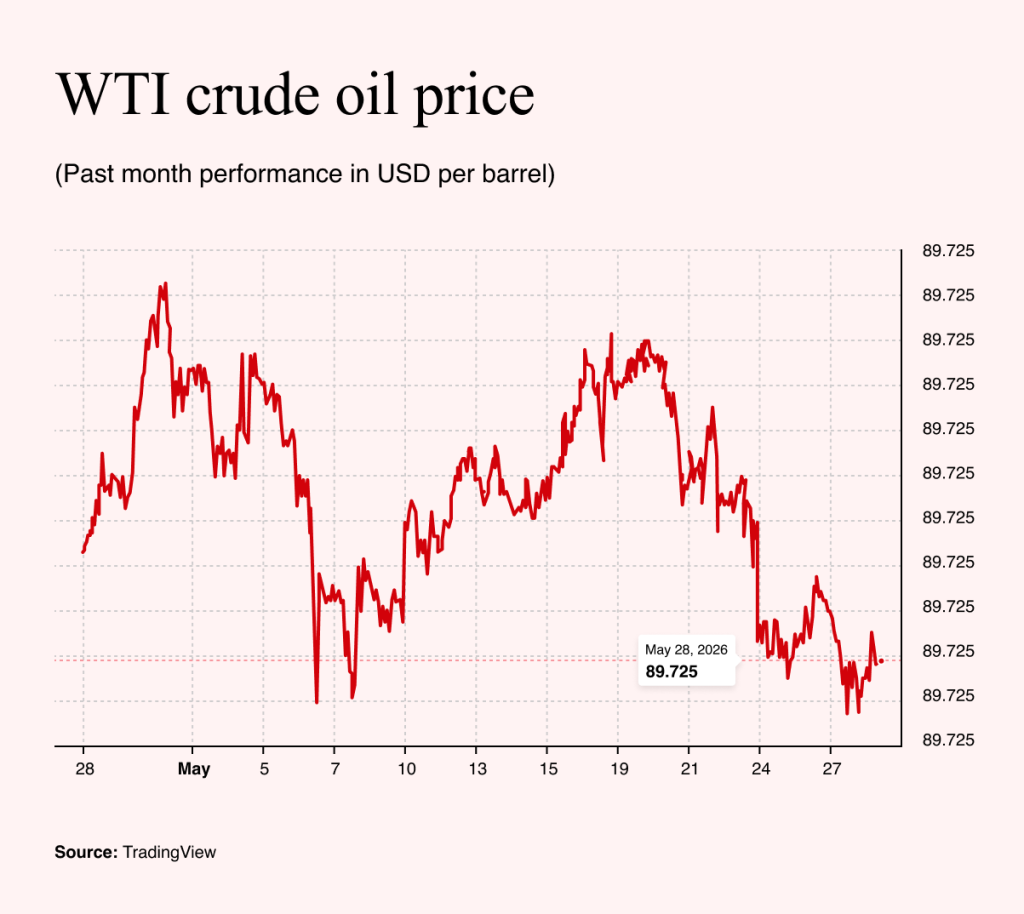
Even so, oil prices have fallen sharply. At one point, they even dropped below $90 a barrel. News of the strikes in Iran did not change that. Bond yields have also fallen and markets are once again striking a more optimistic note.
Markets Look Past the Crisis
There were, however, two new reasons for the more positive mood.
The first is that events have shown that Iran does not want to escalate the conflict at any cost. In the preceding days, it had several options for attacking Israel or other countries in the Gulf again. Markets therefore see that the Iranian regime has its limits. A new war is not an absolute priority, although the fighting in Lebanon is still continuing.
The second is that it is now clear that any peace agreement would proceed in two phases. The first would deal with shipping through the Strait of Hormuz. The second would address all other conditions, including Iran’s nuclear and missile programs. Markets are pragmatic.
A comprehensive agreement is impossible at the moment. For markets, the Strait of Hormuz remains the only real vulnerability. At least for now, investors are giving the Trump administration breathing room.
Ferrari in an Electric Trap
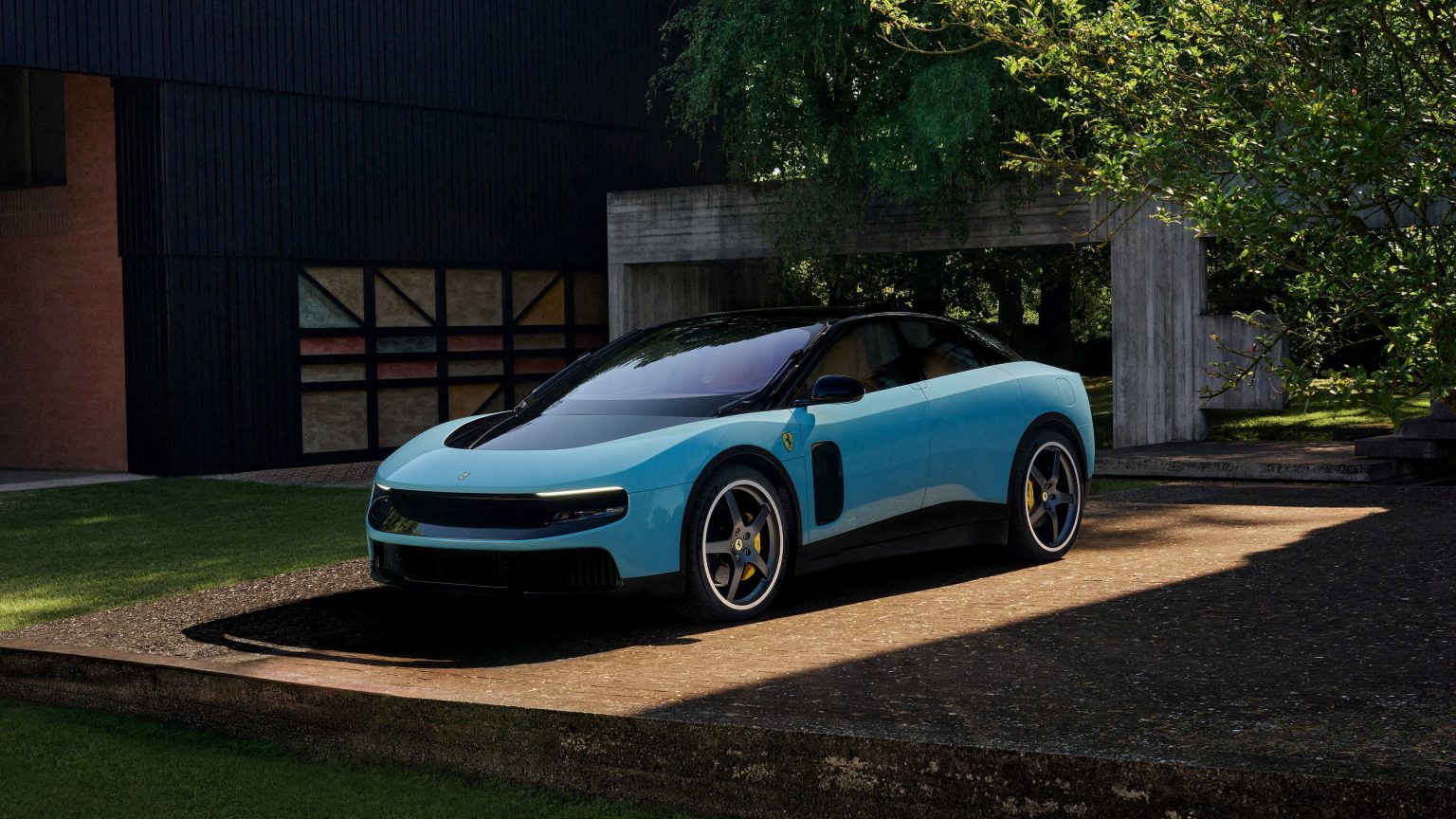
The week began with a flurry of corporate news. The long-awaited electric Ferrari Luce drew plenty of attention, though not for the reasons Maranello would have hoped.
The luxury sports carmaker had long hesitated before entering the electric car market. Ferrari owners adore not only speed and the prancing horse logo, but also the sound of the engine. That is exactly what electric cars fundamentally lack.
Ferrari has tried to solve the problem in its own way by adding artificial sound to the Luce. The idea is to preserve at least some of the emotion of a combustion engine. But the result has so far failed to convince investors or social media users.
The new model, which costs around $640,000, has been compared by some commentators to a Nissan Leaf rather than to the iconic cars from Maranello. Its price is also astronomical compared with Tesla models. Criticism has focused mainly on the unconventional design, which favors aerodynamics over the classic aggressive Ferrari silhouette.
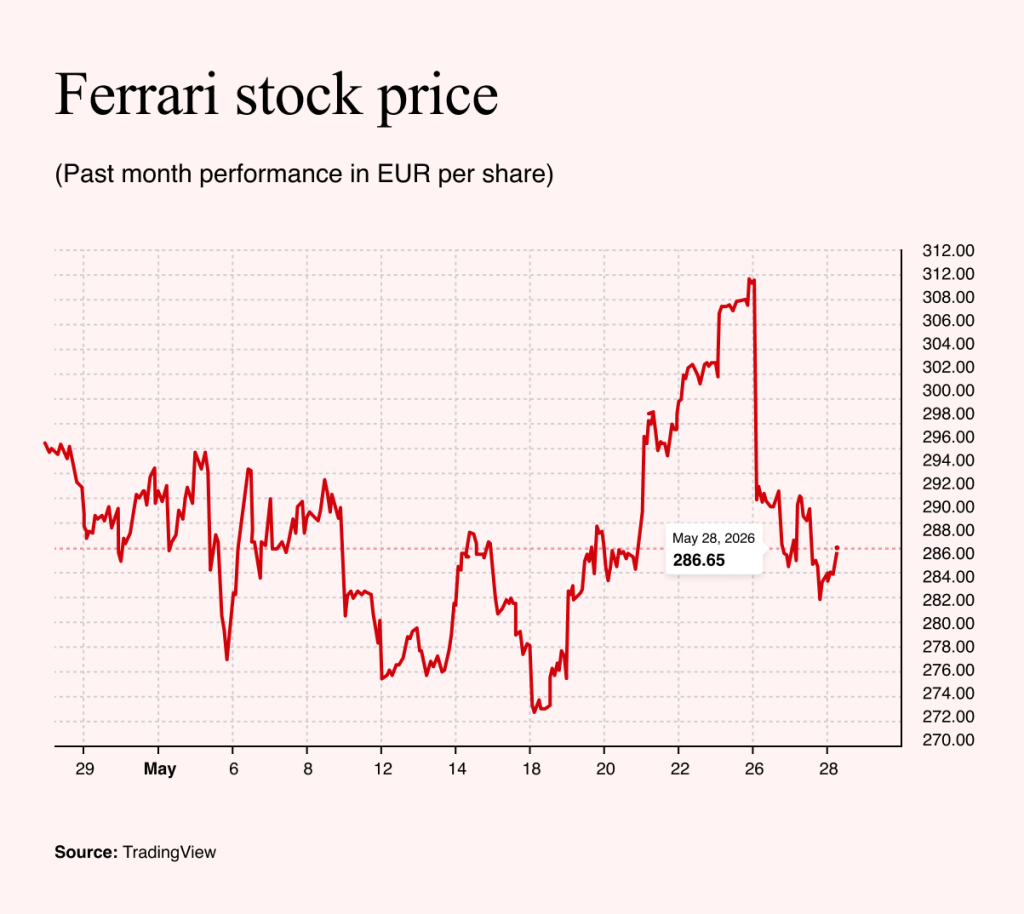
The market reaction was harsh. Ferrari shares plunged more than 8% after the model was unveiled, as investors worried that the brand’s first all-electric car could damage its aura and image. The Luce is not exactly a car that would turn heads on the street.
Some analysts tried to temper the negative reaction, saying it was too early to draw conclusions. Similar doubts accompanied the Purosangue, Ferrari’s first utility-style model, which became one of the brand’s bestsellers after its launch.
The fall in Ferrari’s share price has only confirmed the uncertainty now gripping the automotive sector. Even luxury carmakers do not have a recipe for turning electromobility from a political and technological obligation into a product that customers actually want.
For conventional carmakers, electric vehicles mainly come down to price and range. For Ferrari, however, the problem goes deeper. The brand sells emotion, sound and exclusivity. That is much harder to replace in the electric era than the internal combustion engine.

Micron Takes the AI Baton
By contrast, the technology sector is thriving. This week, Micron shares rallied again, taking the AI baton from Nvidia.
There has already been debate about when Nvidia’s rise might run out of steam. With Micron, however, that point is far less clear. The stock has gained a staggering 928% over the past year.
This week’s sharp rise was driven by two events. The first was a dramatic increase in UBS’s price target, which the Swiss bank raised from $535 to $1,625 in a single day. Its reasoning was simple: demand is not slowing. In other words, the boom in data center construction and the hunger for memory chips are likely to keep growing in the coming quarters.
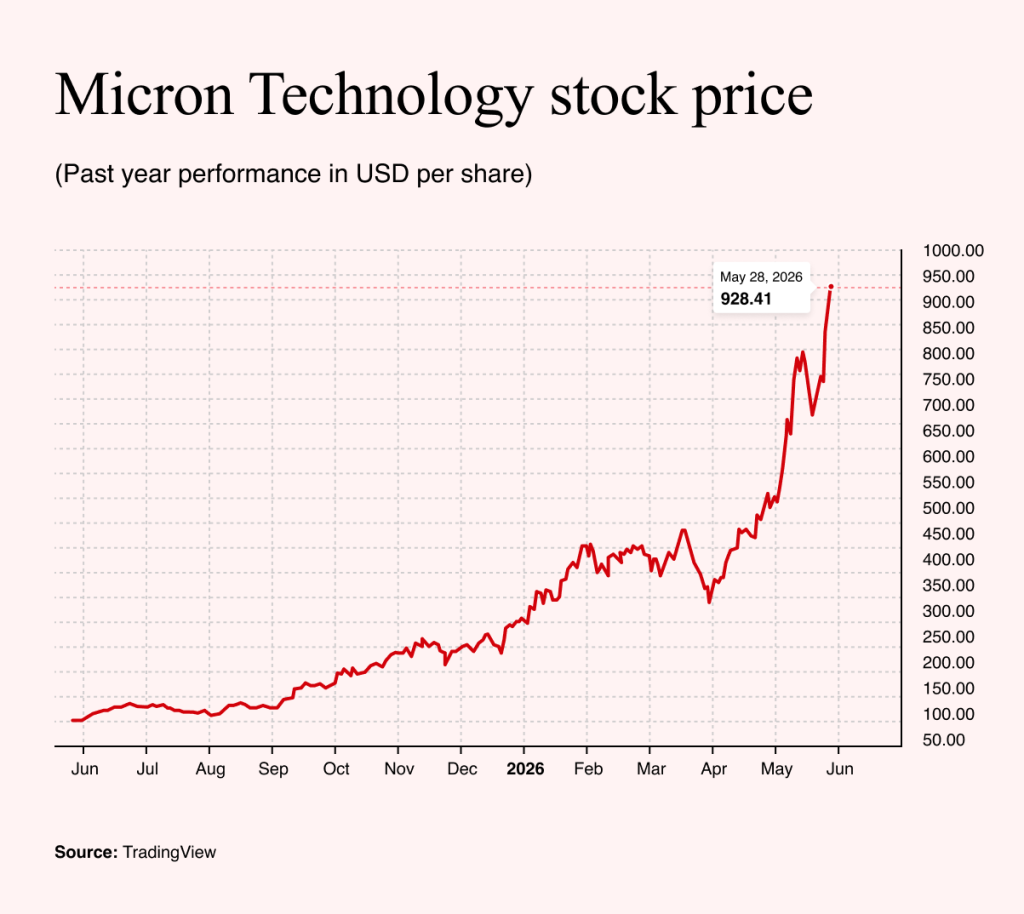
The second boost to Micron shares came from Donald Trump. “Micron, boy, Micron’s great, they’re investing hundreds of billions”, he said on Friday at a rally in Suffern, New York.
Micron had previously announced plans to invest up to $100bn over two decades to build America’s largest semiconductor factory, also in New York state. Construction began earlier this year and production is expected to start in 2030.
Trump is unlikely to miss such an investment opportunity, just as he did not miss the one involving Intel. Micron is therefore successfully joining the stable of patriotic companies.
Trump also no longer has to fear pursuit by the Internal Revenue Service over past tax claims, after a Justice Department settlement barred the agency from pursuing audits into tax returns filed before 18 May 2026.
Micron’s market capitalization has now crossed the psychological threshold of $1tn, putting it ahead of Warren Buffett’s iconic Berkshire Hathaway fund, known in recent years for its skepticism toward artificial intelligence.