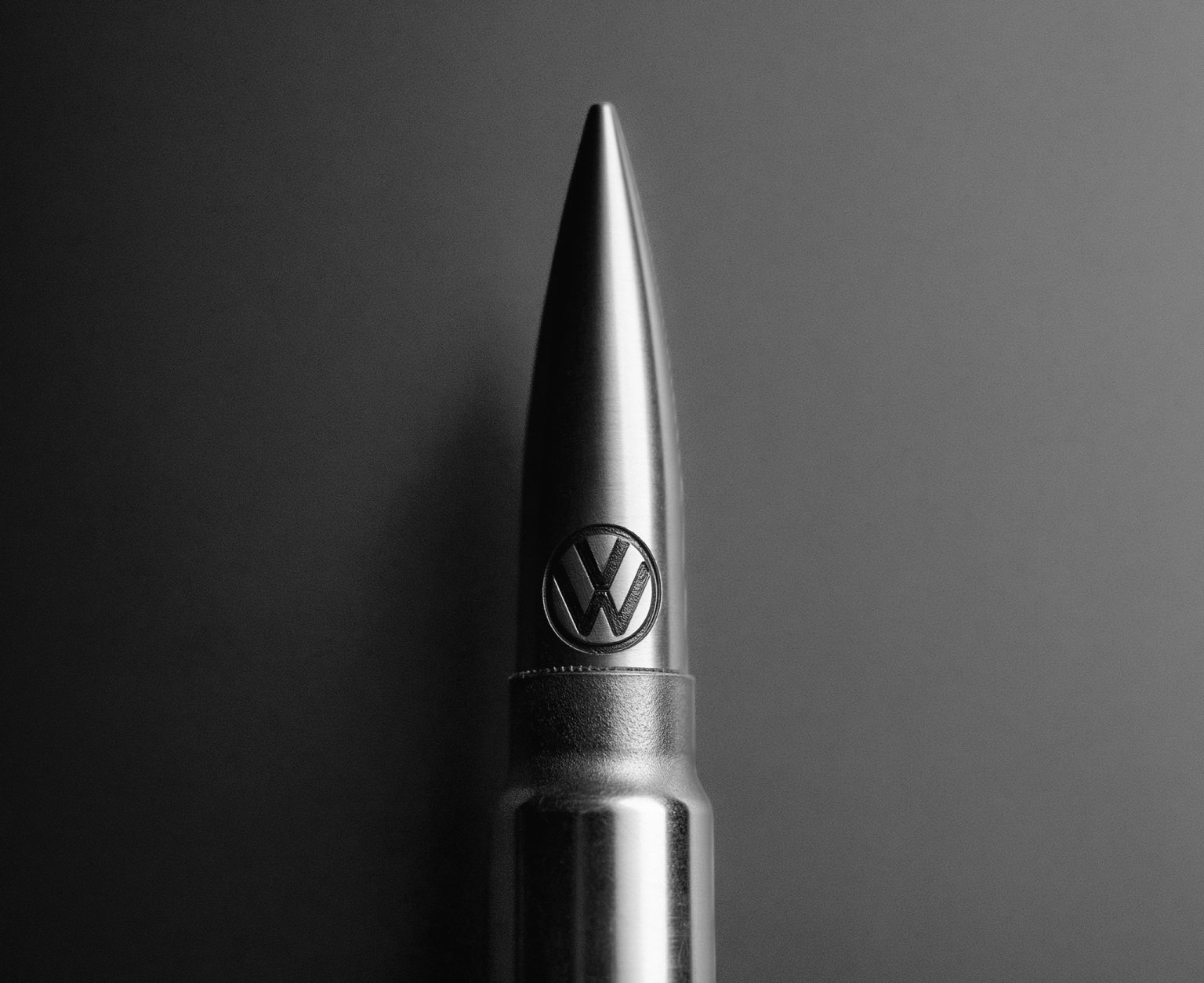
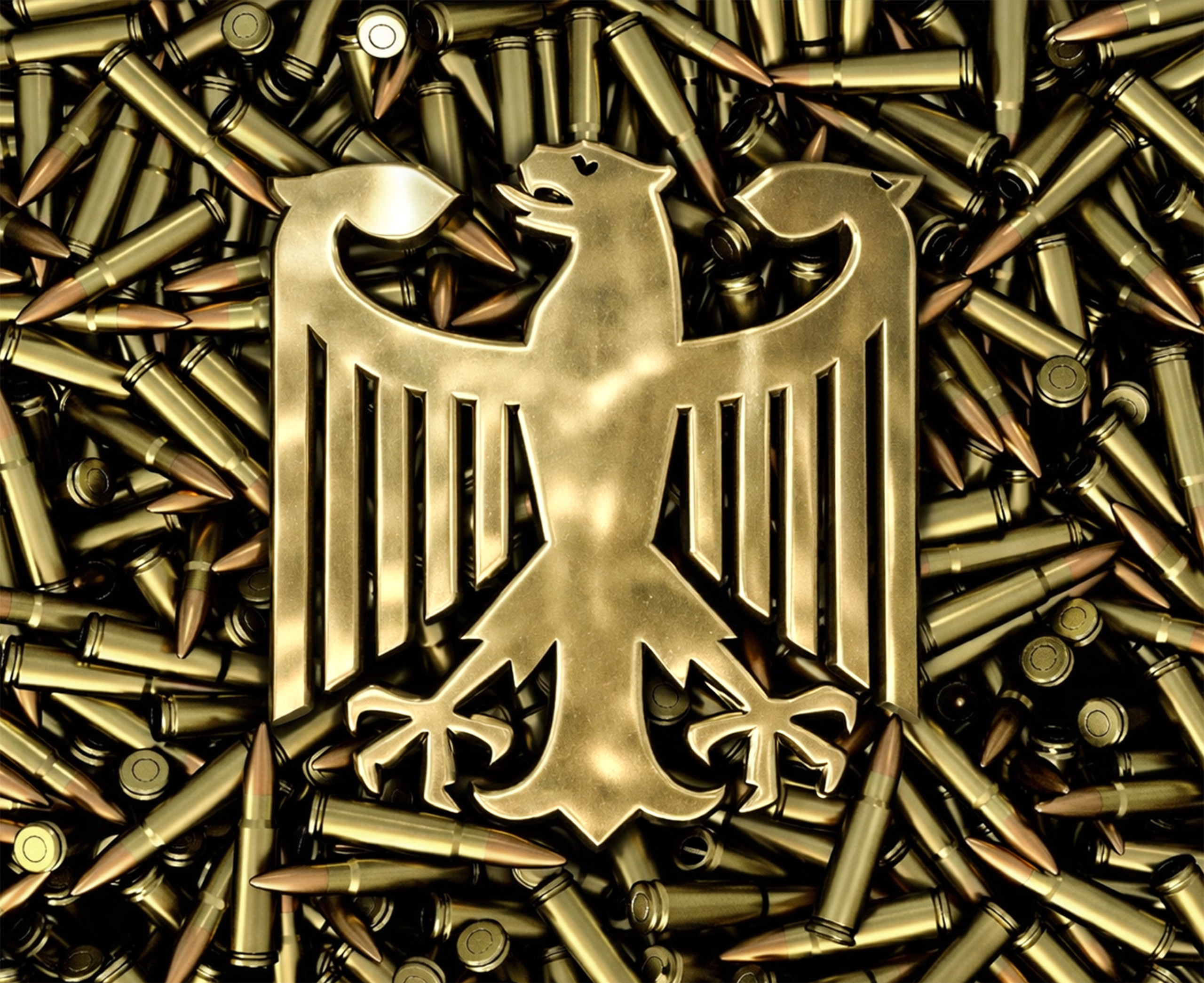
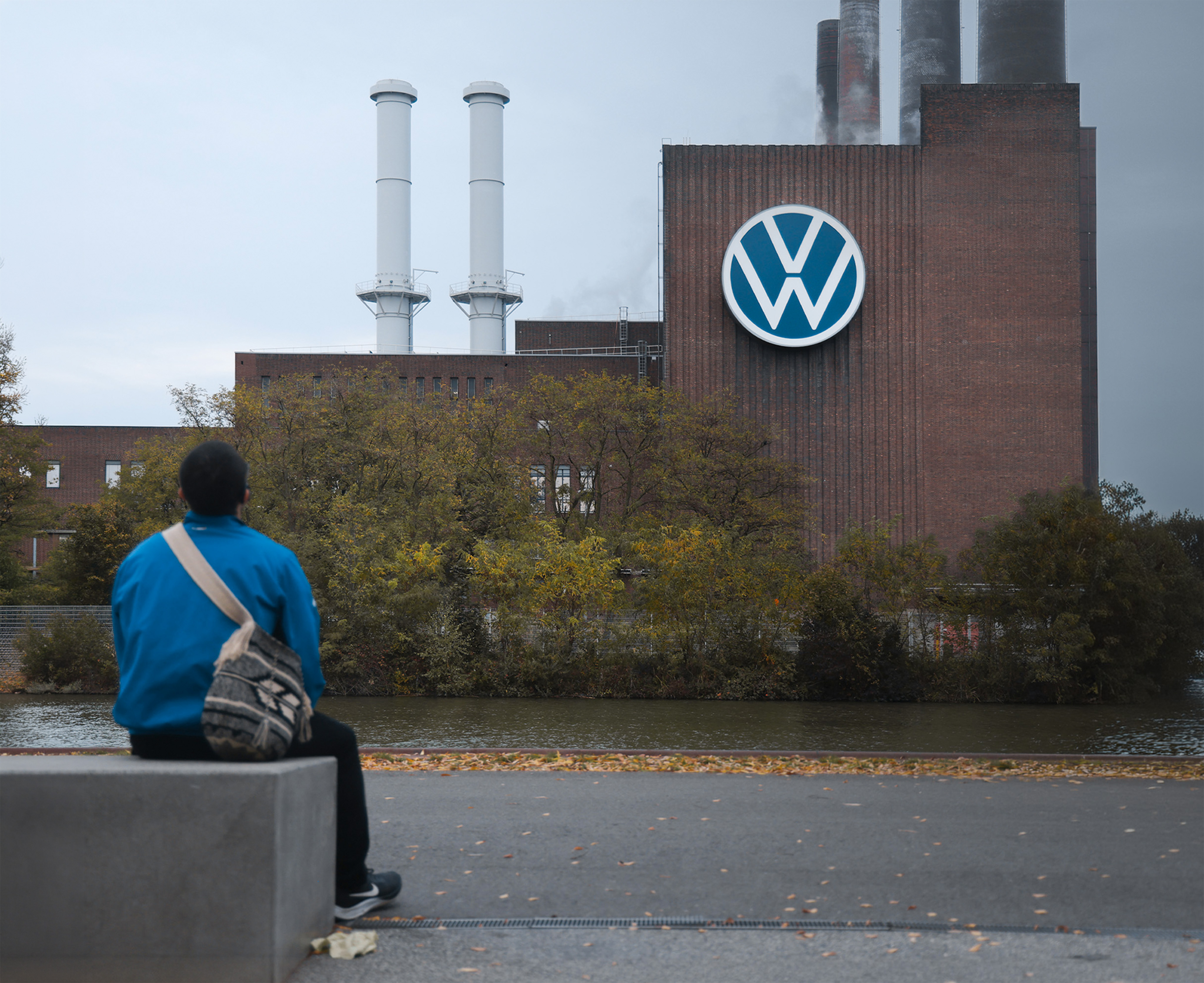
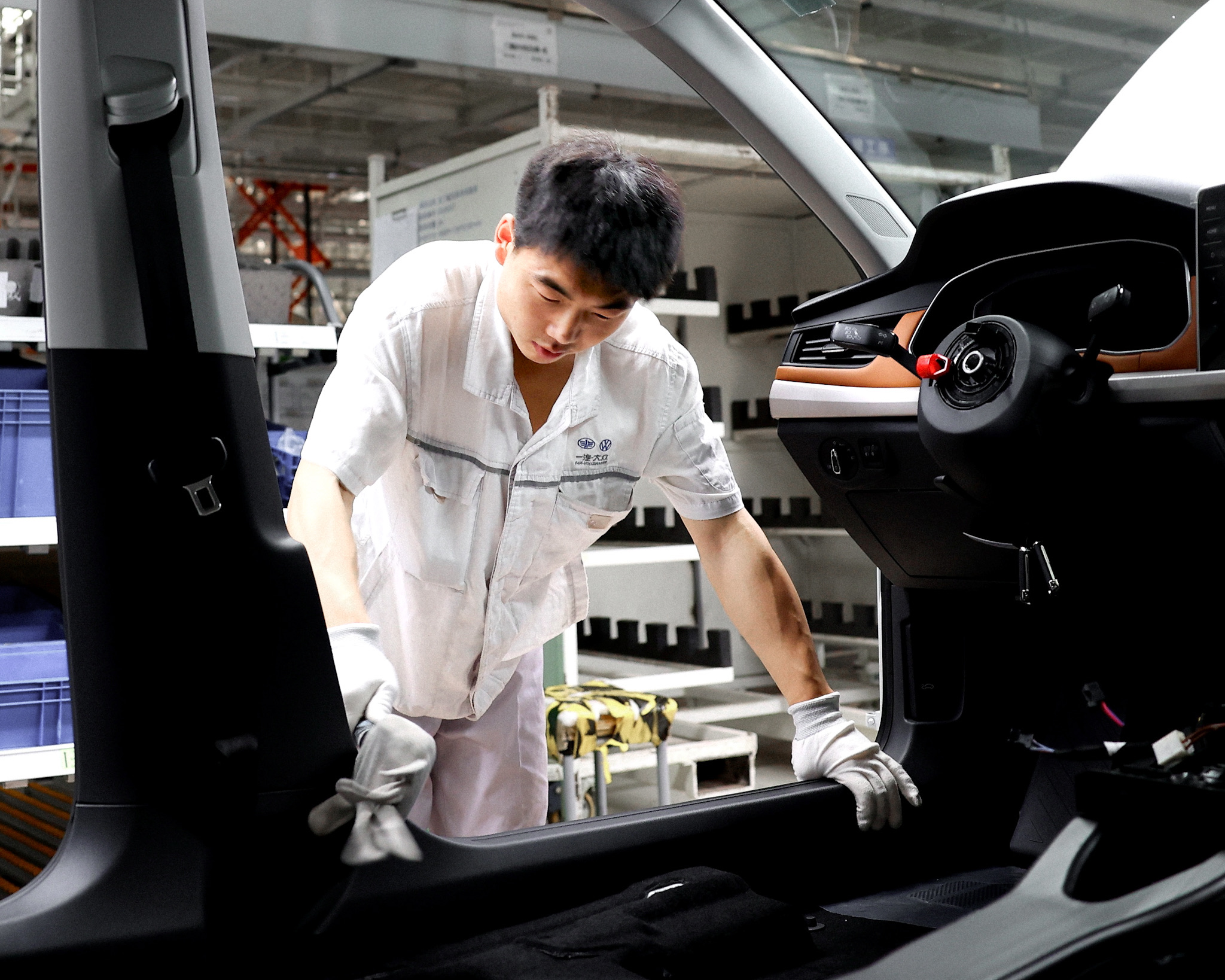
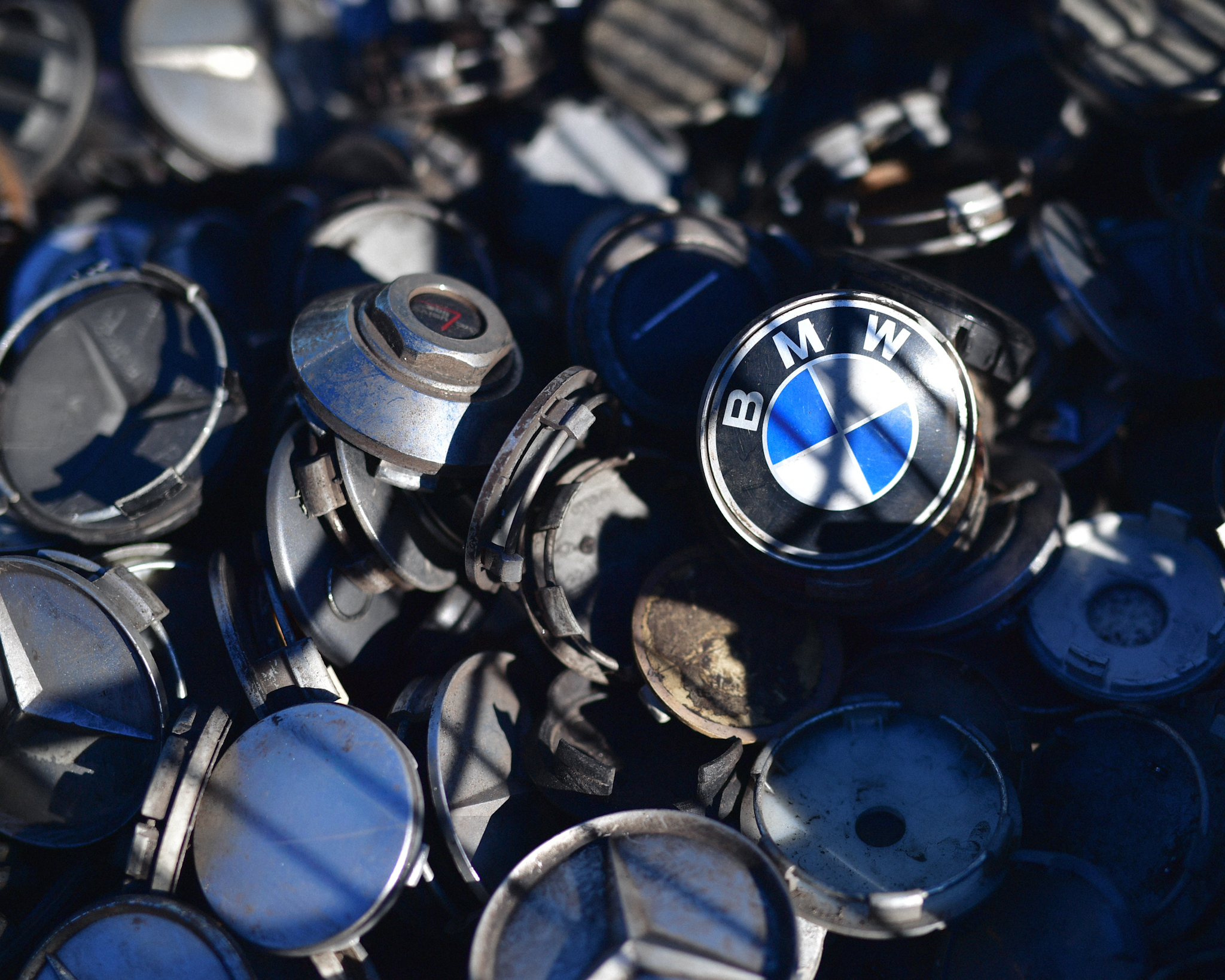
German carmakers are increasingly turning to defense production, redirecting industrial capacity from civilian vehicles to military contracts amid a global rearmament drive. Photo: Statement / AI
From Carmaking to Arms Production
Germany’s carmakers are eyeing defense contracts, with spare industrial capacity meeting a global rearmament boom. From Volkswagen to Mercedes-Benz, production once devoted to civilian vehicles is being redirected toward military use.
Volkswagen (VW) wants to build weapons. The news made headlines in the German media. Yet the group is only the most prominent German example of a carmaker seeking a foothold in arms production. Mercedes-Benz and Daimler Truck are also exploring defense contracts, with Renault and Audi Brussels following suit elsewhere in Europe.
There have been repeated periods in German automotive history when military equipment was produced instead of cars. There was always a specific trigger, such as the First or Second World War. Today, a domestic economic crisis is coinciding with a global security crisis.
VW plans to sell its plant in Osnabrück, Lower Saxony. Whatever happens, the long-established business, which began as a coachbuilder, is losing its existing automotive contracts. The Wolfsburg-based group intends to decide on the plant’s future by the end of 2026. VW Chief Executive Oliver Blume has confirmed talks with defense companies.
The world is becoming increasingly militarized in response to a succession of crises. The trend is evident not only in active conflicts such as those in Ukraine and the Middle East. Even in relatively peaceful regions, economic developments show that military production is expanding. Warring parties need weapons. Other countries are rearming because they fear that conflicts may spread. The global arms industry has grown significantly over the past 10 years.
According to the Stockholm International Peace Research Institute (SIPRI), the revenues of the world’s 100 largest arms-producing and military services companies rose by 26% in real terms between 2015 and 2024. In 2024, they reached $679bn, the highest figure ever recorded by SIPRI. The combined arms revenues of the four German companies in the Top 100 rose by 36% that year to $14.9bn.
Rheinmetall, traditionally one of Germany’s largest arms manufacturers, considered acquiring the VW plant in Osnabrück at the beginning of the year but decided against it in March 2026. Rather than building six-wheeled vehicles in Osnabrück, the company intends to expand its capacity for eight-wheeled armored vehicles in Kassel. A takeover of the VW facility by Israel’s Rafael Advanced Defense Systems is currently under discussion. The plant would be operated by Rafael’s German subsidiary, DND. According to the trade publication Produktion, Rafael and DND are holding talks with Volkswagen about a possible acquisition.
Iron Dome from Osnabrück
Components for the Iron Dome system could be produced there in the future. That would end 125 years of automotive tradition in the Lower Saxon city. The site dates back to 1901, when the coachbuilding company Karmann was founded. For decades, Karmann was renowned for producing convertibles. The Beetle Cabriolet, Golf Cabriolet and open-top models for BMW, Mercedes and Renault were built at its plants in Osnabrück and Rheine. After the company became insolvent in 2009, it was broken up. Volkswagen subsequently took over large parts of the Osnabrück facility.
It is no secret that the German car industry is struggling. That is cause for alarm because it remains one of the country’s key industries. In addition to those employed at the plants, millions of jobs depend on the automotive supply sector. At its peak in 2017, the car industry accounted for 21% of gross value added in German manufacturing.
Electric cars built in Germany in recent years have been unable to compete in the market, placing manufacturers and their production sites under growing pressure. A return to combustion-engine models is being blocked by policymakers. In the current global climate, producing weapons appears to be a lucrative option.
The development has clear historical precedents, albeit under different circumstances. In times of war and crisis, German industry turned to weapons production. BMW, for example, was already producing aircraft engines during the First World War. Daimler likewise became one of the country’s most important manufacturers of aircraft engines. Daimler-Motoren-Gesellschaft (DMG/Mercedes) produced almost 20,000 of them, around 46% of the German total, as well as 265 aircraft. Opel supplied 4,400 of the military trucks delivered to the army during the war.
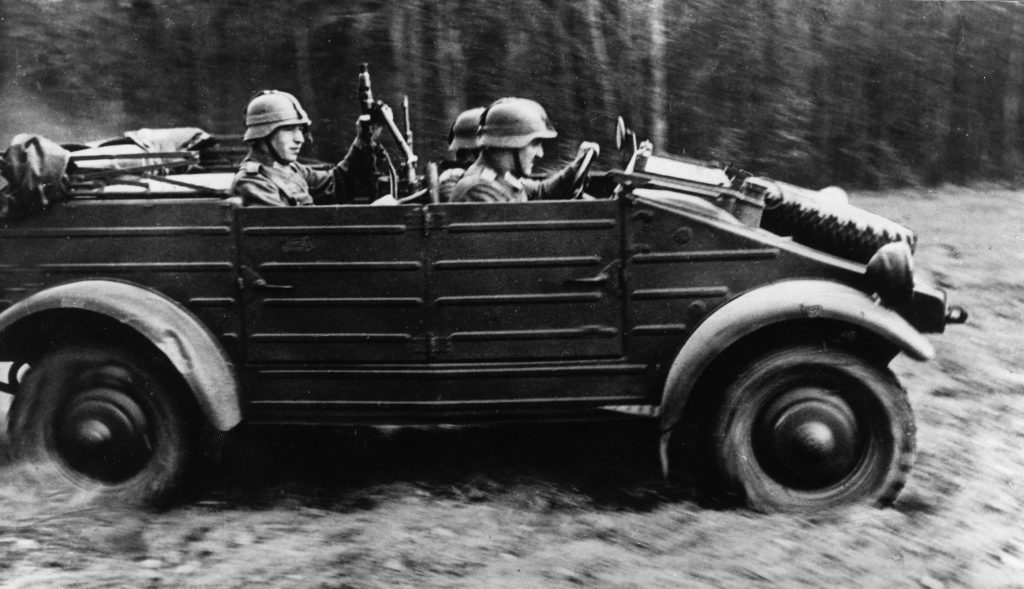
The shift became even more pronounced during the Second World War. MAN produced commercial vehicles, diesel engines and military equipment, including tanks. The company played a leading role in the development and production of the Panther tank. VW’s Type 82 Kübelwagen is well known.
Volkswagen’s own historical account states that its plant became part of the German arms industry after the outbreak of war. During the conflict, Karmann in Osnabrück produced aircraft cabins and components essential to the war effort for vehicles of all kinds.
German infantrymen travel in a Volkswagen Kübelwagen on the Eastern Front in June 1942. Photo: ullstein bild/Getty Images
Beyond Volkswagen
At these and other automotive plants, hundreds of thousands of forced laborers were deployed during the war, some of them living under inhumane conditions. The dark side of arms production lies not only in the fact that weapons are built to kill, but also in the circumstances in which they have sometimes been made.
The legacy of the Nazi era weighs heavily on Germany’s automotive industry, creating a certain unease at the prospect of military equipment once again being produced at the same sites, in some cases in the same halls.
VW is not alone. Mercedes-Benz is also considering expanding its defense business. A few days ago, the carmaker announced a collaboration with drone start-up Tytan Technologies. The companies signed a memorandum of understanding on the sidelines of the ILA Berlin Air Show. Mercedes-Benz is to provide the carrier vehicles for a counter-drone system.
Carmakers Abroad Turn to Defense
Carmakers in other European countries and the United States are also moving into arms manufacturing. French carmaker Renault is preparing to collaborate with Thales. In June 2026, the two companies unveiled the 4 Troop, a tactical multi-purpose vehicle for land forces. It combines automotive platform expertise with Thales technology for communications, data processing and connecting drones with ground robots. Renault is taking its first step into the defense sector.
General Motors (GM) in the United States is going considerably further than most European manufacturers. GM and Lockheed Martin have announced a partnership. The aim is to apply GM’s mass-production, engineering and supply-chain expertise to Lockheed’s weapons and ammunition operations. Areas under discussion included components for weapons systems and the scaling up of critical ammunition production. GM already has its own defense division, GM Defense.
The shift is also affecting the automotive supply sector. Last year, Rheinmetall openly offered 100 employees at an unprofitable Continental brake plant in Lower Saxony the chance to move to an ammunition factory. Defense electronics manufacturer Hensoldt also hired Continental and Bosch employees who had lost their jobs.
Train manufacturer Alstom signed an agreement last year with arms manufacturer KNDS Deutschland GmbH & Co. KG (KNDS) for the takeover of its Görlitz site, where tram cars had previously been built. From 2027, the plant is to produce various assemblies for the Leopard 2 main battle tank and the Puma infantry fighting vehicle, along with modules for several versions of the Boxer wheeled armored vehicle.
These and numerous other examples show how industrial capacity shifts almost of its own accord toward the arms sector in times of crisis.
That is still a long way from the wartime production seen during the two world wars. Yet economies around the world are steadily increasing the share of military goods in their industrial value chains. Ideologically driven changes such as the EU’s green mobility transition are not the cause, but they are hastening the development, as the carmakers’ figures plainly show. Spare production capacity is meeting growing global demand.
As it has in the past, Germany is drawing on its core industrial expertise in mechanical engineering, vehicle manufacturing, chemicals, electronics and shipbuilding for military purposes in a time of crisis. The shift is particularly evident in Rheinmetall’s new and planned defense projects and its expansion of ammunition capacity.
Civilian plants are also being converted for military use. KNDS is taking over the former Alstom site in Görlitz, while Helsing and Stark are expanding combat-drone production. Donaustahl is active in drone systems, MBDA in counter-drone missiles and ARX Robotics in military robotics.
Germany is not witnessing total mobilization of the kind seen in 1936, nor an improvised wartime economy like the one that emerged from 1914. It is, however, the country’s clearest industrial turn toward arms production in decades.
Here is placeholder for Article excerpt Here is placeholder for Article excerpt Here is placeholder for Article excerpt Here is placeholder for Article excerpt
Here is placeholder for Article excerpt Here is placeholder for Article excerpt Here is placeholder for Article excerpt Here is placeholder for Article excerpt
Here is placeholder for Article excerpt Here is placeholder for Article excerpt Here is placeholder for Article excerpt Here is placeholder for Article excerpt
Welcome to the comments section of the Štandard daily. Please take note of our guidelines, comments are moderated by us. You can contact the moderators at [email protected].
Participate in the discussion
Comments are available to subscribers only. If you'd like to join the discussion, choose a subscription starting at €6.72 per month.
All comments 0
Register
Comments are available to registered users only. If you'd like to join the discussion, register here.