Signs of de-escalation in the Middle East are helping financial markets rise around the world. That remains true despite various delays and mutual accusations from the three parties involved.
The US president was very terse during the G7 leaders’ summit when he declared that if the Strait of Hormuz were not reopened soon, the world would face an economic catastrophe. That was precisely what Trump wanted to prevent, which is why an agreement with Iran had to be reached.
It does seem rather ironic, however, because it was Donald Trump himself who, by ordering an attack on Iran, helped create a situation in which the world was threatened with economic catastrophe.
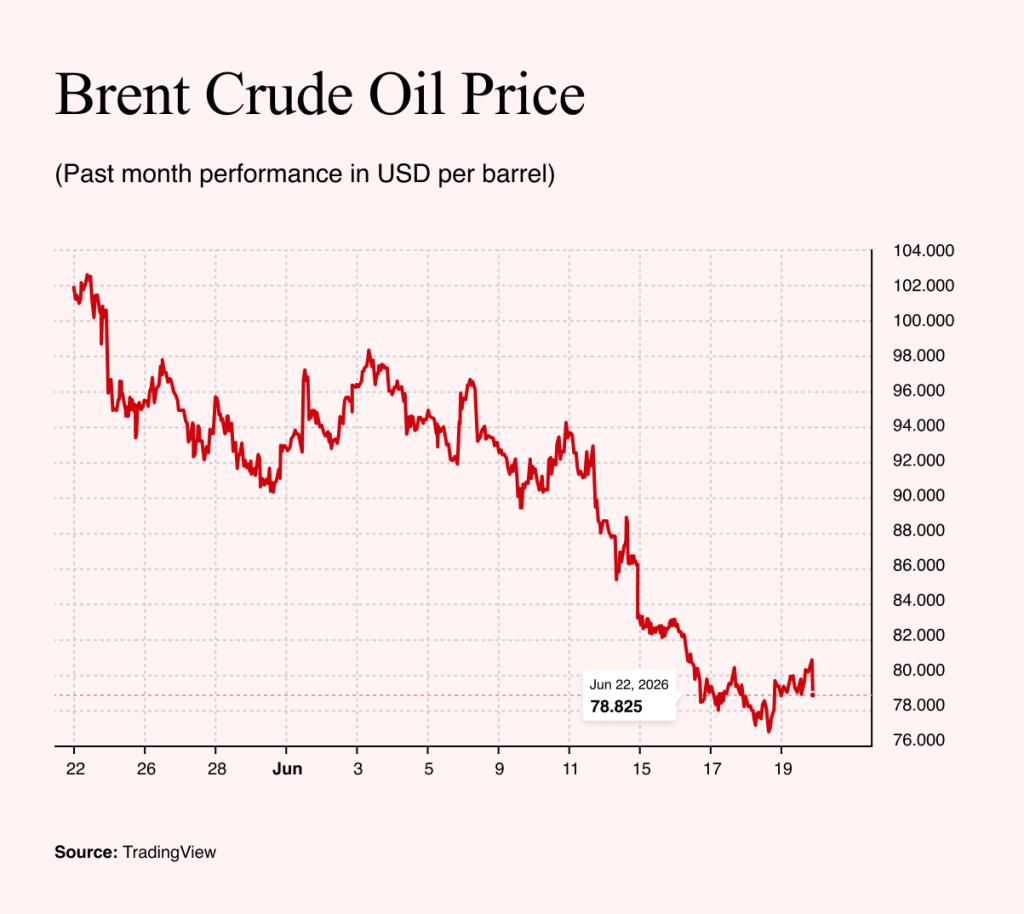
Trump has therefore merely confirmed that Wall Street has once again emerged as the clear winner. The fact that markets are rising again is absolutely crucial for him. Even though ordinary American consumers are struggling with higher prices, a Wall Street crash ahead of the coming elections would make a good result virtually impossible.
Tehran’s Victory and Market Pragmatism
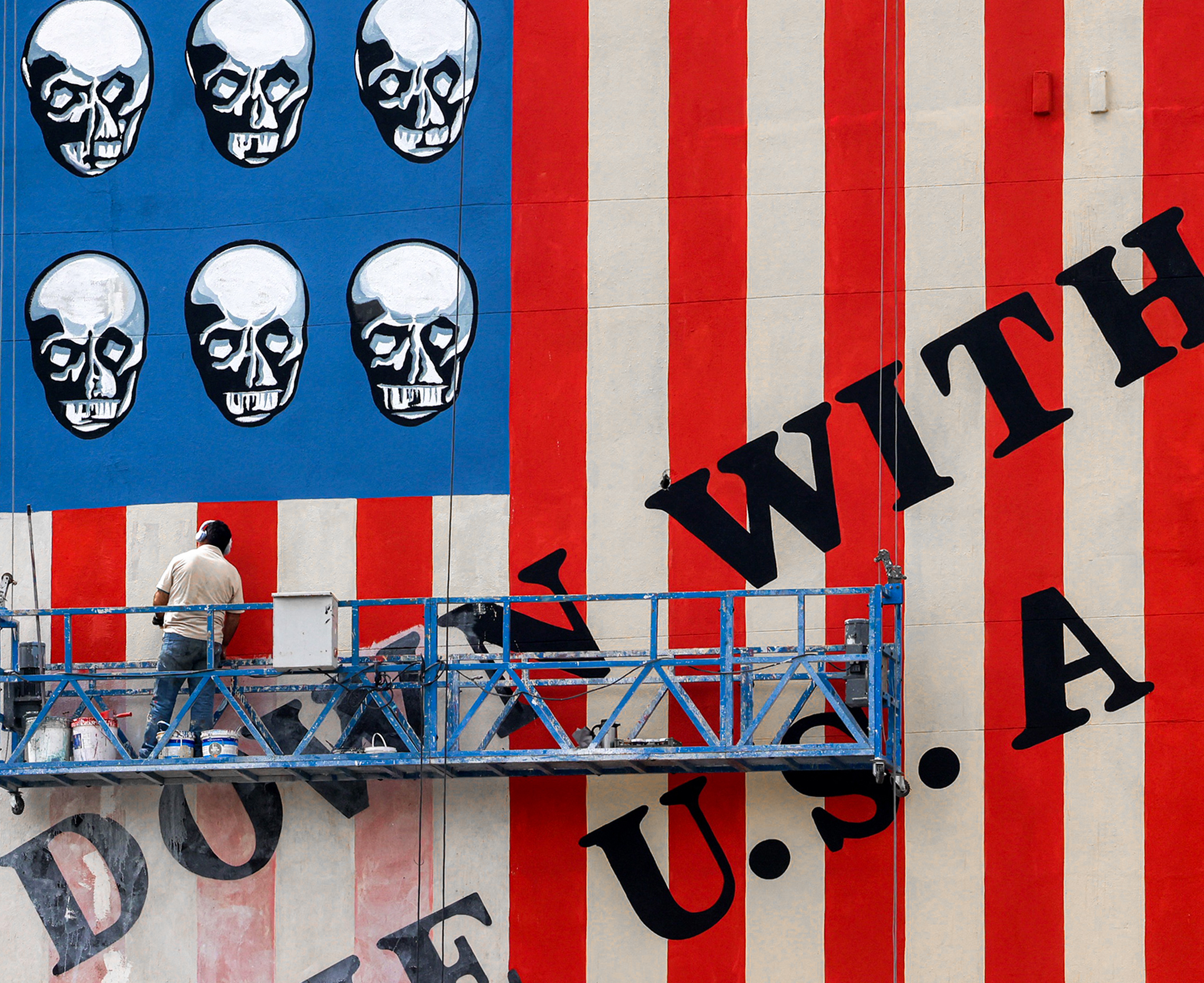
The signed 14-point agreement is a clear victory for Iran, as 10 of the 14 points in the memorandum are in line with Tehran’s demands. Only one point concerns nuclear weapons, and on that issue, Iran assures that it will not produce them.
Even that point, however, is only a relative success, as Iran’s religious leaders agree that nuclear weapons are contrary to religious precepts. Trump’s signature therefore means that the United States has yielded to Iran out of economic interest. That step has calmed the markets, even though it is yet another sign of waning US influence in the world.
Markets and investors now know that a deal must be reached. As a result, they are less likely to react to the various spats and verbal jabs between the delegations. It is simply part of the negotiations, which are somewhat reminiscent of haggling in Iranian bazaars, where merchants put on a convincing show. The truth is that neither Washington nor Tehran wants to continue the conflict. The only clear willingness to keep fighting comes from Israel, which is responding to Hezbollah attacks.
The rhetorical exchanges are far removed from reality. Although the Iranian delegation postponed the reopening of the Strait of Hormuz over the weekend, that statement contradicted a report from US Central Command (CENTCOM), according to which Saturday 20 June was a very busy day in the strait. Fifty large ships passed through, bringing an additional 17 million barrels of oil to the market. That, too, is a sign that business can overcome mutual hostility.
Oil Remains King
Investors should pay close attention to OPEC’s flagship annual report, World Oil Outlook 2026. Efforts by politicians and nonprofit organizations to bring about a zero-emission green economy will be anything but straightforward. OPEC predicts that oil consumption will continue to grow in the coming years.
From the current 105.1 million barrels, global consumption is expected to reach 113.3 million barrels of oil per day by 2030. Even the long-term forecast through 2050 does not anticipate a decline in consumption. On the contrary, the world will need 124.1 million barrels of oil per day.
That increase will be driven primarily by Asia, the Middle East and Africa. At first glance, the reason is clear. It is precisely in those regions that the middle class is growing stronger and increasingly adopting the lifestyle of Western economies.
No matter how rapidly artificial intelligence’s share of the economy grows, data alone will not displace oil for the time being. The digital economy may change the way we work, communicate or invest, but the physical world will continue to need energy, transportation, petrochemicals and industry.
Moreover, the Iranian crisis has once again shown that we are still very far from an era in which oil will cease to be a strategic commodity.
BMW’s Bavarian Warning
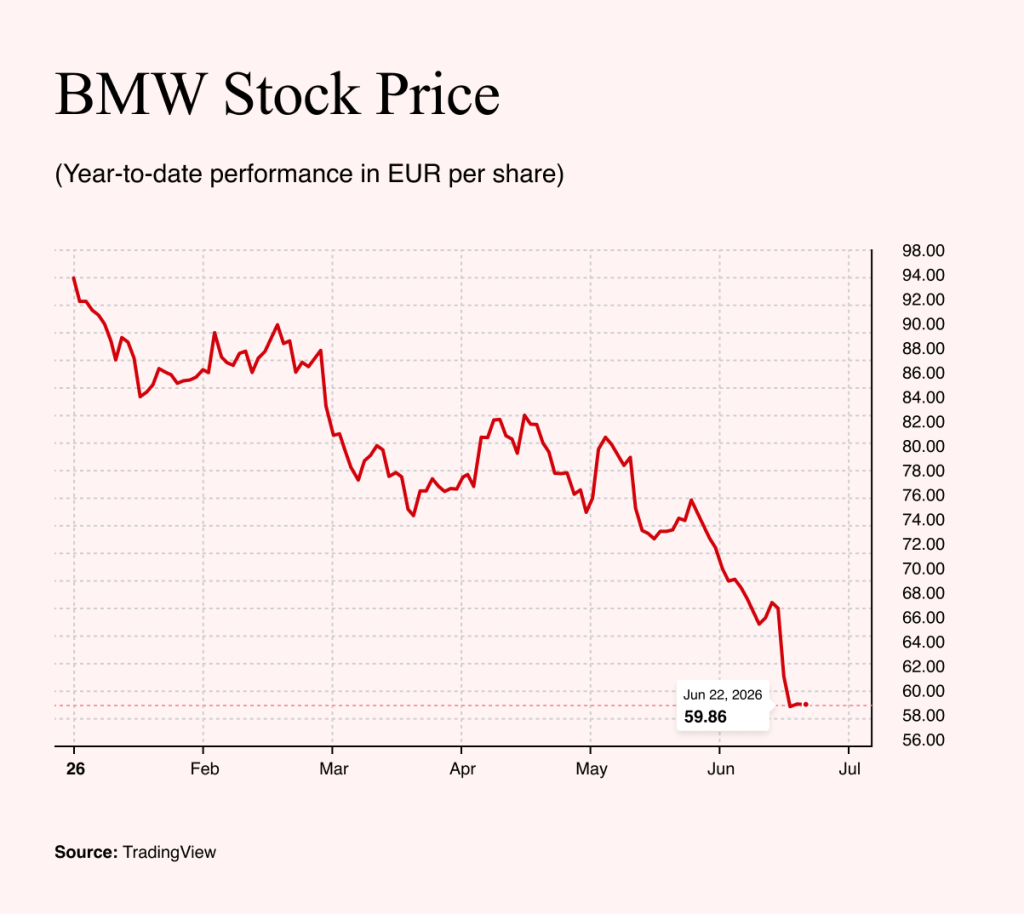
Last week brought a sharp fall for a German automotive icon: BMW. Its shares lost more than 11% over the last five trading days on financial markets. The reason was a so-called profit warning, or a warning of lower profits.
A profit warning is never good news. BMW announced that it expects pre-tax profit to fall sharply, whereas it had previously anticipated only a slight decline. The automotive division’s margin is now expected to be only 1%–3%, instead of the previous estimate of 4%–6%.
A margin in the range of 1%–3% is typical of mass-produced cars. BMW has thus entered the category of ordinary vehicles.
BMW customers simply no longer want to pay a premium for the brand. The German automaker is facing its biggest challenges in China, where its sales are falling sharply. The problem is that this is a systemic issue. In China, interest in cars with internal combustion engines is generally declining.
Not even the best marketing campaign can help BMW counter the trend. It is hard to imagine the situation changing. If anything, it is likely to get worse. Domestic competition in the electric vehicle segment will continue to squeeze out premium European brands.
The second problem relates to the situation in the Middle East. Global consumer sentiment is deteriorating, and higher energy costs are eroding already thin production margins. At the same time, the decline in BMW’s shares reminds us that stock market activity is not limited to artificial intelligence or semiconductor companies, which continue to experience a growth boom.
Incidentally, hard drive manufacturer Western Digital rose 32% this week. It is an almost perfect contrast. While some technology stocks continue to benefit from a market hungry for data infrastructure, traditional industrial companies remain exposed to much more practical problems, such as weaker demand, more expensive energy and geopolitics.
BMW is not just the story of a single automaker. It is a reminder that the stock market today operates at two speeds. On one side are companies tied to the data economy and the investment euphoria surrounding artificial intelligence. On the other are businesses that must continue to sell physical products amid weaker consumer sentiment, more expensive inputs and uncertain geopolitical developments.