

The week's most consequential macroeconomic release was the US inflation figure for July. Tensions between Iran and the US had intensified at the end of June, pushing oil prices higher and raising the risk that inflation would reaccelerate following its earlier decline.
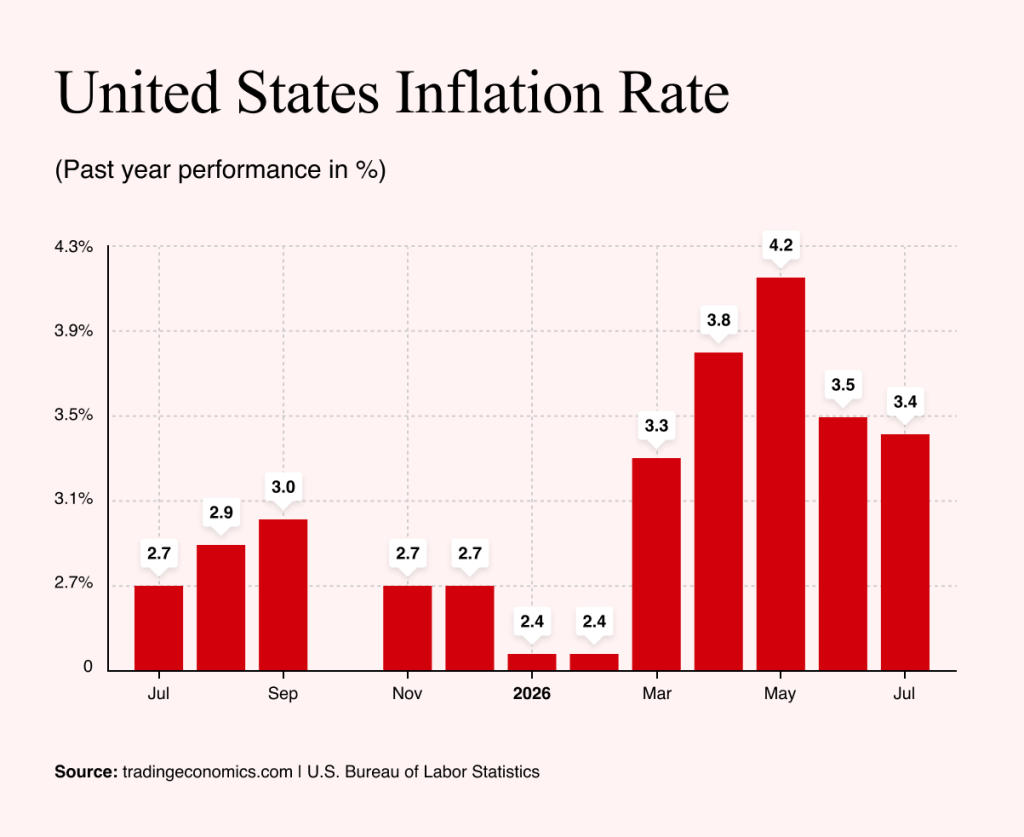
That risk did not materialize. Despite the rise in oil prices, headline inflation for July came in slightly lower than the prior reading, at 3.4%. The effect on rate expectations was immediate and largely mechanical: markets promptly scaled back the probability of a hike at the Fed's next meeting.
The FedWatch tool now puts that probability at 36%, a decline of 4 percentage points. Absent a sharp escalation of the conflict severe enough to drive a significant rise in oil prices, the data point toward the Fed holding rates steady at its next meeting.
Why Oil Is Constraining the Fed
Market developments, however, offer a clearer window onto US President Donald Trump's underlying strategy. The Iran conflict remains a highly sensitive variable, bearing not only on oil prices but, more consequentially, on inflation and the rate decisions that follow from it.
It is worth recalling that most investors at major US institutions had been positioned for one or two rate cuts this year. Today, the mere absence of a hike would count as a relief. That shift matters: these institutions and banks had built their strategies around an assumption of gradual monetary easing.
A rate hike would upend those calculations, rendering the investment strategies carefully constructed at the start of the year largely obsolete. Maintaining rate stability, then, is not merely a matter of satisfying US President Donald Trump's political preferences. It is also a question of preserving a fragile economic equilibrium.
A new agreement between Iran and the US was reportedly due to be signed last Wednesday, with the talks centering above all on transit through the Strait of Hormuz, alongside a technical dispute over the route of the proposed security corridor.
Over the weekend, the Iranian regime disclosed its own vision for the memorandum, one that would, in practice, amount to a US acknowledgement of defeat and the payment of reparations to Iran. The US president responded to this report in characteristic fashion.
“But it is an interesting idea”, he said, “because now I am likewise demanding compensation from Iran, for all of the people that they have killed and gravely wounded with their roadside bombs and many conflicts, for which they are famous.”
That is a strikingly incongruous demand, particularly given that the US and Israel struck Iran first.
This episode only reinforced the impression that an agreement remains nowhere in sight. The purpose of the American reaction can reasonably be read as a strategy to buy time. This is precisely the US president's evolving approach, one he himself signaled through his characteristically cryptic remark that he is now playing chess with Iran.
There is a discernible logic to this approach: the Trump administration needs the Fed to hold off on raising interest rates before the November election, and needs oil prices to avoid spiking. So far, it has succeeded on both counts.
Even as the Iranian Revolutionary Guards project confidence, and the Iranian population appears considerably more prepared to bear the costs of war, the country's underlying economic position remains far from favorable.
Inflation reached 87.9% in July. Iran's central bank is grappling with an entirely different order of concern than the Fed, whose dilemma is whether to raise interest rates by 25 basis points. Iran's economic position thus remains dire, which lends credibility to the Trump administration's wait-and-see approach.

Oil Stocks Are Buying Trump Time
The latest data point came from the release of US commercial and strategic oil inventory figures. At first glance, the numbers appear contradictory: commercial crude oil inventories rose by an unexpected 17.4 million barrels in a single week, reaching 424.4 million.
Analysts had anticipated a decline. Strategic reserves, by contrast, moved in the opposite direction, falling by a further 6.1 million barrels to 298.7 million, their lowest level in more than 40 years.
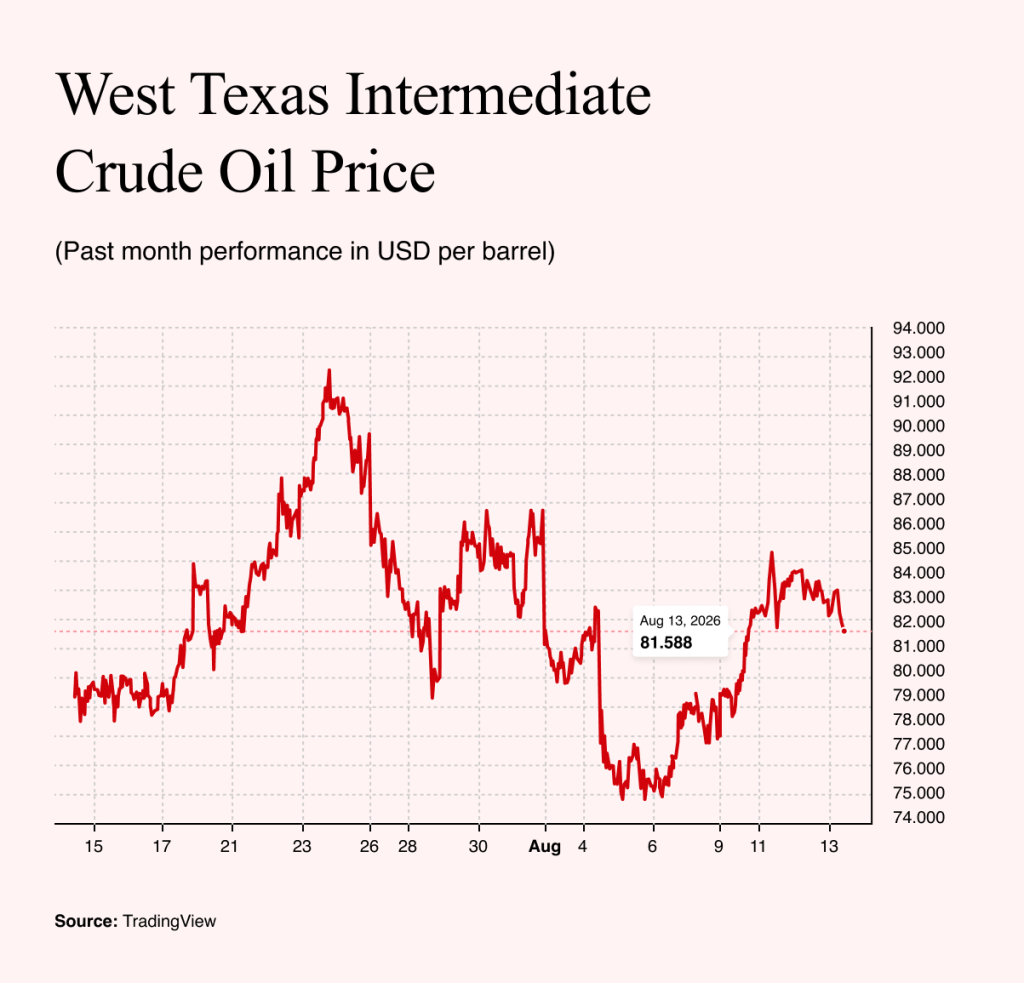
The discrepancy, however, is more apparent than real. Oil inflows into the United States increased while exports declined, and a portion of the strategic reserves was simultaneously shifted into the commercial system. The US market is, as a result, currently well supplied, which is the metric that matters most at this juncture. Oil prices duly fell on the news.
This affords the Trump administration considerable latitude to wait and see. Although strategic reserves have declined substantially since the start of the conflict, from 415 million barrels to the current 299 million barrels, the threshold of 180 million barrels currently regarded as critical remains some distance away.
A lower level would, in practice, complicate the logistics and operation of the reserve system as a whole. Keeping oil prices stable until the election is a priority for Trump, and the administration retains sufficient reserves to do so. For investors, the implication is that positioning should be calibrated to the political calendar. Between now and the November election, the US administration is likely to work to preserve the status quo for as long as possible. Any substantive shift on key issues, accordingly, is unlikely before the vote.
A Circle, Reconstructed
Artificial intelligence remains the other major driver of market sentiment, and should not be overlooked. The most significant development here was Nvidia's announcement of a new $500bn funding program.
Six financial heavyweights have joined the initiative: Apollo, BlackRock, Blackstone, Brookfield, Goldman Sachs and KKR. Their function will be to supply capital for the construction of data centers and the purchase or leasing of computing equipment built primarily on Nvidia chips.
In effect, as Nvidia's customers begin to exhaust their capacity to fund increasingly expensive AI infrastructure, Nvidia is helping them locate someone willing to lend it to them instead.
On its face, this is an elegant structure. Nvidia avoids financing hundreds of billions in investment directly, while simultaneously helping generate the capital that will be used to purchase its own chips. The model itself is not new, and is commonly described as circular.
Nvidia, however, disputes that characterization, arguing that this instance differs materially. One of the world's most profitable companies has agreed to guarantee a quarter of the loan. The large financial institutions involved are not, in this framing, lending on Nvidia's behalf. Rather, they are acting as independent market participants, each assessing which projects merit support on its own terms.
Viewed this way, the arrangement does not constitute a fully circular system, though it retains certain circular characteristics. A banker's lending decision is inevitably shaped by the knowledge that 25% of the loan is guaranteed. The structure therefore represents a variant of circularity, one that is more sophisticated and correspondingly harder to detect.
Nvidia's willingness to act as guarantor thus illustrates a broader point: the central vulnerability underlying the AI growth narrative remains the question of sustained financing, pending the point at which returns on capital begin to materialize.