Why Are Stock and Bond Markets Diverging in Expectations?
While banks profit from market volatility and the AI boom, bond investors are increasingly worried about deficits, war spending and rising oil prices.
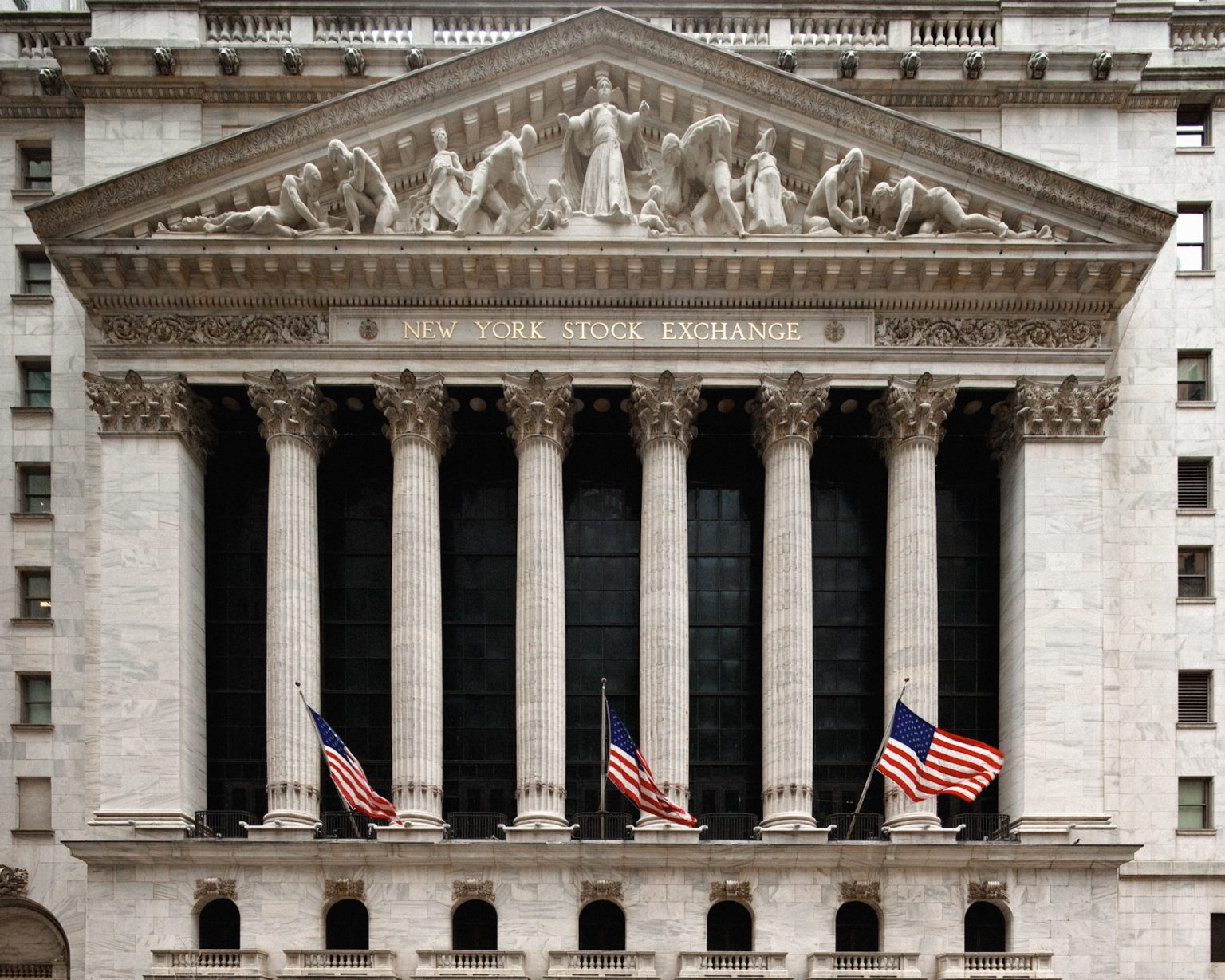
View of the stock exchange building in New York. Photo: Siegfried Layda/Getty Images
|
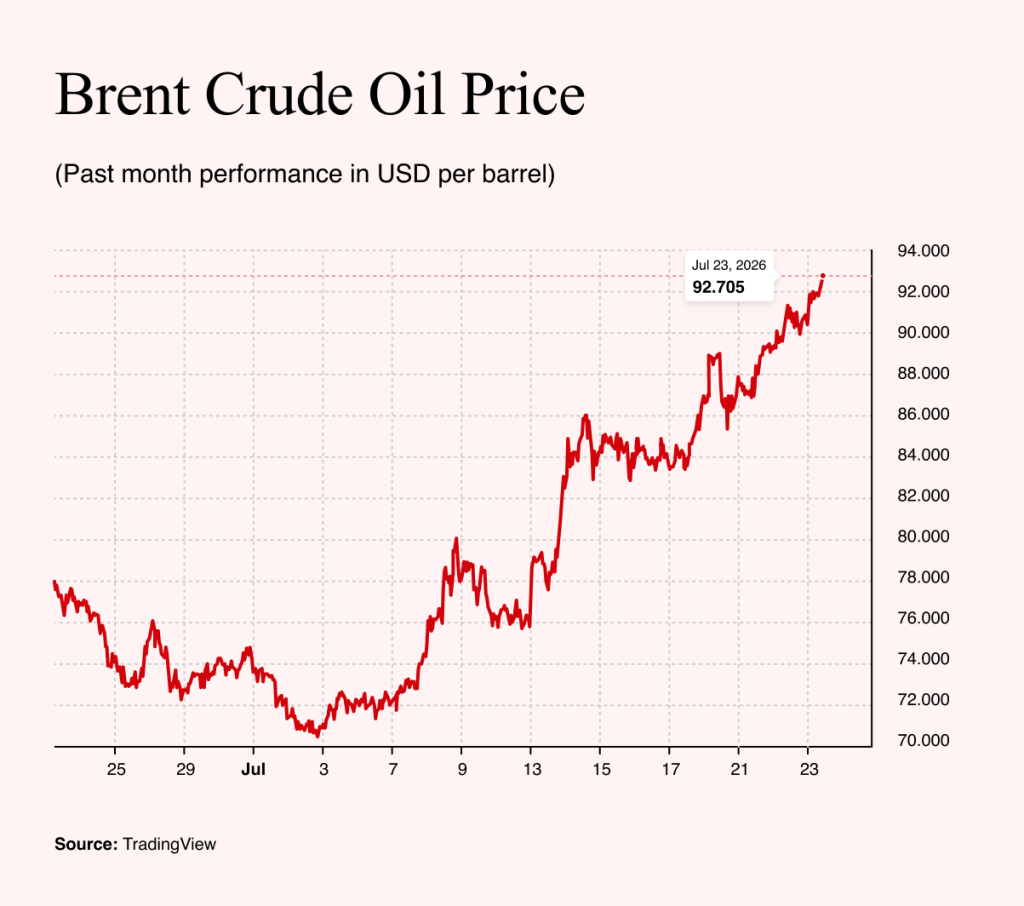
High oil prices are steadily taking center stage in global markets. Since 2 July, the price of oil has risen by more than 31%.
The logic is straightforward. Every day that shipping through the Strait of Hormuz remains severely restricted pushes oil prices higher. At present, there is little sign that the conflict will ease.
Donald Trump has warned that for every attack on a ship transiting the strait, the US will destroy either a bridge or a power plant in Iran. Tehran has responded that, in that case, the United States should expect retaliation in line with the Old Testament principle of “an eye for an eye, a tooth for a tooth”.
Iran is therefore expected to once again target the infrastructure of US allies in the region. Kuwait is likely to be among its primary targets. An attack on the country's desalination plants could quickly render much of the country virtually uninhabitable.
Source: TradingView
If living conditions in the region deteriorate significantly, retaining the workers and engineers needed to keep the oil industry operating will become increasingly difficult. Disrupting the region therefore involves far more than blocking shipping routes.
Ships may resume sailing once the conflict ends, but damaged ports, desalination plants and energy infrastructure cannot be rebuilt overnight. Nor can confidence in the region's security be restored quickly. That loss of confidence could discourage investors, workers and foreign specialists for years to come. Every additional day deepens the crisis, and financial markets are well aware of it.
The contrast is particularly evident in the US bond market. Current market trends paint two very different pictures.
Equity investors remain enthusiastic about artificial intelligence and memory chip manufacturers. Although these sectors have recently undergone a correction, the pullback has been relatively modest following an extended period of rapid gains. At the same time, a classic sector rotation is under way, with capital flowing into other parts of the market. Healthcare and financial stocks have both advanced.
US banks posted strong second-quarter results in 2026. Their performance has been driven by two key factors. The first is elevated market volatility. The more turbulent the markets become, the more actively investors trade. For banks, the direction of the market matters less than the volume of activity, as every transaction generates additional fee income.
The second driver is artificial intelligence. Banks are becoming more efficient through its use, while the technology itself requires enormous amounts of capital, much of it supplied by banks and other financial institutions. For now, this narrative continues to shield equity markets from a broader sell-off.
The picture is very different in the bond market, which tends to take a more measured view. US inflation unexpectedly eased in June, but largely because oil prices temporarily declined. The data highlighted how closely both inflation and inflation expectations remain tied to energy prices. With oil now climbing again, concerns about renewed inflationary pressure are also mounting.
The war itself is also becoming increasingly expensive. The Pentagon has so far estimated its cost at $37.5bn and is seeking an additional $67.1bn to sustain operations.
That spending is not backed by additional revenue. Instead, it will further widen the US budget deficit and increase the amount of government debt that must be sold to investors. In effect, Washington will be financing a war while already grappling with a large fiscal deficit and rapidly rising debt-servicing costs.
As a result, investors are demanding higher yields to hold long-term US government bonds. Yields had already climbed above 5% in May and have now returned to that level.
The bond market is also sending another important signal, this time about Britain's new prime minister, Andy Burnham.
Yields on 10-year UK government bonds began rising several days before Burnham took office, as markets increasingly priced in both his expected victory and the prospect of a looser fiscal policy.
After his appointment, the 10-year yield moved above 5%, signaling that investors remain unconvinced by Burnham's ability to restore Britain's public finances.
Some of the government's early measures, such as scrapping VAT on electricity and capping bus fares, may prove popular with voters. Investors, however, fear they mark the beginning of a more expansionary spending agenda that will deepen Britain's fiscal deficit rather than reduce it.
The main corporate story was Alphabet's latest earnings report. At first glance, the results were exceptionally strong.
Revenue reached $119.8bn, comfortably ahead of analysts' expectations of $117.1bn. Adjusted earnings per share came in at $9.11, far exceeding the consensus forecast of $2.88. However, that figure was significantly boosted by accounting gains from the revaluation of equity investments, which added $6.26 per share.
Advertising revenue also exceeded expectations, rising to $81.6bn. Search advertising generated $63.3bn, although that figure fell just short of analysts' forecasts.
The standout performer was Google Cloud, where revenue surged 82% year-on-year to $24.8bn. This is particularly significant because it provides investors with tangible evidence that businesses are willing to pay for artificial intelligence-related services.
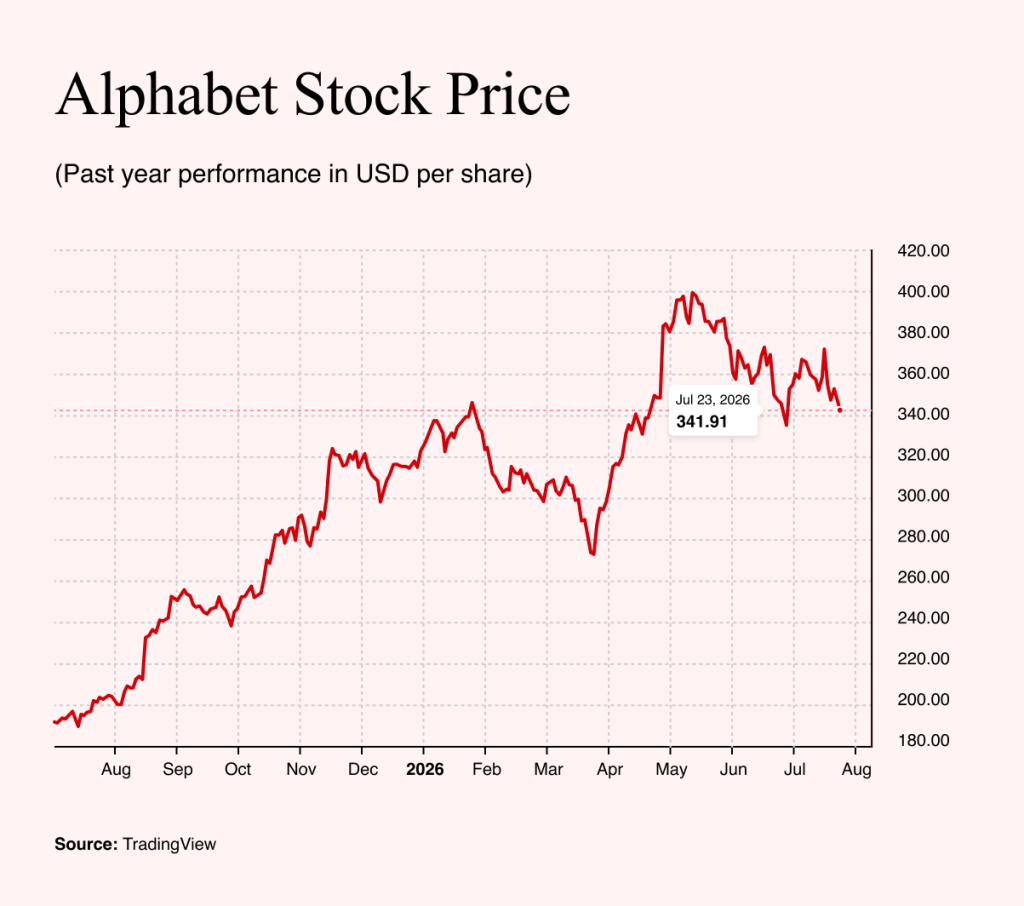
Source: TradingView
Despite the strong results, Alphabet's shares fell after the earnings release. The sell-off was driven not by revenue or profit, but by another sharp increase in investment spending. Capital expenditures reached $44.9bn in a single quarter, double the level of a year earlier. As a result, the company reported negative free cash flow of $5.9bn.
Even more notable was the upward revision to Alphabet's full-year capital expenditure forecast. The company now expects to spend $195bn–$205bn, up from its previous guidance of $180bn–$190bn.
Investors' reaction was therefore mixed. Alphabet's shares fell 4% in after-hours trading. The market applied the same logic seen after the results of Taiwan Semiconductor Manufacturing Company (TSMC) and Netflix: good results are no longer enough. Investors now expect exceptional ones.
Spending $200bn on artificial intelligence also struck many investors as excessive. To put that figure into perspective, Alphabet could instead acquire the entire luxury goods maker Hermès, IBM or Seagate Technology. The comparison underscores the sheer scale of the company's investment plans.
On the other hand, cloud computing continues to expand rapidly and is already generating substantial revenue. The results also showed that demand for cloud services has reached $516bn. That figure is likely somewhat inflated, as it almost certainly includes highly ambitious AI projects that may never materialize. Even so, it demonstrates the enormous potential of the market.
Welcome to the comments section of the Štandard daily. Please take note of our guidelines, comments are moderated by us. You can contact the moderators at support@statement.com.
Participate in the discussion
Comments are available to subscribers only. If you'd like to join the discussion, choose a subscription starting at €6.72 per month.
All comments 0
Register
Comments are available to registered users only. If you'd like to join the discussion, register here.