
The National Bureau of Economic Research (NBER) is one of the most authoritative economic institutions in the United States. It is a private, non-profit US economic research organization founded in 1920 and one of the most influential institutions in academic economics. A very large number of prominent economists are affiliated with it, and its working-paper series is often where important economics research first appears.
All of which means that when it publishes a paper suggesting that one answer to collapsing birth rates may be to replace missing human beings with artificial intelligence, people should sit up straight and pay attention.
Its new working paper, The Global Transition: The Impact of Demographics and AI on Economic Power, attempts something extraordinarily ambitious: modeling the world economy through to 2100. It covers more than 150 countries containing 99% of the world’s population and asks what happens when two of the great economic forces of our age collide: collapsing fertility and artificial intelligence.
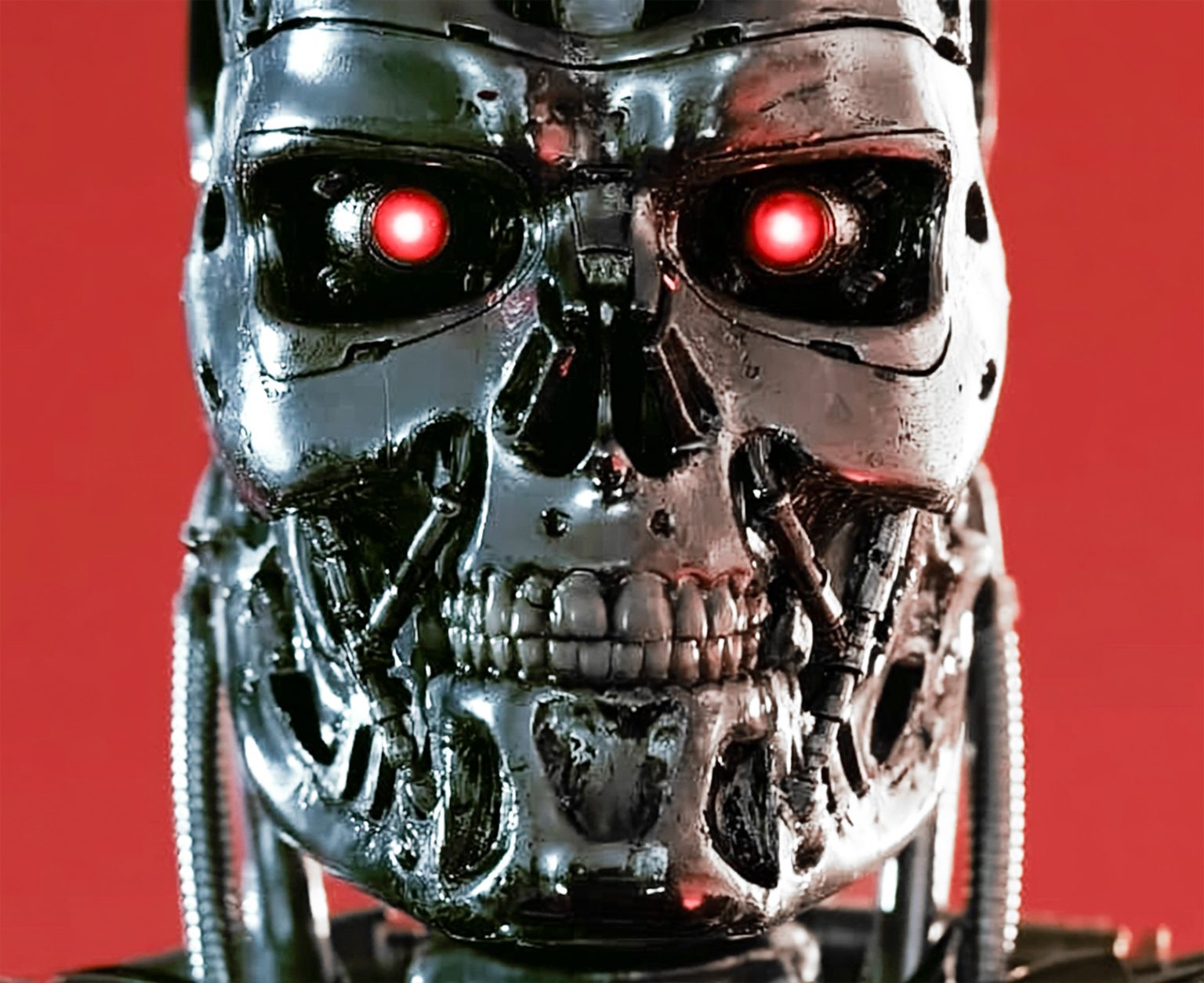
The answer, crudely, is this: if human beings will not produce enough future workers, perhaps machines will. Imagine Arnold Schwarzenegger's Terminator – but instead of shooting you it drives tractors around fields, harvesting grains.
Demographic Collapse Means Economic Pain – or Does It?
That is the dystopian vision at the heart of the paper. Falling birth rates are an economic and geopolitical problem, and one most of us can understand: fewer babies eventually mean fewer workers. Longer lives mean more pensioners for those workers to support. The result is slower growth, higher taxes and a world in which younger generations spend more of their lives financing the old. Misery all around.
The demographic part of the paper, in particular, makes grim reading. It is based on the United Nations’ population forecasts, which have changed dramatically and not for the better. The UN’s 2024 projections are substantially more pessimistic than those published in 2017, particularly about Chinese fertility.

When the economists substitute those new demographic assumptions into their model, projected global GDP in 2100 is about 10% lower than previously assumed. And if fertility is lower still, the fall in global output could be up to one-third compared to previous assumptions.
That is bad enough. But the really extraordinary effect is geopolitical, which is important to understand because of what the paper goes on to say about the machines.
Under the older demographic assumptions, China accounted for 25.6% of global GDP in 2100, compared with just 11.2% for America. Use the latest population projections, however, and China’s share collapses to 14.9%, while America’s actually rises to 14.4%.
In other words, one of the most consequential developments in the struggle for economic supremacy between China and America may not be taking place in a semiconductor factory, tariff office or aircraft carrier, but in China’s dead bedrooms.
There is, as an aside, an awkward sting here for American – and likely European – immigration restrictionists. America’s relatively favorable demographic position in this new model depends partly on immigration. When the economists run their model assuming that the United States eliminates all future immigration, America’s projected share of global GDP in 2100 falls from 14.4% to just 9.2%.
If We Cannot Breed Workers, Can We Build Them?
Unless, of course, it can invent a fourth option.
That is where the paper goes full cyborg-futurist: what if, it asks, the “great replacement” will not be with people, but with artificial intelligence?
The researchers model several rates of automation. Their most aggressive scenario, which they call “Transformative AU/AI”, assumes capital’s share of production grows ten times faster than its recent historical rate. They also model a less extreme accelerated-AI scenario in which it grows four times faster through 2050.
The result is startling. Using the latest demographic projections without transformative AI, America and China finish the century almost level, accounting for 14.4% and 14.9% of world GDP respectively. Under the transformative-AI scenario, America’s share rises to 25.3%, against China’s 16.9%.
This does not mean three NBER economists have discovered that ChatGPT will make America ruler of the world.
Or ... does it?
Advantage America?
There is, of course, an important assumption in the model. The United States retains a technological advantage over China throughout the century. If automation becomes vastly more important to economic production, then a country possessing superior technology naturally becomes vastly more powerful.
For most of human history, population has been one of the foundations of economic power. People work, consume, invent, pay taxes and fight wars. A shrinking population therefore imposes fairly obvious constraints.
AI potentially loosens and may well invert that relationship.

Imagine two countries. One has 300 million working-age people using relatively ordinary technology. Another has 100 million people, but machines capable of performing enormous quantities of cognitive and physical work. It is no longer obvious which possesses the greater productive capacity.
And that raises the intriguing – some might say horrifying – possibility that AI could become part of the answer to the West’s demographic crisis.
Governments currently have three obvious responses to collapsing birth rates. They can try to persuade their citizens to have more children. Countries from Hungary to South Korea have spent enormous sums attempting precisely that, generally with disappointing results. They can raise retirement ages and ask existing workers to remain economically active for longer. Or they can import workers through immigration, which can improve the demographic arithmetic while creating its own political, cultural and infrastructural pressures.
AI, however, suggests a fourth option: what if we just replace people with machines?
The Existential Question
If software and machines can perform an ever larger share of the work previously done by humans, a smaller working-age population need not translate automatically into proportionately lower production. The old may still need care. Taxes may still need to be paid. Goods may still need to be produced. But perhaps the missing children do not need to grow up, enter the workforce and become taxpayers. Perhaps a machine can do enough of that instead.
This is, of course, extremely speculative. It is also entirely dystopian. The optimistic version is that artificial intelligence helps aging societies maintain prosperity despite demographic decline. The darker version is that humanity, having ceased to reproduce itself at replacement level, begins building the machinery that will make its own absence economically manageable.
That is a strange thought.
Darwin’s theory of evolution presupposes that, over time, the strongest adaptations within a species become dominant. Evolution has never really been a conscious process. There is something different, therefore, about what is being mooted here. As humans collectively bring their own reproduction to a standstill, they are simultaneously developing near-human machines that can do much of their work more efficiently and productively.
It is not conscious or even deliberate. Nobody sat down and said: “Let us stop having children and then invent something to make children less economically necessary.” Yet the more one reads of it, the more one wonders whether what is happening is akin to the dinosaurs developing technology to attract an asteroid.