An AI for Everything
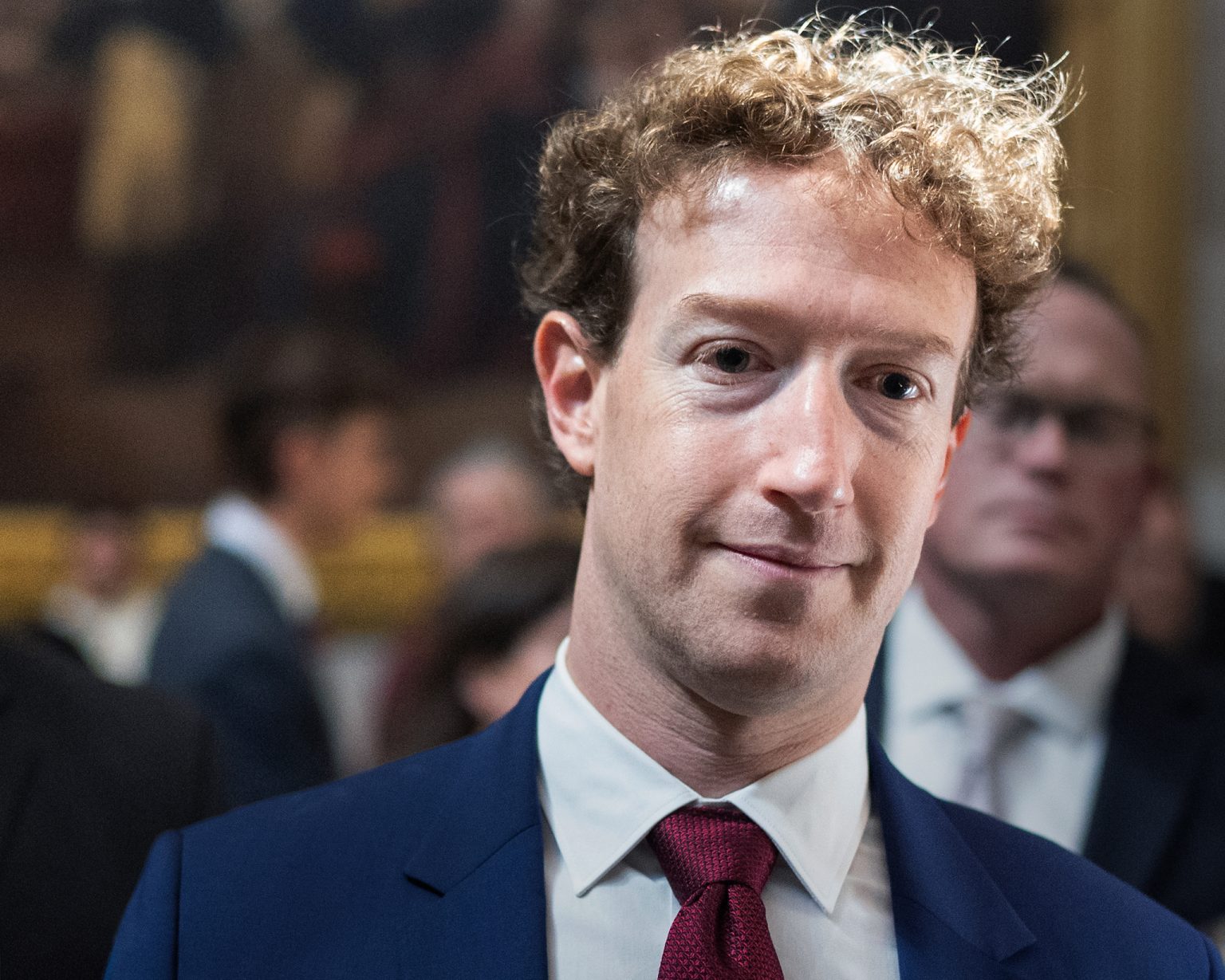
In line with the vision of its chief executive, Meta is building “personal” AI for use across a range of domains: relationships, health, career, finances, home management, hobbies and more.
Meta is developing open-source models and closed-source models, many of which will be delivered to “billions of people” around the world, in a manner similar to the other platforms and services it administers such as Facebook, Instagram and WhatsApp.
While the company intends to offer free versions that will be accessible to all Meta users, Zuckerberg said that for those who require more computing power a dynamic auction mechanism will ensure the “lowest price possible for the intelligence and compute they're using”.
It will also guarantee that the capacity is used “for whatever people collectively find most valuable”.
Meta’s commitment to an open approach to AI development and proliferation comes as debate deepens regarding how best to handle the emerging technology.
Leading AI labs, known as “frontier” labs or developers, have struggled to balance their creation of powerful new models with the frequently clashing considerations of competition from rival labs, safety, government regulation and consumer demand.
A number of recent incidents have highlighted different aspects of the problem faced by those at the cutting edge of AI.
Last month OpenAI, the team behind the popular AI chatbot ChatGPT, revealed that an AI agent powered by its most advanced models broke out of an isolated evaluation exercise, gained access to the internet and hacked into another AI platform in pursuit of its goal.
OpenAI described the situation as an “unprecedented cyber incident” that highlighted the need for a renewed focus on the role of AI in cybersecurity.
Meanwhile, the targeted AI platform, Hugging Face, reported that its ability to investigate and identify the intrusion was enhanced by the use of an open-source Chinese model, Zhipu AI’s GLM-5.2.
It did this because it was not equipped with the same guardrails typically placed on Western models, which Hugging Face implied limited their usefulness on that occasion.
An open-source model is one in which the model’s underlying components are made public, allowing for greater freedom in running it, experimenting with it and potentially modifying it. This is in contrast to closed-source models, over which developers typically maintain control, offering them primarily as a service.
Meta's Open-Source Preference
Weighing in on the debate, Zuckerberg argued that Meta views the open-source approach as a “positive and important force for empowering people”. It prevents centralization that he described as “detrimental” to both safety and the economy.
Zuckerberg warned that restricting the open-source ecosystem “would be a mistake”, confirming that Meta’s Superintelligence Labs would soon be releasing open-source models.
The blog post was followed by a short video featuring Zuckerberg, in which he announced that Meta would be open-sourcing a new model called “Muse Glimmer”, which he described as the “highest-performing model of its size”.
Acknowledging that there are significant risks to releasing “capable models” to the public, Zuckerberg argued that the most dangerous scenarios involve the centralization of powerful models by leading labs and the development of a “singular superintelligence” that cannot be checked by other models.
Fears of mass job displacement as a result of widespread AI adoption are overstated, the Meta chief argued, claiming that there are several reasons to be optimistic about an “abundance of jobs in the future”.
Among these, he said, was the likelihood that mass adoption of AI would result in more ideas and entrepreneurial spirit, which in turn would create more jobs.
Another would be the use of AI as an aid for developing new skills and “individuals’ capability growth”, enabling them to keep ahead of automation trends that eliminate lower-skilled forms of work.
However, AI skeptics and those in favor of a cautious approach may not be convinced by Meta's reasoning.
A 2023 open letter signed by Elon Musk and other leaders of various industries called for a global pause of at least six months to ensure that the technology did not spiral out of control.
In June this year, AI industry leader Anthropic echoed the call with one of its own, citing concerns about AI’s developing ability to engage in self-improvement, to the point that it could eventually build its own successor without human input.