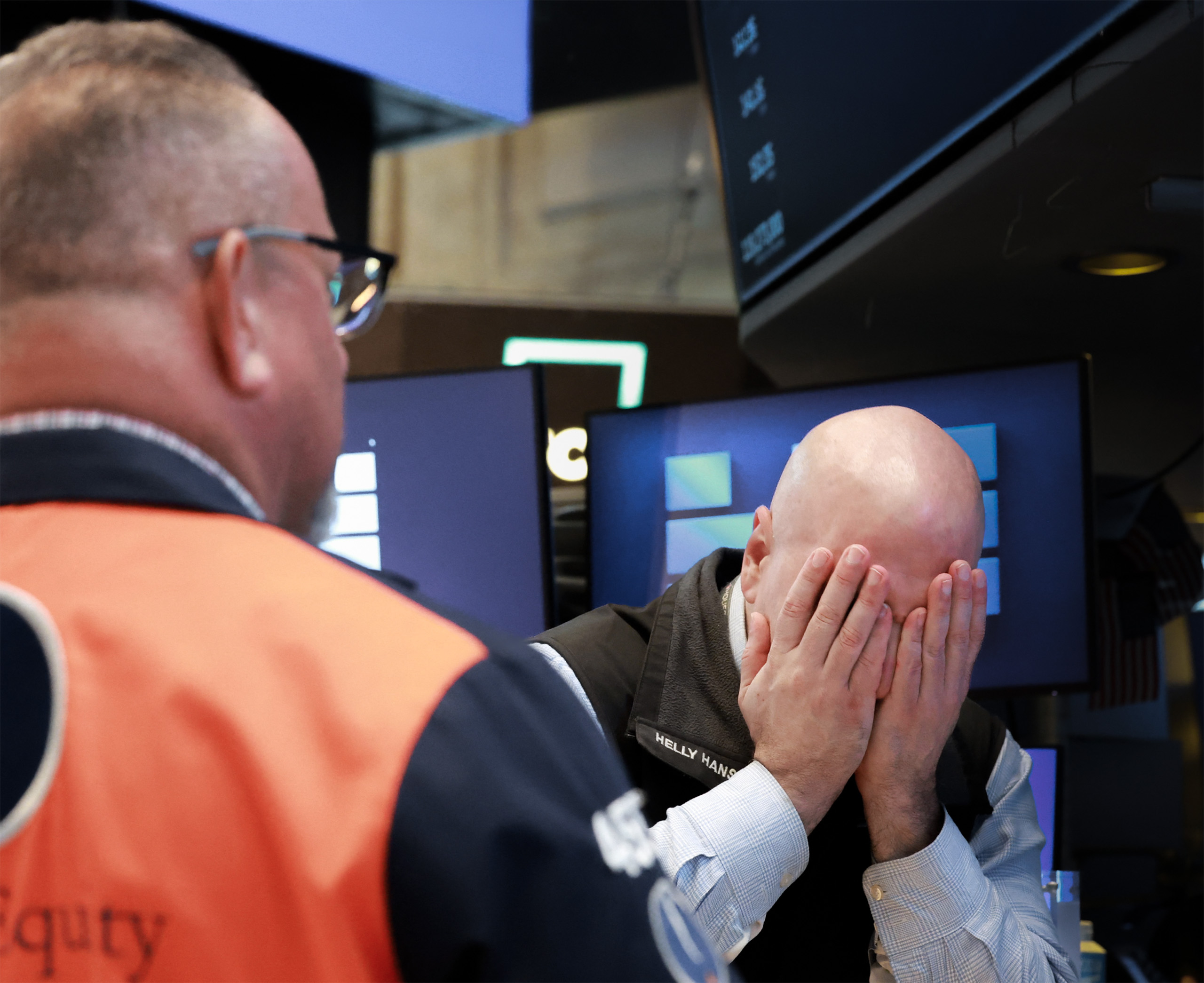
Global markets began the week on an optimistic note following the signing of a memorandum of understanding by US President Donald Trump and his Iranian counterpart, Masoud Pezeshkian. That was enough for investors to regard the matter as virtually settled, sending oil prices lower throughout the week.
Even news that US strategic reserves had fallen to 340.3 million barrels, their lowest level since Ronald Reagan’s presidency, failed to alter the mood. The release of those reserves had prevented prices from soaring above $150 per barrel during the conflict with Iran. Their rapid depletion also increased pressure on the US to secure the reopening of the Strait of Hormuz as quickly as possible.
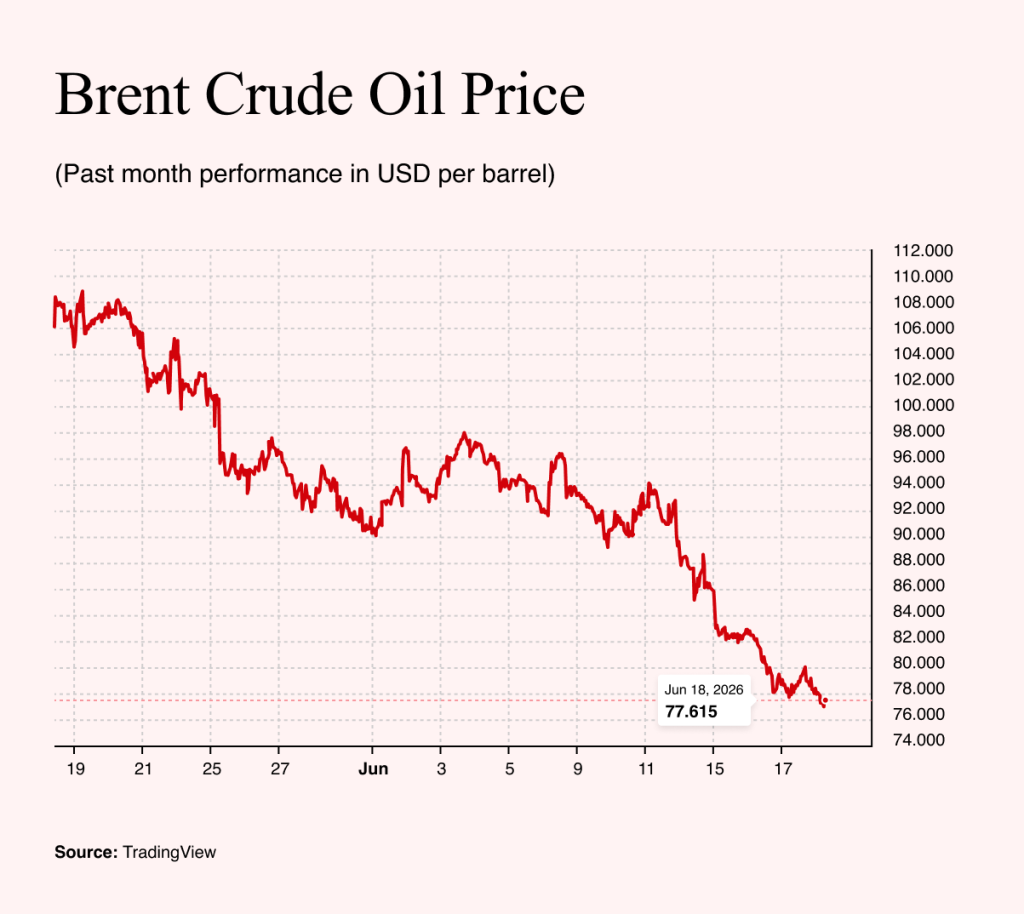
In practice, the strait should soon be passable again, although a return to full operation will take longer. Shipping companies and insurers will want assurances that their valuable cargo is safe. Tankers will also need time to travel from the Strait of Hormuz to Asia and Europe.
Markets, which are always looking ahead, have largely shrugged off those concerns. Should the reopening of the Strait of Hormuz also lead to the lifting of the embargo on Iranian oil and natural gas, the world could face a surplus of both commodities by 2027. Investors therefore had reason to celebrate. That outlook, of course, assumes that nothing goes wrong and that both sides work toward a new agreement within 60 days.
Spotlight Shifts to SpaceX
One lesson Wall Street has drawn from the Iran crisis is that oil no longer holds the same sway over trading. Its direct impact on the technology-heavy Nasdaq is limited, with investors focusing mainly on the indirect consequences for monetary policy.
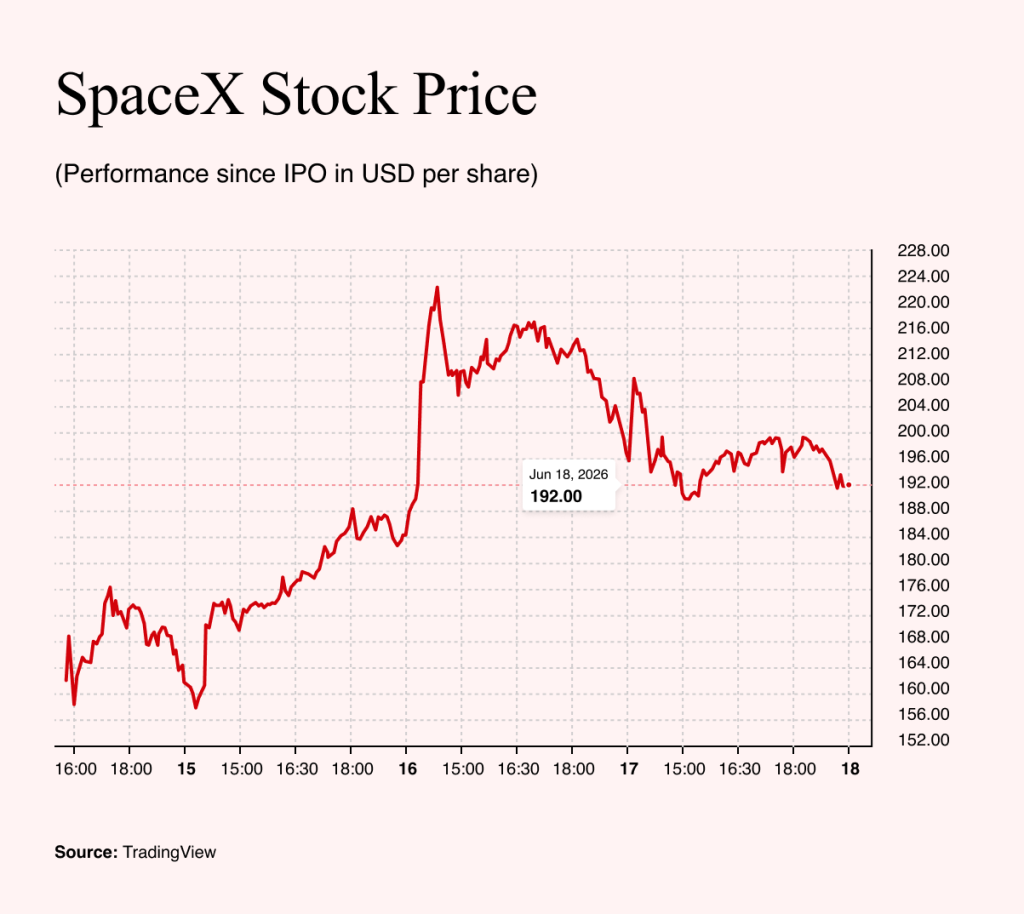
Artificial intelligence has overshadowed events surrounding Iran, while SpaceX shares have provided investors with a new focus since last Friday. Elon Musk’s company made a spectacular stock market debut. During the week, its shares approached $220, briefly lifting its market capitalization above those of Amazon and Microsoft. The newcomer temporarily became the fourth most valuable company on Wall Street, an achievement few had anticipated.
SpaceX’s strong performance lifted the wider artificial intelligence sector and influenced trading on the S&P 500, even though the company is not included in the index. Western Digital, for example, gained 16% in a single day.
SpaceX plans to build data centers in Earth’s orbit, which would require hard drives supplied by Western Digital. It remains unclear when the facilities will be constructed, but that has not deterred investors. Musk knows how to keep the spotlight firmly on himself.
He announced this week that SpaceX could generate $1tn in revenue by 2030. It is certainly an ambitious target. To achieve it, revenue would have to double every year until 2030, a daunting task even for Musk.
Speculative capital has clearly shifted toward the stock. Not everyone has benefited from the influx, however. Shares in smaller space companies, which had soared in the days before SpaceX’s initial public offering, suffered significant outflows as investors redirected their money toward Musk’s company.
That carries considerable risk because speculators can rapidly change their minds and reverse the direction of their investments. Wednesday marked a turning point in the rally, with SpaceX shares closing lower for the first time.
Further losses in the coming weeks would pose a psychological test, particularly for retail investors who bought the stock at $200 or more. The decline was not triggered by any specific news, but by a change in sentiment following the Federal Reserve meeting.

Warsh Tears Up the Fed Playbook
Kevin Warsh held his first press conference as Fed chair after succeeding Jerome Powell. The main risk surrounding his appearance was that no one knew what to expect. By the time oil prices began falling early in the week, however, it was clear that the immediate danger of a rate increase had receded.
US interest rates were kept steady for the fourth consecutive meeting. The Federal Reserve therefore declined to follow the European Central Bank and the Bank of Japan, both of which had raised rates, allowing investors to breathe a sigh of relief. Warsh delivered no hawkish jolt, but the evening still brought an important change.
Investors had expected a “dove” who would speak about artificial intelligence, productivity growth and a gradual decline in inflation. Such a message would have appealed to US President Donald Trump, who nominated Warsh to the Fed with a clear mission: to cut rates as far as possible. Instead, they encountered a central banker who immediately signaled that he had no intention of accepting the role assigned to him by either the markets or Trump.
Warsh noted that inflation had remained too high and above the 2% target for too long. His main objective, however, will not merely be to set interest rates, but to transform the way the Fed operates and communicates. He has already begun doing so decisively.
The regular policy statement, previously refined at every meeting to the point that investors scrutinized each change in wording, was cut from 341 words to just 130. Economic projections, which had traditionally been examined just as closely, were not even presented during the press conference.
The new Fed chair has made clear that he intends to discard the old playbook and replace it with far less guidance. Warsh does not want every sentence issued by the central bank to serve immediately as a roadmap for financial markets. Fewer words are intended to create less false certainty.
For investors, the shift will be uncomfortable. Instead of a central bank that guides them by the hand, they will face an institution that offers fewer clues about its next move. That uncertainty has unsettled the markets. Under Warsh, the Fed has not changed interest rates, but it has altered something more fundamental: the degree of certainty it is prepared to offer investors.