Cheaper oil briefly lifted the mood. Yet nervousness soon returned, and Micron’s record profit was needed to help technology stocks weather the storm.
The good news for markets is that the memorandum of understanding has allowed traffic through the Strait of Hormuz to resume. According to the latest reports, more than 70 ships and tankers are passing through the waterway. While traffic has not yet returned to the levels seen before the crisis, the situation has clearly improved.
That has also been reflected in the oil price. US light crude has even fallen below the psychologically important threshold of $70 a barrel. Oil should therefore no longer pose a major problem for markets. Investors might be tempted to expect calmer weeks ahead.
The opposite is true.
Valuation Fears and the AI Brain Drain
Markets were shaken by doubts over whether companies linked to the artificial intelligence boom are overvalued. The doubts were aimed particularly at memory module manufacturers. The sell-off was so severe that the stock exchange in Seoul even had to suspend trading. The South Korean index has reached record highs largely thanks to two companies: SK Hynix and Samsung.
This was not simply classic profit-taking, which might have explained the volatility. The trigger for the sell-off was a report that South Korean lawmakers are drafting a bill to tax unrealized gains. The bill is clearly aimed at the two South Korean giants. Such efforts only confirm the direction already signaled by the South Korean president in May, namely that a tax on AI should be introduced.
That was not the only news unsettling the tech sector. Alphabet, the world’s third-largest company by market capitalization, suffered its worst trading session of the year, losing about 7% during the day. The reason was not weak financial results or regulatory intervention, but the departure of two exceptionally important figures.
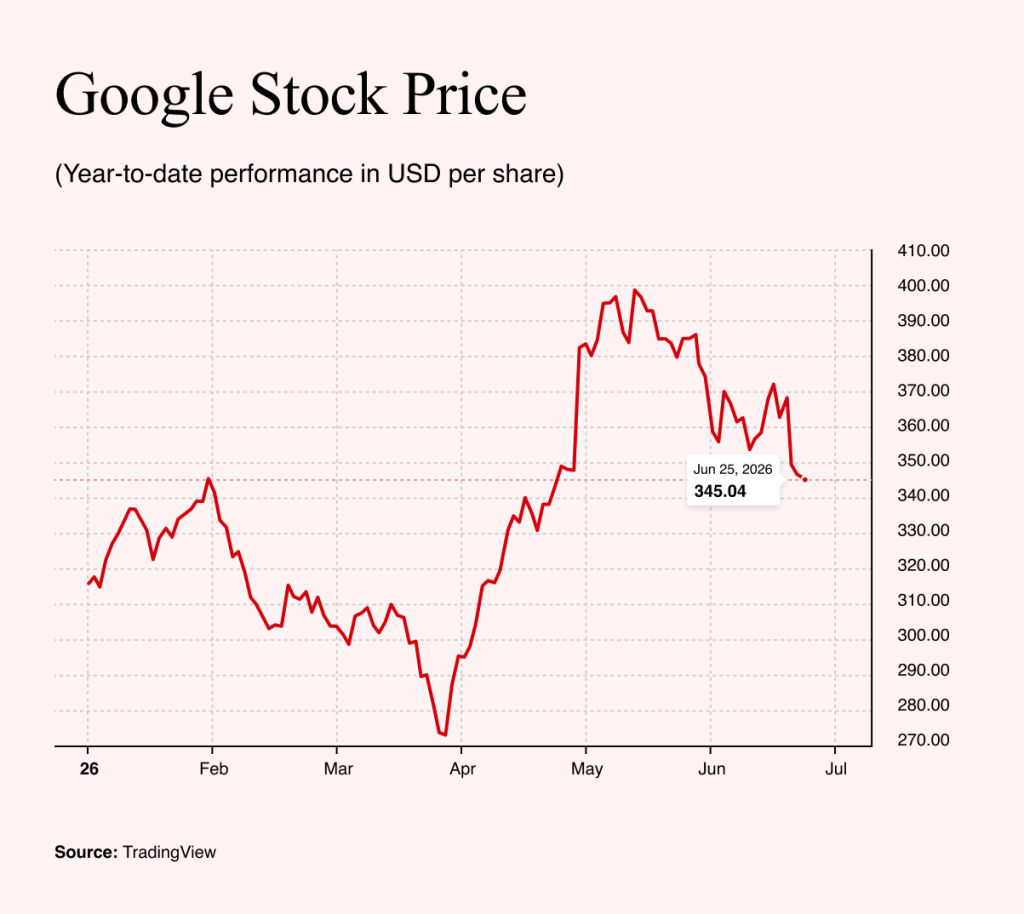
Noam Shazeer, one of the key minds behind the Gemini model, has moved to OpenAI. Nobel Prize winner John Jumper, best known for his breakthrough work on AlphaFold, has left for Anthropic. The loss of such significant human capital would raise questions in itself. More concerning still is that both are leaving for direct competitors.
That highlights one of the paradoxes of artificial intelligence. A technology intended to automate an ever-larger share of human labor remains, in its own development phase, highly dependent on a small number of exceptional individuals. For investors, it is a reminder that the race for AI is not decided solely by data centers, chips and capital. It also depends on the ability to retain the people driving the field forward.

SpaceX’s Cash Burn and Micron’s Triumph
The third piece of bad news for markets was the decline in SpaceX’s stock, currently one of the most closely watched on Wall Street. It fell below the price at which it had debuted only a few days earlier. While it is normal for euphoria to cool after a successful initial public offering, there was another reason behind the drop.
By going public, the company raised about $86bn in new cash. The money, however, did not remain untouched for long. A few days after its IPO, SpaceX announced the acquisition of Cursor for $60bn.
This week, management also said the company was entering the bond market. SpaceX plans to issue $20bn in bonds maturing over 30 years. The good news is that markets regard the bonds as high-quality. The bad news is that SpaceX faces a problem similar to Tesla’s: the company is burning through cash.
Despite the sector-wide decline at the start of the week, the episode is still likely to end on a positive note. Micron, a symbol of the rise of memory component manufacturers during the AI boom, has published its financial results.
They were spectacular. Earnings per share reached $25.11. To put the strength of demand for data center construction into perspective, the company’s earnings per share were only $1.91 a year ago. Revenue reached $41.5bn. Micron far exceeded analysts’ estimates, which had pointed to $35.9bn. As a result, the stock rose 14% in after-hours trading. Thanks to the strong results, the downward trend from the beginning of the week is likely to be reversed.
Micron’s results also highlight an important point: the investment frenzy around artificial intelligence is not the same as the dot-com bubble at the turn of the century. Back then, investors often bought into a story with no revenue, no profits and, in many cases, no clear business model.
Today’s AI boom is more complex. It has its share of inflated valuations, euphoria and risk of disappointment. At the same time, it is grounded in real investment in infrastructure, data centers, chips, memory and energy. Micron is currently benefiting enormously from the situation, but over time it will have to prepare for the fact that demand for memory modules remains cyclical. Once data centers reach saturation after the current investment wave, the key question will be when the next wave of demand arrives and whether it will be comparable in scale.

A Hawkish Fed Pressures Gold and Bitcoin
Tech stocks were not the only assets to see volatility this week. Bitcoin and gold were caught up in the turmoil as well. The gold price fell below the psychologically important threshold of $4,000 an ounce, while Bitcoin dropped below $60,000.
This time, the decline in both assets had a common denominator: the prospect of a stronger dollar. In the financial world, expectations for interest rates are slowly but surely shifting. Bank of America, which had previously been on the dovish side in its forecasts, has completely changed its stance. Its analysts now expect three rate hikes, the first of them in September.
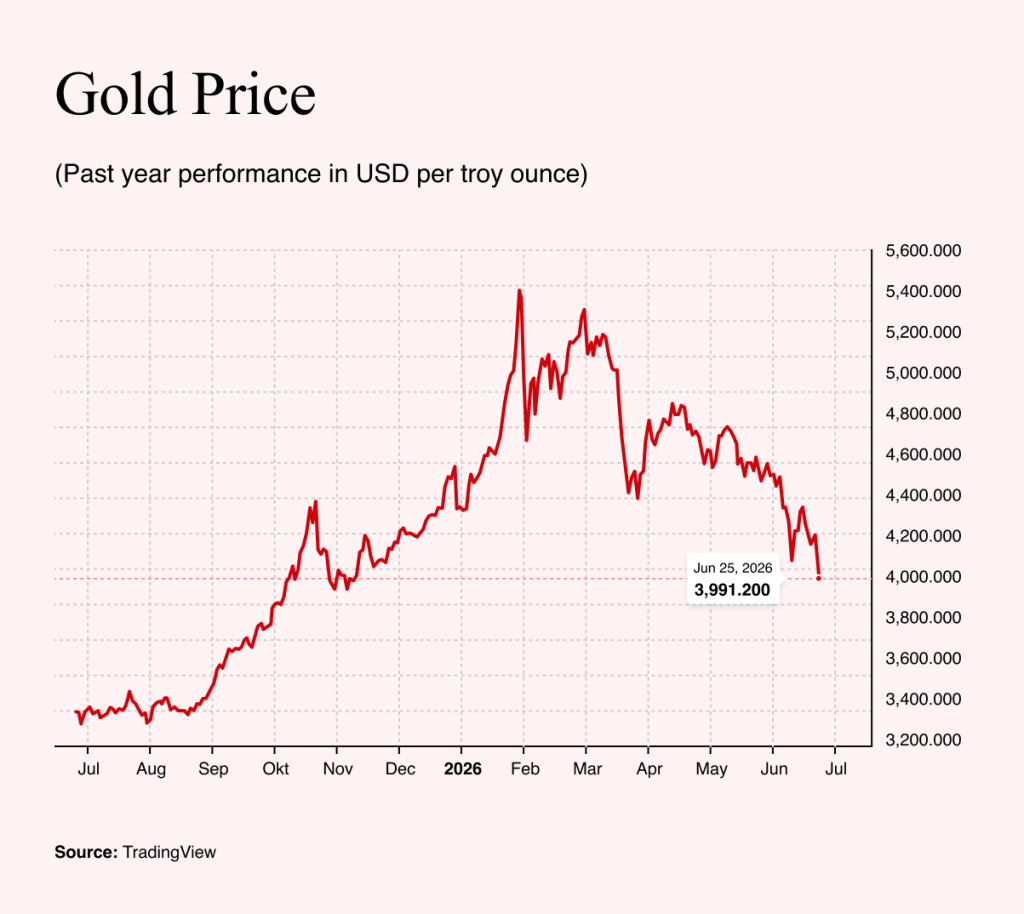
They were persuaded by the hawkish stance of new Federal Reserve Chair Kevin Warsh, who made clear that inflation must be brought under control despite Trump’s calls for lower interest rates. As a result, US Treasury yields are expected to rise, which is never good news for gold or Bitcoin.
The uncomfortable question, of course, remains: how will higher bond yields further strain the already depleted US Treasury? And if the intellectual legacy of the recently deceased former Fed Chair Alan Greenspan proves correct, namely that the Fed will always rescue markets at the last minute with massive monetary expansion, then the decline in gold and Bitcoin prices is an opportunity for those who believe the same will happen again.
In other words, gold and Bitcoin are falling today because of a stronger dollar and higher government bond yields. Yet it is precisely those higher yields that may ultimately create the pressure that forces the Fed back toward monetary easing.